
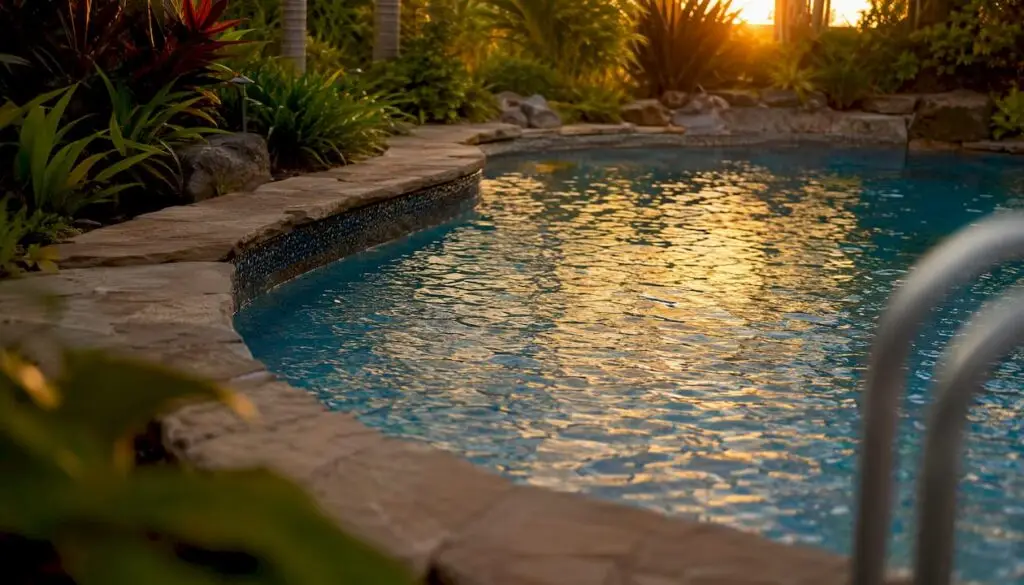
A pebble surface swimming pool is the right call when you want a finish that outlasts standard plaster, resists slipping on steps and ledges, and delivers a designer water color that holds up for decades. The trade-off is a higher price at installation and a texture underfoot that some swimmers need a season to love.
Here’s the one-line decision rule we give clients at Wefixuglypools: choose pebble if you’re planning to stay in the home long enough to let a 15 to 20 year finish pay for itself, or if a specific water color (think deep charcoal or bright turquoise) matters more to you than shaving dollars off the initial quote. Choose plaster or colored quartz if your priority is the lowest possible upfront number or the smoothest possible feel on bare feet.
- Durability: Pebble finishes commonly reach 15 to 20 years or more with routine care, well beyond typical plaster.
- Safety: The aggregate texture gives feet real grip on wet steps and sun ledges.
- Color control: The pebble blend you pick determines whether your water reads turquoise, lagoon green, or mirror black.
- Cost: Expect a meaningfully higher bill than basic plaster, both on new construction and on a resurfacing job.
Key Takeaways
Pebble surface pools cost more upfront but typically outlast plaster by roughly a decade, and blend choice controls final water color far more than most homeowners expect going in.
| Point | Details |
|---|---|
| Durability wins long-term | Pebble finishes commonly last 15 to 20+ years versus 7 to 10 for plaster. |
| Color depends on depth and light | Always view a filled pool sample in your exact blend before committing. |
| Cost sits higher upfront | Expect a real premium over plaster, offset by fewer resurfacing cycles over time. |
| Texture is a genuine trade-off | Mini pebble softens the feel underfoot while keeping most durability benefits. |
| Get three quotes and proof of certification | Ask every bidder for certified-applicator status and a completed local project to view. |
| Wefixuglypools handles the full process | From blend selection through certified installation and maintenance planning across the Phoenix area. |
Table of Contents
- What Is a Pebble Surface Swimming Pool, Exactly?
- How Do Pebble Colors and Blends Affect Water Color?
- What Are the Main Benefits of a Pebble Pool Finish?
- What Are the Downsides of Pebble Finishes?
- Pebble vs. Colored Quartz vs. Plaster: Which Finish Fits Your Pool?
- How Is a Pebble Finish Installed, and How Long Does It Take?
- What Does a Pebble Pool Cost, and How Long Should It Last?
- How Do You Maintain a Pebble Pool Surface Long Term?
- What Pebble Brands and Blends Should You Ask About?
- What Do Experienced Pool Installers Say About Pebble Finishes?
- Who Should Actually Choose a Pebble Pool Finish?
- A Remodeler’s Note on Pebble Finishes
- How Wefixuglypools Handles Pebble Resurfacing and Remodeling
- Frequently Asked Questions
- Sources
What Is a Pebble Surface Swimming Pool, Exactly?
A pebble surface swimming pool is an exposed-aggregate finish. Instead of the smooth, uniform look of standard plaster, small natural or manufactured pebbles get mixed into fortified cement and then partially exposed at the surface, giving you texture, depth, and a shimmer that plain plaster can’t produce.
The industry term for this finish family is exposed-aggregate pool finish. “Pebble pool” is the common household phrase, and we’ll use both throughout this guide since they mean the same thing.
Here’s how it actually comes together. Manufacturers source tumbled river pebbles that get screened for size consistency, then blend them with Portland cement fortified for pool use and pigments engineered to resist fading. That mix goes on like a plaster coat, but the finishing crew doesn’t leave it smooth. They wash back a thin layer of cement (or in some cases polish the surface) to reveal the pebbles underneath, which is what gives the finish its texture and its light-catching sparkle. This is genuine engineering, not decoration slapped over a standard shell, and the installer’s skill during that exposure step has a direct effect on how the pool performs for the next two decades.
You’ll run into two main categories when you start shopping finishes:
- Standard pebble: Larger aggregate, more pronounced texture, the most dramatic color depth.
- Mini pebble: Finer aggregate that creates a denser, smoother surface with fewer voids, softer underfoot while keeping most of the durability upside.
Calling this finish “rocks in cement” undersells what’s happening. The pigment chemistry, the cement fortification, and the exposure technique all have to work together, and a poor job on any one of those fronts shows up as blotchy color or premature wear within a few years.
How Do Pebble Colors and Blends Affect Water Color?
Your pebble blend is the single biggest lever you have over how your pool water actually looks. Light blends bounce sunlight and read as bright turquoise. Tan and earth-tone blends settle into a lagoon or soft green cast. Charcoal and black blends absorb light and turn the water into something closer to a mirror, reflecting sky and architecture back at you.

That last effect has become a genuine design trend. Dark pebble finishes create reflective water that doubles the sky and surrounding landscaping, and the textured surface hides small imperfections that would stand out on a flat, glassy dark plaster job.
Here’s the catch almost every homeowner runs into: the dry chip sample in the showroom bears little resemblance to how that blend behaves in twelve feet of water. Depth changes how light travels through the pool, and a color that looks charcoal gray on the sample board can read nearly black once the pool is filled. That’s why manufacturer galleries and photos of filled pools in your exact blend matter more than the physical chip you hold in your hand.
Light and landscaping keep changing the story throughout the day. A tan blend can look golden at noon and shift toward green in late-afternoon shade from a nearby tree line. A charcoal finish acts like a mirror in bright sun and goes moodier at dusk. None of that is a flaw. It’s a design variable you can plan around once you know it’s happening.
Pro Tip: Ask your installer to walk you through a completed pool in the exact blend you’re considering, and go see it at the time of day you’ll actually be using your own pool. A blend that looks stunning at noon might read completely different at your typical 6 p.m. swim.
If you’re also reworking the backyard around a new finish, our guide to pool landscaping ideas covers how plantings and hardscape interact with water color through the seasons.
What Are the Main Benefits of a Pebble Pool Finish?
Homeowners pay more upfront for pebble because it delivers on four fronts that plaster consistently struggles with.

Durability that changes the ownership math. Pebble finishes typically last 15 to 20 years or longer with proper maintenance, compared to a plaster surface that often needs attention within 7 to 10 years. Stretch that out over a 20 year ownership window and you’re comparing one pebble installation to two or three separate plaster jobs, each with its own labor cost, drain-down, and downtime.
Genuinely better footing. The exposed texture gives bare feet traction on steps, benches, and sun ledges that smooth plaster simply can’t match, which matters most for households with young kids or older swimmers.

Stains show up less, and blemishes hide better. The irregular surface breaks up light reflection, so minor staining or small surface imperfections blend into the texture instead of standing out the way they would on flat plaster.
Design range that plaster doesn’t offer. Between blend, pebble size, and finish technique (standard, mini, or polished), you get a genuinely wide palette to match the pool to the house rather than settling for whatever color happens to be standard.
The SGM industry comparison puts it plainly: pebble finishes typically offer the best slip resistance of any common pool surface and hold up to staining better than plaster does, even though they cost more to install.
What Are the Downsides of Pebble Finishes?
No finish is free of trade-offs, and pebble has four you should weigh honestly before you sign a contract.
The upfront number is bigger. Pebble finishes commonly run 40 to 70% more than basic plaster, and that gap holds whether you’re finishing new construction or resurfacing an existing shell.
Texture underfoot takes some getting used to. Standard pebble has real grit to it. Mini pebble softens that noticeably, but even the finest blends retain more texture than smooth plaster, which some swimmers notice on bare feet or when sitting on the bottom step.
Aggregate loosens over a very long life. Some pebble loss is normal wear over 15 to 20 years, but excessive aggregate loss is a signal that the surface needs professional attention or eventual resurfacing, not something to ignore.
The texture that grips your feet also grips debris. Fine sediment, algae spores, and organic matter settle into the surface irregularities more readily than they would on a smooth surface, which means a slightly more deliberate brushing routine than plaster demands.
Pro Tip: If you’re comparing bids and one contractor’s price seems well below the others, ask specifically what pebble size and blend complexity they’re quoting. A basic small-format pebble in a common color costs meaningfully less than a large-format, multi-color custom blend, and that gap explains most quote discrepancies.
Pebble vs. Colored Quartz vs. Plaster: Which Finish Fits Your Pool?
Choosing between these three finish families comes down to how you rank durability, comfort, look, upkeep, and budget against each other. Here’s how they stack up on the factors that actually affect ownership.
| Factor | Pebble | Colored Quartz | Plaster |
|---|---|---|---|
| Expected lifespan | 15 to 20+ years | 10 to 15 years | 7 to 10 years |
| Texture and comfort | Textured; mini pebble softens it | Smoother than pebble, slight sparkle | Smoothest of the three |
| Slip resistance | Best of the three | Moderate | Lowest of the three |
| Stain resistance | Strong; texture masks blemishes | Good | Weakest; shows staining fastest |
| Maintenance needs | Moderate; texture holds debris | Low to moderate | Low, but resurfaces sooner |
| Typical cost position | Highest upfront | Mid-range | Lowest upfront |
If longevity and a specific water color matter most to you, pebble earns its price. If you want a smoother feel and a lower initial number and you’re comfortable resurfacing again sooner, colored quartz sits as a reasonable middle ground, and plaster remains the budget entry point. None of these is objectively “wrong” for every homeowner. It’s a question of what you’re optimizing for.
- Prioritize pebble if you’re staying long-term and want maximum durability and slip resistance.
- Prioritize colored quartz if you want a smoother surface with moderate upgrade cost over plaster.
- Prioritize plaster only if minimizing day-one cost outweighs every other factor.
How Is a Pebble Finish Installed, and How Long Does It Take?
A pebble installation follows a fairly consistent sequence, whether it’s going onto a brand-new shell or replacing a worn-out finish.
- Prep and repair. For resurfacing jobs, the crew chips out the old surface (or acid-washes and profiles it, depending on condition) and repairs any structural cracks or plumbing issues before new material goes down.
- Surface cleaning. The shell gets pressure-washed and inspected to make sure the new finish bonds properly, since trapped debris under a pebble coat causes long-term problems.
- First application. Crews trowel the pebble and cement mixture onto the shell in a single coordinated pour, working the pool in sections so the material cures evenly.
- Exposure or polishing. This is the step that defines the finish. Technicians wash back the surface cement layer (or mechanically polish it) to reveal the pebbles underneath, and this two-step process is what separates a quality pebble job from an amateur one.
- Curing. The surface needs time to harden properly before it can handle water and chemistry.
- Fill and startup chemistry. The pool gets filled promptly after curing, and the crew balances water chemistry carefully during the first days to protect the fresh cement matrix.
Most residential jobs run a few days from prep through fill, though weather, pool size, and blend complexity can stretch that timeline. Get the cure and fill schedule in writing rather than relying on a verbal estimate, since rushing the fill is one of the more common causes of blotchy or uneven finishes.
Ask any bidder about permits (your municipality may require inspection on resurfacing jobs involving structural repair) and whether their crew includes a certified applicator for the specific product line you’re choosing. For a deeper look at the resurfacing sequence specifically, see our pool resurfacing process guide.
- Certified applicator status for the specific brand you’re buying.
- Written cure and fill timeline, not a verbal estimate.
- Evidence of dealer-network training on that product line.
What Does a Pebble Pool Cost, and How Long Should It Last?
Resurfacing with pebble commonly lands in the mid to high thousands range, with the final number driven by pool size, pebble size, blend complexity, and regional labor rates. On new construction, pebble is typically presented as an upgrade over base plaster rather than a separate line item, and that upgrade premium runs 40 to 70% over basic plaster pricing.
Four factors move that number more than anything else:
- Pebble size and blend complexity. A simple single-tone small pebble costs less than a large-format, multi-color custom blend.
- Pool size and shape. More surface area and more complex geometry (steps, ledges, spillovers) both add labor time.
- Access. Backyards with tight equipment access or difficult drainage add cost regardless of finish type.
- Regional labor rates. Certified applicator availability varies by market, which affects both price and lead time.
The lifespan side of the equation is where pebble earns back its premium. A well-installed and maintained pebble finish commonly reaches 15 to 20 years or more, while standard plaster often needs resurfacing within a decade. Run the math over a 20 year ownership window: one pebble job against two separate plaster jobs, each carrying its own labor cost, drain-down, and week of pool downtime. When you frame it as cost per year of service rather than cost at signing, pebble’s number looks competitive.
Ask any manufacturer or dealer what warranty terms apply to your specific blend, since warranty length is one of the clearest signals of how confident a manufacturer is in that product’s long-term performance.
How Do You Maintain a Pebble Pool Surface Long Term?
Pebble finishes reward a slightly more deliberate maintenance routine than plaster, mostly because the texture that gives you grip also gives debris something to hold onto.
Monthly and seasonal habits:
- Brush the surface weekly with a nylon or non-abrasive brush designed for textured finishes, focusing on steps and corners where sediment collects.
- Vacuum manually or run an automatic cleaner rated for pebble surfaces at least weekly during swim season.
- Test and balance chemistry regularly, keeping pH and alkalinity within recommended ranges to protect the cement matrix from etching or staining.
- Schedule a professional inspection annually to check for aggregate loss, cement-matrix staining, or early signs of wear.
On tools and chemicals, use non-abrasive brushes and cleaners formulated for textured surfaces, and avoid harsh acid washes or abrasive pads that strip pigment and accelerate aggregate loss. If you notice patchy discoloration in the cement itself rather than surface-level staining, that usually points to a chemistry imbalance that needs correcting quickly before it spreads.
Watch for two specific warning signs that call for a professional rather than a DIY fix: aggregate loss beyond what you’d expect from normal wear, and staining that appears to be inside the cement matrix rather than sitting on top of it. Both point toward a finish nearing the end of its service life. Our guide on restoring a peeling pool finish covers what that repair process typically looks like, and our pool cleaning guide walks through routine care in more depth.
- Avoid acid washes on pebble unless a professional recommends it for a specific problem.
- Keep chlorine and pH within target ranges consistently rather than swinging between extremes.
- Address cloudy or unbalanced water quickly since prolonged imbalance is what damages the cement matrix over time.
What Pebble Brands and Blends Should You Ask About?
Several product families dominate the pebble finish market, and knowing the names helps you have an informed conversation with contractors rather than nodding along to unfamiliar jargon.
PebbleTec is the finish most homeowners have heard of, with a wide blend catalog and an established authorized-dealer network. RiverRok and StoneScapes both offer their own blend lines with different aggregate sourcing and color development. Wet Edge is known for polished and glass-aggregate options that push toward a smoother, more reflective look than traditional pebble. PebblePlus, sometimes marketed as Pool Stone, rounds out the category with additional blend and finish choices. Treat these as categories worth researching rather than a checklist to memorize; the right one for you depends on which authorized dealer serves your area and which blend samples actually match what you want.
Beyond brand, the finish technique itself changes the outcome. Mini-pebble blends soften the underfoot feel while keeping most of the durability benefit. Polished finishes buff the surface smoother and often intensify color depth. Glass-aggregate blends swap in reflective glass beads for a distinctly different sparkle than natural stone.
Because many of these are proprietary products, installer certification and authorized-dealer status matter enormously. An uncertified crew applying a name-brand product can still produce an inconsistent result, and warranty coverage frequently depends on certified installation in the first place.
Pro Tip: Before you sign anything, get three things from your dealer in writing: the exact blend ID (not just a color name, which can vary by region), a photo of a filled pool in that specific blend, and the warranty terms tied to certified installation. If a dealer can’t produce all three, that’s worth asking about directly.
What Do Experienced Pool Installers Say About Pebble Finishes?
Contractors who’ve installed hundreds of pebble finishes tend to watch for details that never make it into a sales brochure.
Shell condition matters more than most homeowners assume going in. Existing repairs, drainage patterns around the pool, and shade from mature landscaping all affect how a finish cures and how it performs over the following decade. A shaded pool that never gets full sun exposure can hold moisture differently during curing than one in full sun, which is why an experienced crew adjusts timeline and technique based on your specific site rather than applying a one-size approach.
Premature aggregate loss almost always traces back to one of two causes: rushing the cure-and-fill timeline, or chemistry imbalance in the first weeks after fill while the cement matrix is still stabilizing. Both are preventable with a disciplined installation process and a startup chemistry plan the contractor actually follows through on.
Timeline “gotchas” are common enough that we recommend getting every date in writing. Weather delays, blend-specific cure requirements, and inspection scheduling can all push a project back, and a contractor who won’t commit to a written cure-and-fill schedule is a red flag worth taking seriously.
Before you sign with anyone, ask these questions directly:
- What warranty coverage applies, and is it contingent on certified installation?
- Are your applicators certified for this specific product line?
- Can you show me a completed local project in this exact blend?
- What’s the full timeline from prep through fill, in writing?
- Do you offer polishing or mini-pebble as alternatives, and what do they cost?
- What’s included in a post-installation maintenance plan?
- How do you handle repairs if aggregate loss shows up early?
- Who handles permits or inspections if structural repair is involved?
Who Should Actually Choose a Pebble Pool Finish?
Pebble finishes fit three homeowner profiles particularly well: design-focused buyers who want specific water color control, families who prioritize slip resistance on steps and ledges, and long-term owners planning to stay in the home well past the 10 year mark where plaster typically needs attention.
If you’re renovating a rental property you plan to sell within a few years, working with a tight construction budget, or simply prioritize the smoothest possible underfoot feel over everything else, colored quartz or plaster likely make more financial sense for your situation.
The one-line rule to bring into any quote conversation: if the finish needs to last as long as you plan to own the pool, pebble is worth the premium; if you’re optimizing purely for lowest cost today, it isn’t.
A Remodeler’s Note on Pebble Finishes
We’ve walked hundreds of Phoenix-area homeowners through this exact decision, and the pattern holds up every time: the clients happiest with their pebble finish five years later are the ones who picked their blend by looking at a filled pool, not a dry chip in a showroom binder. The ones who regret their choice almost always skipped that step and got surprised by how different their water looked once it was actually wet.
Pebble isn’t the right answer for every backyard, but for homeowners planning to stay put and wanting a finish that still looks sharp in year fifteen, it consistently earns its higher price tag. If you’re weighing a resurfacing project or want to see completed pebble installations near you before committing to a blend, we’re glad to walk you through options in person.
How Wefixuglypools Handles Pebble Resurfacing and Remodeling
If you’ve read this far, you already know pebble is a bigger decision than picking a color off a chip. Wefixuglypools is the Phoenix-area alternative to guessing your way through blend samples and generic contractor bids: we handle blend selection, prep, certified application, and startup chemistry as one coordinated project instead of a patchwork of subcontractors.

Our services relevant to a pebble project include full resurfacing, custom blend selection and pairing with landscaping, structural repair before the new finish goes down, polishing options, and ongoing maintenance plans built specifically for textured surfaces. We’ve completed hundreds of pool transformations across the Greater Phoenix area, and that volume means we’ve seen the installation mistakes that cause premature aggregate loss and know how to avoid them.
If you’re ready to see what a pebble finish would actually look like in your backyard, start with our pool remodeling and restoration page to see the process and request a quote, or visit our pool resurfacing page if your existing pool just needs a new surface rather than a full remodel.
Frequently Asked Questions
Is a pebble surface swimming pool worth the extra cost?
For homeowners planning to stay in the home more than a decade, yes. The finish typically lasts 15 to 20 years or more, which usually means avoiding a second or third plaster resurfacing over the same period.
How do I know what color my pebble pool will actually be?
Never rely on a dry sample chip. Ask your dealer for photos of a filled pool in your exact blend, and if possible, visit a completed local project at the time of day you’ll be using your own pool most.
Does pebble hurt bare feet?
Standard pebble has noticeable texture; mini pebble softens that considerably while keeping most durability benefits. Most homeowners adjust within the first few weeks.
How often does a pebble pool need resurfacing?
Typically 15 to 20 years or longer with proper maintenance, though excessive aggregate loss or cement-matrix staining can signal the need sooner.
Can I install pebble myself to save money?
This isn’t a practical DIY project. The exposure technique requires trained application, and warranty coverage on branded products is usually contingent on certified installation.
Sources
- Pebble Pool Finish: Pebble Tec, Colors & Cost for 2026 | PoolPad
- Quartz vs. Pebble vs. Plaster Pool Finishes | SGM Guide
- Pebble Plaster for Swimming Pool Interior Finishes: Pros & Cons
- Pebble Tec Pool Finish: Dive Into Durability And Style


