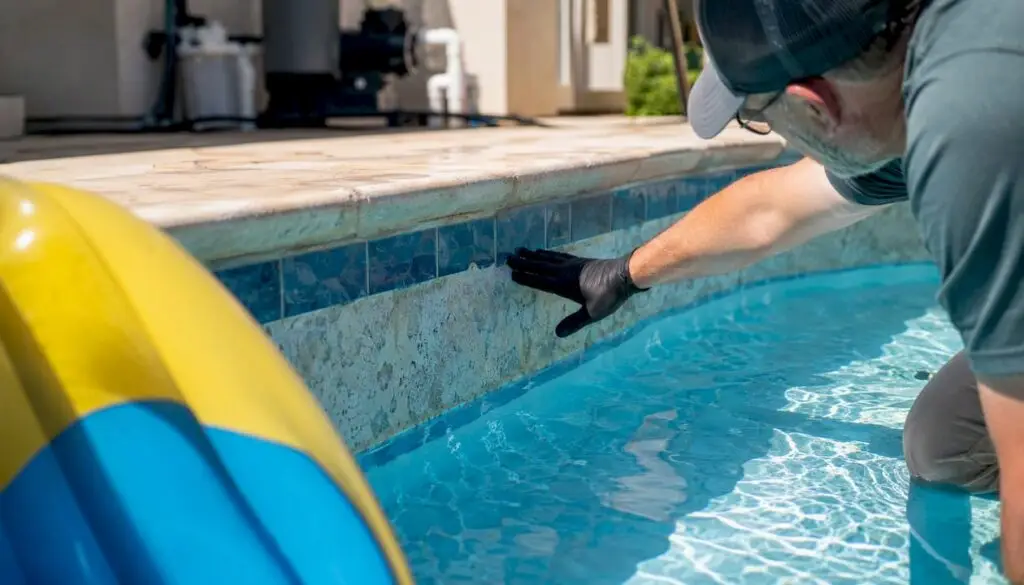
Buyers who look at a pool during a home tour are really evaluating three things: its physical condition, whether it fits the climate and neighborhood, and whether the ongoing costs are transparent. Get those three right and a pool is an asset. Get them wrong and it becomes the most expensive feature in the house to unwind.
Before you write an offer, expect to check or ask about:
- Water clarity and surface condition (plaster, pebble, tile)
- Coping and deck condition, including drainage
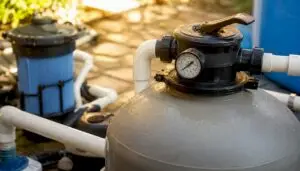
- Pump, filter, and heater operation
- Recent maintenance records and invoices
- Photos of the pool in use, not just closed for winter
- Fencing, gate latches, and other safety compliance items
- Signs of leaks or unusually low water levels
- Whether the pool matches what similar homes in the area have
A well-maintained pool with documented service history tends to support the home’s value. A neglected one, especially in a market where pools aren’t the norm, can just as easily scare off buyers or eat into your negotiating leverage.
Table of Contents
- What Buyers Look for in Pools During a Walkthrough
- Which Pool Systems Matter Most for Long-Term Cost?
- How Much Does Owning This Pool Actually Cost?
- Does a Pool Increase or Decrease Home Value?
- Should You Get a Separate Pool Inspection?
- What Safety and Insurance Details Should You Verify?
- What Red Flags Should Make You Walk Away?
- When Does Remodeling Make More Sense Than Walking Away?
- Are Slip Hazards and Lighting Bigger Risks Than Code Compliance?
- Do Local Permits and Regulations Affect What You Can Do With the Pool?
- What Do Water Test Results Actually Tell You?
- How Do You Estimate Future Repair Costs by Component Age?
- Why the Standard Pool-Buying Advice Misses the Point
- Turning a Dated Pool Into a Selling Point
- Frequently Asked Questions
- Sources
What Buyers Look for in Pools During a Walkthrough
A pool tells you a lot before you ever call an inspector. Visible signs of deferred maintenance make buyers suspect the home’s other systems have been neglected too, and that suspicion tends to spread to the roof, the HVAC, and everything else on your inspection list.
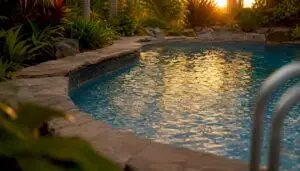
Start with the water. Cloudy or green water usually means the filtration system has been ignored, not just that nobody vacuumed recently. Run your eyes along the surface finish, whether it’s plaster, pebble, or tile, and look for cracking, staining, or rough patches that suggest the finish is near the end of its life.
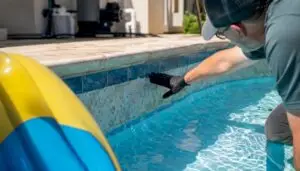
Then look down at the coping and deck. Gaps in the coping joint, cracked pavers, or a deck that’s visibly settling away from the shell are all worth flagging. The coping joint specifically deserves attention because missing mastic there lets water seep beneath the deck, causing damage you won’t see until it’s expensive.
If the pool is open, ask the seller or agent to run the pump. Listen for grinding or straining sounds, check that the heater fires, and confirm any automation or lighting works as advertised. If the pool is closed for the season, request recent photos from when it was in use, along with maintenance invoices, service history, and any equipment manuals or warranties still in force.
- Check water clarity and surface finish for cracks, stains, or roughness
- Inspect coping and deck for gaps, cracking, or settling
- Run the pump and heater; listen for unusual noise
- Request service invoices, warranties, and recent in-season photos
Pro Tip: A hairline surface crack you can barely see with your fingernail is usually cosmetic. A crack wide enough to slip a coin into, or one that runs through the tile line and into the shell, is a question for a structural specialist before you go any further.
Which Pool Systems Matter Most for Long-Term Cost?
Every pool is really a small mechanical system wrapped around a hole in the ground, and the equipment tells you more about future costs than the water does. Focus on six components:
- Pump and motor — the workhorse; older single-speed pumps cost more to run and wear out faster than variable-speed models.
- Filter type — sand, cartridge, or DE, each with different replacement schedules and costs.
- Heater — gas heaters are cheaper to install but pricier to run than heat pumps.
- Sanitation system — chlorine versus salt, which affects both maintenance routine and buyer appeal.
- Automation and controls — smart systems that manage chemical balance and scheduling remotely.
- Electrical panel and bonding — often overlooked, but a safety and code issue if it’s outdated.
Most of this equipment lasts somewhere between 8 and 15 years depending on use and climate, and mismatched sizing is a red flag worth asking about directly. A pump that’s too small for the pool’s volume runs constantly and burns out early; an oversized heater wastes energy every time it cycles.
Sanitation choice affects resale, too. Zillow data shows saltwater pools sell for roughly a 1.5% premium and close about two days faster than comparable chlorine pools, a small but real signal that buyers increasingly prefer lower-maintenance chemical systems. Ask when each major component was last serviced, whether any carries a manufacturer warranty, and whether automation is included in the sale or was added by the seller as a personal upgrade.
How Much Does Owning This Pool Actually Cost?
Routine upkeep runs through chemicals, energy, water, and service visits, whether you do it yourself or hire a company. Seasonal climates add opening and closing costs on top of that. BobVila’s cost breakdowns for inground and above-ground pools are a useful starting point for budgeting what a specific pool type typically runs annually.
Big-ticket items come with their own timelines: resurfacing every 10 to 15 years, heater replacement roughly on the same cycle, salt cell swaps every 3 to 7 years, and pump replacement somewhere in the 8 to 12 year range. Leak repairs are the wildcard. They’re cheap when caught early and expensive once they’ve undermined the deck or shell.
- Ask for the last 12 months of service invoices to estimate real monthly carry
- Add a seasonal reserve line for resurfacing or equipment replacement
- Factor energy costs separately if the heater or pump is older equipment
Pro Tip: Take the seller’s actual invoices, not an online average, and multiply the monthly service fee by twelve, then add one-tenth of a typical resurfacing quote as your annual reserve. That gives you a realistic all-in number to weigh against the asking price.
Does a Pool Increase or Decrease Home Value?
The honest answer is: it depends where you’re buying. Contributory value swings heavily based on climate and how common pools are in the neighborhood. In a warm-climate neighborhood where every third house has a pool, skipping one can actually make a listing harder to sell. In a cooler climate or a neighborhood where pools are rare, the same pool can narrow your buyer pool and complicate the appraisal.
Local data backs this up concretely. A 2026 Las Vegas market analysis found private in-ground pools typically add 4% to 8% of home value, with the exact figure shifting based on price tier and how saturated the area already is with pools. That range won’t hold in every market, which is why comparable sales matter more than a national rule of thumb.
- Warm climate, pool-common neighborhood: pool is close to expected; missing one can be a liability
- Cold climate, pool-rare neighborhood: pool narrows your buyer pool at resale
- Luxury tier: buyers often expect a pool as baseline, shifting the calculus again
Specific features move the needle further, as highlighted in Homes with Pool Temecula: Top Options for Buyers, which discusses local buyer priorities and how pools affect competitiveness in regional markets. Energy-efficient equipment, automation, updated finishes, and visible safety compliance all read as buyer-friendly upgrades, while a dated finish or loud, inefficient pump reads as deferred maintenance regardless of the pool’s actual age.
Should You Get a Separate Pool Inspection?
Yes, and it’s one of the cheapest insurance policies in the entire home-buying process. A standard home inspector often skips the pool entirely or only glances at it, missing plumbing leaks, filtration issues, and shell problems that require specialized knowledge to catch. A dedicated pool inspection typically runs $125 to $250 and covers the shell, plumbing, equipment, and structural indicators like the coping joint.
- Add a pool inspection contingency to your purchase offer, separate from the general home inspection.
- Request full maintenance records and recent photos of the pool in active use.
- Require a live equipment demonstration, pump and heater running, before you remove contingencies.
- Ask for warranties, resurfacing receipts, and any contractor invoices tied to major repairs.
If the inspection turns up defects, you generally have three negotiating paths: a credit at closing, a straight price reduction, or requiring the repair before close. Minor cosmetic issues usually justify a credit; structural or plumbing problems are worth requiring repair first, since sellers have more incentive to fix things properly before they’ve cashed out.
Pro Tip: If a seller resists letting you run the equipment or won’t produce recent invoices, treat that resistance itself as information. Sellers with well-maintained pools are almost always eager to show it off.
What Safety and Insurance Details Should You Verify?
Check fencing height and self-latching gates, compliant drain covers, and whether the pool has an automatic cover, alarm, or slip-resistant decking with adequate lighting. These aren’t optional extras; many jurisdictions require some combination of them, and insurers pay close attention to compliance.
A pool can shift how your homeowner’s policy is classified, sometimes raising premiums, and it introduces “attractive nuisance” liability that your insurance agent should walk through before you close.
- Confirm fencing, gate latches, and drain cover compliance
- Ask whether the pool triggers a policy reclassification or premium increase
- Check for slip-resistant surfaces and adequate nighttime lighting
Pro Tip: Secure fencing, a documented automatic cover, and any recorded safety upgrades tend to reduce insurance friction, sometimes enough to offset part of the premium increase a pool otherwise triggers.
What Red Flags Should Make You Walk Away?
Some issues are worth killing a deal over, or at minimum pausing until a specialist weighs in.
- Consistently low water levels suggesting an active leak
- Shell cracks wide enough to fit a coin into
- Missing or degraded coping that’s letting water intrude beneath the deck
- Heavy algae growth or visible long-term neglect
- Electrical components near the water that look outdated or improperly bonded
- No maintenance records at all, combined with a seller who won’t run the equipment
Any of these justifies bringing in a structural engineer or leak-detection specialist before you proceed further.
When Does Remodeling Make More Sense Than Walking Away?
A dated pool isn’t automatically a deal-breaker. In many cases, the smartest move for a buyer, or a seller trying to close the gap in negotiations, is targeted remodeling rather than a full teardown. Resurfacing, upgrading to a variable-speed pump, and adding basic automation tend to deliver outsized buyer-perceived value relative to their cost.
Not every upgrade is worth chasing, though. Elaborate water features or exotic finishes rarely recoup their cost in a typical resale, while a clean, modern surface finish almost always helps. If you’re weighing renovation against walking away, understanding pool renovation timing matters as much as the scope itself.
- Resurfacing and coping repair address both cosmetics and structural health
- Variable-speed pump upgrades cut operating costs immediately
- Automation and updated salt systems reduce hands-on maintenance time
Pro Tip: New LED lighting, a clean finish, and a simple automation upgrade are inexpensive relative to a full remodel, and they’re often exactly what closes the gap between a hesitant buyer and a signed offer.
Are Slip Hazards and Lighting Bigger Risks Than Code Compliance?
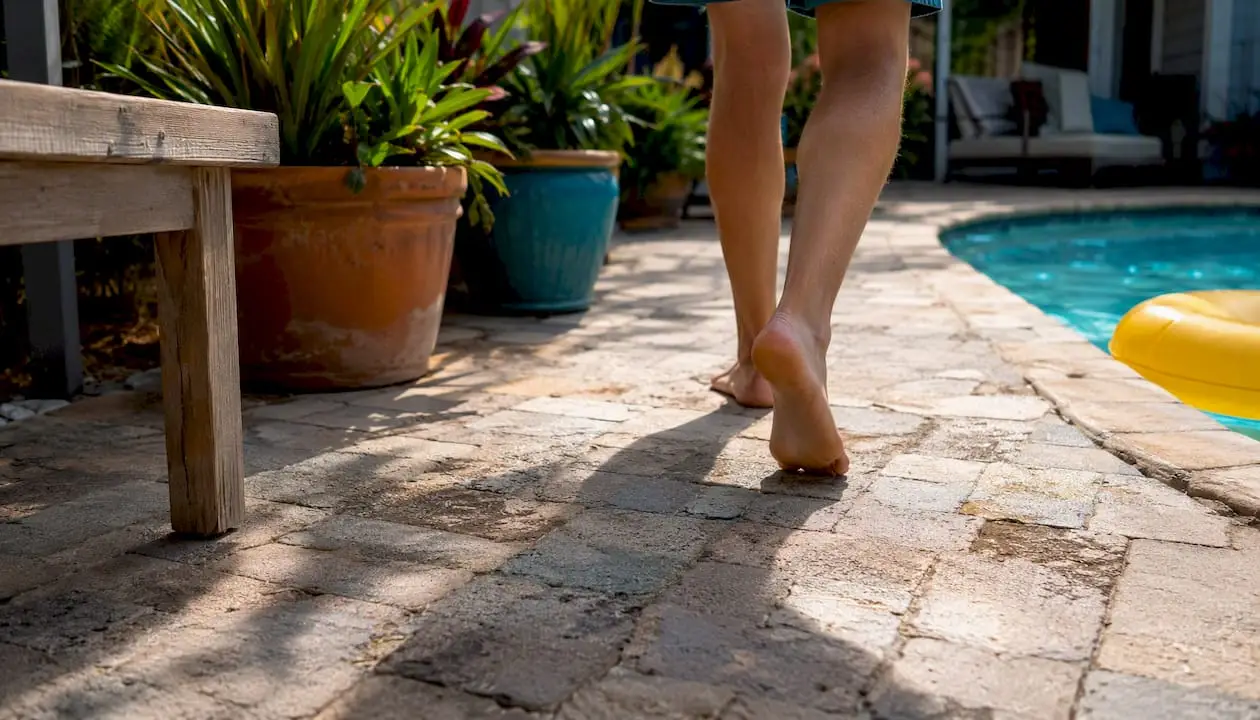
Meeting local safety code is the floor, not the ceiling. Plenty of pools pass inspection and still carry real hazards that a checklist won’t catch on paper. Walk the deck barefoot in your mind, literally, and look at the surface texture around the coping. Smooth stone or polished concrete that’s been worn glassy over the years is a slip risk regardless of whether it meets code.
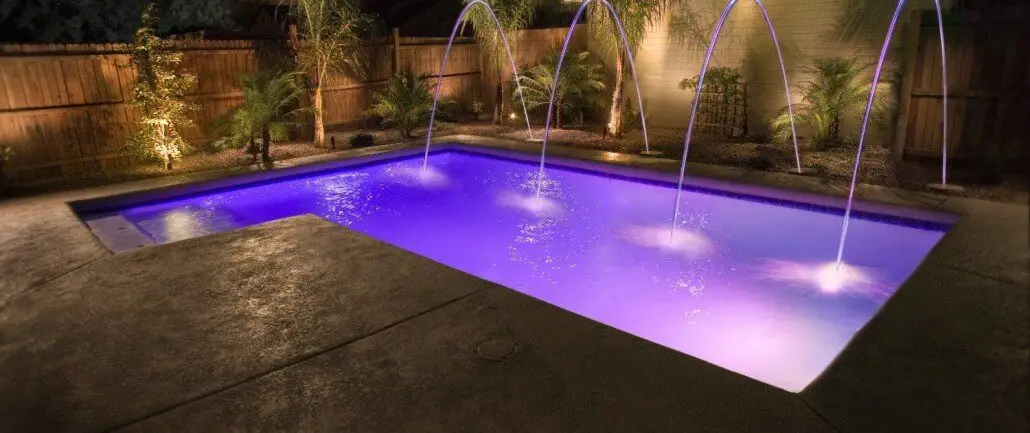
Lighting matters more than most buyers realize. Underwater lights that don’t work, or a deck with no path lighting at all, turn an evening swim into a liability, especially with kids or older family members using the space. Check that pool lights actually illuminate the deep end and that any pathway lighting still functions; replacement bulbs and fixtures are inexpensive compared to the injury risk of a dark, uneven deck edge.
Diving boards and rock features deserve a second look too. A diving board over water that’s shallower than the manufacturer’s spec, or a boulder feature with sharp, unprotected edges, isn’t necessarily a code violation but is absolutely a hazard worth negotiating or removing before you move in.
Ask directly whether the current owners have had any injuries or near-misses around the pool. It’s a blunt question, but sellers are typically candid, and the answer can surface issues no inspection checklist will flag on its own.
Do Local Permits and Regulations Affect What You Can Do With the Pool?
Every pool sits inside a web of local rules that determine what you can legally do with it after closing, and skipping this step is one of the more common mistakes buyers make. Ask your agent or the local building department whether the pool was permitted when it was built or last renovated. An unpermitted pool can complicate financing, future resale, and even insurance coverage.
Permitting history also affects what repairs you can make later. If the original pool was built before current fencing or drain-cover requirements took effect, a significant renovation can trigger a requirement to bring the entire pool up to current code, not just the section you’re fixing. That’s a meaningful cost difference between a simple resurfacing job and one that also demands a full fence rebuild.
Zoning matters too, particularly for setbacks from property lines and easements. If you’re picturing a future expansion, like adding a spa or extending the deck, check what the local jurisdiction allows before you assume it’s possible. Some municipalities have also tightened rules around pool draining and water usage in drought-prone regions, which can affect both maintenance costs and what future modifications are permitted.
What Do Water Test Results Actually Tell You?
If the pool is open and running, ask to see a recent water test or run a basic test strip yourself during the showing. The results tell you more about ongoing maintenance quality than a visual glance ever could.
pH readings consistently outside the 7.2 to 7.8 range suggest inconsistent chemical management, which over time corrodes equipment and degrades the surface finish faster than normal wear. Chlorine or salt levels that are chronically low point toward the algae and staining issues you may have already spotted on the walkthrough. Total alkalinity and calcium hardness matter too. Water that’s persistently out of balance on hardness can leave scaling on tile and equipment, while low alkalinity accelerates plaster erosion.
None of this is disqualifying on its own. Water chemistry is fixable in days, not months. But a pattern of poor water quality combined with visible surface wear tells you the maintenance problem has been ongoing rather than incidental, which should factor into how aggressively you negotiate repairs or a price adjustment.
How Do You Estimate Future Repair Costs by Component Age?
Every pool component has a rough shelf life, and knowing where a specific pool sits on that timeline helps you budget instead of guess. A pump nearing 10 years old is a near-term expense even if it’s currently running fine. A heater past 12 to 15 years is operating on borrowed time, especially a gas unit that’s seen heavy seasonal use.
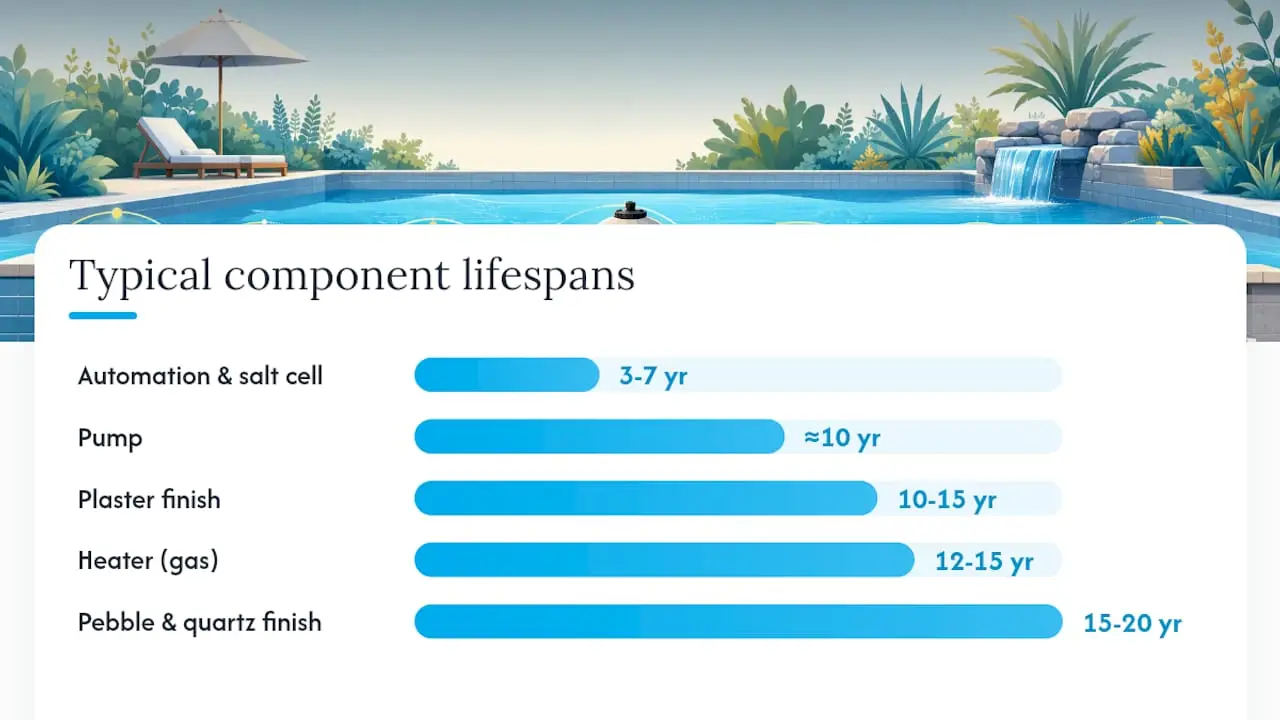
The shell itself follows a different clock depending on material. Plaster finishes typically need resurfacing in the 10 to 15 year range, while pebble and quartz finishes can often stretch past 15 to 20 years before they show similar wear. Ask when the pool was last resurfaced and match that against the visible surface condition. A finish that looks rough well before its expected lifespan suggests either poor water chemistry management or lower-quality original materials.
Automation and salt cells sit on shorter cycles, often needing replacement every 3 to 7 years, so factor those into your near-term budget even if everything looks fine on the walkthrough. The goal isn’t to price every component perfectly. It’s to walk into the offer knowing roughly which systems are due soon, so nothing catches you off guard in year two.
Buyers who evaluate a pool with condition, cost transparency, and neighborhood fit as the three filters make far fewer expensive mistakes than those who judge a pool on looks alone.
| Point | Details |
|---|---|
| Condition drives everything | A pool’s physical condition signals whether other home systems have been maintained too. |
| Get a specialized inspection | A dedicated pool inspection costs roughly $125 to $250 and catches issues a general home inspector misses. |
| Match value to your market | Contributory value depends on climate and neighborhood saturation, ranging from roughly 4% to 8% in some local markets. |
| Budget beyond monthly upkeep | Track routine chemical and energy costs alongside big-ticket items like resurfacing and pump replacement. |
| Remodeling can close the gap | Wefixuglypools notes that resurfacing, pump upgrades, and automation deliver strong buyer-perceived value without over-improving. |
Where to Learn More
- NAR’s pool-buying guidance covers inspection basics and structural warning signs.
- Realtor tracks pricing trends nationally.
- BobVila’s cost guide breaks down installation and maintenance expenses.
- Pool Magazine’s market analysis explains why pool-ready homes retain appeal.
These are starting points; questions specific to your local appraisal district or permitting office deserve a direct call, not a blog post.
Why the Standard Pool-Buying Advice Misses the Point
Most guides treat a pool purchase like a checklist exercise: verify the fence, check the pump, done. That’s necessary but shallow. The research consistently points somewhere else. It’s not the individual defects that matter most, it’s what a pattern of neglect signals about everything else in the house.
A pool with missing coping mastic and a struggling pump isn’t just a $15,000 problem. It’s evidence the sellers deferred maintenance broadly, which should make you look harder at the roof and the HVAC too. Conventional advice treats the pool as an isolated line item on the inspection report, when it’s really a diagnostic tool for the whole property.
I’d also push back on the idea that pools are universally good or bad investments. The honest framing is conditional: good in the right climate and neighborhood, a liability everywhere else, and the difference has nothing to do with how nice the water looks on tour day.
If you take one thing from this, prioritize the maintenance paper trail over the cosmetic walkthrough. Photos and invoices don’t lie the way a freshly vacuumed pool can.
Turning a Dated Pool Into a Selling Point
If the walkthrough left you staring at a tired finish, a struggling pump, or a deck that’s seen better days, you don’t have to walk away or inherit someone else’s deferred maintenance. Wefixuglypools has spent over a decade in the Greater Phoenix area doing exactly one thing: turning ugly, outdated pools into features that actually add value instead of subtracting it.
Unlike a general contractor juggling multiple trades, resurfacing, equipment upgrades, and custom features are the entire business, which means faster turnaround and fewer surprises mid-project. Whether you’ve already closed on a fixer-upper pool or you’re still negotiating repair credits, Wefixuglypools’s remodeling services can scope the work and give you a real number to plan around instead of a rough guess. Get a project quote and find out what your specific pool would take to go from liability to asset.
Frequently Asked Questions
What do buyers look for in pools most often?
Buyers focus on visible condition first (surface finish, water clarity, coping), then equipment function, then documentation like maintenance records and warranties.
Is a pool a good investment when buying a home?
It depends on climate and neighborhood norms. In warm markets where pools are common, they typically support value; in cooler or pool-rare markets, they can narrow your buyer pool later.
Should I get a separate pool inspection when buying a house?
Yes. A specialized pool inspection, typically $125 to $250, catches plumbing, shell, and equipment issues a standard home inspector often misses entirely.
What are the biggest red flags when buying a home with a pool?
Low water levels suggesting a leak, coin-wide shell cracks, missing coping mastic, heavy algae, and a seller who won’t run the equipment or provide maintenance invoices.
How much does it cost to maintain a pool after buying a home?
Costs vary by equipment age and pool type, covering chemicals, energy, routine service, and periodic big-ticket items like resurfacing or pump replacement roughly every 8 to 15 years.
This article is general information, not a substitute for advice from a qualified financial advisor. Consult a qualified financial professional about your own circumstances before acting on anything here.
Sources
- Buying a Home With a Pool? Here’s What You Need to Know
- Realtor
- Does a Pool Increase Home Value? | iBuyer
- Buying a house with a swimming pool (BobVila)
- Pool Homes in Las Vegas — A 2026 Buyer’s Guide