The best kid-friendly pool design examples share three non-negotiable traits: gradual depth transitions, layered safety systems, and clearly defined activity zones. In the pool industry, this approach is called family aquatic design, and it goes far beyond adding a shallow end. The right design keeps toddlers safe, gives older kids room to swim hard, and gives parents clear sightlines from inside the house. Done well, it also looks beautiful. This article walks you through every feature, zone strategy, and material choice that makes a family pool both safe and worth showing off.
1. What are the essential kid-friendly pool features explained?
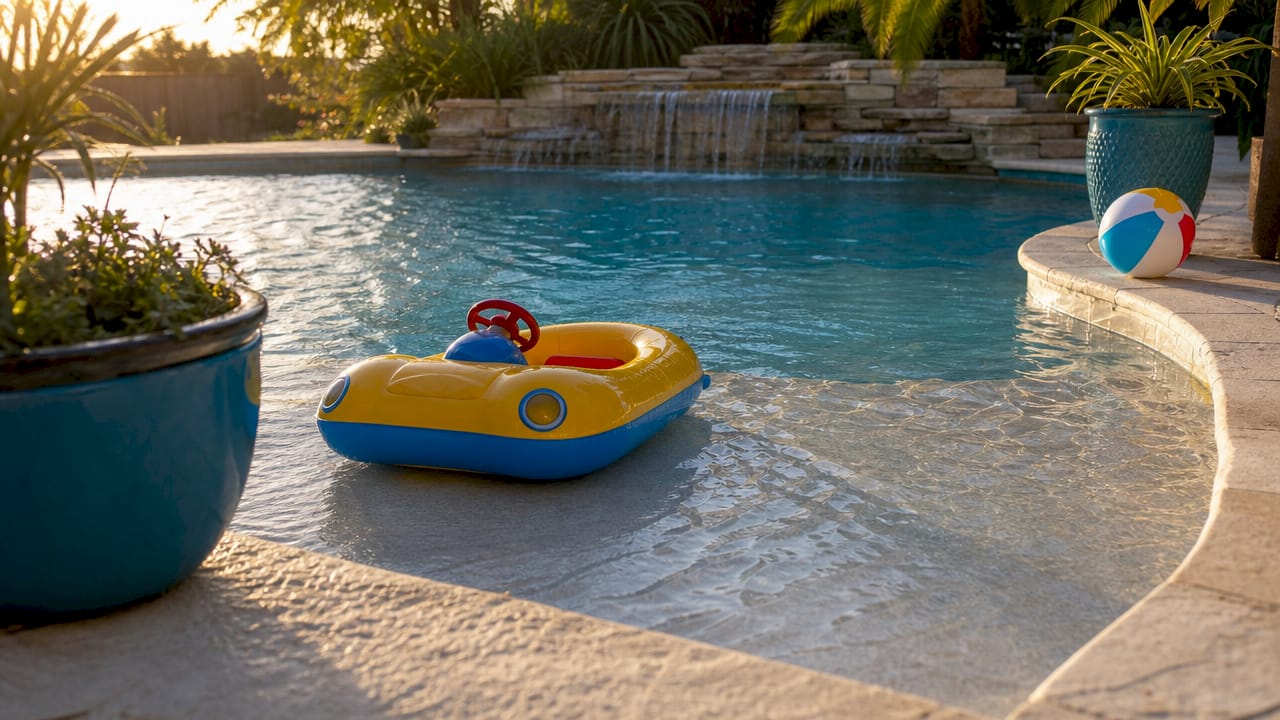
The foundation of any safe family pool is depth control. A dedicated children’s play zone should start at 6 inches and slope gradually to a maximum of 3 feet, eliminating sudden drop-offs that catch young swimmers off guard. That gradual slope also builds water confidence in children who are just learning to swim.
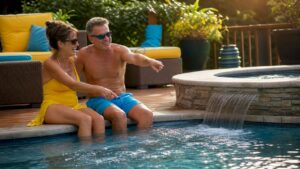
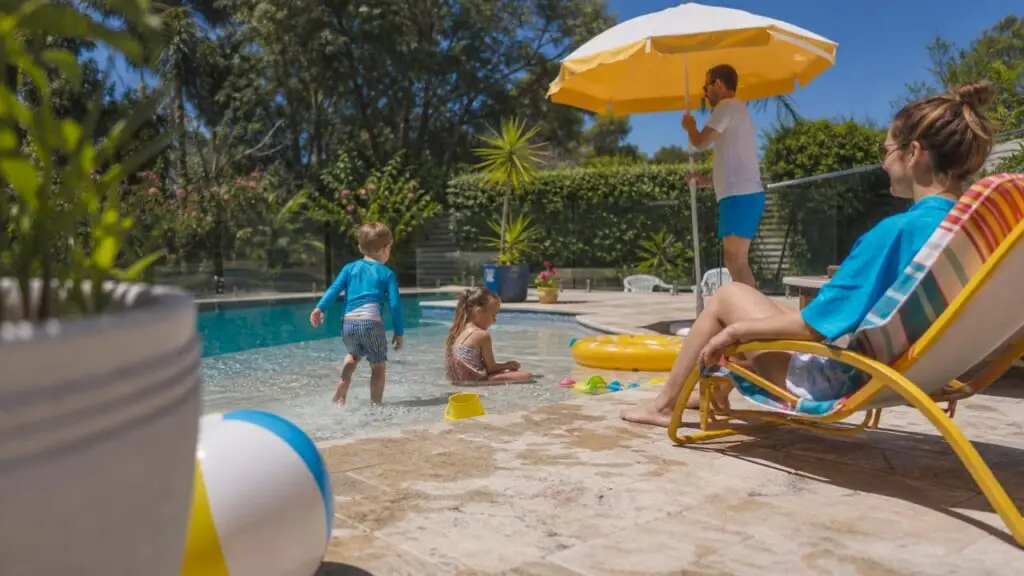
The Baja shelf, also called a sun shelf or tanning ledge, is the single most requested feature in family aquatic design. Baja shelves sit at 6–12 inches of water depth, making them safe for toddlers to splash in while a parent watches from a lounge chair placed directly on the shelf. They double as a supervision station and a play area at the same time.
Non-slip decking is not optional. Textured concrete, brushed travertine, and tumbled pavers all reduce slip risk without looking industrial. Pair the decking with contrasting tile colors on pool steps and edges. Contrasting tile on steps communicates depth changes visually, helping children understand where the water gets deeper before they feel it.
Layered pool safety combines physical barriers, visibility, and alarms into a system that outperforms any single measure. That means a four-sided fence with a self-latching gate, a pool alarm, and open sightlines from your kitchen or patio. No single feature replaces the others.
- Baja shelf or sun shelf: 6–12 inches deep, serves as toddler splash zone and adult lounge
- Gradual depth slope: starts at 6 inches, reaches no more than 3 feet in the children’s zone
- Non-slip decking: textured travertine, brushed concrete, or tumbled pavers
- Contrasting tile: marks steps and depth changes with a different tile color for visual clarity
- Four-sided fencing: self-latching gate, minimum 4-foot height, no footholds on the exterior
- Pool alarm: surface wave sensors or subsurface motion detectors add a backup layer
- Open sightlines: no tall hedges, walls, or structures blocking the view from indoors
Pro Tip: Choose water features like gentle bubblers and low-arc fountains over high-pressure jets. Sensory-friendly water movement keeps young children calm and engaged without startling them.
2. How to design pool zones for family-friendly function and safety
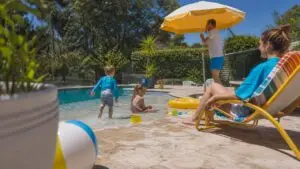
Zoning is the most underused tool in family aquatic design. Dividing the pool into shallow play zones, active swim zones, and relaxation zones reduces conflicts between children of different ages and cuts safety risks significantly. A toddler splashing on a Baja shelf and a teenager doing laps need different spaces, and a well-zoned pool gives both.
Here is how to structure the three core zones:
- Shallow play zone (0–3 feet): Place this zone at the entry point of the pool. Include the Baja shelf, a splash pad area, and gentle water features like bubblers. This is where toddlers and young children spend most of their time.
- Active swim zone (3.5–5 feet): This is the main body of the pool. Keep it open for lap swimming, games, and general family use. Avoid placing obstacles or features in this zone that could cause collisions.
- Relaxation zone: Position a spa, tanning ledge, or seating bench at the far end or along one side. Adults can supervise from here while staying in the water.
- Visual separation over physical barriers: Use changes in tile color, water depth, or a subtle step to signal zone transitions. Physical barriers like ropes work for lap swimming but can create entanglement risks for young children.
- Landscaping as a safety tool: Soft, non-toxic shrubbery placed along the pool perimeter reduces hazards without blocking sightlines. Avoid thorny plants, sharp ornamental grasses, or tall hedges near the pool edge.
Pro Tip: Plan your pool landscaping before the pool is built, not after. Landscaping decisions affect drainage, sightlines, and how much usable deck space you actually have.
Maintaining unobstructed sightlines from indoor living areas is a primary safety design objective. Position the pool so your kitchen window or living room door faces the shallow play zone directly. That single design decision reduces supervision gaps more than almost any other choice.
3. What kid-friendly pool design examples balance safety with style?
Safety and style are not competing priorities. Slip-resistant natural stone, textured pavers, water bubblers, and modern fencing all enhance safety while contributing to a high-end backyard aesthetic. The key is choosing materials that serve both functions simultaneously.
Here are the design elements that deliver both:
- Slip-resistant travertine or limestone: These natural stones look elegant and provide grip when wet. Tumbled or brushed finishes add texture without looking utilitarian.
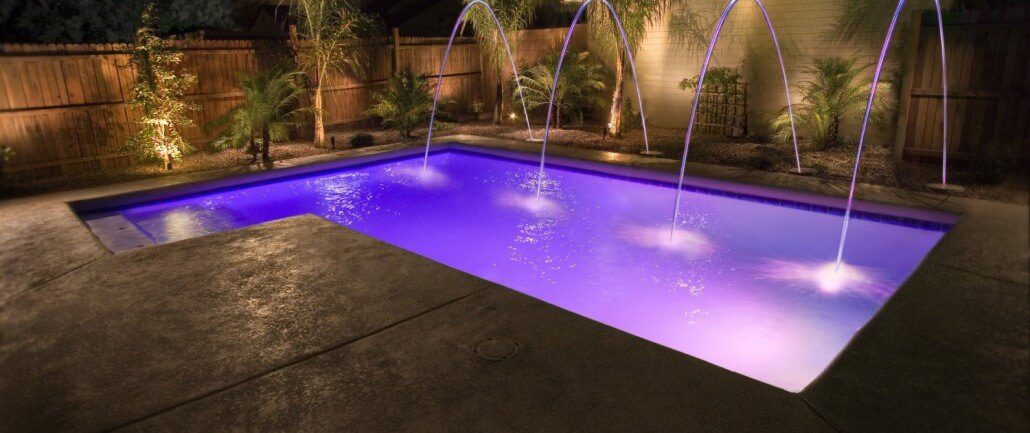
- Gentle water features: Low-arc bubblers, sheet waterfalls, and rain curtains add visual interest and sound without creating turbulence. They are safe for young children and look stunning in photos.
- Integrated LED lighting: Underwater LED lights in warm white or soft blue tones make the pool safe to use at dusk and add a resort-quality look. Explore pool lighting options to find fixtures that complement your tile choice.
- Modern glass or aluminum fencing: Frameless glass panels provide full visibility into the pool area while meeting safety code requirements. They disappear visually, keeping the backyard looking open and clean.
- Shade structures: Pergolas, sail shades, and cantilever umbrellas protect children from sun exposure and create defined seating areas that anchor the outdoor space.
| Design Element | Safety Benefit | Style Contribution |
|---|---|---|
| Textured travertine decking | Reduces slip risk on wet surfaces | Natural, warm tone that complements pool tile |
| Contrasting step tile | Communicates depth changes visually | Creates a polished, intentional design detail |
| Frameless glass fencing | Maintains full sightlines | Keeps backyard visually open and modern |
| Low-arc water bubblers | Sensory-friendly, no turbulence | Adds movement and sound without clutter |
| Integrated LED lighting | Improves visibility at dusk | Creates resort-quality ambiance |
The most successful family pools treat safety features as design features. A frameless glass fence is not a compromise. It is a design choice that happens to be safe.
4. How can you future-proof your kid-friendly pool design?
A pool built for a three-year-old should still work well when that child is sixteen. Multi-depth layouts and flexible features support the full arc from toddler to teen to adult, reducing the need for costly renovations along the way. Planning for that arc at the design stage costs far less than retrofitting later.
- Multi-depth layouts: A pool that transitions from 6 inches to 5 feet serves every age group. Toddlers use the shallow end, school-age children use the mid-depth zone, and teens and adults use the deep end for diving or lap swimming.
- Tanning ledge versatility: The Baja shelf that serves as a toddler splash zone in year one becomes an adult lounge area in year ten. Its function shifts with the family without any physical changes to the pool.
- Swim lane planning: Leave enough open length in the active swim zone to add lane lines when children reach competitive swimming age. A 30-foot minimum length accommodates basic lap training.
- Sports zone additions: Volleyball nets, basketball hoops, and water polo goals can be added to an open swim zone as children grow. Design the zone without permanent obstacles so these additions are easy to install and remove.
- Durable, low-maintenance materials: Pebble Tec and quartz finishes last significantly longer than standard plaster and require less chemical maintenance. Choosing them at build time avoids a full replaster within the first decade.
- Safety upgrade pathways: Design the fence post footings to accept a gate alarm retrofit. Install conduit during construction so you can add underwater cameras or surface alarms later without breaking concrete.
The families who get the most value from their pools are the ones who think ten years ahead during the design phase. A pool that needs a major renovation every five years is not a family asset. It is a recurring expense.
Key takeaways
The most effective family pool designs combine layered safety, zoned depth, and durable materials from the start, making costly future renovations far less likely.
| Point | Details |
|---|---|
| Layered safety outperforms single measures | Combine fencing, alarms, and open sightlines rather than relying on any one feature. |
| Depth control is the first safety decision | Start the children’s zone at 6 inches and slope gradually to no more than 3 feet. |
| Zoning reduces conflict and risk | Separate shallow play, active swim, and relaxation areas to serve all ages safely. |
| Safety features can be design features | Frameless glass fencing, contrasting tile, and textured stone are both safe and stylish. |
| Future-proof at the design stage | Multi-depth layouts and flexible features like tanning ledges adapt as children grow. |
What I have learned from years of watching families use their pools
The most common mistake I see is parents treating pool safety as a checklist rather than a system. They install a fence, check the box, and assume the job is done. What actually keeps children safe is the combination of that fence, clear sightlines from the kitchen, a pool alarm, and a shallow zone that gives young swimmers a place to stand. Remove any one of those layers and the system weakens.
The second mistake is designing only for the child’s current age. I have watched families spend money on a toddler splash zone, then tear it out four years later because their kids outgrew it. A Baja shelf does not need to be removed. It just needs to be repurposed. The families who plan for that transition from the start never have to make that call.
Style and safety genuinely do not conflict. The most beautiful family pools I have seen are also the safest ones. Frameless glass fencing, natural stone decking, and soft water features are not compromises. They are the right choices for both reasons at once. If a designer tells you that you have to sacrifice one for the other, find a different designer.
My honest advice: spend the extra time at the planning stage. Map out where your children will be in five years and ten years. Design the pool for that family, not just the one you have today. The cost difference at build time is small. The cost difference at renovation time is not.
— Brian
Wefixuglypools and your family’s next pool project
Families across the Greater Phoenix area have trusted Wefixuglypools for over a decade to turn outdated, unsafe pools into spaces the whole family actually uses. Our team specializes in pool remodeling and custom builds that incorporate every feature covered here, from Baja shelves and gradual depth transitions to frameless glass fencing and integrated lighting.
Whether you are starting from scratch or updating an existing pool in Surprise or Scottsdale, we bring the same attention to safety, materials, and long-term design thinking to every project. Our custom pool features include water bubblers, tanning ledges, non-slip decking, and modern fencing options that work for families at every stage. Contact Wefixuglypools to talk through your family’s needs and get a design that grows with you.
FAQ
What depth is safe for a children’s pool zone?
A children’s play zone should start at approximately 6 inches and slope gradually to a maximum of 3 feet. That range eliminates sudden drop-offs and supports water confidence in young swimmers.
What is a Baja shelf and why does it matter for families?
A Baja shelf, also called a sun shelf or tanning ledge, is a shallow platform set at 6–12 inches of water depth. It serves as a toddler splash zone and a supervision spot for adults at the same time.
How does layered pool safety work?
Layered pool safety combines physical barriers like fencing, open sightlines from the house, and alarms into one system. Each layer covers the gaps left by the others, making the overall setup far more effective than any single measure.
Can a family pool look stylish and still be safe?
Yes. Slip-resistant natural stone, frameless glass fencing, contrasting tile on steps, and low-arc water features all meet safety standards while contributing to a high-end backyard design.
How do I future-proof a pool for growing children?
Design a multi-depth layout that serves toddlers through adults, choose a Baja shelf that transitions from splash zone to adult lounge, and leave open swim lane length for future lap training or sports features.