Weekly pool service is the most effective way to keep your pool clean, safe, and in proper working order. Skipping even one or two visits creates a cascade of problems: chemical imbalances, debris buildup, and equipment strain that compound quickly. The industry term for this routine is preventive pool maintenance, and it covers water testing, surface cleaning, filter checks, and equipment inspection on a seven-day cycle. Pools in hot, sunny climates like Phoenix face even faster chemistry swings, making the weekly interval a practical necessity rather than a preference. This guide explains exactly what that service includes, what goes wrong without it, and how consistent care protects your investment.
Why pools need weekly service: the core answer
Weekly pool service is defined as a structured, recurring maintenance visit that keeps water chemistry, surfaces, and equipment within safe operating ranges. A standard visit takes 15 to 30 minutes and follows a 10-step inspection process. That may sound brief, but the value is in the frequency. Seven days is roughly the maximum window before chemical levels drift far enough to cause visible damage or create health risks.
Pool water is not static. Sunlight burns off chlorine. Bathers introduce contaminants. Rain dilutes chemicals. Heat accelerates evaporation and speeds up bacterial growth. Each of these forces acts on your pool every single day, which is why a monthly or biweekly schedule simply cannot keep up. Weekly service resets the balance before problems take hold.
Pro Tip: Ask your pool technician to leave a written service report after every visit. If a task is not documented, it effectively did not happen in service quality terms, and you lose the ability to track gradual equipment changes over time.
What does a standard weekly pool service include?
A professional weekly visit follows a consistent sequence. Each step targets a specific failure point that, if ignored, leads to a larger problem.
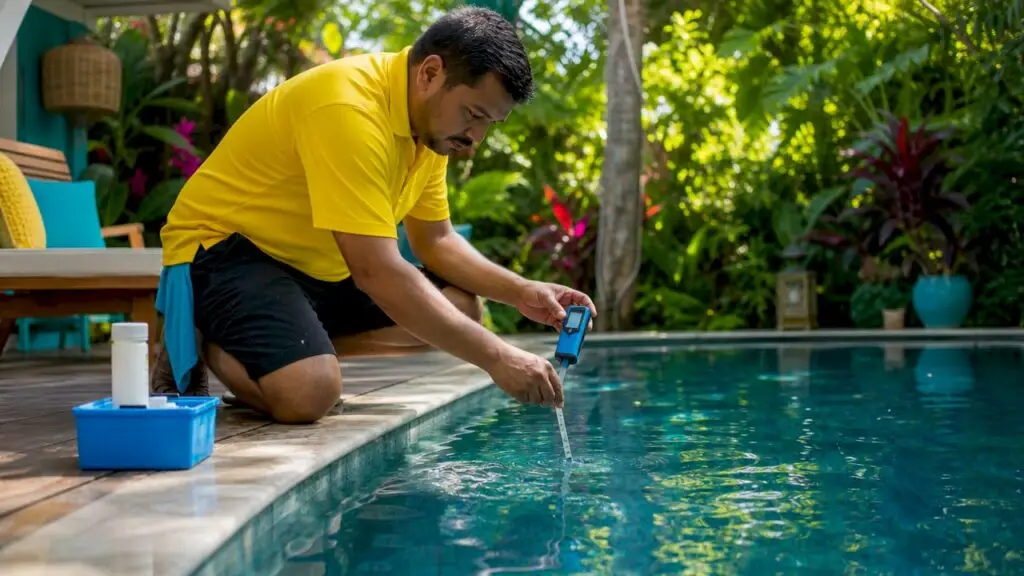
- Water testing. The technician tests pH, chlorine, alkalinity, calcium hardness, and cyanuric acid levels. Results drive every chemical adjustment made during that visit.
- Chemical balancing. Based on test results, the technician adds the correct chemicals in the correct order. Guessing or skipping this step causes plaster erosion and scale buildup that shortens the life of your pool finish.
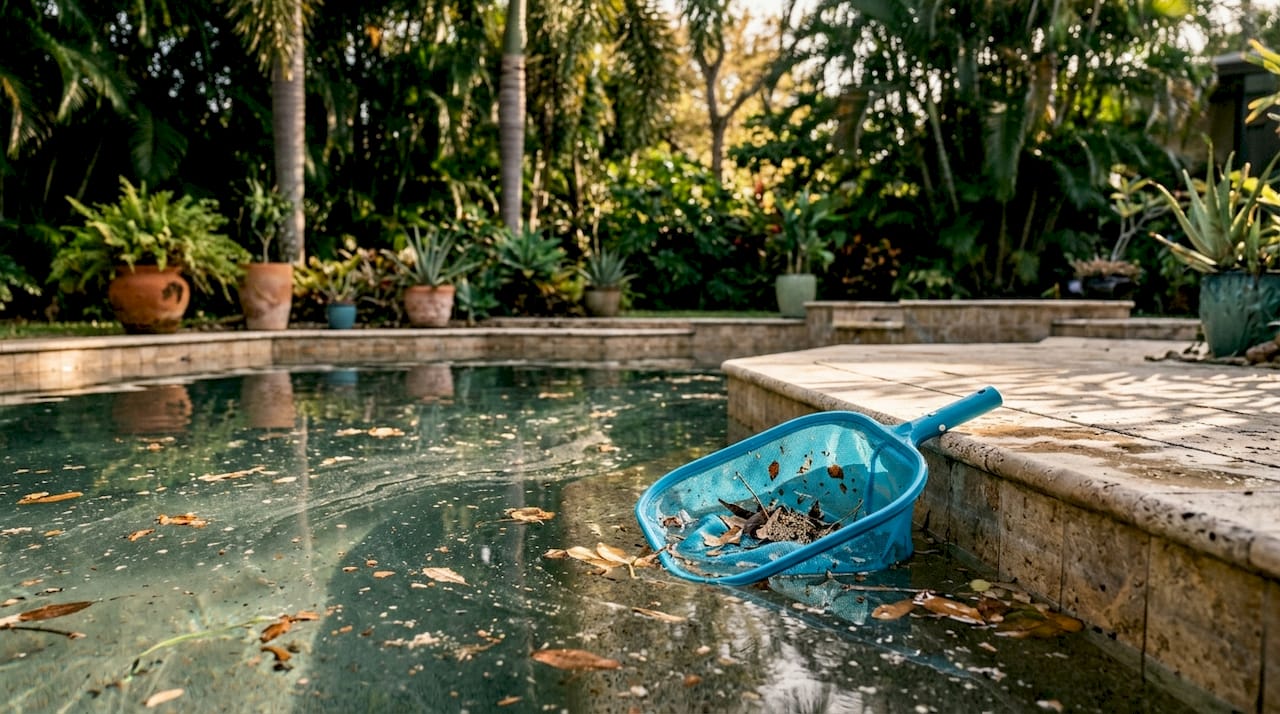
- Skimmer and basket cleaning. Clogged skimmer baskets restrict water flow, forcing the pump to work harder and shortening its lifespan.
- Brushing walls, steps, and tiles. Brushing removes biofilm before it hardens into algae or staining. Regular brushing prevents pool surfaces from becoming porous and trapping dirt permanently.
- Vacuuming the pool floor. Debris that settles on the floor begins releasing tannins within 24 hours. Those tannins cause stains that no amount of scrubbing can fully reverse.
- Filter inspection. The technician checks filter pressure and flow rate. A filter running above its normal pressure range signals a clog that reduces circulation and creates dead zones where algae thrive.
- Equipment pad walkthrough. This is where silent failures get caught early. Small leaks, unusual pump noises, and corroded fittings are visible during a careful walkthrough before they become expensive repairs.
- Water level check. Normal water loss is about 1/4 inch per day from evaporation. Consistent excess loss signals a leak in the plumbing or shell that needs professional attention before it causes soil erosion or structural damage.
- Detailed service notes. Quality technicians log every reading and observation. These records reveal trends, like a pump that runs slightly hotter each week, before the pump fails entirely.
- Final visual inspection. A trained eye scans for discoloration, surface cracks, and any changes since the last visit.
What happens when you skip weekly maintenance?
Neglecting regular pool care does not just mean a dirty pool. It means accelerating damage to every surface and component in the system.
- Irreversible staining. Organic debris left on pool surfaces for more than 24 hours releases tannins that bond to plaster. Once those stains set, chemical treatments alone rarely remove them fully.
- Plaster degradation. Poor water chemistry damages pool finishes, causing either erosion from low pH or rough scale deposits from high calcium. Both conditions shorten the life of your plaster by years.
- Algae blooms. Dead zones with weak water circulation create ideal conditions for algae. Once algae establishes itself, clearing it requires shock treatments, extended downtime, and often a full brush-and-vacuum cycle that takes days.
- Equipment failure. Leaking fittings and worn mechanical seals start as minor issues. Left unchecked, they escalate into pump replacements or full equipment pad overhauls.
- Major repair bills. Repairs like skimmer replacement cost $1,200 to $3,000. That figure represents months of weekly service fees for a single repair that consistent maintenance could have prevented.
The cost math is straightforward. Regular service fees are predictable and modest. Emergency repairs are unpredictable and expensive. Homeowners who treat weekly service as optional often discover this the hard way after their first major repair. For a closer look at the most common repairs and how to avoid them, the pool repairs to avoid guide from Wefixuglypools covers the specifics in detail.
How does climate affect how often you should service a pool?
Environmental conditions are the single biggest driver of maintenance frequency. In hot, sunny regions, the forces acting on your pool chemistry are relentless.
- Heat destabilizes chlorine. High summer temperatures accelerate chlorine consumption dramatically. A pool that holds a safe chlorine level on monday can drop to zero by thursday in peak Arizona heat.
- UV exposure depletes chemicals faster. Ultraviolet rays break down free chlorine and degrade certain equipment seals and gaskets over time. Pools without a stabilizer like cyanuric acid lose chlorine even faster under direct sun.
- Local foliage and dust add debris load. Trees, shrubs, and desert dust contribute organic material that settles on pool surfaces daily. Chemistry swings and debris loads are higher in hotter, sunnier climates, which is exactly why weekly service is calibrated to those conditions.
- Seasonal usage changes maintenance priorities. Summer pools with heavy bather loads need more frequent chemical adjustments. Winter pools in mild climates still need regular checks because algae grows in cool water and equipment can degrade without use.
- Water evaporation signals hidden leaks. Evaporation is normal, but excess water loss above the standard 1/4 inch per day threshold points to a leak in pipes or fittings. Catching this early during a weekly visit prevents costly soil erosion and foundation damage.
Pro Tip: Run your pool pump during off-peak hours in summer, typically early morning or late evening, to reduce heat stress on the motor and cut energy costs. Your technician can help you set the right run time for your pool’s volume.
How does weekly service protect pool equipment and appearance?
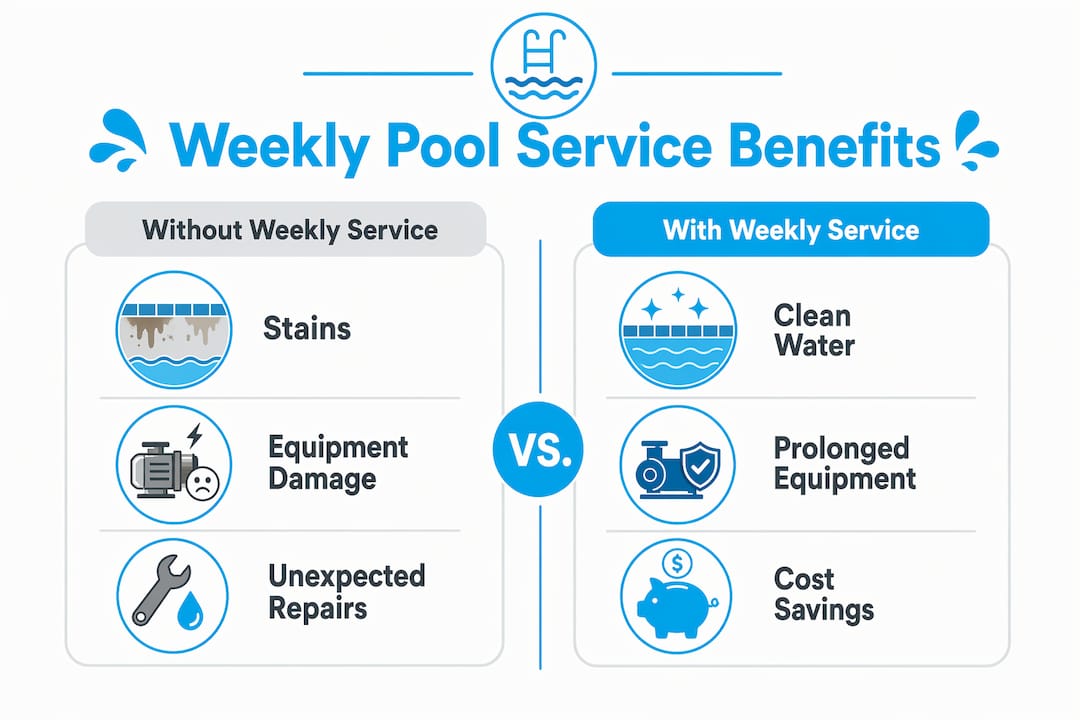
Consistent weekly care extends the life of every component in your pool system. The connection between maintenance frequency and equipment longevity is direct.
| Equipment or Surface | Risk Without Weekly Service | Benefit of Weekly Care |
|---|---|---|
| Pool plaster | Erosion from low pH or scale from high calcium | Stable chemistry preserves finish for its full lifespan |
| Pump and motor | Overwork from clogged baskets and low flow | Clean baskets and proper flow reduce motor strain |
| Filter | Pressure buildup from debris accumulation | Regular pressure checks prevent blowouts and extend media life |
| Skimmer and fittings | Leaks escalate from minor drips to structural damage | Early detection during equipment pad walkthrough |
| Tile and waterline | Calcium scale and organic staining | Weekly brushing keeps surfaces clean and non-porous |
Detailed service records are the backbone of proactive equipment management. When a technician notes that filter pressure is trending upward over several weeks, that data triggers a backwash or media replacement before the filter fails. Without those records, the first sign of trouble is often a broken component rather than a warning. Wefixuglypools builds this kind of documentation into every service visit, giving homeowners a clear picture of their pool’s condition over time. You can also review the neglected pool repair priorities guide for a practical breakdown of what deferred maintenance actually costs.
Key Takeaways
Weekly pool service is the most cost-effective way to prevent staining, equipment failure, and expensive repairs by keeping water chemistry and surfaces within safe ranges every seven days.
| Point | Details |
|---|---|
| Weekly interval is not arbitrary | Seven days is the maximum window before chemistry drifts into damaging ranges. |
| Debris causes permanent staining | Organic material left over 24 hours bonds to plaster and cannot be fully reversed. |
| Climate accelerates maintenance needs | Heat and UV exposure in sunny climates deplete chemicals and stress equipment faster. |
| Service records enable proactive care | Documented trends catch equipment decline before it becomes a costly failure. |
| Skipping service is expensive | Single repairs like skimmer replacement cost $1,200 to $3,000, far exceeding regular service fees. |
What I’ve learned after years of watching pools age
I’ve seen the same pattern repeat itself more times than I can count. A homeowner decides to cut back on service visits to save money. The pool looks fine for a few weeks. Then the water turns cloudy, a stain appears on the steps, and by the time they call us, the repair bill is three times what they saved.
The misconception I hear most often is that weekly service is a luxury for people who want a perfect-looking pool. That framing misses the point entirely. Weekly service is preventive maintenance for a mechanical system that operates under constant chemical and environmental stress. You would not skip oil changes on your car for months and expect no consequences.
What separates quality weekly service from a basic visit is the documentation. Any technician can add chemicals and leave. A professional records every reading, flags every anomaly, and builds a service history that tells you exactly how your pool is aging. That history is what allows us to say, “Your pump is showing early signs of wear” before the pump dies on the hottest weekend of the year.
Consistency also matters more than perfection. A pool that receives reliable weekly service from an average technician will outlast a pool that gets sporadic visits from an excellent one. The chemistry does not care how skilled your technician is if they only show up every three weeks.
— Brian
Your pool deserves professional care it can count on
A well-maintained pool does not happen by accident. It takes consistent, skilled attention every single week to keep the water safe, the surfaces clean, and the equipment running properly.

At Wefixuglypools, we bring over a decade of hands-on experience to every pool we service in the Greater Phoenix area. Whether your pool needs regular weekly maintenance or a full pool remodeling and restoration, our team has the expertise to protect your investment and keep your backyard looking its best. If your pool has already suffered from years of neglect, our custom pool renovation services can bring it back to life. Reach out to Wefixuglypools today and let us show you what consistent, professional care looks like.
FAQ
Why do pools need weekly service instead of monthly?
Pool chemistry drifts into damaging ranges within seven days under normal conditions. Monthly service leaves too large a gap for heat, UV exposure, and bather load to destabilize water quality without correction.
What causes pool staining?
Organic debris left on pool surfaces for more than 24 hours releases tannins that bond permanently to plaster. Metal contamination and poor chemical balance also cause staining that worsens without weekly brushing and vacuuming.
How does weekly service prevent pool equipment failure?
Weekly equipment pad walkthroughs catch small leaks, worn seals, and pressure irregularities before they cause major damage. Early detection during routine visits costs far less than emergency repairs or full component replacements.
What causes pool disrepair in Arizona specifically?
High temperatures and intense UV exposure accelerate chlorine depletion, stress equipment seals, and increase debris load from local foliage and dust. These conditions make weekly service a necessity rather than an option in the Greater Phoenix area.
How often should a pool be professionally serviced?
Most pools require professional service once per week. Pools with heavy bather loads, significant tree coverage, or exposure to extreme heat may benefit from more frequent visits during peak summer months.