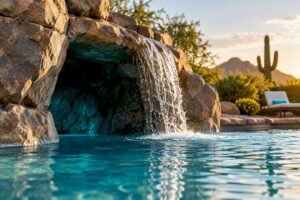
For most tight backyards, a plunge pool, spool (spa plus pool), or a compact modular shell beats a full-size build every time. These designs fit footprints as small as 48 square feet, install faster than traditional pools, and cost less to run. If budget is the hard limit, a stock tank or above-ground pool gets you swimming for a fraction of the price. Either way, plan access and one high-value feature (a bench, swim jet, or heater) before you break ground.
TL;DR:
- Access considerations overwhelmingly determine feasible pool types, with narrow gates and slopes favoring fiberglass or precast shells over in-ground options.
- Installing a pool close to the house or property line in small yards benefits from corner placement and layered lighting to enhance perceived space.
- Smaller pools typically cost between $600 and $50,000 depending on shell type, site access, and added features like heaters or jets, with installation times ranging from a weekend to several months.
- Safety measures, including fencing, pool alarms, and textured non-slip decking, are especially critical in tight yards due to limited buffer space and higher fall risks.
- Prioritizing access and primary use decisions before design details can significantly impact overall costs and usability, with equipment accessibility being a key factor.
Table of Contents
- Top Small Backyard Pool Ideas for Tight Yards
- How to Choose the Right Small Pool for Your Yard
- Design Moves That Make a Small Pool Feel Bigger
- Realistic Costs and Timelines for 2026
- Installation Constraints and Practical Access Solutions
- Why Small Pools Cost Less to Maintain
- Proof That Small Pools Work: Real Transformations
- Safety Considerations Specific to Small Pools
- Our Take: What Actually Matters When Space Is Tight
- Get a Site Assessment for Your Small Backyard Pool
- Sources
Top Small Backyard Pool Ideas for Tight Yards
Not every small yard needs the same solution. Your lot shape, your budget, and how you actually plan to use the water should drive the decision, not what looks good on a mood board. Here’s how the main options stack up against each other.
- Plunge or cocktail pools. These typically run 6 to 12 feet wide and 10 to 22 feet long, with depths of 3.5 to 5 feet, and most stay under 400 square feet. They fit corner lots and side yards where a traditional pool would never work, and installed costs generally land in the $25,000 to $50,000 range depending on finish. A built-in bench with jets turns a plunge into a relaxation feature rather than just a dip tank.
- Spools (spa plus pool). A spool combines heating and jets in one shell, giving you soak-and-swim flexibility in a single footprint. These work well for narrow side yards where you want year-round use, not just summer cooling.
- Narrow lap pools. If fitness is the priority, a long, narrow shape (often 8 to 10 feet wide) with a swim jet system delivers real exercise value without needing a 30-foot span. Retrofit a swim jet later and you’ll pay significantly more, so decide on it before the shell goes in.
- Stock tank pools. Galvanized stock tanks repurposed as pools are the budget entry point, with installed costs often between $600 and $4,300. They suit renters, DIY-minded homeowners, and anyone testing whether a permanent pool is worth the investment.
- Above-ground and modular pools. Kits typically start around $1,800 to $5,000 installed and can go in over a long weekend in many cases. They’re a strong fit for sloped or oddly shaped above-ground pool sites where in-ground excavation gets expensive fast.
- Fiberglass and precast shells. These preformed shapes come in compact footprints, install faster than poured concrete, and often include a molded bench or ledge already built in, cutting down on later add-ons.
How to Choose the Right Small Pool for Your Yard
Start by measuring your usable span, not just the total yard size. Walk off where a barrier fence or wall will sit, then check gate and side-yard widths, since that number often decides which shell type you can even get onto the property.
Next, decide your primary use. Cooling off and entertaining calls for a shorter, deeper plunge with seating. Fitness and laps call for a narrow shape with a swim jet.
Budget tiers roughly break down like this:
- Stock tank: lowest cost, fastest setup, least permanence.
- Vinyl or plunge kit: mid-range cost, more finish options.
- Swim spa: higher upfront cost, but heating and jets included.
- Fiberglass or precast: strong middle ground on cost and speed.
- Gunite or concrete: highest cost, most customization, longest timeline.
Before you get quotes, ask every installer these questions:
- What’s your access plan if the gate or side yard is narrow?
- How will drainage and grading be handled on this specific lot?
- Where will the pump, filter, and heater sit, and how much noise will they generate near the house?
- What’s the realistic timeline, including permitting delays?
Pro Tip: Ask installers to walk your side yard with a tape measure before you sign anything. A 34 inch gate can eliminate poured concrete entirely and push you toward fiberglass or a crane-set shell, and that’s information you want before you fall in love with a design that won’t fit through your gate.
Design Moves That Make a Small Pool Feel Bigger
A small pool doesn’t have to feel small. A handful of design choices consistently make compact water features punch above their square footage.
- Choose a dark interior finish. Dark plaster or pebble finishes turn the water into a reflective surface that mirrors the sky and surrounding landscaping, visually doubling the sense of depth.
- Run one continuous decking material from the house to the pool edge. This removes visual breaks and stretches the whole space.
- Use thin, flush coping instead of a bulky raised edge, which keeps sightlines open.
- Tuck the pool into a corner or against a property line, then use tall, narrow planting for privacy instead of a fence that eats floor space; corner locations are ideal for corner log cabins and space-saving garden summerhouses that can complement your pool area without crowding your yard.
- Pick one water feature, like a single sheer descent or bubbler, rather than several competing elements.
- Layer lighting: underwater LEDs, low path lights, and one accent fixture on a wall or tree extend usable hours into the evening.
On the bench versus tanning ledge question, go with a bench in yards under about 12 feet wide. A shallow ledge looks appealing in photos, but a bench with jets tends to get used more months out of the year, especially once the weather cools.
Realistic Costs and Timelines for 2026
Budget expectations vary enormously by shell type, and the installation calendar moves just as much.
Stock tanks and above-ground kits sit at the bottom of both scales. Stock tank installs run $600 to $4,300, and above-ground kits start near $1,800, with some builds finished in a single weekend.
Vinyl-lined plunge kits and swim spas occupy the middle tier, generally taking two to eight weeks depending on site prep and equipment delivery.
Fiberglass and precast shells cost more but install fast: typically two to four weeks once the shell arrives, since most of the shape is already formed off-site. Gunite and concrete pools, by contrast, often stretch to three to six months and need heavy machinery access for excavation and curing.

Across every tier, the same factors drive cost up: site access, finish material, a heater or chiller, a swim jet system, decking, and permitting fees. A basic plunge pool commonly lands in the $25,000 to $50,000 range, and adding jets or spa features pushes that number higher fast.
Installation Constraints and Practical Access Solutions
When a gate is narrower than typical access requirements, or the yard sits on a slope with stairs, gunite becomes impractical without serious extra spend. This is exactly where fiberglass or precast shells earn their reputation as the practical choice: a crane can lift the shell over a house or fence line in cases where wheeling equipment through a side gate simply isn’t possible.
Hand-digging and crane operations both add cost and time, so ask about that up front. A raised shell set partly into a deck also avoids deep excavation entirely, a common fix on sloped lots.
Before your first site visit, walk through this checklist:
- Confirm the widest point of access from the street to the build site.
- Note any slope, retaining walls, or drainage paths near the proposed pool.
- Identify where equipment (pump, filter, heater) can sit without disturbing neighbors.
- Mark where a barrier fence or gate will need to go.
Why Small Pools Cost Less to Maintain
Less water means less to heat, less to treat, and less to filter. A smaller volume reduces heating energy and chemical use compared to a full-size backyard pool, which shows up directly in your monthly utility and supply bills.
Most small pools run their filtration system for shorter daily cycles than a large pool needs, and a simpler footprint cleans faster with less labor. To extend your swim season, a modest heater, an insulated cover, or a small chiller each add usable months without the running costs of full-size equipment. Finish choice matters too: plaster needs more frequent chemical balancing than fiberglass, which resists algae growth better and needs less scrubbing. For a fuller breakdown of what ongoing ownership actually costs, see our pool maintenance cost guide.
Proof That Small Pools Work: Real Transformations
Wefixuglypools has spent over a decade turning outdated, unsafe, and awkward backyard pools into finished spaces homeowners actually use, with hundreds of completed transformations across the Greater Phoenix area. Tight lots are not a hypothetical problem for us. We’ve converted narrow side yards and sloped lots using raised shells and deck-integrated builds that sidestep the excavation headaches a full gunite pool would create.
Brian’s take on this topic runs through the rest of this piece:.
Safety Considerations Specific to Small Pools
A smaller footprint does not mean lower risk. If anything, tight yards make barrier planning more urgent, because there’s less buffer between the water and the house, patio, or play area.
Start with fencing. A self-closing, self-latching gate on any barrier around the pool is standard practice, and the fence itself should be tall enough and gap-free enough that a toddler can’t climb or squeeze through. In a small yard, that fence often has to double as a property-line barrier, so plan the layout with both jobs in mind from day one.

Childproofing goes beyond the fence line. A pool alarm that triggers on water disturbance adds a second layer of protection, especially useful in compact yards where the pool sits close to a back door. Removable ladders on above-ground and stock tank pools should come out or lock when the pool isn’t in use, since these designs are often easier for small children to climb than an in-ground pool’s coping.
Non-slip decking matters more in small spaces too, simply because there’s less room to walk around wet edges. Choose a textured deck material, especially near steps and benches where feet stay wet longest. And if your small pool includes a raised or elevated shell, check that any surrounding platform meets standard guardrail height, since a raised design adds a fall risk that a flush in-ground pool doesn’t have.
Our Take: What Actually Matters When Space Is Tight
Most small-pool content obsesses over shape and finish before it addresses access, and that order is backwards. The single biggest variable in what you can build, and what it will cost, is whether equipment and materials can physically reach your backyard. A gorgeous plunge pool design means nothing if your gate is 30 inches wide and the quote balloons once a crane gets involved.
The conventional advice to “pick your favorite pool shape first” skips the step that determines your entire budget. Measure access before you fall for a design. Decide your primary use early, since a swim jet or heater is far cheaper to include at the start than to retrofit. And don’t underestimate a bench with jets in favor of a tanning ledge if your yard is under 12 feet wide. It’s a small decision that determines how many months a year you’ll actually use the pool.
Small yards don’t have to mean small ambitions. They just demand smarter sequencing.
— Brian
Get a Site Assessment for Your Small Backyard Pool
If you’ve read this far, you already know a small yard doesn’t rule out a great pool. It rules out guesswork. Wefixuglypools has spent over a decade solving exactly this problem across the Greater Phoenix area, matching plunge pools, spools, and access-aware shells to lots that other builders might walk away from.

A site visit tells you in one conversation what your gate width, slope, and drainage will actually allow, and what that means for your budget and timeline. Whether you’re weighing a compact plunge pool, exploring custom pool features like a swim jet or bench, or planning how the pool ties into your existing landscaping (our guide on pool landscaping ideas covers privacy planting and deck integration), the next step is the same: get eyes on your actual lot. Schedule a pool remodeling consultation and find out what your backyard can really hold.
Sources
- Plunge pools are the popular upgrade that will keep you cool all summer (BHG)
- Small backyard pool ideas for tight spaces (Backyard Edit)
- Plunge pool ideas: small, stylish & surprisingly practical (PoolPad)