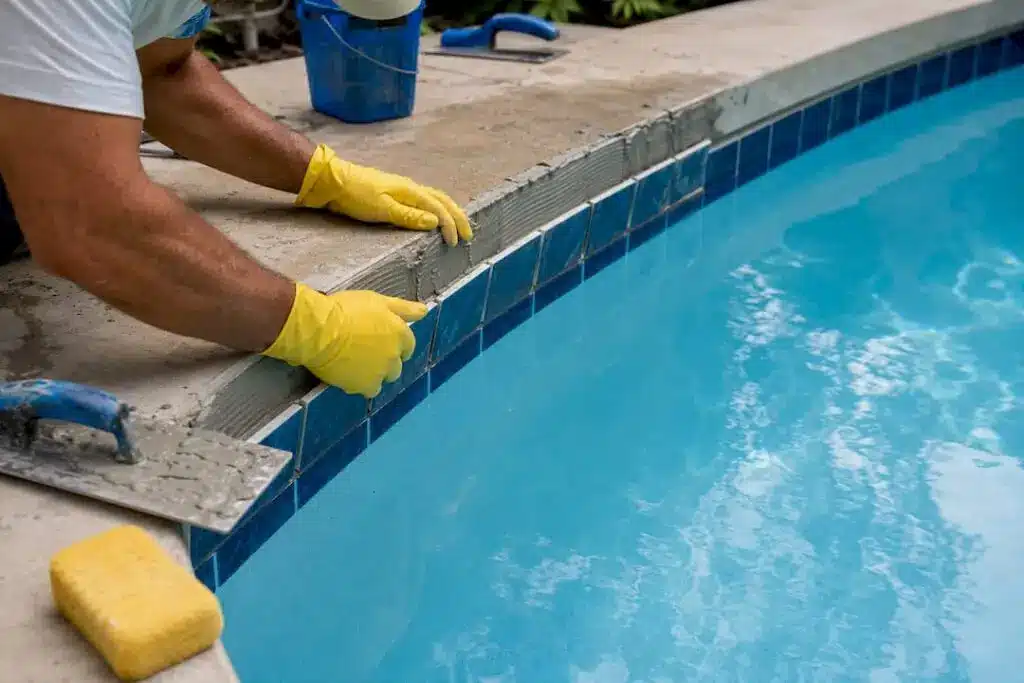
Waterline tile replacement typically runs $15 to $60 per linear foot, while a full interior retile lands between $20 and $60 per square foot. A small pool waterline job often totals $1,200 to $6,000, and full retiles on larger pools can climb past $15,000. Tile material and hidden substrate damage swing those numbers more than anything else, so get a line-item quote before you commit to a number.
TL;DR:
- Waterline tile replacement costs between $15 and $60 per linear foot, totaling $1,200 to $6,000 for most residential pools.
- Full interior pool retiling ranges from $20 to $60 per square foot, potentially exceeding $30,000 for large pools or premium materials.
- Bids can vary significantly depending on pool shape, pattern complexity, substrate condition, and regional labor rates, so detailed line-item quotes are essential.
- Tile choice impacts both cost and installation complexity, with glass mosaics and natural stone requiring specialized materials and methods.
- Expect full interior retiling to require draining the pool completely, with additional costs for permits, repairs, and curing time that may extend project duration.
Replacing pool tile in the Phoenix area? We Fix Ugly Pools completes 700+ pool renovations a year. Most resurface and new-tile projects we complete run $8,000–$15,000, and every quote is itemized before work begins. See our pool tile replacement service.
Get a Free Tile Quote or call (602) 253-4499
Table of Contents
- How Much Does Pool Tile Replacement Cost?
- What Affects Your Pool Tile Quote?
- Which Tile Type Fits Your Budget?
- Do You Need to Drain the Pool First?
- What Should You Ask a Pool Tile Contractor?
- How Should You Budget for the Unexpected?
- Why Contractor Experience Matters More Than the Estimate
- Get a Real Quote Instead of a Guess
- Sources
How Much Does Pool Tile Replacement Cost?
Most homeowners only need waterline tile replaced, the narrow band of tile that sits at the pool’s water level and takes the brunt of calcium buildup and sun damage. That’s a very different project, cost-wise, than tiling the entire pool shell.
Waterline-only work runs $15 to $60 per linear foot, with standard ceramic or porcelain toward the low end and glass mosaics pushing the high end. A typical residential pool has a waterline perimeter of 60 to 100 linear feet, so most homeowners land somewhere between $1,200 and $6,000 total, matching the range HomeGuide reports for standard waterline jobs.
Full interior retiling, where tile covers the entire pool shell rather than just the waterline band, is priced differently: $20 to $60 per square foot including materials and labor. A 500 square foot pool interior at that rate puts a full retile anywhere from $10,000 to $30,000.
Here’s how that breaks down across three common project sizes:
| Scenario | Scope | Tile Grade | Estimated Total |
|---|---|---|---|
| Small pool | Waterline only, ~60 linear ft | Standard ceramic | $1,200 to $6,000 |
| Mid-size pool | Waterline only | Mid-grade porcelain | $1,200 to $6,000 |
| Large pool, full retile | Full interior, ~500 sq ft | Premium glass mosaic | $15,000 to $30,000+ |
A full quote should separate four cost categories rather than bury them in one number: materials (tile, thinset, grout, trim pieces), labor (demo and installation hours), demolition and disposal (hauling out old tile and debris), and permits where local code requires them for pool work. Yelp’s aggregated service-cost data puts tile-specific labor at $20 to $40 per square foot in many markets, separate from material costs, which is exactly why a single lump-sum bid tells you almost nothing about where your money is going.
What Affects Your Pool Tile Quote?
Two contractors can look at the same pool and hand you bids that differ by thousands of dollars. That’s rarely a scam. It usually comes down to a handful of variables that don’t show up in a quick phone estimate.
- Access and pool shape: A freeform pool with tight corners or a spa attached takes far more labor hours than a straight-edged rectangle, since crews have to cut more tile to fit curves and steps.
- Pattern complexity: A simple running-bond waterline is fast to install; a listello border, mosaic accent, or custom pattern adds cutting time and waste, which shows up directly in labor cost.
- Substrate condition: Once old tile comes off, crews frequently find loose or crumbling bond beam concrete underneath, and that repair work gets priced separately from the tile itself.
- Regional labor rates: The same job can cost 10% to 25% more or less depending on your market, since labor pricing varies regionally even when material costs stay flat.
If a bid seems unusually low, ask what happens if the crew finds bond beam damage once they start demo. A contractor who has a clear answer to that question, with a set repair rate already in mind, is thinking about your project the way an experienced remodeler should.
Which Tile Type Fits Your Budget?
Tile choice is the single biggest lever homeowners actually control on this project. The material you pick changes not just the sticker price but the labor complexity, since some tiles need special adhesives and more careful hands to install correctly.
| Tile Type | Material Cost (per sq ft) | Installed Cost (per sq ft) | Notes |
|---|---|---|---|
| Ceramic | $3 to $10 | $20 to $30 | Widely available, easiest to install |
| Porcelain | $5 to $15 | $25 to $40 | More durable, resists fading better than ceramic |
| Natural stone | $10 to $25 | $20 to $40 | Heavier, needs experienced setters |
| Glass mosaic | $15 to $40+ | $40 to $60+ | Premium look, most installation-sensitive |
Glass and specialty mosaic tiles can double or triple the installed cost compared to standard ceramic, and that premium isn’t just about the tile itself. Glass tile needs specific epoxy-based thinset and grout systems designed to prevent delamination, the tile lifting away from the substrate after repeated water exposure. Cheaper cement-based mortar simply doesn’t bond well enough for glass in a submerged application, and using the wrong system is one of the more common causes of early tile failure.
Natural stone carries its own quirks. It’s porous, so it usually needs a sealer application after installation, and its weight means installers work more slowly to avoid cracking pieces during setting. If you’re chasing a high-end look on a tighter budget, porcelain that mimics stone or glass texture is often the smarter trade-off, since you get most of the visual impact without the material and labor premium.

Do You Need to Drain the Pool First?
Full interior retiling always requires draining the pool completely. There’s no way around it. Crews need a dry, accessible shell to demo old tile, inspect the substrate, and set new tile with proper adhesion, and that’s simply not possible underwater.
Waterline-only work is more flexible. Many contractors can complete it with the pool partially drained, just below the work zone, rather than emptying the whole shell.
- Full retile jobs: always fully drained, several days of dry time before refilling
- Waterline-only jobs: often partially drained, sometimes completed in a single day
- Draining and refilling adds $80 to $600 or more depending on pool size and local water rates
- New tile needs curing time, often 24 to 72 hours, before the pool can safely refill
Pro Tip: Schedule a full retile during a stretch of mild weather if you can. Extreme heat can dry thinset too fast and weaken the bond, while very cold temps slow curing down to a crawl and push your timeline out further than expected.
Be skeptical of anyone offering to fix cracked or loose waterline tile without draining at all. Underwater patch jobs using pool putty or epoxy can hold for a season, but they’re a stopgap, not a real repair, and they almost never address whatever caused the tile to fail in the first place.
What Should You Ask a Pool Tile Contractor?
A comparable quote is a line-item quote. If a bid arrives as a single number with no breakdown, that’s your first red flag, not your last question.
- Ask for line items covering demo, prep, materials, labor, disposal, permits, and a contingency allowance. Anything less makes it impossible to compare bids apples to apples.
- Ask what thinset and grout system they’ll use, and why. The right mortar chemistry depends on your substrate, whether it’s gunite or plaster, and your regional climate exposure. A contractor who can’t explain this clearly probably isn’t thinking about it.
- Ask how they handle waterproofing and how long they’ll let new tile cure before refilling. Rushing this step is one of the fastest ways to end up redoing the job in two years.
- Ask for photos of similar past installs, references you can call, and written warranty terms. A contractor with hundreds of completed transformations should have this ready without hesitation.
Watch for vague materials lists (“standard tile” with no brand or grade specified), no mention of drying or curing time at all, and quotes that don’t separate labor from materials. Those are the three most common signs a bid was built to win the job cheap, not to survive contact with your actual pool.
How Should You Budget for the Unexpected?
That’s not padding, it’s realistic planning. Contractors and remodeling guides consistently flag hidden bond beam or shell damage as the single biggest source of cost overruns, since nobody knows what’s under old tile until it comes off.
- Small waterline jobs: often complete in 1 to 3 days
- Full interior retiles: commonly take 1 to 3 weeks depending on pool size and crew availability
- Budget for periodic resealing on natural stone and grout lines every few years to protect your investment
Small, localized repairs often stay under $3,000, but full retile projects with substrate work can reach $6,000 to $15,000 or beyond once hidden damage enters the picture. That gap between the “clean” quote and the final bill is almost always the contingency line doing its job, not a contractor padding the price.
Why Contractor Experience Matters More Than the Estimate
The lowest bid on your kitchen counter isn’t the one that determines your actual cost. What determines it is whether the crew finds bond beam damage in week one and has a plan, or discovers it and starts negotiating change orders mid-project.
Wefixuglypools has spent over a decade in the Greater Phoenix area focused entirely on pool remodels, not general pool maintenance, and that specialization shows up in how estimates get built. Line items separate demo, substrate repair, and tile installation from the start, with contingency built in rather than tacked on later as a surprise. Homeowners dealing with common tile problems or wanting to see before-and-after restoration work can request an on-site estimate that reflects their pool’s actual condition, not a generic per-square-foot guess.
— Brian
Get a Real Quote Instead of a Guess
A DIY waterline patch might save you money for a season, but most homeowners lack the tools and experience to set tile that survives constant water exposure and chemical cycling, which means the repair often fails faster than a professional install would. Wefixuglypools handles tile replacement alongside coping and resurfacing in a single project, similar to how travertine pool deck installation in Marana, AZ combines coping and stonework, so you’re not paying separate mobilization and disposal fees for jobs that could be bundled into one visit. That combined approach, backed by warranty terms on the finished work, is the practical alternative to hiring separate crews for each piece of a full pool refresh.

If your pool needs anything from a waterline refresh to a full shell retile, start with a pool remodeling estimate built around your actual pool, not a national average. Homeowners in Surprise can also check out local remodeling and tile services to see recent project photos before scheduling a site visit.
Sources
- How Much Does Pool Tile Cost? (2026) — HomeGuide
- Pool Tile Replacement Cost: Price Ranges, Drivers, and Savings 2026 — Current Cost
- How to Replace Pool Tile—and Fix Issues That Make It Crack — Angi
- Cost of Pool & Hot Tub Service – Last Updated August 2026 — Yelp