A typical residential pool costs between $1,200 and $5,300 annually to maintain, covering chemicals, electricity, filter replacements, water, and minor repairs. That range is wide because pool upkeep expenses vary sharply based on pool size, climate, equipment age, and whether you hire a professional or handle it yourself. Understanding the full pool maintenance cost breakdown before you budget prevents the most common mistake pool owners make: underestimating total annual spend. The industry term for this planning process is pool lifecycle costing, and it separates recurring operating costs from capital equipment reserves. Knowing both numbers gives you a clear, honest picture of what pool ownership actually costs.
What are the major components of pool maintenance costs?
Pool upkeep expenses fall into six clear categories. Each has a predictable annual range, and knowing them individually makes budgeting far more accurate than using a single average figure.
| Cost Category | Typical Annual Range |
|---|---|
| Chemicals (chlorine, acid, stabilizers) | $400–$800 |
| Electricity (pump, heater, lighting) | $300–$700 |
| Filter media replacement | $50–$200 |
| Water (fill, refill, evaporation) | $50–$150 |
| Minor repairs and consumables | $100–$300 |
| Professional service (if hired) | $1,200–$2,400 |
Chemicals are the largest recurring line item for most pool owners. Liquid chlorine, muriatic acid, cyanuric acid (stabilizer), and algaecide all add up across a full swim season. Skipping or under-dosing any of these leads to algae blooms or cloudy water that costs more to fix than it would have to prevent.
Electricity is the second biggest recurring cost. Variable-speed pumps cut energy use significantly compared to single-speed models, making them one of the best long-term investments for affordable pool maintenance. Running a heater, especially a gas heater, pushes electricity and gas costs toward the top of the range.
Filter media replacement depends on filter type. Cartridge filters need new cartridges every one to two years. Sand filters need media replaced every five to seven years. Diatomaceous earth (DE) filters need fresh DE powder after each backwash. The annual cost stays low if you stay on schedule.
Seasonal opening and closing are costs many pool owners forget to include in their annual budget. Seasonal opening averages around $350, and closing averages around $300, with labor rates ranging from $60 to $120 per hour depending on your region. For Phoenix-area pools that run year-round, these costs are lower, but equipment inspections at the start of each season still apply.
Pro Tip: Build seasonal opening and closing costs into your annual pool maintenance budget as fixed line items, not surprises. Set aside $600–$650 each year specifically for those two service visits.
How do DIY pool maintenance costs compare to professional service?
The cost difference between DIY and professional service is real, but the full picture includes your time, skill level, and what each option actually covers.
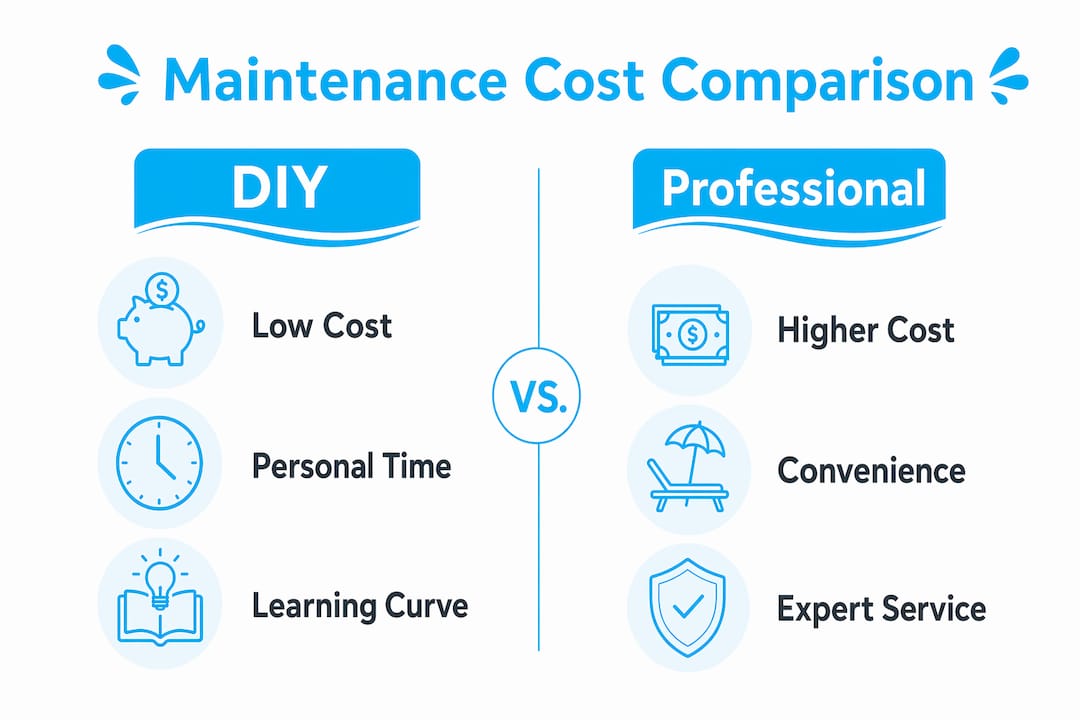
DIY monthly costs average $80–$150 during swim season, covering chemicals and supplies. Professional weekly pool service runs $150–$350 per month, including chemicals. That gap narrows when you factor in the time DIY requires.
| Factor | DIY | Professional Service |
|---|---|---|
| Monthly cost | $80–$150 | $150–$350 |
| Time per week | 30–45 minutes | None for owner |
| Chemical knowledge needed | Yes | No |
| Filter cleaning included | Owner handles | Often billed separately |
| Acid washing included | Owner handles | Often billed separately |
The detail most pool owners miss: filter cleaning and acid washing are frequently excluded from standard weekly service contracts and billed as separate add-ons. A service agreement that looks like $200 per month can quietly become $300 once those tasks are invoiced. Always read a pool service contract line by line before signing.
Regional pricing also varies more than most owners expect. Florida averages $139–$145 per month for professional service, while the broader Sunbelt market averages around $225 monthly. Phoenix falls within that Sunbelt range, so Greater Phoenix pool owners should budget accordingly.
DIY makes financial sense if you have the time, enjoy the process, and are willing to learn proper water chemistry. Professional service makes sense if your schedule is tight or if your pool has a history of chemistry problems that require expert correction. Many owners use a hybrid approach: handle weekly testing and brushing themselves, then hire a pro for quarterly filter cleaning and annual acid washing.
Pro Tip: Before hiring a pool service company, ask specifically whether filter cleaning, acid washing, and equipment inspections are included in the monthly rate or billed separately. Get the answer in writing.
What do pool equipment costs and lifespans mean for your budget?
Major equipment replacement is the largest single expense most pool owners face, and it almost always arrives as a surprise. Separating your operating budget from a capital reserve fund is the most practical way to handle it.
Pool equipment lifespans vary widely: pumps last 8–12 years, filters last 10–20 years depending on type, and heaters last 5–15 years. Replacement costs follow the same wide range.
- Pumps: $400–$2,000 to replace. Variable-speed models cost more upfront but reduce electricity costs over their lifespan.
- Filters: $300–$1,500. Cartridge and DE filters cost more than sand filters but offer better filtration.
- Heaters: $1,500–$5,000. Gas heaters are cheaper to buy but cost more to run. Heat pumps cost more upfront but are far more efficient over time. Solar heaters have the lowest operating cost but the highest installation price.
- Salt chlorine generators: $800–$2,000 to replace, with cells typically lasting 3–7 years before replacement.
- Automation systems: $1,500–$3,500 installed, with lifespans of 10 or more years when properly maintained.
The practical budgeting move is to calculate the replacement cost of each piece of equipment, divide by its expected remaining lifespan, and set that amount aside each year. For a pool with a pump worth $1,200 that has five years left, that means reserving $240 per year. It sounds simple, but most owners skip this step entirely and then face a $2,000 repair bill with no savings to cover it.
Equipment condition also directly affects routine costs. A worn pump seal causes leaks and water loss. A clogged filter strains the pump motor and shortens its life. Staying current on professional pool repair before small issues become large ones is always the cheaper path.
How does a pool maintenance schedule influence costs?
A consistent pool maintenance schedule is the single most effective cost control tool available to pool owners. Cheap, inconsistent maintenance leads to expensive fixes, while prevention-focused routines save money over the long term.
A weekly pool maintenance routine takes about 30–45 minutes and covers five core tasks. The order matters as much as the tasks themselves.
- Test the water first. Check pH, chlorine, alkalinity, and stabilizer levels before doing anything else. This tells you exactly what chemical adjustments are needed and prevents over-correction.
- Skim and brush the pool. Remove surface debris, then brush walls and steps to dislodge algae before it takes hold. Physical cleaning before chemical adjustment means the chemicals work on water, not debris.
- Vacuum the pool floor. Automated pool cleaners like Polaris or Dolphin handle this step daily, but a manual vacuum pass catches what they miss.
- Adjust chemicals based on test results. Add chlorine, acid, or alkalinity increaser only in the amounts the test shows are needed. This is where task order pays off: testing first means you add the right amount, not a guess.
- Inspect equipment. Check the pump basket, filter pressure gauge, and skimmer baskets. Catching a clogged basket or rising filter pressure early prevents motor strain and costly repairs.
Following this order minimizes chemical waste and maintains water clarity more efficiently than adding chemicals first and testing later. Proactive property maintenance scheduling applies directly to pools: the owners who stick to a weekly routine spend the least on emergency fixes.
Pro Tip: Keep a simple log of your weekly test results and chemical additions. Patterns in your data, like pH consistently dropping, point to underlying issues you can fix cheaply before they become expensive.
Key Takeaways
Annual pool ownership costs range from $1,200 to $5,300, and separating recurring operating expenses from capital equipment reserves is the most reliable way to budget without surprises.
| Point | Details |
|---|---|
| Annual cost range | Budget $1,200–$5,300 per year for chemicals, electricity, filter media, water, and minor repairs. |
| DIY vs. professional service | DIY costs $80–$150 per month; professional service runs $150–$350, often with add-on fees for filter cleaning. |
| Equipment reserve fund | Set aside annual amounts for pump, filter, heater, and salt cell replacement based on remaining lifespan. |
| Schedule consistency saves money | A 30–45 minute weekly routine prevents costly algae blooms, equipment strain, and chemical overcorrection. |
| Read service contracts carefully | Filter cleaning and acid washing are frequently excluded from standard contracts and billed separately. |
What I’ve learned after years of seeing pool budgets go wrong
Most pool owners underestimate their annual costs not because the numbers are hidden, but because they only count what they spend regularly and ignore what they will eventually spend. Chemicals and electricity show up on every receipt. A pump replacement or a full acid wash does not show up for years, and then it arrives all at once.
The owners who handle this best treat their pool like a rental property. They separate the operating budget from the capital reserve, they review their service contract every year, and they do not assume that “no problems” means “no costs coming.” A pool that looks fine in march can have a failing pump seal, a DE filter that needs a full teardown, or a salt cell at the end of its cycle. None of those announce themselves until they fail.
My honest advice: if you are doing DIY maintenance, invest in a quality digital test kit like the Taylor K-2006 or a photometer. Cheap test strips give you a rough reading. Accurate chemistry data lets you add exactly what the water needs, which cuts your annual chemical spend and prevents the overcorrection cycles that cloud water and stress equipment. That one tool pays for itself in a single season.
If you are hiring a professional, do not just compare monthly rates. Ask what is included, what is not, and what the hourly rate is for add-on work. A service plan guide like the one at Wefixuglypools walks through exactly what to look for. The cheapest monthly rate is rarely the best value once you see the full contract.
— Brian
Your pool investment deserves expert care
Knowing your numbers is the first step. Acting on them is the second.
At Wefixuglypools, we work with pool owners across the Greater Phoenix area who are tired of reactive spending and want a pool that looks great and runs efficiently. Whether your pool needs a full remodeling and restoration to address years of deferred maintenance, or targeted repairs to get aging equipment back in shape, our team brings a decade of hands-on experience to every project. We have completed hundreds of pool transformations in Phoenix, Scottsdale, and Surprise, and we know exactly where costs hide and how to prevent them. Reach out to Wefixuglypools today and get a clear picture of what your pool needs and what it will cost.
FAQ
What is the average annual cost to maintain a pool?
Residential pool maintenance costs range from $1,200 to $5,300 per year, covering chemicals, electricity, filter media, water, and minor repairs. Professional service adds $1,200–$2,400 annually on top of those base costs.
Is DIY pool maintenance worth it financially?
DIY maintenance costs $80–$150 per month versus $150–$350 for professional service, so the savings are real. The tradeoff is 30–45 minutes of weekly work and the need to understand basic water chemistry.
What pool maintenance costs are most often overlooked?
Equipment replacement reserves and seasonal opening and closing fees are the most commonly missed costs. Seasonal opening averages $350 and closing averages $300, and most pool owners do not budget for either.
How do I avoid surprise fees from a pool service company?
Ask your service provider to list every task included in the monthly rate and every task billed separately. Filter cleaning and acid washing are the two most common add-ons that standard contracts exclude.
How long does pool equipment typically last?
Pumps last 8–12 years, filters last 10–20 years, and heaters last 5–15 years depending on type and maintenance quality. Salt chlorine generator cells typically need replacement every 3–7 years.