A pool service contract is a legally binding agreement between a pool owner and a service provider that defines the scope, frequency, payment, and liability terms for pool maintenance. Without one, you are relying on handshakes and memory. That is a fast way to end up with a green pool and a disputed invoice. Whether you own a single family home in Phoenix or manage multiple investment properties, understanding what a pool maintenance contract covers is the first step toward protecting your asset and your budget.
What is a pool service contract and what does it include?
A pool service contract is the industry’s standard term for a written maintenance agreement that spells out exactly what the provider will do, how often, and for how much. Rocket Lawyer and Skimmer both offer contract templates that reflect the core elements most providers use. Knowing those elements before you sign puts you in a far stronger position.
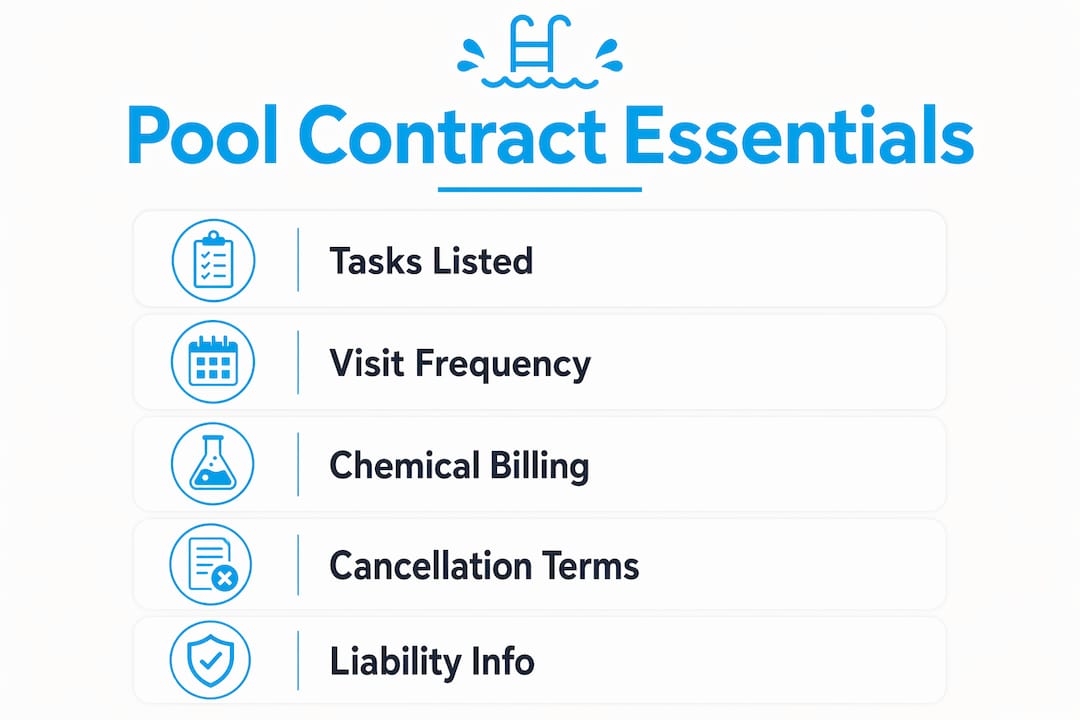
Service description
The contract must list every task performed on each visit. Specific task lists covering skimming, brushing, vacuuming, and equipment checks are far more useful than vague phrases like “full service.” A vague description gives the provider room to skip steps without technically breaking the agreement. Koko Head Pools recommends treating any contract that lacks a task checklist as incomplete.

Service frequency and visit counts
Most weekly service plans promise 52 visits per year. Some contracts say “up to 48 visits” at the same monthly rate, which means you pay full price for fewer actual visits. Always compare the stated visit count against the service schedule before signing.
Pricing and chemical billing
Contracts must clarify whether chemicals are included in the flat monthly rate or billed separately. Separate chemical billing shifts price volatility to you as the homeowner, while a flat rate shifts that risk to the provider. A cost-plus model transfers chemical price swings directly to your bill, while a flat-rate bundle gives you predictable monthly costs. Choose based on how closely you want to monitor water chemistry and how much cost variability you can absorb.
Cancellation and termination terms
Every contract should state the notice period required to cancel and whether any fees apply. Month-to-month agreements typically require 30 days’ notice with no penalty. Annual contracts often lock in your rate but charge a cancellation fee if you exit early.
Liability and insurance
A well-written agreement names the provider’s liability insurance carrier, states coverage limits, and lists exclusions. Common exclusions include wear and tear, weather damage, and damage caused by owner modifications to the pool.
Pro Tip: Ask for a copy of the provider’s certificate of insurance before signing. If they hesitate, treat that as a red flag.
How do pool service contracts differ by term and scope?
Not all pool service agreements are built the same. The two biggest variables are contract length and service scope. Understanding both helps you pick the right fit for your situation.
| Contract type | Commitment | Coverage | Cost risk |
|---|---|---|---|
| Month-to-month | 30-day notice to cancel | Full or partial service | Slightly higher monthly rate |
| Annual | 12 months, cancellation fee possible | Full or partial service | Locked rate, exit penalty |
| Chemical-only | Month-to-month or annual | Water chemistry only | Owner handles equipment |
| Full-service | Month-to-month or annual | All maintenance tasks | Higher cost, less owner effort |
Month-to-month contracts give you flexibility. If the provider underperforms, you can walk away with 30 days’ notice and no financial penalty. Annual contracts reward you with a locked rate, which matters when chemical prices rise mid-year. The tradeoff is that exiting early can cost you.
Chemical-only plans work well for hands-on owners who handle their own equipment checks and cleaning. Full-service plans are the better choice for property investors or busy homeowners who want the provider responsible for everything. The higher monthly cost of a full-service plan is often worth it when you factor in the time and expertise required to manage equipment repairs on your own.
Why does liability language matter in a pool service agreement?
Liability clauses define who pays when something goes wrong. Clear liability terms reduce disputes and set boundaries before a problem occurs, not after. Without them, a cracked pump housing or a stained finish becomes a he-said-she-said argument.
The key liability elements to verify before signing include:
- Provider’s insurance: Confirm the policy covers property damage and personal injury during service visits.
- Coverage limits: Know the dollar cap on claims so you understand your exposure if damage exceeds that limit.
- Exclusions: Standard exclusions include pre-existing damage, weather events, and modifications made by the owner.
- Repair warranty terms: Repair warranties of 30–90 days are common and protect you if a repair fails shortly after completion.
- Authorization thresholds: The contract should state the dollar amount above which the provider must get your approval before proceeding with a repair.
That last point matters more than most homeowners realize. Without a repair authorization threshold, a provider can charge you for a $600 pump repair without calling you first. With a threshold set at $150, you stay in control of unexpected costs.
Pro Tip: Negotiate a repair authorization limit of $100–$200 and require written or text confirmation before any repair above that amount proceeds.
What steps should you take when choosing a pool service contract?
Choosing the right pool cleaning contract requires more than comparing monthly prices. The details inside the agreement determine whether you get consistent, quality service or a string of billing disputes.
- Request a written service checklist. Ask the provider to list every task performed on each visit. Compare checklists from at least two providers before deciding.
- Confirm the visit count. Verify whether the contract guarantees 52 visits per year or uses language like “up to 48.” That difference is four missed visits at full price.
- Clarify the chemical billing model. Decide whether you prefer a flat rate for predictability or a cost-plus model if you plan to monitor chemical usage closely. Chemical cost models shift financial risk differently, so choose based on your tolerance for variability.
- Get a definition of a completed visit in writing. A written definition protects you from paying for a visit where the technician could not access the pool due to a locked gate, a pet in the yard, or bad weather.
- Review cancellation terms carefully. Know the notice period and any fees before you commit, especially with annual agreements.
- Check repair authorization and warranty provisions. Confirm the threshold amount and the warranty period for any repair work performed under the contract.
- Use professional templates as a baseline. Tools like the Skimmer pool service agreement toolkit and Rocket Lawyer contract templates give you a clear picture of what a complete agreement looks like, so you can spot gaps in any contract a provider hands you.
Understanding improper pool service risks is also worth your time before signing. Knowing what can go wrong when service is vague or inconsistent reinforces why every clause in your agreement deserves careful review.
How does a pool service contract protect your investment?
A pool is one of the most expensive features on a residential property. A clear, detailed maintenance contract protects that investment in concrete, measurable ways.
- Prevents maintenance gaps. Defined service schedules eliminate the guesswork about when the pool was last serviced and what was done.
- Protects equipment life. Consistent chemical balancing prevents corrosion and scale buildup that shortens pump, filter, and heater lifespans.
- Reduces surprise repair costs. Authorization thresholds and repair warranties keep unexpected charges in check and create accountability.
- Supports budget planning. Flat-rate contracts give you a fixed monthly cost, making annual pool maintenance predictable.
- Maintains property value. A well-maintained pool contributes positively to resale value. Research on pools and home value consistently shows that condition matters as much as the pool’s presence.
Formal agreements create trust and accountability between both parties. That trust is the foundation of a long-term service relationship that keeps your pool in top condition year after year.
Key Takeaways
A pool service contract protects your investment by defining services, costs, liability, and repair terms before any work begins.
| Point | Details |
|---|---|
| Define services in writing | Require a task checklist covering every visit, not vague “full service” language. |
| Verify visit counts | Confirm whether the contract guarantees 52 visits or allows fewer at full price. |
| Understand chemical billing | Choose flat-rate for cost predictability or cost-plus if you monitor usage closely. |
| Negotiate repair thresholds | Set a dollar limit requiring your approval before the provider proceeds with repairs. |
| Get a completed visit definition | A written definition prevents billing disputes caused by access issues or weather. |
What I’ve learned from years of watching pool contracts go wrong
Vague contracts are the single biggest source of homeowner frustration in the pool service industry. I have seen situations where a provider billed for 12 months of “full service” while the homeowner had no idea what that phrase actually covered. When the pool turned green in august, both sides pointed fingers and neither had documentation to stand on.
The fix is always the same: specificity. A contract that lists 11 tasks per visit is worth more than one that promises “complete pool care.” When repair authorization limits are missing, providers are not acting in bad faith. They are filling a vacuum the contract created. Negotiate those limits before you sign, not after a $900 invoice arrives.
Flexible terms matter too. If you are a property investor managing multiple pools in the Phoenix area, locking every pool into a 12-month annual contract creates unnecessary risk. A mix of month-to-month agreements on newer pools and annual contracts on stable, well-maintained pools gives you the flexibility to switch providers without financial penalty when performance drops. Repair warranty provisions are equally worth negotiating. A 90-day warranty on parts and labor is reasonable to ask for and signals that a provider stands behind their work.
The homeowners who get the best outcomes are the ones who treat the contract review as seriously as the service itself.
— Brian
Ready to take your pool from maintenance to transformation?
A strong pool service agreement keeps your pool clean and functional. But if your pool needs more than maintenance, Wefixuglypools is the team to call.
Wefixuglypools has spent over a decade transforming pools across the Greater Phoenix area, completing hundreds of remodels and custom builds. We specialize in turning outdated, unappealing pools into spaces homeowners are proud of. Whether you need a full pool remodeling and restoration or expert repair work to complement your new service contract, our team brings the experience and craftsmanship to get it done right. Contact Wefixuglypools today to explore your options and protect the full value of your pool investment.
FAQ
What is a pool service contract?
A pool service contract is a legally binding agreement between a pool owner and a service provider that defines the scope, frequency, payment terms, and liability for pool maintenance. It protects both parties by setting clear expectations before work begins.
What should a pool service contract include?
A complete pool service contract should include a task checklist for each visit, service frequency, chemical billing terms, liability and insurance details, repair authorization thresholds, and cancellation terms.
What is the difference between a month-to-month and annual pool contract?
Month-to-month contracts allow cancellation with typically 30 days’ notice and no penalty, while annual contracts lock in your rate for 12 months but may charge a fee for early termination.
Do I need a pool service contract or can I pay per visit?
A contract provides cost predictability, defined service standards, and liability protection that per-visit arrangements rarely offer. Homeowners and property investors with ongoing maintenance needs benefit significantly from a formal agreement.
How do I avoid billing disputes with my pool service provider?
Get a written definition of a “completed visit” in your contract, confirm the visit count for the year, and set a repair authorization threshold. These three clauses resolve the most common sources of billing disagreements.