A swim-up bar is defined as a submerged counter built into the pool wall where swimmers sit on underwater ledges and enjoy drinks without leaving the water. To incorporate swim-up bar pool design into your backyard, you need to plan it during the original pool build, not after. Custom integrated swim-up bars add $8,000–$25,000 to pool construction costs, while full outdoor kitchen and bar combos run $35,000–$60,000 or more. That range reflects the real difference between a basic submerged counter and a fully equipped poolside entertainment station. This guide covers structural requirements, layout options, retrofit alternatives, and maintenance practices so you can make confident decisions before breaking ground.
How to incorporate swim-up bar pool design: structural essentials
The bar counter in a swim-up pool setup sits approximately 12 inches above the waterline, with submerged seating ledges cast directly into the pool wall. That height is not arbitrary. It lets seated swimmers rest their arms comfortably on the counter while staying fully in the water. The ledges function like built-in barstools, typically 18–24 inches below the surface.
Non-slip tile on every underwater surface is a construction requirement, not an upgrade. Smooth plaster or standard ceramic tile becomes dangerously slick when wet, and the bar area sees constant foot traffic from swimmers climbing onto ledges. Materials like quartz, glass mosaic tile, and poured concrete with marine-grade sealers are the preferred choices because they resist chemical degradation and hold up under permanent water contact.
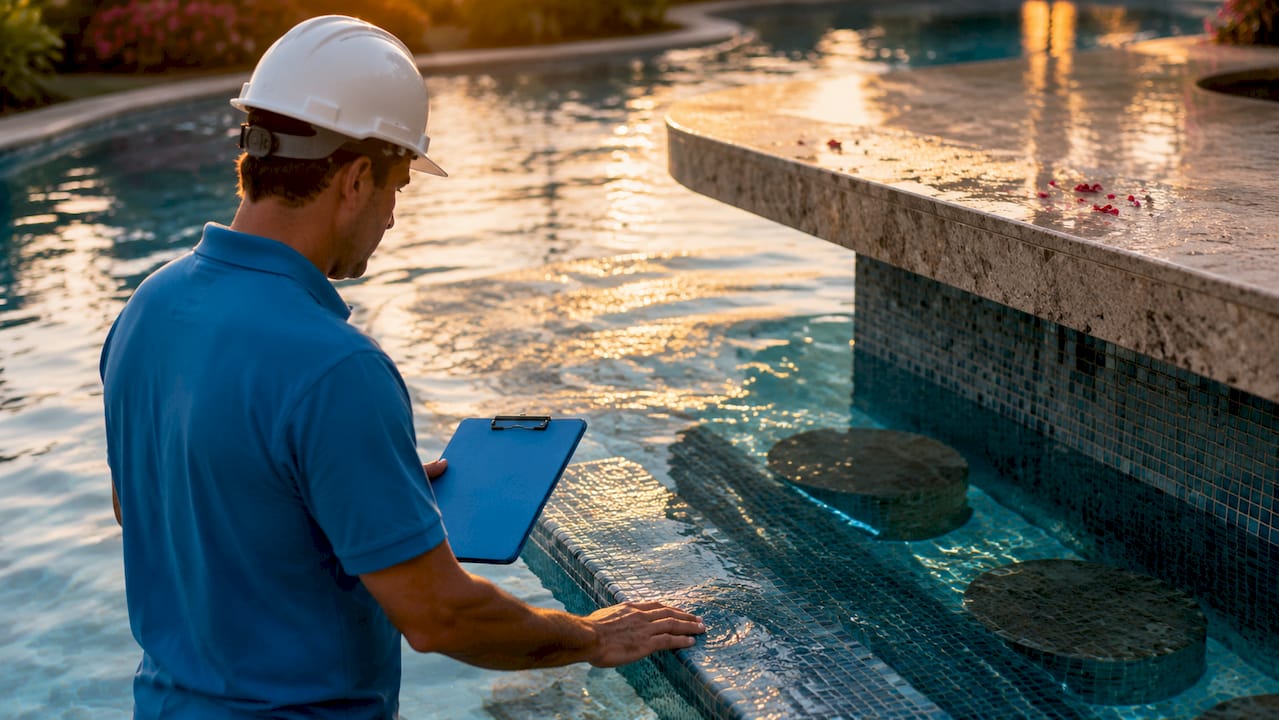
One of the most overlooked structural details is hydraulic circulation. Swim-up bars create dead water zones where the counter blocks normal water flow. Without dedicated return jets positioned near the bar, those zones become stagnant, collecting debris and promoting algae growth. Your pool builder must account for this in the hydraulic plan from day one.
A true integrated swim-up bar requires structural engineering of the pool shell at the initial build. Retrofitting one later means partially demolishing the pool wall, which adds significant cost and construction time. If you are planning a new pool, add the bar now. If you already have a pool, read the retrofit section below before committing.
Key structural requirements to confirm with your builder:
- Counter height: 12 inches above the finished waterline
- Seating ledges: Cast into the pool wall, not added later
- Non-slip tile: Required on all submerged horizontal surfaces
- Return jets: Dedicated jets positioned to circulate water around the bar area
- Material selection: Quartz, glass mosaic, or sealed concrete for all wet surfaces
- Structural engineering: Bar integrated into the pool shell design, not bolted on
Pro Tip: Ask your pool builder to show you the hydraulic circulation plan before finalizing the design. If the plan does not include dedicated return jets near the bar, request them. This single detail prevents the most common maintenance headache with swim-up bars.
What design layouts work best for a swim-up bar?
The most functional swim-up bar layout is the hybrid design, where half the counter is accessible from the water and half from the dry deck. This approach solves a real social problem: not everyone at your party swims. A hybrid counter lets guests stand on the pool deck and interact with swimmers at the same bar, which makes the space feel like a genuine gathering spot rather than a feature only swimmers can use.
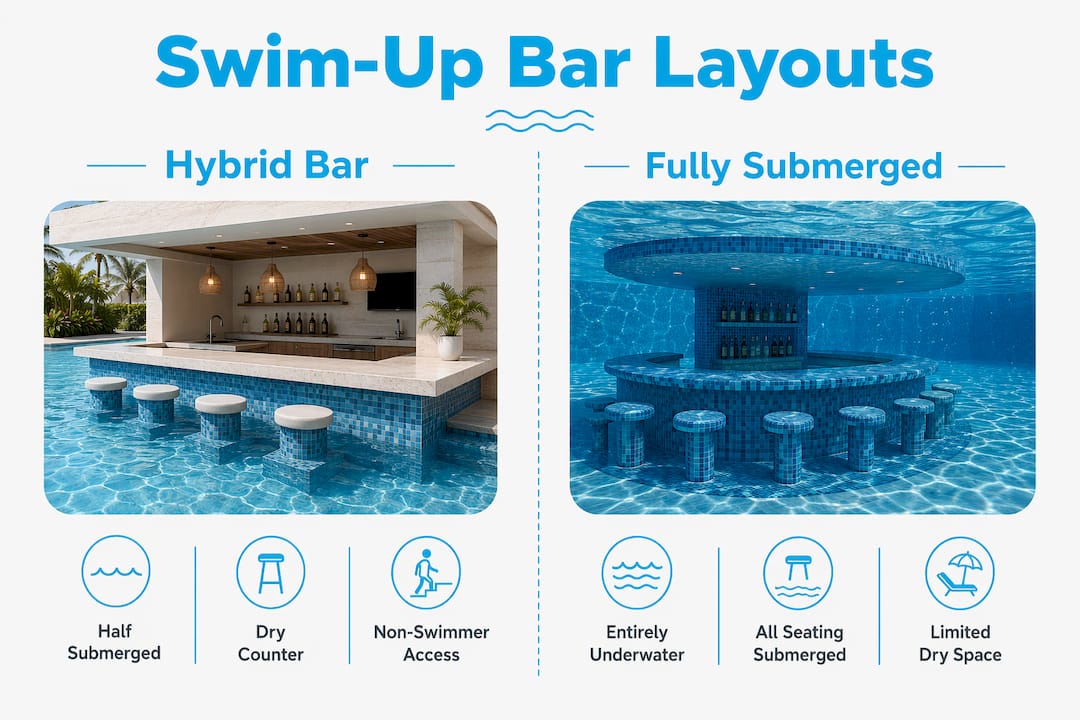
The fully submerged bar is the other main option. The entire counter sits at water level, and all seating is underwater. This design creates a more immersive resort feel but limits access to swimmers only. For homeowners who entertain a mix of guests, the hybrid layout consistently outperforms the fully submerged version in day-to-day usability.
| Feature | Hybrid bar (half in, half out) | Fully submerged bar |
|---|---|---|
| Non-swimmer access | Yes, from pool deck | No |
| Resort aesthetic | Moderate | High |
| Social flexibility | High | Limited |
| Construction complexity | Moderate | Lower |
| Best for | Mixed-use entertaining | Dedicated swim crowd |
Placement within the pool matters as much as the bar style. Industry experts recommend separating swim-up bars from tanning ledges to prevent traffic conflicts. A tanning ledge is a quiet, low-traffic zone. A swim-up bar is an active social hub. Putting them side by side creates congestion and reduces the function of both areas.
For the bar face and countertop, natural stone like travertine or quartzite adds visual weight and pairs well with Arizona desert landscaping. Glass tile creates a reflective, resort-style finish that photographs well and holds color under UV exposure. Concrete countertops with marine-grade sealers offer the most flexibility in shape and color but require resealing every few years.
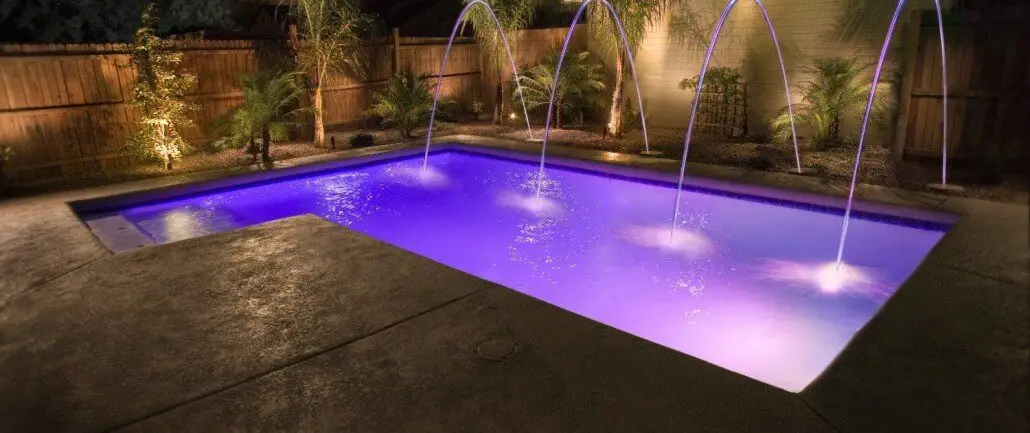
Proper LED lighting around the bar improves both safety and nighttime ambiance. Underwater LED strips along the bar face and perimeter lighting on the dry-side counter extend usability well past sunset. LEDs are energy-efficient and rated for permanent submersion, making them the practical choice for any in-pool lighting application.
Pro Tip: Plan at least 18 inches of dry-side counter space behind the bar for storage, a small refrigerator, or a blender. A bar with no prep space forces you to run back to the kitchen for every drink.
Can you add a swim-up bar to an existing pool?
Portable swim-up bar tables are the most practical option for homeowners with existing pools who want the experience without major reconstruction. Products like the Dunn-Rite PoolBar adjust from 32 to 51.5 inches in height to fit different pool depths and floor slopes. They work with both above-ground and in-ground pools and install without tools.
The trade-off is real. A portable bar table delivers the social function of a swim-up bar but none of the structural integration. There are no built-in seating ledges, no dedicated return jets, and no custom countertop materials. Guests sit on separate pool floats or stand in the water rather than on cast-in ledges. The experience is functional but noticeably different from a custom build.
For homeowners who want a permanent retrofit, the honest answer is that it requires major demolition and remodeling. The pool wall must be partially removed to structurally integrate the bar and seating. This is a full remodeling project, not a simple add-on. The cost approaches that of a new custom bar, and the timeline depends on the existing pool’s construction type and condition.
Here is a quick comparison of retrofit options:
- Portable bar table: Low cost, no installation, works immediately, limited experience
- Partial retrofit: Adds seating ledges and a counter to an existing pool wall, moderate cost, requires a licensed pool contractor
- Full structural retrofit: Demolishes and rebuilds the bar section of the pool wall, highest cost, closest to a custom build result
Whether you go portable or structural, check your pool type compatibility before purchasing or planning. Vinyl-lined above-ground pools have different structural constraints than gunite in-ground pools, and the retrofit approach differs significantly between them.
How do you maintain a swim-up bar properly?
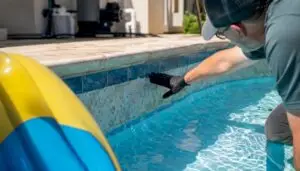
Regular cleaning of submerged stools and bar surfaces prevents bacterial buildup and keeps the area looking sharp. The underwater ledges and bar face collect sunscreen, body oils, and organic debris faster than open pool surfaces because the water movement around them is reduced. A weekly scrub with a pool-safe brush and enzyme-based cleaner handles most buildup before it becomes a problem.
Follow this maintenance sequence to keep your swim-up bar in top condition:
- Weekly: Scrub submerged ledges and bar face with a pool brush. Check for algae on non-slip tile grout lines.
- Weekly: Verify that return jets near the bar are flowing at full pressure. Reduced flow signals a filter or pump issue.
- Monthly: Inspect LED lighting fixtures for seal integrity. Water intrusion into a light housing is a safety hazard.
- Seasonally: Check all countertop materials for surface wear, cracking, or sealer degradation. Reseal concrete countertops as needed.
- Annually: Have a licensed pool technician inspect the structural connection between the bar and pool wall, especially after freeze-thaw cycles.
Pro Tip: Enzyme-based pool cleaners break down body oils and sunscreen residue far more effectively than chlorine alone. Adding a weekly enzyme treatment to your maintenance routine keeps the bar area cleaner with less scrubbing.
Proper pool filter maintenance is directly connected to bar hygiene. A swim-up bar increases the organic load on your filtration system because of the concentrated bather activity in one zone. Running your filter for an extra hour per day during peak use periods compensates for that load and keeps the water around the bar clear and balanced.
Key takeaways
A swim-up bar delivers the most value when it is planned as part of the original pool build, built with the right materials, and maintained consistently.
| Point | Details |
|---|---|
| Plan during initial build | Structural integration at construction is far less costly than retrofitting later. |
| Counter height matters | Set the bar counter 12 inches above the waterline for comfortable seated use. |
| Use hybrid layout for entertaining | A half-in, half-out design gives swimmers and non-swimmers equal access to the bar. |
| Circulate water around the bar | Dedicated return jets prevent stagnant zones that cause debris buildup and algae. |
| Maintain weekly | Scrub submerged surfaces and check jet flow every week to prevent bacterial buildup. |
What I have learned from designing swim-up bars in Arizona backyards
The single biggest mistake I see homeowners make is treating the swim-up bar as an afterthought. They finalize the pool shape, pick the tile, approve the budget, and then ask about adding a bar. At that point, the structural opportunity is gone. Coordinating your pool builder and outdoor kitchen contractor from the very first design meeting is the difference between a bar that feels built-in and one that looks bolted on.
The second issue I see constantly is poor seat height. Builders sometimes set the ledge depth based on the pool’s average water level rather than the actual finished waterline at the bar location. The result is a counter that sits too high or too low for comfortable use. I always recommend homeowners physically mock up the seating height with a temporary structure before the concrete is poured. Thirty minutes of testing saves years of discomfort.
The social value of a well-designed swim-up bar is genuinely hard to overstate. A swim-up bar transforms into a social destination when it is designed for comfort and ease of access. In my experience, it becomes the spot where every backyard gathering naturally centers. People who would never spend two hours in the pool will sit at a swim-up bar for an entire afternoon. That shift in how your backyard gets used is worth every dollar of the investment.
One more thing: do not skip the shaded dry-side counter. Arizona sun is brutal, and a bar with no shade on the service side becomes unusable by noon in July. A pergola, shade sail, or extended roof overhang over the dry counter turns a seasonal feature into a year-round one.
— Brian
Ready to add a swim-up bar to your Phoenix area pool?
If you are planning a new pool or considering a remodel, Wefixuglypools has spent over a decade building custom pool features across the Greater Phoenix area, including swim-up bars, outdoor kitchens, and full backyard transformations. We work with homeowners in Surprise, Scottsdale, and surrounding communities to design pools that actually get used.
Whether you are starting from scratch or upgrading an existing pool, our team handles the structural planning, material selection, and contractor coordination that makes a swim-up bar work long-term. Explore our pool remodeling services or check out our custom pool builds to see what is possible for your backyard. Contact Wefixuglypools today to schedule a consultation and get a design that fits your space, your budget, and how you actually entertain.
FAQ
What is a swim-up bar in a pool?
A swim-up bar is a submerged counter built into the pool wall with underwater seating ledges, allowing swimmers to sit in the water and enjoy drinks at bar height. The counter typically sits 12 inches above the waterline.
How much does a swim-up bar cost to add?
Custom integrated swim-up bars add $8,000–$25,000 to pool construction costs. Full outdoor kitchen and bar combinations range from $35,000 to $60,000 or more depending on materials and seat count.
Can I add a swim-up bar to my existing pool?
A full structural swim-up bar requires partial demolition of the pool wall and is a major remodeling project. Portable adjustable bar tables, like those from Dunn-Rite Products, offer a lower-cost alternative that works with existing in-ground and above-ground pools.
What materials are best for a swim-up bar?
Quartz, glass mosaic tile, and poured concrete with marine-grade sealers are the top choices. These materials resist chemical degradation and hold up under permanent water exposure without fading or cracking.
How do I keep my swim-up bar clean?
Scrub submerged ledges and bar surfaces weekly with a pool brush and enzyme-based cleaner. Check return jet flow weekly and inspect LED lighting fixtures monthly to catch issues before they become safety concerns.