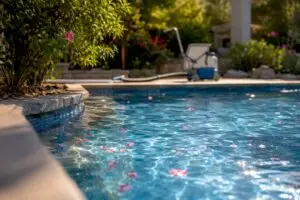
Neglecting a pool quickly creates health, safety, legal, and financial risks for the homeowner, and those risks compound faster than most people expect. Within days, standing water turns into a mosquito nursery. Within weeks, bacteria and algae make the water unsafe to touch. Left long enough, the pool becomes a legal liability under the attractive nuisance doctrine, a target for municipal fines, and a drain on your property’s resale value. Here’s what typically comes first:
- Bacterial growth and recreational water illness risk
- Green or cloudy water from algae blooms
- Pump, filter, or heater failure from lack of circulation
- Mosquito breeding within a week or two of stagnation
- Structural decline in plaster, tile, and liner surfaces
- Legal exposure tied to attractive-nuisance liability
Key Takeaways
Neglecting a pool creates compounding health, safety, legal, and financial consequences that escalate from days to years if left unaddressed.
| Point | Details |
|---|---|
| Health risks appear fast | Bacteria and recreational water illness risk rise within days of losing sanitizer balance. |
| Algae blooms within a week | Green water can develop in under a week during hot weather without circulation. |
| Equipment fails in sequence | Pumps, filters, and heaters seize or corrode when neglect continues unchecked. |
| Liability doesn’t pause with disuse | Attractive-nuisance law keeps duty of care active even on a dormant pool. |
| Wefixuglypools handles the full range | From drain-and-clean restoration to full remodels for pools beyond DIY repair. |
Table of Contents
- Common Pool Neglect Consequences for Your Health
- Why Does a Neglected Pool Turn Green So Fast?
- What Equipment Fails First When a Pool Is Neglected?
- Do Neglected Pools Attract Mosquitoes and Pests?
- How Neglect Speeds Up Structural Decline
- Are You Liable if Someone Gets Hurt in Your Neglected Pool?
- How Fast Do Pool Problems Actually Escalate?
- What’s the Best Way to Prevent Pool Neglect?
- When Should You Call a Pool Professional Instead of DIY?
- Frequently Asked Questions
- Sources
Common Pool Neglect Consequences for Your Health
Neglected pools raise your risk of recreational water illness fast, often within days of the sanitizer level dropping. Without chlorine or proper pH balance, bacteria like Pseudomonas and E. coli multiply in warm, stagnant water, and swimmers pay the price.
- Ear infections (“swimmer’s ear”) from bacteria trapped in the ear canal
- Skin rashes and folliculitis from bacterial exposure
- Gastrointestinal illness from ingesting contaminated water
- Eye irritation and conjunctivitis in poorly sanitized pools
Statistic Callout: A pool that sits untreated doesn’t just look bad, it becomes a documented public-health hazard. Municipal codes in many jurisdictions classify uncirculated, untested water as grounds for inspection, and a confirmed violation can escalate into a fine or forced abatement.
If a neighbor or guest gets sick from your water, that’s not just a maintenance failure. It’s the kind of documented harm that turns a health issue into a legal one.
Why Does a Neglected Pool Turn Green So Fast?
A pool without circulation and sanitizer will bloom algae fast, sometimes in under a week during hot weather. Algae feeds on sunlight, warmth, and the nitrates and phosphates that build up once you stop testing and treating the water.
- Day 1 to 3: Water loses clarity, starts looking hazy or dull
- Day 4 to 7: Green tint appears as algae multiplies
- Week 2: Full green, opaque water with visible growth on walls and steps
Shocking the pool, brushing the walls, and running the filter continuously can pull a mildly green pool back within a few days. Once the water turns dark green or black, or the filter clogs with organic debris, those DIY steps usually fail and you’re looking at professional drain-and-clean service.
Pro Tip: Even a pool you’re not using should run its pump a few hours daily and get a chlorine check weekly. Circulation alone prevents most early-stage algae blooms.
What Equipment Fails First When a Pool Is Neglected?
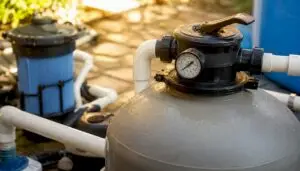
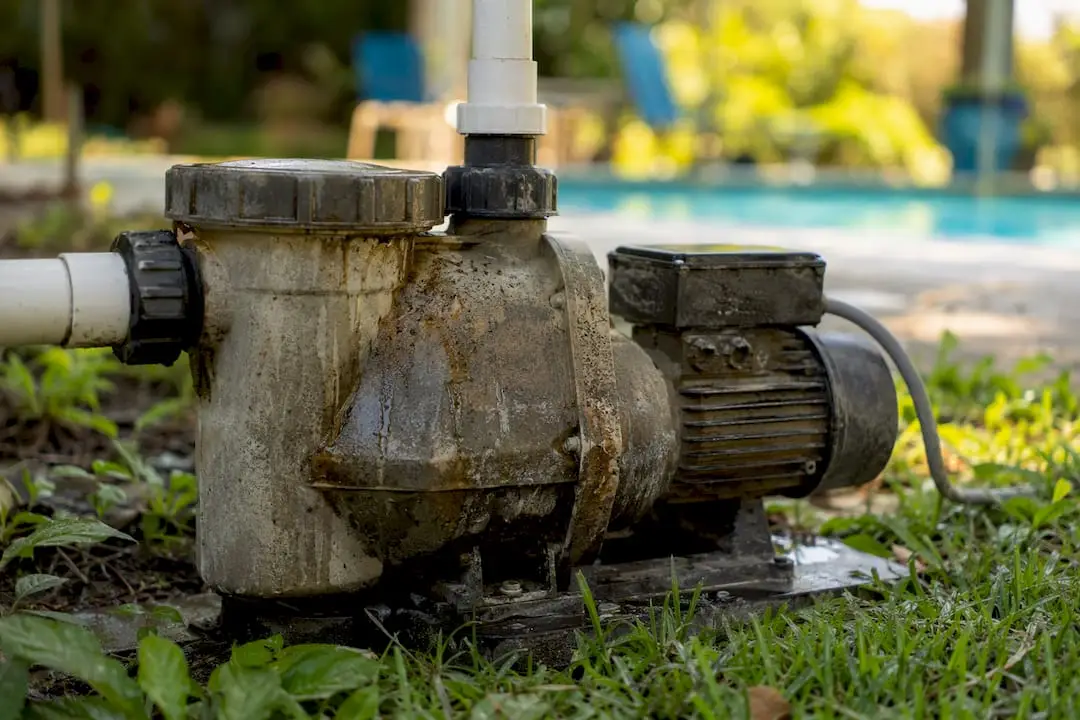
Neglected systems seize, corrode, or clog, and a small ignored issue often triggers a much bigger and more expensive failure. Pumps are usually first to go because they’re designed to run against clean, balanced water, not sludge.
- Pump motor seizure from running dry or fighting debris buildup
- Clogged cartridge or sand filters from months without backwashing or cleaning
- Heater corrosion from acidic, unbalanced water sitting in the heat exchanger
- Liner damage from algae staining, chemical imbalance, or UV exposure with no cover
Statistic Callout: A stuck pump motor might cost a modest amount to repair, but a full replacement, especially if the motor burns out and damages the filter system downstream, can be significantly more expensive. Waiting rarely saves money.
Avoid running a struggling pump “just to see if it clears,” since that’s a common way owners burn out a motor that could have been saved with an early service call. If your equipment has already started acting up, neglected pool repair priorities can help you triage what needs attention first.
Pro Tip: Listen for grinding or humming from the pump. That sound usually means the motor is fighting something, and catching it early is far cheaper than replacing it after seizure.
Do Neglected Pools Attract Mosquitoes and Pests?
Stagnant pool water is one of the most efficient mosquito nurseries a homeowner can create in a backyard. Mosquito eggs can hatch in standing water quickly in warm months, and a single untreated pool can seed an entire neighborhood’s mosquito population during those times.
- Mosquitoes, which can carry West Nile virus and other vector-borne diseases
- Rats and other rodents, drawn to debris and standing water for drinking
- Frogs, birds, and other wildlife that treat a green pool as a habitat
Scholarly research has tied delinquent, neglected pools to measurable spikes in West Nile virus risk in affected neighborhoods, which is exactly why vector-control agencies treat this as a community issue, not just a homeowner’s problem. Draining, covering securely, or maintaining circulation are the fastest ways to shut this risk down.
How Neglect Speeds Up Structural Decline
Neglect shortens the functional life of every surface and system your pool depends on, often by years. Unbalanced water doesn’t just look bad, it actively eats away at the materials holding your pool together.
- Acidic water etching plaster, leaving a rough, pitted surface
- Tile delamination as grout breaks down and tiles pop loose
- Liner shrinkage and cracking from chemical imbalance and sun exposure
- Corrosion of metal fittings, ladders, and rebar-reinforced structures
- Freeze/thaw cracking in colder climates where water sits untreated over winter
Statistic Callout: A pool that could have been fixed with a minor patch early in neglect often needs a full replaster, or even shell repair, after a few years, with repair costs escalating substantially. If your surfaces are already showing wear, pool renovation vs. repair breaks down which path fits your situation.
This is also where the common-pool resource lens matters. Research on common-pool resource framing shows that shared systems degrade fastest when individual stewardship lapses, and a backyard pool, tied into your neighborhood’s water table, mosquito ecology, and property values, behaves the same way.
Are You Liable if Someone Gets Hurt in Your Neglected Pool?
Owning a pool means you carry a duty of care regardless of whether it’s operational, and courts have long applied the attractive nuisance doctrine to hold owners responsible when children or trespassers get hurt on unsecured property. A drained, cracked, or algae-choked pool doesn’t reduce that duty. It often increases it, since a decaying pool is more likely to attract curious kids or wildlife.
- Civil judgments if someone is injured, even a trespasser
- Municipal abatement orders forcing you to drain or repair at your own cost
- Fines and liens placed on the property for code violations
- Insurance premium increases or denied claims tied to a documented hazard
Statistic Callout: A green, standing pool is treated by many municipalities as a public nuisance, which means code enforcement can act on it without waiting for a complaint.
Secure fencing and self-latching gates first. If you’re not using the pool, drain it properly or maintain minimum circulation rather than abandoning it outright, and document every repair and inspection. If you’ve already received a notice from your municipality, that’s the point to involve a local code official or attorney rather than waiting it out.
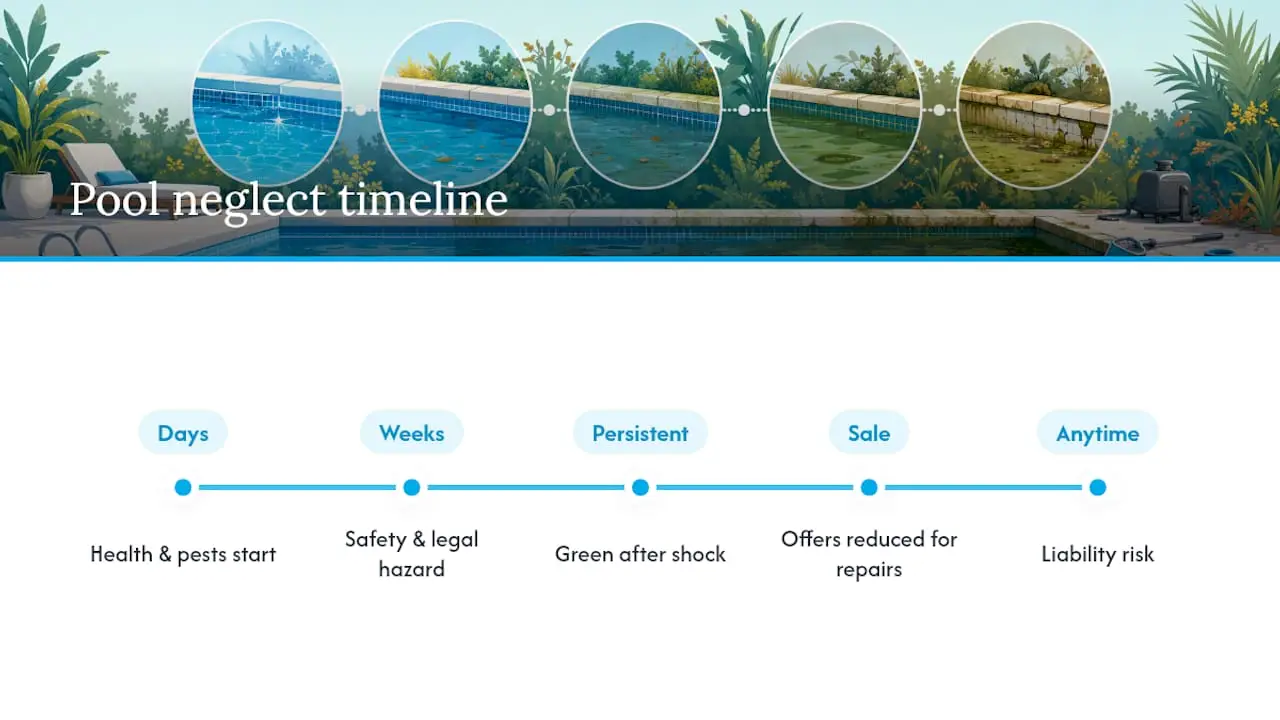
How Fast Do Pool Problems Actually Escalate?
Pool problems escalate on a predictable clock, and understanding it helps you decide what to fix first.
- Days: Mosquito eggs hatch, water starts clouding
- Weeks: Full algae bloom sets in, filters clog and strain
- Months: Equipment failures compound, odors develop from decaying organic matter
- Years: Structural damage, code liens, and full-scale replacement become the only options
Hot weather accelerates almost every stage of this timeline. A pool neglected in July can hit “full green” in the time a similarly neglected pool in October takes a month to reach.
What’s the Best Way to Prevent Pool Neglect?
Routine, simple tasks prevent nearly every consequence covered above, and they cost far less than the repairs that follow neglect. Here’s a frequency guide that keeps a pool out of trouble:
- Daily: Skim debris, check water clarity, run the pump 8 to 12 hours
- Weekly: Test and balance chlorine, pH, and alkalinity; brush walls and steps
- Monthly: Clean or backwash the filter, inspect equipment for leaks or noise
- Seasonally: Shock the pool, inspect the cover, check fencing and gate latches, prep for winter or summer heat
Pro Tip: If you’re closing the pool for winter, balance the water and add a winterizing algaecide before covering it. An unbalanced pool under a cover in January is just as prone to bacterial growth as an open one in July.
Pro Tip: A secure, locking cover does double duty. It keeps debris out and closes off the “attractive nuisance” risk that worries insurers and code officials alike.
Keep photos and receipts for every repair, chemical purchase, and inspection. If a liability question or insurance claim ever comes up, that paper trail is often what separates a quick resolution from a drawn-out dispute. For a full cost comparison across maintenance tiers, the pool maintenance cost breakdown is worth a look before you set your seasonal budget. For general seasonal upkeep beyond the pool itself, this home maintenance checklist covers related tasks worth pairing with your pool routine.
When Should You Call a Pool Professional Instead of DIY?
If your pool stays green after a full shock-and-filter cycle, shows visible cracks or shell damage, has equipment that’s seized entirely, or has drawn a municipal notice, it’s time to call a professional rather than keep experimenting.
- Persistent green water after proper treatment signals an imbalance beyond a simple shock treatment
- Visible plaster or tile damage needs assessment before it spreads further
- Multiple equipment failures at once usually means a full system evaluation, not piecemeal fixes
- Fencing or gate failures need immediate correction given the liability stakes
Pro Tip: A decade of transforming neglected pools across Greater Phoenix has shown one pattern again and again: the pools that cost the most were the ones where owners waited “just one more season” before calling for help.
A Remodeler’s View on Waiting Too Long
Most calls we get start the same way: a homeowner inherited or ignored a pool for a year or two, and now it’s a full shell repair instead of a $200 fix…
How Wefixuglypools Solves What Neglect Leaves Behind
Wefixuglypools is the specialist route for Phoenix-area pools that have gone past the point where a filter cleaning and some chlorine tablets will fix things. Where a generic pool service might patch symptoms, a decade of remodeling and restoration work in Greater Phoenix means recognizing which problems are surface-level and which are structural before you spend money twice.
Our services cover the full range of neglect consequences discussed here:
- Drain, clean, and chemical restoration for green or heavily fouled water
- Equipment repair and replacement for seized pumps, failed heaters, and clogged filters
- Replaster and tile repair for acid-etched or delaminating surfaces
- Full remodel and rebuild for pools too far gone for spot repair
- Custom features and outdoor living upgrades once the core problem is solved
If your pool matches any of the red flags above, from persistent algae to visible shell cracking, start with our pool remodeling and restoration page to request an estimate, or visit our pool repair services page if equipment failure is your immediate concern.
Frequently Asked Questions
How long can a pool sit neglected before it becomes dangerous?
Health and pest risks start within days, and the pool can become a genuine safety and legal hazard within a few weeks once algae blocks visibility and mosquitoes begin breeding.
Can a neglected pool lower my property value?
Yes. Buyers and appraisers treat a green, damaged, or non-functional pool as a liability rather than an amenity, and repair costs often get deducted directly from an offer.
Is a homeowner liable if a trespasser gets hurt in an unused pool?
Often, yes. The attractive-nuisance doctrine can hold owners responsible for injuries to children or trespassers even when the pool isn’t in active use, which is why securing the area matters regardless of your plans for it.
What’s the fastest sign that pool neglect has gone too far for DIY fixes?
Water that stays green after a full shock-and-filter cycle, or equipment that fails to respond at all, usually signals a problem beyond home remedies.
This article is general information, not a substitute for advice from a qualified lawyer. Consult a qualified legal professional about your own circumstances before acting on anything here.
Sources
- Attractive Nuisance Doctrine — Wex Legal Encyclopedia
- Poolmagazine
- Delinquent Mortgages, Neglected Swimming Pools, and West Nile Virus, California — Drexel University
- Freshwater salinization syndrome and common-pool resource framing — OSTI