
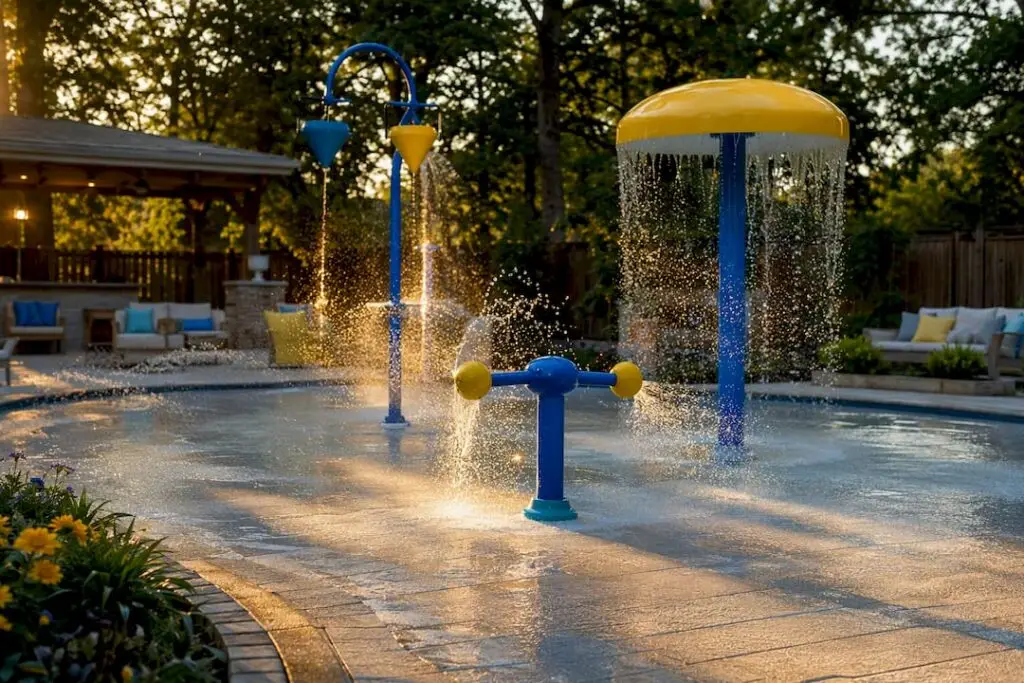
A private, backyard commercial-style splash pad is a viable remodel option, and it works best when you hire a licensed, insured pool-remodeling contractor who provides permits, equipment specs, and a milestone payment schedule. Skip that, and you’re gambling on a five-figure feature with no recourse when the pump undersizes or the concrete cracks.
Here’s what we’d do first if we were standing in your backyard right now:
- Get three written quotes. Price spreads on splash-pad features run wide because contractors scope them so differently.
- Demand a line-item scope with model numbers for pumps, filters, and controllers, not a vague “water feature package.”
- Verify insurance and permit responsibility before signing anything.
Pro Tip: Ask every bidder to show you a certificate of insurance with general liability coverage of at least the commonly recommended amount in aggregate, plus proof of workers’ compensation. A contractor who hesitates on this request is telling you something.
Key Takeaways
A private commercial-style splash pad succeeds when a licensed contractor supplies itemized equipment specs, pulls every required permit, and bills through milestone payments instead of a large deposit.
| Point | Details |
|---|---|
| Get multiple quotes | Compare pump specs, permit responsibilities, and payment terms side by side, not just total price. |
| Verify insurance and licensing | Require a certificate of insurance with $1M+ general liability and proof of workers’ comp. |
| Demand equipment specifics | Ask for pump model numbers, GPM ratings, duty cycle, and filtration strategy in writing. |
| Budget for site surprises | Request cost allowances for ledge removal or high groundwater before signing. |
| Choose milestone payments | Tie each payment to a verified stage, from permit submittal through final inspection. |
| Work with a proven remodel partner | Wefixuglypools provides itemized proposals, licensed trades, and full permit handling for backyard splash-pad remodels in the Greater Phoenix area. |
Table of Contents
- Should You Hire a Pool Pro for a Commercial Splash Pad?
- What Should Be on Your Commercial Splash Pad Contractor Checklist?
- What Technical Specs Should a Splash Pad Proposal Include?
- What Site Risks Could Blow Up Your Splash Pad Budget?
- What Should Your Contract and Payment Schedule Look Like?
- How Much Does Splash Pad Maintenance Cost Each Year?
- Does Your Splash Pad Need Winterization in Cold Climates?
- How Do You Design a Backyard Splash Pad Layout?
- What Safety Features Does a Splash Pad Need?
- How Do You Negotiate a Splash Pad Contract to Protect Yourself?
- What Homeowners Get Wrong About Splash Pad Projects
- How We Fix Ugly Pools® Helps You Build a Backyard Splash Pad
- Where to Verify Permits and Technical Specs
- Frequently Asked Questions
- Sources
Should You Hire a Pool Pro for a Commercial Splash Pad?
Hire a pool or water-feature specialist, not a general landscaper, if your project involves recirculating equipment, electrical or plumbing tie-ins, structural concrete, or anything beyond a plug-and-play kit. A landscaper who builds beautiful koi ponds may have zero experience with the hydraulics a recirculating splash-pad system demands.
Certain thresholds make a pro mandatory: large water volume, a dedicated reservoir or holding tank, multiple pumps running in sequence, permanent connections to your household water supply, or engineered retaining walls near the pad. Cross those lines and you need someone who pulls permits for a living. A licensed contractor also gets you code compliance, dependable winterization each fall, and equipment sized correctly so you’re not overpaying on your electric bill for the next decade.
What Should Be on Your Commercial Splash Pad Contractor Checklist?
Interviewing contractors for a private splash pad is different from interviewing someone to redo your patio. You’re vetting hydraulic expertise, not just aesthetic taste, and the questions you ask should reflect that.
Ask these questions during every interview:
- Have you built recirculating splash-pad systems before, and can I see photos from a similar climate?
- Who handles the plumbing and electrical work, and are they independently licensed?
- How do you calculate pump sizing, and can you walk me through a duty-cycle estimate?
- What’s your process when you hit unexpected site conditions mid-project?
Require these documents before you sign anything:
- Certificate of insurance showing general liability of $1 million or more, plus workers’ compensation coverage.
- Copies of permits pulled on at least two comparable past jobs.
- Local references, ideally with before-and-after photos of splash-pad or spray-feature installs.
- Model numbers and spec sheets for every pump, filter, and controller in the proposal.
Watch for red flags that show up more often than homeowners expect: scopes that use phrases like “we’ll handle whatever comes up,” requests for half the project cost upfront, refusal to name subcontractors or their license numbers, and no written process for change orders. Any one of these should make you pause the conversation.
Pro Tip: Insist on pump performance curves and a full equipment list with duty cycle and kilowatt estimates. Two bids can look identical on price and be wildly different on what you’ll pay to run the system every summer.
What Technical Specs Should a Splash Pad Proposal Include?
A proposal without hard numbers is a guess dressed up as a plan. Push back until you get specifics on every one of these systems.
- Reservoir or tank sizing and location, along with pump horsepower and GPM requirements matched to your nozzle count.
- Filtration strategy, including whether the contractor is using UV disinfection, chemical treatment, or both.
- Automatic drain, overflow protection, and control systems, including timers and an emergency shut-off you can reach quickly.
- Basin material: liner versus poured concrete. Liners cost less upfront and install faster, but concrete basins hold up better long-term and offer more finish flexibility, though repairs run more expensive if something cracks.
On the electrical side, insist on a licensed electrician, GFCI protection on every circuit near water, a subpanel sized for the actual load, bonded metal per code, and a marked emergency shut-off. Surface finishes matter just as much as the plumbing. Non-slip decking isn’t optional around a feature kids will run across barefoot.
Pro Tip: In coastal areas or anywhere deicing salts get used in winter, ask specifically for 316 stainless steel or nonferrous fittings. Standard hardware corrodes fast under those conditions, and replacing fittings after year two is not the surprise you want.
What Site Risks Could Blow Up Your Splash Pad Budget?
Underground surprises cause more change orders than anything else in a splash-pad build. Rock or ledge that needs blasting or breaking, a high water table that fights your excavation, soil that won’t drain, or a lot that sits close to a floodplain or wetland can each add thousands to a project that looked simple on paper.
Ask contractors to show you how they plan to handle these risks before they happen, not after:
- Site photos and soil logs or borings from the actual property, not a generic assumption.
- A specific mitigation method for groundwater, such as an underdrain system or pumped discharge.
- A dollar allowance built into the contract for ledge removal, so it’s priced rather than dropped on you mid-project.
A contractor with real experience will have photos of past jobs where they hit exactly these problems and can explain, in plain terms, what they did about it.
What Should Your Contract and Payment Schedule Look Like?
Your contract is the document that protects you when something goes sideways, so it needs teeth. Require a fully itemized scope with explicit exclusions, clear language on who pulls permits, a pricing formula for change orders agreed to in advance, defined warranty periods for both labor and equipment, and basic dispute-resolution language.
Payment structure matters just as much as scope. A modest deposit followed by milestone-based progress payments protects you far better than one large check up front. Hold back final payment, often called retainage, until the work passes inspection and you’ve signed off.
A typical milestone flow looks like this: design and permit submittal paired with the deposit, excavation and rough plumbing as milestone two, equipment installation and electrical sign-off as milestone three, finish concrete and commissioning as milestone four, and final inspection with a punchlist tied to final payment. Get the warranty in writing, too, spelling out who services the equipment and how you file a claim if something fails.

How Much Does Splash Pad Maintenance Cost Each Year?
A splash pad isn’t a set-it-and-forget-it feature. Build a realistic maintenance rhythm into your expectations from day one: a weekly visual check and surface clean, a monthly filter inspection, seasonal winterization and spring startup, and an annual full equipment service that also confirms your warranty is still active.
- Electricity for running the pump around the clock during peak season.
- Water loss from evaporation and splash-out that needs replenishing.
- Filter media replacement and UV lamp or chemical costs.
- Expected pump lifespan, which affects when you’ll face a replacement bill.
Pro Tip: Ask every bidder for a projected annual kilowatt usage and an estimated yearly operating cost. Comparing bids on installation price alone hides the energy math that actually determines what the feature costs you over ten years.
Does Your Splash Pad Need Winterization in Cold Climates?
If your region sees hard freezes, winterization isn’t optional. Water left in pipes, pumps, or the reservoir expands as it freezes and can crack fittings, split PVC, or damage the pump housing entirely.
A proper winterization plan drains the recirculation lines completely, blows out any residual water with compressed air, and either removes the pump for indoor storage or insulates it in place depending on the system design. The reservoir or holding tank needs draining too, along with any exposed plumbing runs that sit above the frost line. Controllers and electrical components should get covered or disconnected per manufacturer guidance rather than left exposed to moisture and freeze cycles all winter.
Come spring, startup isn’t just flipping a switch. A contractor should inspect seals and fittings for winter damage, check filter media, and run the system through a full cycle before you let anyone near it. Ask your contractor directly whether winterization and spring startup are included in your maintenance plan or billed separately, and get that answer in writing. It’s a cheap line item to clarify now and an expensive one to argue about in March when a cracked line floods your yard.
How Do You Design a Backyard Splash Pad Layout?
Size and layout decisions shape everything downstream, from pump sizing to daily safety. A private backyard feature typically runs smaller than what you’d see at a public park, but the same design logic applies: match the footprint to how your family actually uses the space, not to what looks impressive in a rendering.
Layout should account for sightlines, since parents need a clear view of the entire play area from a seating spot or patio. Traffic flow matters too. Spray features clustered too tightly create collision zones for running kids, while too much spread wastes water pressure and complicates plumbing runs.
Accessibility deserves real attention even on a private residential project. Zero-depth entry, which means no steps or ledges to navigate, works well for toddlers, grandparents, and anyone using a mobility aid. If you’re building this feature with multi-generational use in mind, ADA-inspired design principles, like adequate clear width for wheelchair access and slip-resistant surfacing, make the space genuinely usable for everyone in your household rather than just the kids.
Material choices around the pad edge affect both safety and long-term maintenance. Textured concrete, rubberized surfacing, and certain paver systems all resist slipping better than smooth stone or standard pool decking. Ask your contractor to show samples and, ideally, point you toward a completed project using the same material so you can see how it wears over a few seasons of sun and foot traffic.
What Safety Features Does a Splash Pad Need?
Safety on a splash pad comes down to a handful of non-negotiables, and a proposal missing any of them deserves a second look. Surface slip resistance sits at the top of the list. Wet, textured, slip-rated surfacing around every spray feature reduces fall risk far more than standard smooth decking ever will.

Water depth limits matter even on a zero-depth feature, since standing water can still pool in low spots after heavy use. Your contractor should grade the surface to drain completely between cycles rather than allowing puddles to collect. Emergency shut-offs need to be within easy reach, clearly marked, and something every adult in the household knows how to operate without hunting for instructions during a panic moment.
Signage might feel like overkill for a private residence, but a small posted notice near the controls, listing operating instructions and an emergency contact, pays off the one time a babysitter or visiting relative needs it. Beyond signage, ask whether the system includes a timer that automatically shuts off spray features after a set interval, which limits both water waste and the chance of a feature running unsupervised for hours. None of these items add meaningful cost to a project, but skipping them is exactly the kind of shortcut that turns a fun backyard upgrade into a liability.
How Do You Negotiate a Splash Pad Contract to Protect Yourself?
Contract negotiation is where most homeowners either protect themselves or leave money and leverage on the table. Start with scope clarification. Every line item should describe exactly what’s included and what isn’t, down to whether decking, landscaping restoration, and cleanup fall inside the price or outside it.
Liability language deserves careful reading, not a skim. Confirm the contract names who carries insurance for what, and ask your contractor to explain, in plain terms, what happens if a subcontractor causes damage to your property during the work. A written scope that separately itemizes excavation, plumbing, electrical, drainage, and equipment gives you something concrete to hold the contractor to if a dispute arises later.
Dispute-resolution clauses often get skipped entirely in residential contracts, which is a mistake. A simple clause specifying mediation before litigation saves both parties time and legal fees if a disagreement over workmanship or scope comes up down the road. Also negotiate the change-order process up front: get a per-hour or per-item pricing formula in writing so a surprise underground rock formation doesn’t turn into an open-ended invoice. Finally, never let a contractor talk you out of milestone payments in favor of a large deposit. That single negotiating point protects more of your money than any other clause in the document.
What Homeowners Get Wrong About Splash Pad Projects
The mistake we see most often isn’t a bad contractor. It’s a homeowner who assumes a splash pad is just “extra plumbing” and treats the hiring process casually, the same way they’d hire someone to redo a flower bed. It’s not the same category of work, and the projects that go sideways almost always trace back to that assumption.
The fix is exactly the checklist laid out above: verified insurance, a licensed electrician on the job, permits pulled and documented, and milestone payments instead of a fat deposit. We’ve walked backyards where a previous contractor undersized the pump by half and the client had no recourse because nothing was in writing. A qualified team will happily do a site walk before you sign anything, precisely because the site conditions drive so much of the real cost.
How We Fix Ugly Pools® Helps You Build a Backyard Splash Pad
Wefixuglypools is the alternative to hiring an unlicensed handyman or a general landscaper for a backyard splash-pad remodel: we’ve spent a decade building and repairing pool features across the Greater Phoenix area, and every proposal comes itemized, not guessed at.

When you work with us, you get the assurances this article just walked you through as standard practice, not upsells: certificates of insurance on request, written warranties on workmanship and equipment, itemized proposals with real model numbers, licensed trade partners handling electrical and plumbing, and full permit handling from submittal to final signoff. We’ve built custom water features into remodels across the Valley, and we know exactly which pump specs and drainage details make a splash pad hold up through an Arizona summer without draining your electric bill.
Ready to see what a splash pad would cost on your property? Request a line-item remodeling quote and we’ll schedule a site visit to walk you through the specifics before anything gets signed.
Where to Verify Permits and Technical Specs
Check with your local building department for building, plumbing, and electrical permit requirements, and ask about stormwater or environmental review if your property sits near a floodplain or wetland. Cross-reference contractor equipment lists against manufacturer install manuals, which spell out drain sizing, slope, and pump placement requirements you can hold proposals to.
- Ask your contractor for permit numbers and inspection signoffs, then verify them directly with your local building authority.
- Review backflow preventer maintenance guidance if your system ties into household water supply.
- Compare proposed specs against kit manufacturer manuals for drain, slope, and pump requirements.
Frequently Asked Questions
What’s the difference between a splash pad and a pool?
A splash pad recirculates a small water volume through spray features across a flat, zero-depth surface, while a pool holds standing water at swimming depth. Splash pads generally cost less to run and carry lower drowning risk, but they still need proper recirculation, filtration, and electrical safety.
How much does a backyard commercial splash pad cost to install?
Cost varies widely based on size, pump count, and finish materials, so get written quotes from at least three contractors before budgeting. Line-item proposals with model numbers let you compare bids accurately instead of guessing from a single lump-sum number.
Do I need a permit for a backyard splash pad?
Most installations trigger building, plumbing, and electrical permits at minimum, and some jurisdictions add stormwater review. Confirm with your contractor who is responsible for pulling permits and ask to see documentation once they’re filed.
Can I install a splash pad kit myself?
Simple plug-and-play kits with minimal plumbing may suit a DIY approach, but anything involving a dedicated reservoir, multiple pumps, or electrical tie-ins calls for licensed trades. Manufacturer manuals list specific slope, drain, and pump requirements that are easy to get wrong without experience.
How long does a splash pad installation take?
Timelines run from design and permit submittal through excavation, equipment installation, finish work, and final inspection, typically spanning several weeks depending on permit turnaround. Permit delays are the most common schedule risk, which is why experienced contractors manage that process directly.
Sources
- How to hire a waterfall or fountain installation pro (Angi)
- What To Ask Contractors When Installing New York Water Features – Cultivating Flora
- Pre-planning for splash pad considerations (Aquatix / Playlsi)
- Rain Deck splash pad kit installation manual (Rain Deck)


