Professional pool service is the scheduled, expert maintenance of a residential swimming pool through chemical balancing, physical cleaning, and equipment inspection performed by a trained technician. Most homeowners think of it as someone skimming leaves off the surface. The reality is far more thorough. A complete service visit covers water chemistry testing, debris removal, brushing, vacuuming, basket emptying, and a full equipment check. Understanding what professional pool service actually includes helps you protect your investment, keep your family safe, and avoid expensive repairs down the road.
What does a professional pool service visit include?
A standard professional pool service visit follows a 10-step process that begins with mandatory water testing before any chemicals are added. That sequence matters. Adding chemicals to untested water is one of the most common DIY mistakes, and it leads to imbalanced pH, cloudy water, and irritated skin.
A full visit covers these tasks in order:
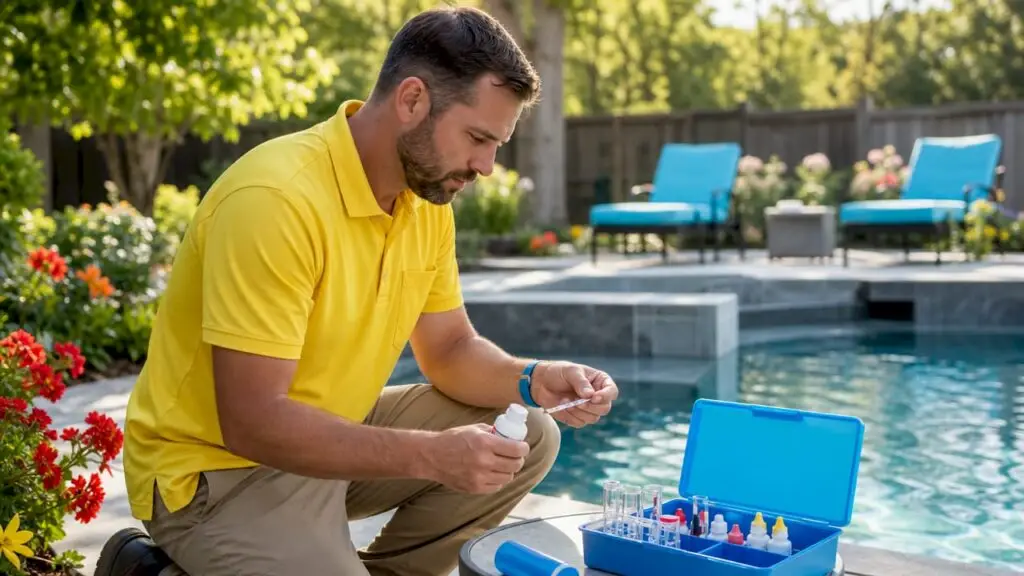
- Water testing using a test kit or digital meter to measure pH, chlorine, alkalinity, and calcium hardness
- Chemical adjustment based on test results, adding chlorine, pH increaser or decreaser, and stabilizer as needed
- Surface skimming to remove leaves, insects, and floating debris from the water surface
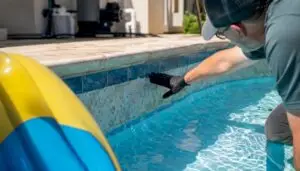
- Tile and wall brushing to prevent algae buildup along the waterline and pool walls
- Vacuuming the pool floor to remove settled debris and fine particles
- Emptying skimmer and pump baskets to maintain proper water flow through the filtration system
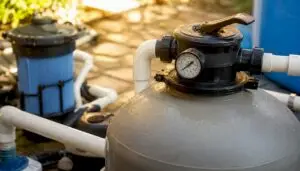
- Backwashing the filter when pressure readings indicate it is needed
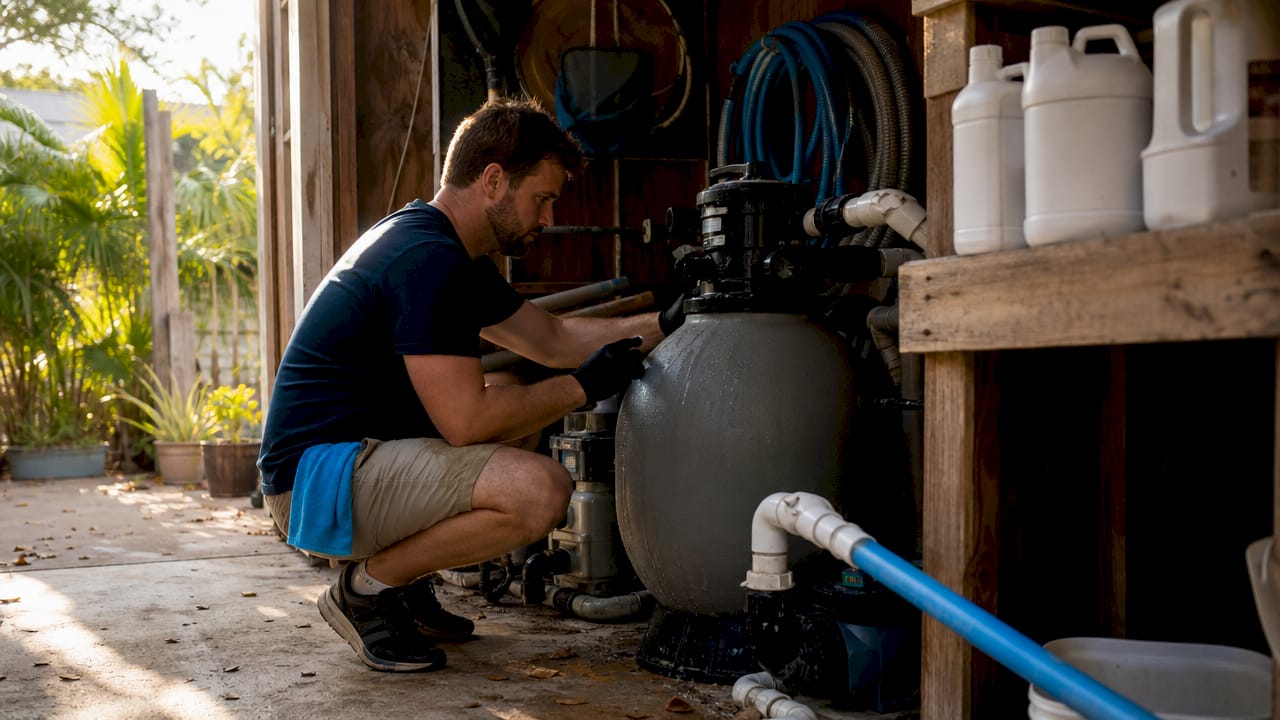
- Equipment inspection covering the pump, motor, filter, heater, and any automation systems
- Water level check to keep the skimmer operating correctly
- Service log entry documenting every chemical added and every observation made during the visit
The entire visit typically takes 15 to 30 minutes. That efficiency comes from industrial-grade equipment and trained technicians who know exactly what to look for. A homeowner doing the same tasks without professional tools and experience typically spends 1–3 hours per week.
Pro Tip: Ask your pool service provider to share their digital visit log after every appointment. That record shows exactly which chemicals were added and flags any equipment concerns before they become costly problems.
Why professional pool service beats DIY maintenance
Professional pool service represents a homeowner’s choice to trade time and liability for expert care and insurance-backed protection. That trade-off pays off in several concrete ways.
The time savings alone are significant. DIY pool maintenance takes 1–3 hours per week, which adds up to 50–150 hours per year. A professional technician handles the same work in a fraction of that time, and the results are more consistent because they use calibrated equipment and follow a structured process every visit.
The financial case is equally strong. Preventive professional maintenance reduces equipment replacement frequency by 35%, helping homeowners avoid annual DIY repair costs that average $1,200 to $2,000. Properly maintained pumps last 8–12 years. Without consistent care, that lifespan drops to 5–8 years.
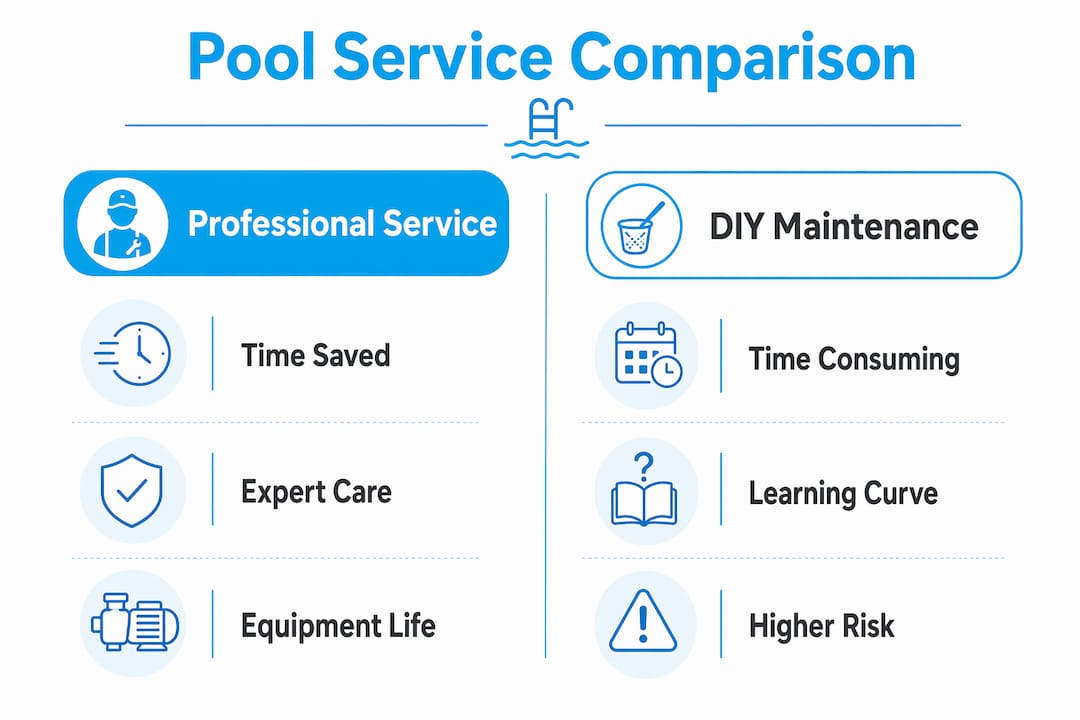
Professionals also catch problems that homeowners miss entirely. A trained technician can detect silent equipment failures like motor bearing wear or rising filter pressure up to a month before the homeowner notices anything wrong. That early warning prevents the kind of catastrophic failures that require emergency repairs.
Key benefits of professional pool service at a glance:
- Consistent water chemistry that protects swimmers from irritation and prevents algae growth
- Early equipment diagnosis that catches wear before it becomes a breakdown
- Time savings of 50–150 hours per year compared to DIY maintenance
- Reduced repair costs through preventive care and routine inspections
- Insurance and liability coverage that protects you if something goes wrong on the job
- Documented visit records that create accountability and track pool health over time
Pro Tip: If you value your free time at $75 or more per hour, or if you own a saltwater or automated pool system, professional pool service is almost always the more cost-effective choice when you factor in your time and the risk of DIY errors.
What types of pool service plans are available?
Pool maintenance services come in several tiers, and the differences between them matter more than most homeowners realize. Choosing the wrong plan is one of the most common sources of frustration for pool owners.
| Plan Type | What’s Included | What’s Excluded | Typical Monthly Cost |
|---|---|---|---|
| Chemistry-only | Water testing and chemical balancing | Skimming, brushing, vacuuming, equipment checks | $60–$90 |
| Basic cleaning | Skimming, brushing, vacuuming, basket emptying | Chemical balancing, equipment inspection | $80–$110 |
| Full-service weekly | All cleaning tasks plus chemistry and equipment checks | Major repairs, filter replacement | $130–$180 |
| Premium package | Full service plus priority scheduling and emergency response | Major equipment overhauls | $180–$250+ |
Weekly residential pool service costs $130 to $180 per month for all-inclusive weekly maintenance in major markets. That price covers water chemistry balancing, equipment inspections, and debris removal. Premium packages add emergency response coverage and priority scheduling for homeowners who want full protection.
Read the contract carefully before signing. Some companies offer chemistry-only or reduced-scope plans where homeowners handle skimming and basic cleaning themselves. Those plans cost less but require consistent effort from you. If you miss a week of skimming, algae can take hold quickly, especially in warm climates like Arizona.
For a full breakdown of what each plan costs and how to budget for it, the pool maintenance cost breakdown from Wefixuglypools walks through typical expenses in detail.
How to hire the right pool service provider
Hiring the right pool service company protects your pool, your budget, and your time. The wrong choice leads to missed visits, chemical imbalances, and voided equipment warranties. Use these criteria when evaluating providers:
- Verify certifications. Look for technicians certified by the Pool & Hot Tub Alliance (PHTA) or the National Swimming Pool Foundation (NSPF). Certification proves they understand water chemistry and safety standards.
- Confirm insurance coverage. Your provider should carry general liability insurance. If a technician damages your equipment or injures themselves on your property, you need that protection in place.
- Check reviews and references. Look for patterns in reviews, not just star ratings. Consistent complaints about missed visits or poor communication are red flags.
- Review the service contract carefully. A solid pool service contract spells out exactly which tasks are included, how often visits occur, and what happens if a visit is missed.
- Ask about digital records. Providers who use digital service logs give you verifiable proof of every visit, every chemical added, and every equipment observation.
- Clarify emergency response. Ask whether emergency service is included in your plan or billed separately, and what the after-hours rate looks like.
The difference between a good and a mediocre provider often comes down to communication and documentation. A company that sends you a service report after every visit is one you can hold accountable.
What homeowners often miss about professional pool service
Most homeowners focus on the obvious benefits of pool maintenance services: clean water and a working pump. The less obvious advantages are often where the real value lives.
Emergency response coverage is one of the most underrated features of a premium service plan. Emergency repair fees can run $300 to $600, with rates increasing 150–200% during holidays and peak summer weekends. A plan that includes emergency coverage pays for itself the first time your pump fails on a Saturday afternoon in july.
Digital service logs are the only verifiable proof of what maintenance was performed and which chemicals were used during each visit. Without that documentation, you have no way to verify that your pool received the care you paid for. Always ask a prospective provider how they document their visits before signing a contract.
Some homeowners also benefit from a hybrid approach. If you enjoy being hands-on, you can handle skimming and basket emptying yourself while leaving chemical balancing and equipment inspection to a professional. This arrangement reduces your monthly cost while keeping the technical work in expert hands. The key is choosing a chemistry-only or partial-service plan that clearly defines who does what.
Pro Tip: Review your weekly service needs before committing to a plan. Pools in hot climates or with heavy bather loads need full weekly service. A chemistry-only plan in those conditions will not keep your water safe.
Key Takeaways
Professional pool service delivers consistent water safety, longer equipment life, and real time savings that DIY maintenance cannot match at the same level of reliability.
| Point | Details |
|---|---|
| Service visit scope | A full visit covers 10 tasks from water testing to equipment inspection, not just skimming. |
| Cost range | Full-service weekly plans run $130–$180 per month in most major markets. |
| Equipment longevity | Professional maintenance extends pump life to 8–12 years versus 5–8 years with DIY care. |
| Plan selection | Read contracts carefully; chemistry-only plans exclude physical cleaning tasks. |
| Documentation matters | Digital service logs are the only verifiable proof of what was done each visit. |
Why I think most homeowners underestimate what they’re paying for
After working alongside pool professionals and seeing hundreds of pool transformations at Wefixuglypools, I’ve noticed a consistent pattern. Homeowners who switch from DIY to professional service almost always say the same thing: “I didn’t realize how much I was missing.”
The chemistry piece is where most DIY efforts fall short. Water balance is not just about keeping the pool clear. Imbalanced pH corrodes equipment, degrades plaster, and irritates eyes and skin. A professional technician calibrates their test kit regularly and follows a structured protocol every single visit. That consistency is hard to replicate on your own, especially during a busy week.
The cost argument for DIY also tends to fall apart once you account for your time honestly. If you spend two hours a week on pool maintenance and value your time at all, the math shifts quickly in favor of professional service. Add in one emergency repair per year, and the savings from DIY often disappear entirely.
My honest advice: prioritize contract clarity and technician qualifications over price. A cheap plan with vague scope language will frustrate you. A well-documented, properly scoped plan from a certified technician is worth every dollar, especially if your pool has automation, a saltwater system, or a heater. Those systems require expertise that goes well beyond basic cleaning. If you’re on the fence, compare your options carefully using a pool service vs. DIY breakdown before committing.
— Brian
When your pool needs more than just maintenance
Professional pool care keeps a healthy pool healthy. But if your pool has cracked plaster, outdated equipment, faded tile, or a layout that no longer works for your family, maintenance alone will not fix it.
Wefixuglypools specializes in pool remodeling and restoration for homeowners across the Greater Phoenix area who want a pool that looks and functions the way it should. From surface resurfacing to full custom redesigns, our team has completed hundreds of transformations over the past decade. If your pool needs structural or cosmetic repairs alongside regular upkeep, our pool repair services are built to address exactly that. Reach out to Wefixuglypools for a consultation and find out what your pool could look like with the right team behind it.
FAQ
What is professional pool service?
Professional pool service is scheduled maintenance performed by a trained technician, covering water chemistry testing, chemical balancing, physical cleaning, and equipment inspection. A standard visit follows a structured 10-step process and typically takes 15 to 30 minutes.
What does pool service include each week?
A full-service weekly visit includes water testing, chemical adjustment, skimming, brushing, vacuuming, basket emptying, filter backwashing when needed, and an equipment inspection. Some lower-cost plans exclude physical cleaning tasks, so always confirm the scope in writing.
How much does professional pool service cost per month?
Weekly residential pool service costs $130 to $180 per month for all-inclusive maintenance in most major markets. Chemistry-only or reduced-scope plans cost less but require the homeowner to handle physical cleaning tasks.
How do I hire a reliable pool service company?
Verify that technicians hold PHTA or NSPF certification, confirm the company carries general liability insurance, and review the service contract for a clear list of included tasks. Ask specifically about digital visit documentation before signing.
Is professional pool service worth it compared to DIY?
Professional service is worth it for most homeowners, particularly those with complex pool systems or limited time. Preventive professional maintenance reduces equipment replacement frequency by 35% and helps avoid annual repair costs that average $1,200 to $2,000 with DIY care.