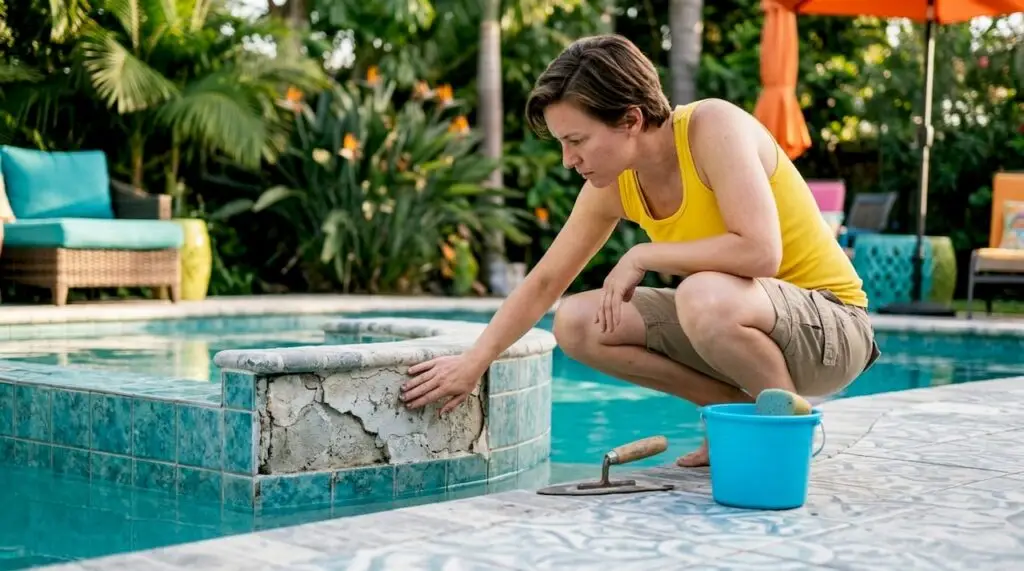
Pool spalling is defined as the flaking, peeling, or chunking of a pool’s concrete or plaster surface caused by internal structural failure, most commonly steel rebar corrosion beneath the shell. Often called “concrete cancer,” this condition goes far deeper than cosmetic damage. Understanding what is pool spalling matters because ignoring it leads to leaks, safety hazards, and full pool renovations that cost far more than early repairs. Pool plaster typically lasts 7 to 15 years, and spalling signals the surface has reached or exceeded that window.
What is pool spalling and why does it happen?
Pool spalling is a material science failure where internal stresses exceed the concrete’s fracture toughness, causing the surface to crack and separate. The result is visible flaking, rough patches, and in advanced cases, chunks of plaster breaking away from the shell. This is not a surface stain or minor blemish. It is a structural problem that starts from the inside out.
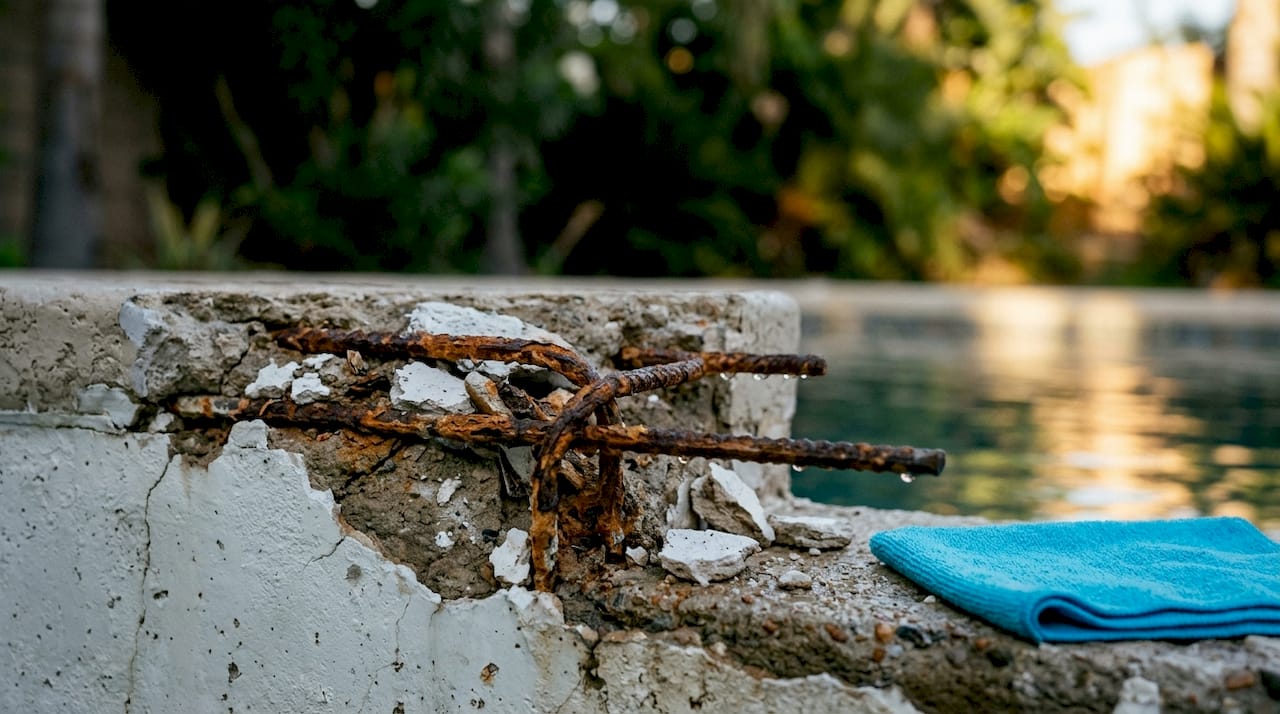
The most common trigger is steel rebar oxidation. When moisture reaches the rebar embedded in the pool shell, the steel rusts and expands 4 to 7 times its original volume. That expansion generates enormous pressure inside the concrete, forcing the surface to crack and pop outward. By the time you see flaking on the pool wall, the corrosion has already been building for months or years.
What causes pool spalling?
Several factors work together to create the conditions for spalling. No single cause acts alone. Understanding the full picture helps you address the root problem rather than the symptom.
- Water penetration through microcracks. Tiny surface cracks let water reach the rebar layer. Once moisture contacts steel, oxidation begins and the clock starts ticking.
- Chemical imbalances. Low pH below 7.2 and low calcium hardness cause water to leach minerals directly from the plaster and concrete. This weakens the surface and accelerates deterioration.
- Freeze-thaw cycles. Water trapped inside the concrete expands when it freezes. Repeated cycles crack the shell from within, creating new pathways for moisture.
- Construction defects. Pools built with less than 40mm of concrete cover over the rebar are far more vulnerable. Legacy pools from the 1980s and 1990s frequently have this deficiency, making them a high-risk group.
- Poor curing during construction. Concrete that dries too fast or unevenly develops internal weaknesses that shorten the surface’s lifespan.
Pro Tip: Test your pool water chemistry at least once a week during swim season. Keeping pH between 7.2 and 7.8 is one of the simplest ways to protect your pool surface from chemical attack.
These causes interact. A pool with thin concrete cover and slightly acidic water will spall far faster than one where only a single risk factor is present. Knowing which factors apply to your pool helps you prioritize the right repairs and prevent improper pool service from making things worse.
How do you identify pool spalling?
Catching spalling early saves money and prevents structural damage from compounding. The signs range from subtle to obvious, and knowing the difference between surface stains and true structural spalling is the most important skill a homeowner can develop.
Visual signs to look for:
- Flaking or peeling plaster, especially near the waterline or steps
- Rough, pitted patches where the surface texture has changed
- Rust-colored stains on the pool wall or floor
- Bubbled or pushed-out sections of concrete
- Chunks of plaster loose at the bottom of the pool
Pro Tip: Do not assume a rust stain is just a mineral deposit. Surface rust stains often signal rebar corrosion beneath the surface. Treat them as a warning, not a cosmetic issue.
The most reliable field test is the drummy test. Tap the pool shell firmly with a hard object, like a coin or the handle of a screwdriver. A sharp click means healthy concrete. A dull, hollow thud means the plaster has delaminated from the shell beneath it. That hollow sound is the acoustic signature of spalling in progress.
A common mistake homeowners make is confusing surface stains with structural failure. Algae stains, calcium deposits, and metal staining all look alarming but do not indicate spalling. The key distinction is whether the surface is physically separating from the shell. If the plaster lifts, flakes, or sounds hollow when tapped, you have a structural issue. If the surface is intact but discolored, you likely have a chemistry or cleaning problem. When in doubt, call a professional for a structural evaluation before spending money on cosmetic treatments that will not hold.
Understanding pool plaster lifespan also helps set realistic expectations. A pool approaching 15 years old with visible surface changes deserves a professional inspection, not another round of patching.
What are the risks of leaving pool spalling untreated?
Untreated spalling does not stabilize on its own. It accelerates. The structural risks compound over time, and the financial cost of waiting grows with each season.
- Structural weakening. As rebar corrodes and expands, it destroys the bond between the steel and the surrounding concrete. The pool shell loses tensile strength and becomes prone to cracking.
- Water leaks. Cracks created by spalling allow pool water to escape into the surrounding soil. Leaks erode the ground beneath the pool and can destabilize the entire structure.
- Safety hazards. Rough, jagged spalled surfaces cut swimmers’ feet and hands. Deteriorating steps and ledges become slip risks that create real liability for property managers.
- Escalating repair costs. Ignoring small rust spots leads to much higher repair costs later. A minor spalling repair addressed early costs a fraction of a full structural renovation.
- Shortened pool lifespan. A pool that reaches advanced spalling without intervention may require complete demolition and reconstruction rather than resurfacing.
The financial logic is straightforward. Early detection and repair protects your investment. Delayed action multiplies the cost and complexity of the fix.
How do you fix and prevent pool spalling?
Repair options range from temporary patches to full resurfacing, and the right choice depends on how far the spalling has progressed. One fact is non-negotiable: patching spalling is temporary. Because spalling results from bond failure between plaster and concrete, a patch applied over a compromised surface will not stop the progression. It buys time at best.
Long-term repair and prevention options:
- Full resurfacing. Removing the existing plaster layer and applying a new surface restores bond integrity across the entire shell. This is the minimum effective repair for pools with widespread spalling.
- Pool remodeling. For pools with structural rebar damage or low concrete cover, a full pool remodeling and restoration project addresses both the surface and the underlying structural defects.
- Polyurea coatings. Advanced coatings like polyurea create a waterproof barrier that resists chemical attack and prevents moisture from reaching the rebar. Applied proactively, they significantly extend surface life.
- Water chemistry management. Maintain pH between 7.2 and 7.8 and keep calcium hardness within the recommended range. These two parameters alone account for a large share of preventable surface damage.
- Routine inspections. Walk the pool perimeter and run the drummy test annually. Catching delamination early means addressing it before it becomes structural.
| Repair approach | Best for | Longevity |
|---|---|---|
| Patch repair | Minor isolated damage | Short term only |
| Full resurfacing | Widespread surface spalling | 7–15 years |
| Structural remodel | Rebar damage, low concrete cover | 20+ years |
| Polyurea coating | Prevention or post-resurfacing protection | Long term |
Pro Tip: If you are buying an older home with a pool built before 2000, budget for a professional spalling inspection before closing. Pools with low concrete cover are a latent defect that does not show up on a standard home inspection.
Maintaining a healthy pool environment also reduces the conditions that accelerate spalling. Keeping the pool clean and balanced, especially if you host backyard swim activities regularly, reduces chemical stress on the surface over time.
Key Takeaways
Pool spalling is a structural failure driven by rebar corrosion, and only professional resurfacing or remodeling provides a lasting fix.
| Point | Details |
|---|---|
| Spalling definition | Flaking or peeling caused by internal rebar corrosion expanding 4 to 7 times its volume. |
| Key risk factors | pH below 7.2, less than 40mm concrete cover, and water penetration through microcracks. |
| Early detection | Use the drummy test annually; a hollow thud confirms delamination beneath the surface. |
| Patching does not work | Bond failure requires full resurfacing to restore structural integrity long term. |
| Prevention priority | Keep pH between 7.2 and 7.8 and apply polyurea coatings to block moisture intrusion. |
What I’ve learned after years of watching pools fail too soon
The homeowners who call us after the worst spalling damage almost always say the same thing: “I thought it was just a stain.” That single misread costs them thousands of dollars more than an early inspection would have.
The uncomfortable truth about pool spalling is that cosmetic fixes are not just ineffective. They are actively harmful. When a homeowner patches over a spalled section without addressing the rebar beneath it, they seal moisture inside the shell. The corrosion continues in a warm, wet environment with no way out. The next time the surface fails, it fails bigger.
Legacy pools built in the 1980s and 1990s are the highest-risk group I see. Thin concrete cover was standard practice then, and those pools are now 30 to 40 years old. Many of them have never had a structural inspection. If your pool is from that era and you have not had a professional evaluate the shell, that is the single most valuable thing you can do this year.
My honest advice: do not let a contractor talk you into another round of patching if the drummy test reveals widespread delamination. A full resurfacing or remodel is a real investment, but it is the only repair that actually solves the problem. Anything less is money spent on borrowed time.
— Brian
Pool spalling repair done right
If your pool shows signs of spalling, the next step is a professional evaluation from a team that specializes in structural pool repair, not just cosmetic touch-ups.
Wefixuglypools has spent a decade transforming pools across the Greater Phoenix area, including hundreds of spalling repairs and full structural remodels. We assess the full condition of your pool shell, identify the root cause of surface failure, and recommend the repair that actually lasts. Whether your pool needs professional resurfacing or a complete structural renovation, our team brings the experience to do it right the first time. Contact Wefixuglypools to schedule your pool evaluation and protect your investment before the damage goes deeper.
FAQ
What is pool spalling exactly?
Pool spalling is the flaking, peeling, or chunking of a pool’s concrete or plaster surface caused by internal rebar corrosion. The corroding steel expands 4 to 7 times its original volume, forcing the surface to crack and separate from the shell.
How do I know if my pool has spalling or just stains?
Tap the pool surface with a coin or hard object. A hollow, dull thud indicates delamination and true spalling. A sharp click means the surface is still bonded and the issue is likely a stain or mineral deposit.
Can I patch pool spalling myself?
Patching is a temporary measure at best. Because spalling results from bond failure between plaster and concrete, a surface patch does not stop the underlying corrosion. Full resurfacing is the only repair that restores structural integrity.
What water chemistry prevents pool spalling?
Maintain pH between 7.2 and 7.8 and keep calcium hardness within the recommended range. Water that falls below pH 7.2 leaches minerals from the plaster and accelerates surface breakdown.
How long does pool plaster last before spalling becomes a risk?
Pool plaster typically lasts 7 to 15 years. Pools approaching or exceeding that range, especially those built before 2000 with low concrete cover, carry the highest spalling risk and benefit most from a professional structural inspection.