
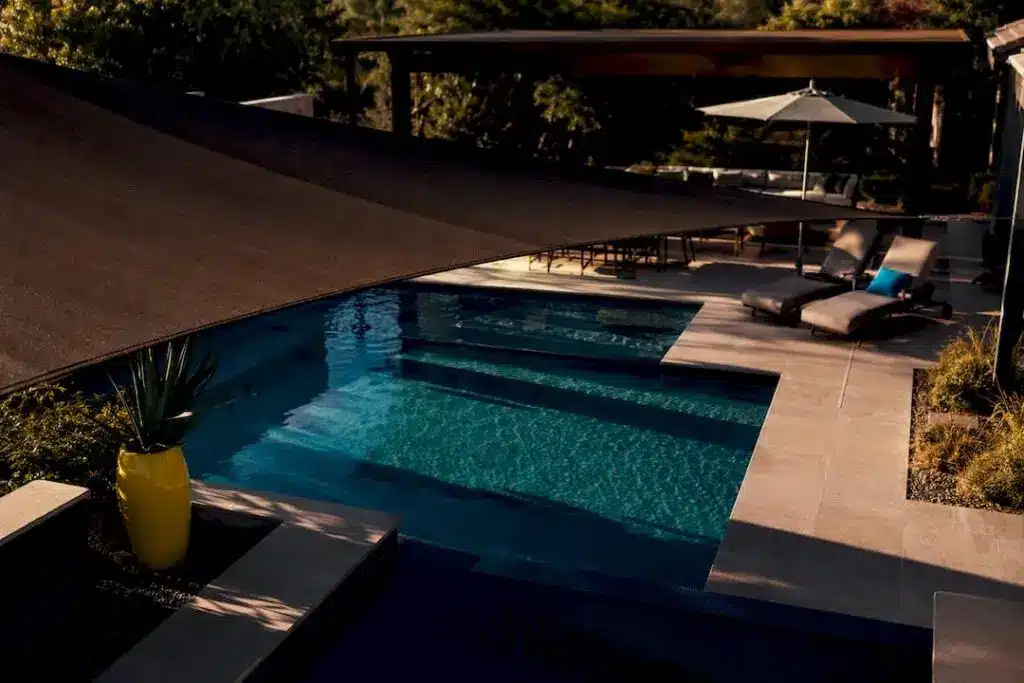
For most homeowners, the fastest and most flexible path to a cooler pool is layering: start with portable shade like cantilever umbrellas or shade sails for instant relief, then add a pergola or pavilion later for lasting value. Prioritize UPF-rated fabric and wind-safe anchoring from day one, and use the option list below to pick your starting point.
TL;DR:
- Proper planning involves observing sun and shadow patterns throughout the day to determine the best placement for shade structures and avoid over-coverage.
- Portable options like umbrellas and shade sails are cost-effective and easy to install, but require proper anchoring and regular maintenance to last.
- Permanent structures such as pergolas, pavilions, and motorized awnings often need permits and professional installation, increasing initial costs and complexity.
- Regular upkeep, including cleaning, tension adjustments, and seasonal removal, extends the lifespan of shade solutions and maintains their safety and effectiveness.
- Coordinating shade design with a comprehensive remodel allows for integrated planning of drainage, electrical wiring, and structural support to optimize longevity and functionality.
Table of Contents
- Pool Shade Ideas Ranked by Permanence and Budget
- How to Choose the Right Shade for Your Pool
- What Pool Shade Actually Costs, and When to DIY
- Placement, Anchoring, and Wind Safety Around the Pool
- Keeping Your Shade Structure Working for Years
- Adjusting Pool Shade for the Season
- What a Decade of Pool Remodels Taught Us About Shade
- Build Your Layered Shade Plan
- Sources
Pool Shade Ideas Ranked by Permanence and Budget
The right shade option depends on the problem you’re solving. Umbrellas handle flexible spot shade, pergolas deliver permanent architectural shade, and cabanas add resort-style privacy and amenities. Here’s how the main categories stack up.
- Market umbrellas. Best for a single lounge chair or side table. Pro: cheap and repositionable. Con: tips easily without a heavy base. Setup takes minutes, no tools required.
- Cantilever umbrellas. Best for shading a group without a center pole in the way. Pro: covers more area, adjustable angle. Con: needs a weighted or bolted base. DIY-friendly if you skip the bolted version.
- Shade sails. Best for covering an entire lounge deck or a stretch of pool edge. Pro: modern look, blocks a high share of UV while staying breathable. Con: needs solid anchor points and correct tension. Usually a half-day install between two posts or a post and the house.
- Pergolas. Best for homeowners who want a defined outdoor room. Pro: adds real property value and year-round structure. Con: requires footings and often a permit. Commonly needs a professional.
- Pavilions. Best for full outdoor living setups with a kitchen or fireplace nearby. Pro: maximum shade and weather protection. Con: the biggest investment on this list. Always a professional job.
- Retractable motorized awnings. Best for people who want sun sometimes and shade on demand. Pro: adjustable without moving furniture. Con: electrical work adds cost and complexity. Requires a pro for wiring and mounting.
- Pop-up canopies. Best for parties or weekend use. Pro: stores flat, no commitment. Con: least wind-resistant option here. Setup takes under ten minutes.
- In-water or in-deck umbrellas. Best for freeform pools where a poolside base isn’t practical. Pro: shade without cluttering the deck. Con: sleeve installation means planning during a resurfacing or remodel. Best handled alongside other deck work.
- Landscaping and living screens. Best for long-term, natural-looking shade. Pro: cools the whole yard, not just the pool. Con: takes years to mature. Zero install, just planting and patience.
Pergolas, pavilions, and motorized awnings are the three most likely to require a permit or licensed installer, so budget extra planning time for those.
How to Choose the Right Shade for Your Pool
Shade the people, not the water. Chasing full pool coverage usually wastes money on structures sized for a problem that doesn’t exist, when a well-placed umbrella over the lounge chairs solves the actual complaint: skin baking at 1:00 PM.
Start by watching your yard for a full day, especially between 10:00 AM and 4:00 PM, and mark where the hot spots and glare actually land. That single observation tells you more than any product review.
- Map the sun path. Note where shadows fall at 10:00, noon, 2:00, and 4:00, and flag the zones people avoid.
- Check anchor points. Look for solid ground, existing footings, or a wall stud that can take real load, and confirm there’s no buried conduit or plumbing underneath.
- Confirm setbacks and rules. Check HOA guidelines and local permit thresholds before ordering a structure that needs concrete footings.
- Assess wind exposure. An open backyard on a ridge needs a sturdier system than a fenced, sheltered patio.
- Ask contractors direct questions. What’s the wind rating? Are footings engineered to local code? Can you provide references from recent installs?
A contractor who can’t answer the wind-rating question, has no engineered footing plan, or won’t share references is a red flag worth walking away from.
Pro Tip: Before you buy anything, tape stakes into the ground at your proposed anchor points and watch how the shadow moves over a weekend. It’s the cheapest planning tool you’ll ever use.

Weigh your decision against four factors: budget, how permanent you want the fix to be, how much upkeep you’re willing to do, and whether you’ll eventually want lighting or fans built into the same structure.
What Pool Shade Actually Costs, and When to DIY
Price ranges vary widely because sizing, motorization, and footings drive most of the cost swing.
- Shade cloth and sails: priced depending on size and anchor complexity.
- Market umbrellas: available at various prices suitable for portable shade needs.
- Cantilever umbrellas: offered across a range suitable for flexible lounge coverage.
- Pergolas: starting at an investment level, varying with materials and size.
- Pavilions: usually represent a larger investment reflecting their size and permanence.
- Retractable motorized awnings: can be priced widely depending on features and installation.
Custom sizing, motorization, added electrical or lighting, and engineered footings are what push a project from the low end to the high end of any range. As a rule of thumb, DIY is fine for portable umbrellas and basic shade cloth you can tension by hand. Skip DIY for anything involving concrete footings, electrical wiring, or a roofed structure. Poorly set footings can crack decking or shift over time, which costs far more to fix than the structure did to build. Fabric shade needs replacing every few years; wood and aluminum framing, properly maintained, can last decades.
Placement, Anchoring, and Wind Safety Around the Pool
Water reflects sunlight back up at swimmers, which is one reason UPF 50+ fabric is worth the extra cost even on a shade sail you’ll only use in summer, since reflection increases effective UV exposure beyond what you’d get on dry ground.
For sails, structural design and wind rating matter more than fabric weight. Use properly tensioned hardware and rated anchors rather than trusting a heavier fabric to hold on its own.
- Mark clearance zones with stakes and tape before digging or drilling, including furniture paths and the pool’s coping edge.
- Use stainless steel turnbuckles and marine-grade hardware on any sail or awning near the water; standard zinc hardware corrodes fast in a chlorinated environment.
- Give portable umbrellas a sufficiently heavy base for stability, as lighter bases tip easily in gusts (https://www.swimmerliving.com/217840/shade-solutions-for-hot-pool-days/) and can crack tile or hurt someone.
- Plan drainage so roof runoff from a pavilion doesn’t dump straight onto the deck or into the pool.
- Before any install, confirm buried utility locations, pull the necessary permit, and verify your contractor carries insurance.
Keeping Your Shade Structure Working for Years
A sail or umbrella that looked great on day one degrades fast without basic upkeep. Rinse fabric shade sails and umbrella canopies with a garden hose every few weeks to clear pollen, dust, and bird droppings before they stain the material. A soft brush and mild soap handle anything the hose won’t, but skip pressure washers on coated fabric. High pressure breaks down the waterproof coating faster than sun exposure does.

Check tension on shade sails monthly during peak season. Fabric stretches slightly over time, and a loose sail flaps in wind, which stresses the seams and anchor points. Retighten turnbuckles by hand rather than over cranking them, since excessive force can tear the corner reinforcements.
Wood pergolas need a fresh coat of sealant every one to two years to resist sun bleaching and monsoon moisture. Aluminum framing needs far less attention, just an occasional hardware check for loose bolts. Retractable awning motors benefit from an annual inspection of the tracking and fabric roll to catch fraying before it becomes a mid-summer breakdown.
Inspect all hardware, especially stainless turnbuckles and mounting brackets, twice a year for corrosion or looseness. Pool chemicals in the air accelerate metal fatigue on anything installed poolside, so a quick check in spring and fall catches problems while they’re still cheap to fix.
Adjusting Pool Shade for the Season
Not every shade solution needs to stay up year round, and forcing one to is often what shortens its lifespan. Shade sails and pop up canopies handle removal well: take them down before monsoon season or the first hard freeze, store them dry, and you’ll get years more use out of the fabric than if you left it flapping through winter storms.

Retractable awnings solve the seasonal question automatically, since you can roll them back on a mild winter afternoon and extend them again for a scorching June weekend. That flexibility is part of why they cost more upfront.
Permanent structures like pergolas and pavilions stay put through every season, which is exactly the point of building them. But even those benefit from a seasonal check: clear leaves from gutters or roof runoff channels before winter rain, and inspect footings each spring for any shifting caused by freeze and thaw cycles in colder climates, or monsoon saturation in the desert Southwest.
If you’re combining a permanent structure with portable pieces, plan storage now. A shed or garage corner for folded umbrellas and rolled sails saves you from scrambling every October.
What a Decade of Pool Remodels Taught Us About Shade
The most common mistake we see is homeowners trying to shade the entire pool surface instead of the people using it, followed closely by undersized umbrella bases that tip the first time the wind picks up. What actually works is smaller and smarter: shade the lounge zone and the shallow end where kids play, anchor it properly, and let the rest of the pool sit in open sun.
With experience and many transformations focused on fixing unsightly and unsafe pools, pool specialists have seen layered shade plans turn a bare, sun-blasted deck into the part of the yard everyone actually wants to sit in. One remodel paired a shade sail over the lounge area with a small pergola near the outdoor kitchen. The result cut usable-hours complaints to zero without touching the open water at all.
— Brian
Build Your Layered Shade Plan
An alternative to piecing together shade one purchase at a time is to coordinate pergolas, sails, and deck drainage in a single remodel. Coordinating them means one contractor plans the footings, drainage, and electrical for lighting or fans together, so nothing gets built twice.

Our services cover custom pergola and pavilion installation, engineered footings, integrated lighting and fan wiring, and shade design built around your pool’s actual sun path rather than a generic layout. If you’re planning a full remodel where shade is part of a bigger backyard upgrade, our pool remodeling services fold structure and drainage planning into one coordinated project, and our custom pools page covers what’s possible when you’re starting closer to scratch. Request a quote today and get a plan that accounts for anchoring, code, and your actual sun exposure before a single post goes in the ground.
Sources
- Pool shade ideas | Rollac
- Shade sail wind rating guidance | Shade Sail Awnings
- Best pool shades for freeform pools | Swimmer Living


