A pool overflow drain is a built-in system that captures water above the operating waterline and routes it away from the pool and deck. If your pool is overflowing right now, the first move is to lower the water to mid-skimmer, the design waterline that PHTA guidance uses for skimmer-equipped pools, then follow the safe draining steps below. We walk through that process at We Fix Ugly Pools® when a remodel calls for it, and the same logic applies whether you’re troubleshooting a storm or planning new construction.
TL;DR:
- After heavy rain, lower skimmer pools only to the midpoint of the skimmer opening; vinyl and fiberglass shells risk structural damage below that level.
- Check local discharge rules before pumping; Chandler directs water to private property or an approved sanitary cleanout and caps flow at 12 gallons per minute.
- For existing pools, a skimmer box outlet is a retrofit, while channel drains suit new concrete; flooding may call for regrading and plumbing repairs.
Table of Contents
- How overflow drains work and why they matter
- Common drain types and where each belongs
- New construction vs. retrofit: expectations and disruption
- How to lower pool water safely after heavy rain
- Safety and code essentials for drains and covers
- Routing discharge and deck drainage: practical examples
- Maintenance checklist: what to inspect and how often
- When to call a pro: a contractor’s viewpoint
- How We Fix Ugly Pools® handles overflow drains and deck drainage
- FAQ
- Sources
How overflow drains work and why they matter
Every pool maintains a design waterline, and the type of system determines where that line sits. On a standard skimmer pool, PHTA-5 sets the target at mid-skimmer, the midpoint of the skimmer’s operating range. On an overflow or gutter system, the design waterline sits at the top of the overflow rim instead, which is why these pools look brim-full even in normal operation.
An overflow drain typically includes a gutter or grate at the collection point, a sump beneath it, and piping that carries water to a flo-well or pop-up emitter well away from the pool shell. Surface water collects at the grate, drops into the sump, and moves through the pipe rather than pooling on the deck or sheeting back toward the coping.

That routing matters for more than tidiness. Standing water on a deck accelerates finish wear, undermines sub-base material over time, and can push debris back into the skimmer, which makes the whole filtration system work harder than it should.
Common drain types and where each belongs
Not every pool needs the same solution, and the right choice depends heavily on whether you’re building new or retrofitting an existing deck.
- Skimmer knockout or overflow outlet: a simple outlet plumbed from the skimmer box, often added as a retrofit so excess water drains before it ever reaches the deck, a practice documented in homeowner forum discussions on skimmer overflow outlets.
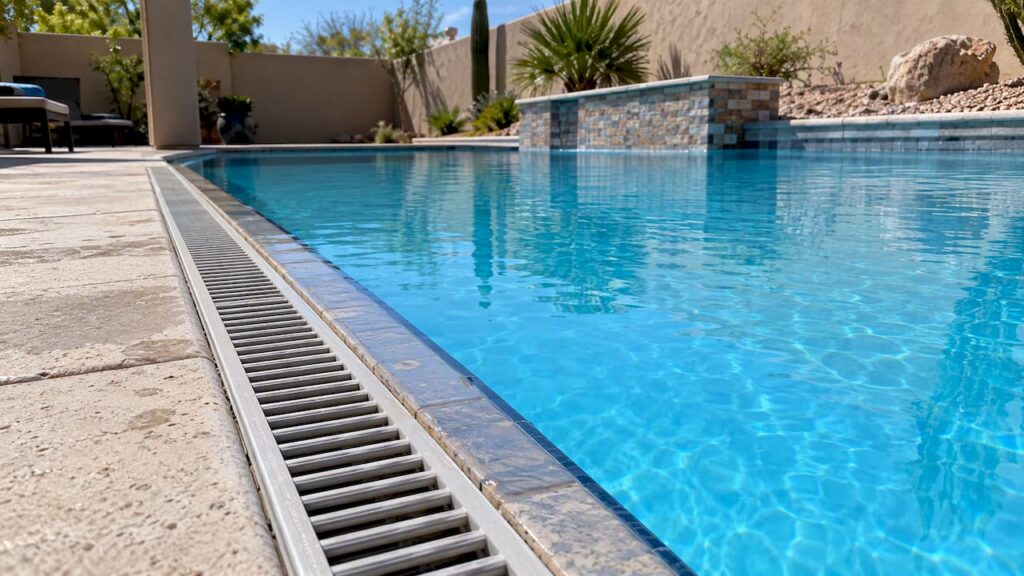
- Channel or grate drains: linear drains set into concrete decks to intercept sheet flow before it reaches the coping, with DECK-O-DRAIN as a common manufacturer example built specifically for new concrete placement.
- Flo-wells and pop-up emitters: the remote discharge points where collected water finally exits the system, typically installed as the final leg of a micro-channel drainage run.
Skimmer outlets and simple overflow fittings are common retrofit fixes, as PoolCareExpert notes, while channel drain systems like DECK-O-DRAIN are generally built into new concrete decks from the start rather than cut into existing slabs. For more detail on slope and placement, our guide on pool deck drain installation covers the practical side of getting the grade right.
New construction vs. retrofit: expectations and disruption
Overflow drain penetrations need to be built into the pool shell’s waterproofing and plumbing while the shell is still under construction, not added afterward. That timing is what separates a clean installation from a complicated one.
Retrofitting an existing pool usually means adding a skimmer-box outlet or cutting a surface channel into the deck after the fact. Both work, but both also involve more labor, more disruption to finished surfaces, and often a higher cost than the same feature would have carried during initial construction. Retrofit issues like uneven settling or clogged original drainage are common enough that we cover them separately in our breakdown of pool drainage problems.

If your pool already has recurring overflow or standing-water issues, a full remodel that reworks plumbing and deck slope together is usually the more durable fix. A narrow retrofit, like adding a single skimmer outlet, makes sense when the rest of the system is otherwise sound.
How to lower pool water safely after heavy rain
Before you touch a valve, check your local rules. Many municipalities, including Chandler, Arizona, require that discharge stay on private property or route to a sanitary sewer cleanout, and they cap the flow rate into that cleanout at no more than 12 gallons per minute.
Once you know where the water is allowed to go, work through these steps:
- Mark the mid-skimmer line on your skimmer opening. That’s the target, since draining further risks structural issues on vinyl and fiberglass pools, per PoolPartsToGo.
- For sand or DE filter systems, turn the multiport valve to “Waste” and monitor the level continuously.
- For cartridge-filter pools, use a submersible pump instead, since cartridge systems don’t have a waste setting.
- For above-ground pools, open the designated drain plug and watch the level closely.
- Stop the moment you reach mid-skimmer, then rebalance chemistry and inspect the filter.
Vinyl and fiberglass owners should stop draining at mid-skimmer to help protect the pool structure, and discharge should never be routed toward the foundation.
Pro Tip: Never leave a draining pool unattended, even briefly; a forgotten valve can empty a pool far past mid-skimmer before you notice.
Safety and code essentials for drains and covers
Suction outlets carry real entrapment risk, which is why the Virginia Graeme Baker Pool and Spa Safety Act and the associated ASME/ANSI A112.19.8 standard require certified anti-entrapment covers, along with a secondary protection method for any pool running a single main drain. These aren’t optional upgrades: pump suction strong enough to trap hair or a limb is a documented hazard, and compliant covers exist specifically to prevent it.
PHTA-5 reinforces the same safety logic from the deck side, requiring that surfaces slope away from the pool toward drains rather than pooling water near the shell, and defining the waterline targets that keep skimming equipment working as designed.
In practice, that means a short checklist before you touch any drain or cover:
- Confirm the cover carries current ASME/ANSI A112.19.8 certification.
- Use the manufacturer-supplied stainless fasteners, never substitutes.
- Inspect covers on a regular schedule and replace any that are cracked, warped, or missing hardware.
Channel drain manufacturers like AVSC build these same inspection points into their installation documentation, which is worth keeping on file alongside your pool’s maintenance records.
Routing discharge and deck drainage: practical examples
A typical surface drainage run moves water from a micro-channel drain into a flo-well, then out through a pop-up emitter well clear of the house. Siting matters here: place the flo-well well away from structures, following the patio and pool deck drainage installation instructions. That distance protects footings and foundations from the kind of saturation that leads to settling, an issue we also touch on in our guide to retaining walls near pools.
DECK-O-DRAIN is a good illustration of how these systems get built. It’s designed for new concrete decks, installs during the forming and pour stage, and runs a center channel that carries flow along its length rather than through isolated grates, per the manufacturer’s own product documentation.
One rule trips up a lot of homeowners: hard-plumbing a pool drain into a public storm drain may be prohibited, so check local requirements. Chandler’s guidance is a clear example, directing discharge to stay on private property or go to an approved sanitary cleanout instead. If your property’s existing storm or sewer line is already compromised, lining services like those covered at Trenchless Maine illustrate the kind of infrastructure repair that sometimes needs to happen before a pool drainage plan works at all.
Maintenance checklist: what to inspect and how often
A few consistent habits keep an overflow system working the way it was designed to.
- After every storm: clear leaves and debris from grates and check for cracked housings or loose screws.
- Annually: have the sump and flow capacity professionally inspected, and confirm the cover’s flow rating still matches its certification.
- Ongoing: keep a simple record of cover certification dates and replace components on the manufacturer’s recommended schedule rather than waiting for visible failure.
When to call a pro: a contractor’s viewpoint
After years of remodeling pools across the Phoenix area, our view is straightforward: sump placement, shell penetrations, and deck regrading are not places to improvise. Flo-well siting and code compliance checks call for someone who has done the waterproofing before, not after. A proper inspection usually tells you whether you need a targeted repair or a fuller remodel.
— Brian
How We Fix Ugly Pools® handles overflow drains and deck drainage
When we take on an overflow drain project, we treat plumbing, waterproofing, deck drainage, and finish work as one coordinated job rather than a patchwork of fixes. That’s what keeps a retrofit from becoming three separate projects with three separate failure points.
- We integrate sump and penetration work into the broader scope of custom pool construction so waterproofing never gets treated as an afterthought.
- We handle deck regrading and drainage as part of our pool repair services when an existing system is clogged, cracked, or routed wrong.
- We bring extensive remodeling experience to every inspection, so you get a realistic read on repair versus remodel.

If your pool is overflowing, draining unevenly, or you’re planning new construction and want the drainage built in correctly from day one, request an inspection through our pool services page and we’ll walk the site with you before anything gets cut into concrete.
FAQ
What is the drain around a pool called?
The drain or channel around a pool deck is generally called a channel drain or grate drain, and on overflow-style pools the rim collection point is called a gutter. Products like DECK-O-DRAIN are a common manufacturer example of this deck-level channel system.
How much water should be over the skimmer?
The correct level is mid-skimmer, meaning the water sits at the midpoint of the skimmer opening, which is the design waterline that PHTA-5 specifies for skimmer-equipped pools. Letting the level drop too low can starve the pump, while overflowing well past this point risks deck flooding.
How do I know if my pool needs to be drained?
If the water sits noticeably above the skimmer midpoint after heavy rain, or the deck is flooding instead of the water routing away through a drain, it’s time to bring the level back down. For vinyl and fiberglass pools, stop draining at mid-skimmer, since draining past mid-skimmer risks structural damage.
Do swimming pools have overflow drains?
Many pools have some form of overflow protection, ranging from a simple skimmer-box outlet to a full gutter and channel drain system, but it depends entirely on how the pool was designed and built. Overflow systems that keep water at the rim, rather than mid-skimmer, are a distinct design choice that PHTA-5 defines separately from standard skimmer pools.
Are overflow drain covers required by law?
Yes, in the United States, certified anti-entrapment covers are required under the Virginia Graeme Baker Pool and Spa Safety Act and ASME/ANSI A112.19.8, and single-drain systems need an additional layer of entrapment protection. Check your cover’s certification and condition regularly rather than assuming an older cover still meets current standards.