Moving pool equipment to a new spot in your yard is usually feasible, but it almost always means licensed plumbing and electrical work, not a weekend DIY project. Permits typically come into play too, especially when gas lines or bonding are involved. Costs and timelines swing widely depending on distance and scope, which we break down below.
TL;DR:
- Most jurisdictions require electrical and plumbing permits, with gas permits for heater reconnections; inspections can stretch work from days to a couple of weeks.
- Equipment outside the pool barrier needs at least 36 inches of clearance, while longer pipe runs may require resizing to maintain circulation and pump performance.
- Budget a 10% to 30% contingency for brittle or undersized pipes, outdated bonding, and wiring problems uncovered during excavation or permit review.
- Choose an experienced pool contractor who identifies licensed trades, confirms insurance, and documents permit handling and testing after reconnection in writing.
- If equipment is already being moved, consider a variable speed pump; ENERGY STAR recommends these over single speed models to reduce energy use.
Table of Contents
- What the Job Involves: Trades, Tasks, and Technical Steps
- Cost and Timeline: Ballparks and What Drives the Final Estimate
- Permits, Codes, and Safety to Plan For
- How to Find and Vet a Qualified Contractor for Relocation
- Planning Checklist: What to Prepare Before Work Starts
- Why Experience Reduces Relocation Risk
- How We Fix Ugly Pools® Handles Equipment Relocation
- FAQ
- Sources
What the Job Involves: Trades, Tasks, and Technical Steps
Relocating a pump, filter, and heater setup is a construction project, not a simple unplug-and-move job. The new location needs a properly sized concrete pad or enclosure, and the ground underneath has to be prepped before anything gets set.

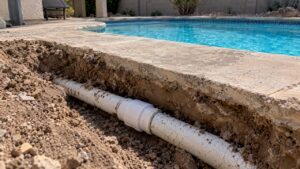
From there, the plumbing has to be rerouted. Suction and return lines get cut, extended, and reconnected, and valves often need repositioning so the system still balances correctly. Pipe sizing matters here: undersized lines after a move are a common source of weak circulation.
Electrical work follows a similar pattern. Circuits often need extending to the new pad, and that work has to include GFCI protection, proper grounding, and equipotential bonding around the equipment area, all of which fall under electrical code rather than general handyman work.
If a gas heater is part of the setup, reconnecting it legally requires a licensed gas contractor in most jurisdictions.
- New pad or enclosure construction and site grading
- Plumbing reroute with pressure testing before backfilling
- Electrical circuit extension, GFCI, grounding, and bonding
- Gas line reconnection by a licensed gas fitter when applicable
- Trenching, conduit runs, and landscape repair around the new location
Cost and Timeline: Ballparks and What Drives the Final Estimate
Short moves, say repositioning equipment a few feet to clear a new patio, tend to land on the lower end of the cost spectrum because they involve less trenching and pipe replacement. Long-distance relocations across the yard, or moves that include a heater, gas reconnection, or full pipe replacement, push costs and timelines up substantially.
Several factors drive the final number:
- Electrical trenching, conduit, and new circuit runs
- A new equipment pad versus reusing an existing slab
- Full plumbing replacement versus reconnecting existing lines
- Permit fees and required inspections
- Gas line work for heaters
- Landscape and hardscape restoration around both the old and new sites
Relocation is often the right moment to upgrade equipment, too. ENERGY STAR recommends variable-speed pumps over single-speed models because they reduce energy use, and planning the new pad with that upgrade in mind avoids a second disruption later.
Hidden costs tend to show up when old piping turns out to be brittle or undersized, or when existing bonding doesn’t meet current code and has to be brought up to standard as part of the permit process. Permitting and inspection scheduling are usually what stretch a straightforward move from a matter of days into a couple of weeks. Ask for itemized bids rather than a single lump number, and build in a contingency for what the ground reveals once digging starts.
Permits, Codes, and Safety to Plan For
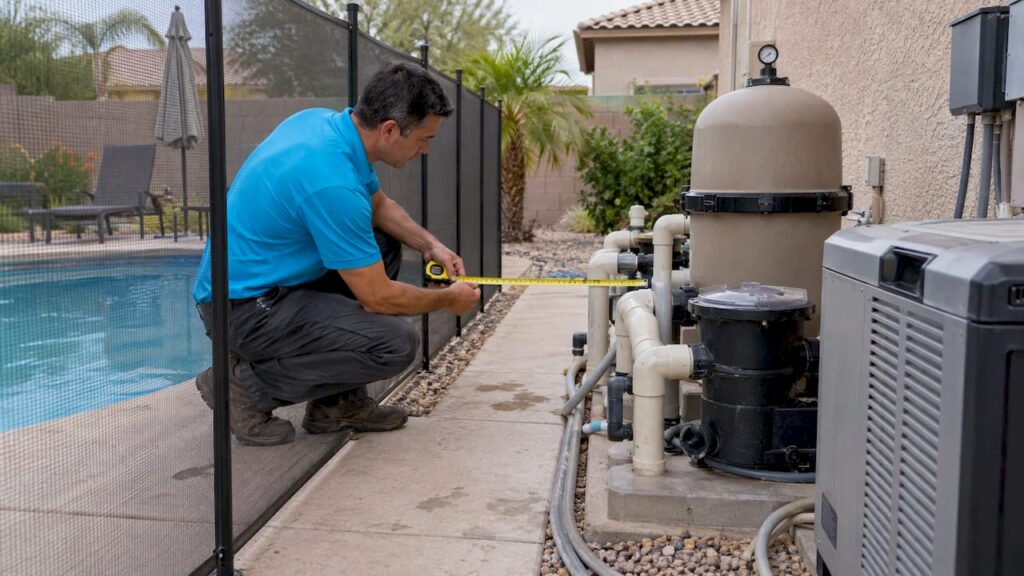
Pool equipment relocation touches electrical and plumbing code in ways that are easy to underestimate. Equipment located outside the pool barrier generally needs to sit at least 36 inches from the outside of that barrier, per clearance guidance referenced in the IRC equipment clearance standards. That distance affects where a new pad can realistically go.
Electrical requirements are just as specific. NEC Article 680 and related NFPA bonding guidance call for equipotential bonding around pool equipment, GFCI protection on circuits, and minimum clearances for receptacles near the pool. This work has to be done by a licensed electrician, both for safety and because inspectors will check it against code before signing off.
A few practical points worth keeping in mind:
- Most jurisdictions require a permit for relocated electrical and plumbing work, not just new construction.
- Older systems sometimes get bonded or wired in ways that no longer meet current code, which can trigger an upgrade during the permit review.
- NFPA has written about code-compliant electrical work as central to swimmer safety, not just a box to check.
- Ask any contractor upfront which permits and inspections they will pull and schedule, and get that answer in writing.
How to Find and Vet a Qualified Contractor for Relocation
A relocation project touches enough trades that picking the right contractor matters more than the quote itself. Here’s how to narrow the field:
- Confirm pool-specific experience, not just general construction or landscaping work.
- Verify that electrical and plumbing work will be done by licensed electricians and plumbers or gas fitters, not subcontracted informally.
- Ask for proof of general liability insurance and workers’ compensation coverage before anyone sets foot in your yard.
- Ask directly about relocation experience: how they handle bonding, who pulls permits, and what testing happens after reconnection.
- Request references from past relocation or remodel jobs, not just new pool builds.
- Compare itemized bids line by line, and treat a vague scope or a price well below the others as a reason to ask more questions, not a reason to sign faster.
Pro Tip: Ask whether one contractor manages all the trades or whether you’ll be coordinating electricians, plumbers, and concrete work separately. A single point of accountability usually means fewer scheduling gaps.
A strong track record in pool repair tends to show up in how clearly a contractor explains the process, not just in the price they quote.
Planning Checklist: What to Prepare Before Work Starts
A little prep work before the crew arrives keeps the project moving and avoids surprises.
- Clear access to both the old and new equipment locations, and mark any underground utilities or irrigation lines nearby.
- Pull together equipment manuals, any existing plumbing or electrical schematics, and photos of the current setup.
- Decide on the new pad location, enclosure style, and how much landscape restoration you expect.
- Set aside a 10 to 30% contingency for unexpected pipe or wiring issues, and confirm who is responsible for permits and inspections.
- Get a written scope of work, clear acceptance criteria for when the job is done, and a warranty or maintenance handoff in writing.
Why Experience Reduces Relocation Risk
A decade of remodeling pools has taught us that most relocation headaches trace back to the same handful of mistakes: pipe sizing that doesn’t match the new run length, bonding that gets rushed or skipped, and gas or electrical reconnections done without the right permits pulled first.
An experienced team catches these before they become a failed inspection or a pump that never quite performs right. That means documentation at each stage, permits managed start to finish, and a pressure test and electrical check after reconnection, not just a visual once-over. The difference shows up less in the quote and more in whether the system works correctly the first time it’s turned back on.
— Brian
How We Fix Ugly Pools® Handles Equipment Relocation
We coordinate licensed electricians, plumbers, and gas fitters, pull required permits, and handle the pad, plumbing, and electrical work as one managed project instead of a string of separate contractors.

| What you get | Detail |
|---|---|
| Trade coordination | Licensed electrical, plumbing, and gas work managed under one scope |
| Permitting | Permits and inspections scheduled as part of the project |
| Equipment upgrades | Option to add efficiency upgrades like variable-speed pumps during the move |
If your relocation is part of a bigger backyard change, our custom pool services cover everything from pad placement to final testing. For projects focused on repair and plumbing relocation specifically, our pool repair services page details what’s included. Homeowners tackling a larger renovation, such as a new outdoor kitchen alongside the pool work, may also find planning ideas at The Bath & Kitchen Gallery useful for coordinating the broader project. Request an estimate through Wefixuglypools to get a scope and timeline specific to your yard.
FAQ
Is it legal to relocate pool equipment yourself?
Homeowners can often handle non-electrical, non-gas tasks like clearing a site, but electrical bonding, circuit work, and gas reconnection require a licensed professional in most jurisdictions. Permits for this type of work are typically required and get verified during inspection.
How far can pool equipment be moved from the pool?
There’s no universal maximum distance, but longer runs increase plumbing and electrical costs and can affect pump performance if pipe sizing isn’t adjusted. Equipment outside the pool barrier generally needs to sit at least 36 inches from the barrier under common clearance guidance.
What permits are needed to move pool equipment?
Most jurisdictions require electrical and plumbing permits for relocated pool equipment, and gas permits when a heater is reconnected. Your contractor should confirm local requirements and handle scheduling the related inspections.
Does relocating equipment affect pump efficiency?
It can, especially if pipe sizing or total dynamic head changes with the new layout. Relocation is a common point to upgrade to a variable-speed pump recommended for efficiency gains over standard single-speed models.
How do I know if a contractor is qualified for this work?
Verify pool-specific experience, confirm that licensed electricians and plumbers or gas fitters are handling their respective portions, and ask for proof of insurance. A contractor who can clearly explain how they’ll handle bonding, permits, and post-reconnection testing is a good sign.
Sources
- 2024_ISPSC.book (IRC sample) — equipment clearances and Chapter 42
- NEC Article 680 / NFPA task group commentary on equipotential bonding
- ENERGY STAR — pool pumps