Most U.S. homeowners pay between $1,830 and $4,236 for a professionally installed pool heater, based on local installer data from Kansas City, though gas, heat pump, and solar systems each land in different parts of that range. Heater type and the condition of your existing electrical or gas service drive most of the price swing. Before requesting quotes, gather your pool size, current equipment list, and desired swim season, then compare at least two or three written bids.
TL;DR:
- Heat pumps cost $2,000 to $5,500 installed and perform best above 45 to 50 degrees Fahrenheit, while older electrical panels may need costly upgrades.
- Gas heaters typically cost $1,500 to $3,500 installed with a nearby gas line; new gas piping or venting adds $500 to $1,500.
- Solar systems cost $3,000 to $4,000 installed and may pay back in 1.5 to 7 years when sun exposure and displaced fuel costs are favorable.
- A pool cover can cut heating energy by roughly half, while correct sizing and a lower target temperature further reduce run time.
- Request an itemized written quote listing the heater model and capacity, utility work, permits, and removal; approvals and inspections can add one to three weeks.
Table of Contents
- Pool Heater Types: Gas, Heat Pump, Electric, and Solar Explained
- What Does It Cost to Install Each Type of Pool Heater?
- Electrical, Gas, and Permit Costs That Change Your Quote
- What Will a Pool Heater Cost You to Run Every Year?
- How Do You Get an Accurate, Comparable Pool Heater Quote?
- Why a Licensed Local Installer Matters for Pool Heaters
- Our Take: The Quote Details Most Homeowners Skip
- Get a Local, Line-Item Pool Heater Installation Quote
- FAQ
- Sources
Pool Heater Types: Gas, Heat Pump, Electric, and Solar Explained
Choosing the right heater starts with understanding how each one actually warms your water and how to protect it from salt air corrosion in coastal environments. The technology you pick determines not just the sticker price but how complicated the installation gets and what you will pay to run it every month.
Gas and propane heaters burn fuel to heat water as it passes through a combustion chamber, delivering fast temperature gains regardless of outside air temperature. They work well for homeowners who swim occasionally or want quick heat-up for a weekend pool party, but they need proper venting and a dedicated gas line.
Electric heat pumps pull heat from the surrounding air and transfer it to pool water, similar to how a refrigerator works in reverse. According to Energy, heat pump pool heaters are efficient in moderate climates, and they tend to cost more upfront than electric resistance units but less to operate over time. They perform best when air temperatures stay above 45 to 50 degrees Fahrenheit, which makes them a strong fit for most of Arizona’s swim season.
Electric resistance heaters use heating elements, much like a household water heater, to warm pool water directly. They are inexpensive to install but expensive to run continuously, making them better suited as a backup or for small spas than as a primary pool heater.
Solar pool heaters circulate water through rooftop or ground-mounted collectors using your existing pool filtration system, as described by energy.gov’s solar heater guidance. They need ample sun exposure and roof or yard space but carry no fuel cost once installed.
Quick comparison of installation complexity:
- Gas heaters need venting, combustion air clearance, and a gas line sized for the BTU output.
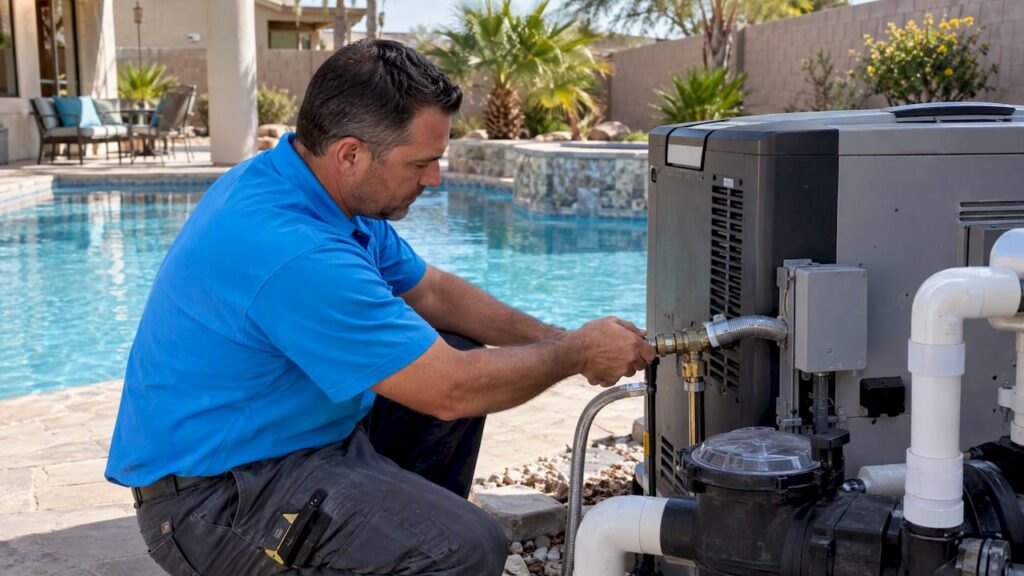
- Heat pumps need a dedicated 240V circuit and adequate airflow clearance around the unit.
- Electric resistance heaters need a dedicated circuit but minimal space.
- Solar systems need collector area, roof or rack mounting, and plumbing tie-ins to the filtration loop.
What Does It Cost to Install Each Type of Pool Heater?
Installed cost includes the heater unit, labor, and whatever supporting work your site requires. Here is how the major categories typically break down for U.S. homeowners.
Gas and propane heaters usually run $1,500 to $3,500 installed for a standard residential unit, assuming an existing gas line is nearby. Add $500 to $1,500 more if a new gas line or additional venting is required.
Electric heat pumps often cost $2,000 to $5,500 installed, with the unit itself representing a larger share of that total than labor. Homes with an older electrical panel frequently need a service upgrade, which adds meaningfully to the final bill.
Electric resistance heaters are the cheapest to install, typically $1,000 to $2,500, but their higher operating cost makes them a poor primary choice for a full-size pool that stays heated for months at a time.
Solar pool heaters generally cost $3,000 to $4,000 to purchase and install for a typical residential system, according to the Department of Energy’s consumer guide, which also reports payback windows between 1.5 and 7 years depending on site conditions and the cost of the fuel they displace.

“Kansas City homeowners pay an average of $3,021 installed for a pool heater, with a typical range of $1,830 to $4,236.” That regional figure illustrates how much labor rates and site conditions can move the final number even within the same heater category.
Common add-ons that change your final quote:
- Electrical service upgrade: often $2,000 to $4,000 when the existing panel can’t support the new load, per local permitting guidance.
- New gas line installation: typically several hundred dollars depending on run length and trenching needs.
- Remote mounting pad or relocation: added labor if the heater can’t sit in the old unit’s footprint.
- Old heater removal and disposal: a modest flat fee most contractors include or add separately.
Electrical, Gas, and Permit Costs That Change Your Quote
The heater itself is only part of the bill. Code compliance, site conditions, and permitting often explain why two quotes for the “same” heater can differ by thousands of dollars.
Electrical code requirements matter more than most homeowners expect. NEC Article 680 requires that circuits within 5 feet of a pool be GFCI-protected and that all metal components be bonded to a common grid, according to local permit and electrical guidance. A 30 to 50 amp 240V heat pump can trigger a full service panel upgrade in older homes, particularly when the main panel is only 100 amps and already carries modern household loads.
Gas line work adds inspection requirements on top of installation labor. Contractors need to size the line correctly for BTU output and confirm venting clearances meet local fire code before a final sign-off.
Plumbing connections sometimes require a bypass valve or a pump upgrade to maintain correct flow rate through the new heater, especially when upgrading from an older, lower-capacity system.
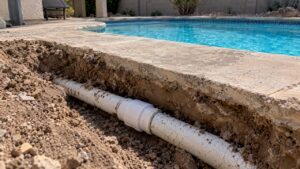
Permits and inspections add both cost and time. Site access issues, such as a heater location that requires trenching through a finished pool deck, increase labor hours beyond what a straightforward swap would cost.
Line items to expect on a thorough quote:
- Electrical permit and inspection fee.
- Gas permit and inspection fee, when applicable.
- Bonding and grounding verification.
- Site access or deck repair allowance.
Pro Tip: Ask your contractor to confirm in writing whether bonding and GFCI protection are already compliant or whether they’re included as a line item, since missing bonding is one of the most common reasons for a failed inspection.
What Will a Pool Heater Cost You to Run Every Year?
Upfront installation cost is only half the budgeting picture. What you pay monthly depends heavily on heater type, local energy prices, and how much you run the system.
Gas heaters typically last 5 to 10 years and cost the most to operate per hour of use, since propane and natural gas prices fluctuate and heat output is immediate rather than efficient. Electric heat pumps generally last 10 to 15 years with proper maintenance and cost noticeably less to run than gas, since they move heat rather than generate it. Electric resistance heaters have the shortest practical lifespan for full-time pool heating and the highest ongoing electric cost. Solar systems often last 15 to 20 years with minimal moving parts to fail.

Solar pool heating typically pays for itself in 1.5 to 7 years, depending on local sun exposure and the cost of the fuel it replaces. That payback window makes solar one of the more attractive long-term options for sunny climates, provided collector area is sized correctly for the pool surface.
A few practical levers reduce your annual bill regardless of heater type:
- A pool cover can cut required heating energy by roughly half by reducing evaporation and overnight heat loss.
- Correct sizing to your pool’s surface area and target temperature avoids both under-heating and wasted run time.
- Lowering your target temperature by even a few degrees meaningfully reduces run hours over a full season.
How Do You Get an Accurate, Comparable Pool Heater Quote?
Getting quotes you can actually compare starts with giving every contractor the same information up front.
- Measure your pool’s surface area and note its depth, since BTU or horsepower requirements scale directly with volume.
- List your existing equipment, including pump model, filter type, and panel amperage, so contractors can flag upgrade needs early.
- Decide your desired swim season and target temperature, since a three-month season needs less heater capacity than year-round use.
- Confirm power and gas access at the install location, including distance from the panel or meter.
- Ask who pulls permits, whether warranty covers both parts and labor, and how sizing was calculated.
- Request a line-item written quote covering the heater, electrical or gas work, permits, and old equipment removal.
Pro Tip: A complete, accurate quote should name the heater model and capacity, not just a price, so you can verify it’s sized correctly for your pool before work begins.
Expect permit approval and inspection scheduling to add one to three weeks in most jurisdictions, longer during peak spring and summer installation season.
Why a Licensed Local Installer Matters for Pool Heaters
Installation manuals from manufacturers like Pentair specify that pool heaters must be installed by qualified personnel, with proper grounding and code compliance required to keep the warranty valid. We’ve spent over a decade fixing electrical bonding gaps and undersized panels that other installers missed across the Greater Phoenix area. A contractor who pulls permits, handles the electrical scope, and schedules inspections in one process typically finishes faster with fewer surprise change orders.
Our Take: The Quote Details Most Homeowners Skip
The biggest gap we see in pool heater budgeting isn’t heater price, it’s the electrical and permit line items that show up after a homeowner has already mentally committed to a number. Most online cost guides lead with unit price, which makes heat pumps and solar look more expensive than gas on paper while burying the service upgrade that often makes gas installations cost just as much once wiring catches up to code.
Our advice: ask for the electrical scope and permit cost in writing before comparing heater prices at all. A $2,500 heat pump with a $3,000 panel upgrade and a $1,200 gas heater with a $1,800 new gas line can land in the same final range, just with different line items doing the work. Prioritize the total installed number, not the heater sticker price, and you’ll avoid the sticker shock that hits most homeowners at the final invoice.
— Brian
Get a Local, Line-Item Pool Heater Installation Quote
Budgeting for a heater is one thing. Getting a quote that actually reflects your pool’s electrical panel, gas access, and site conditions is another, and that’s where our crews in the Greater Phoenix area come in.

We provide comprehensive service including heater sizing, managing electrical and gas work, and handling permits as part of pool heater installation. This provides a streamlined process without requiring coordination among multiple contractors.
- Request a written, line-item quote before committing to a heater model.
- Combine heater installation with other pool equipment and system upgrades if your equipment pad needs attention anyway.
- Ask about bundling heater installation with a broader pool remodel or custom feature project if you’re already planning updates.
Reach out to schedule an estimate and get a detailed, written quote for your pool heater installation.
FAQ
What’s the average lifespan of a pool heater?
Gas heaters typically last 5 to 10 years, electric heat pumps last 10 to 15 years with regular maintenance, and solar systems often last 15 to 20 years thanks to having few moving parts. Electric resistance heaters tend to have the shortest practical lifespan when used as a primary heat source for a full-size pool.
How much does a swimming pool heating system cost?
Most U.S. homeowners pay between $1,830 and $4,236 installed, with the exact figure depending on heater type and whether electrical or gas upgrades are needed. Solar systems typically run $3,000 to $4,000 installed, while gas and electric resistance units often fall at the lower end of the range.
Can you add a pool heater to an existing inground pool?
Yes, heaters are commonly added to existing inground pools as long as the plumbing and electrical or gas service can support the new load. A contractor will check panel capacity, gas line availability, and pump flow rate before recommending the right heater type for your setup.
Is it cheaper to have a gas or electric pool heater?
Gas heaters usually cost less to install but more to run, while electric heat pumps often cost more upfront and less to operate over time, since they move heat rather than generate it. Which option is cheaper overall depends on how often you heat the pool and local energy prices in your area.
What electrical requirements apply to pool heater installation?
Pool heater circuits must be GFCI-protected when located within 5 feet of the pool, and metal components need to be bonded to a common grid, per local electrical and permitting guidance. Older homes with a 100-amp panel sometimes need a service upgrade to safely power a new heat pump.