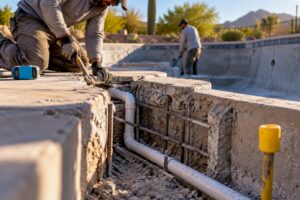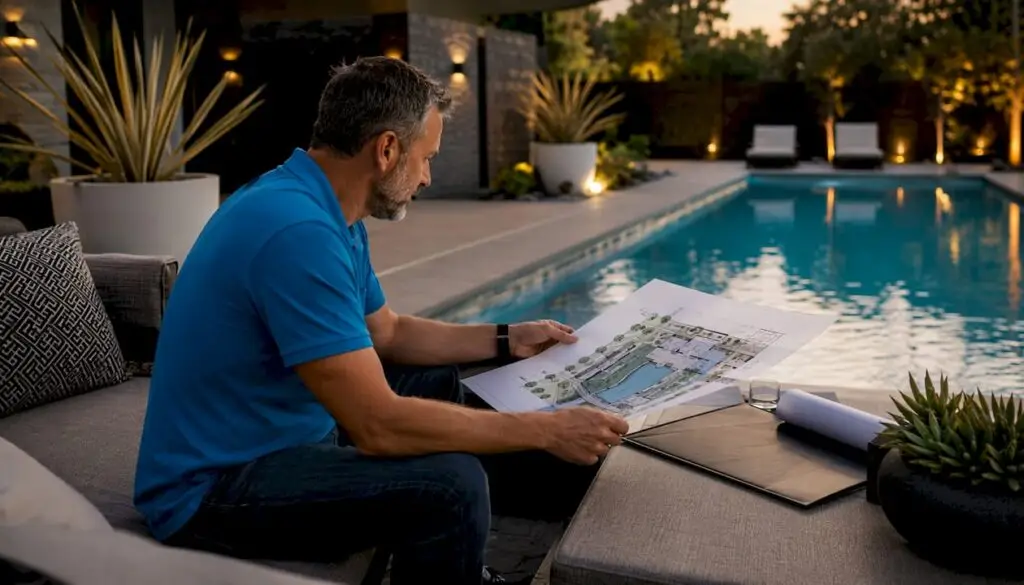
The most rewarding backyard pools aren’t built around a single showpiece. They’re built around combinations. A raised spa that spills into a tanning ledge, fire bowls flanking a sheer descent waterfall, color-changing LEDs that shift the whole mood after dark. These are the unique pool feature combinations that turn a standard backyard into something genuinely worth coming home to.
Here’s a quick look at the combinations homeowners and designers reach for most:
- Integrated spa + tanning ledge + bubblers: Relaxation for adults, safe play for kids, all in one connected layout
- Infinity edge + LED lighting + sheer descent waterfall: Maximum visual drama, especially at night
- Swim-up bar + in-pool seating + fire bowls: The full resort entertainment setup
- Movable floor + tanning ledge + automation: Flexible depth, safety, and one-tap control
- Raised perimeter-overflow spa + glass tile + spillway: A floating focal point that anchors the entire backyard
- Fire and water combo features + landscape lighting: Extends usability well into cooler months
Each of these pairings works because the features reinforce each other. The goal isn’t to add as many elements as possible. It’s to choose features that serve the same design language and lifestyle, then layer them deliberately.
What makes certain pool features worth combining?
Not every feature pairs naturally. The ones that do share a design logic: they address different user needs, occupy different zones, and create a visual hierarchy that feels intentional rather than cluttered.
The most-requested individual features include:
- Infinity edges (vanishing edges): Best on properties with an elevated view or open sightline. The water appears to dissolve into the horizon, and the effect is genuinely dramatic. They work best on rectangular or geometric pools where the clean bond beam reads as a design element.
- Waterfalls and sheer descents: A sheer descent drops a thin, glassy sheet of water from a raised bond beam. With LED lighting behind it at night, it’s one of the most visually striking upgrades in residential pool design. Rock waterfalls add texture and sound; sheer descents add architectural precision.
- Tanning ledges (Baja shelves): A shallow platform, typically 6–12 inches deep, spanning the full width of one end of the pool. Adults use water-rated lounge chairs; young children splash safely. Adding an umbrella sleeve anchor cast directly into the ledge concrete at construction keeps shade available without a bulky deck stand.
- Swim-up bars: Submerged seating, counter space, and integration with an outdoor kitchen or fire feature. Guests stay in the water while socializing, which makes them one of the most popular luxury upgrades for entertaining-focused homeowners.
- Fire features: Fire bowls, linear fire elements, and fire-and-water combos are among the most photographed pool features in any portfolio. Beyond aesthetics, they extend your backyard’s usable months through cooler evenings when no one is swimming.
- Integrated spas with perimeter overflow: The spa walls sit lower than the water level, so water spills over the entire perimeter and into the pool. A small containment vessel recirculates it. The result looks like the spa is floating on the pool surface, finished in iridescent glass tile that glistens in sunlight.
- LED lighting and automation: Color-changing LEDs, smartphone-controlled equipment, and preset scenes let you shift the pool’s entire atmosphere with one tap. Systems from Pentair, Jandy, or Hayward integrate lights, heaters, pumps, and water features into a single app. Nighttime atmosphere is what separates a resort-level pool from one that just sits dark after 7 PM.
- Hydrotherapy circulation systems: Technologies like Riverflow Pumps’ BlueOrbit system use seven-port nozzles to create gentle circular currents throughout the entire pool, moving wellness beyond stationary jets into a whole-pool experience.
Pro Tip: When you’re selecting water features, think about sound as much as sight. A sheer descent is quieter and more architectural; a rock waterfall is louder and more organic. Matching the sound profile to your backyard’s overall feel makes the combination more cohesive.
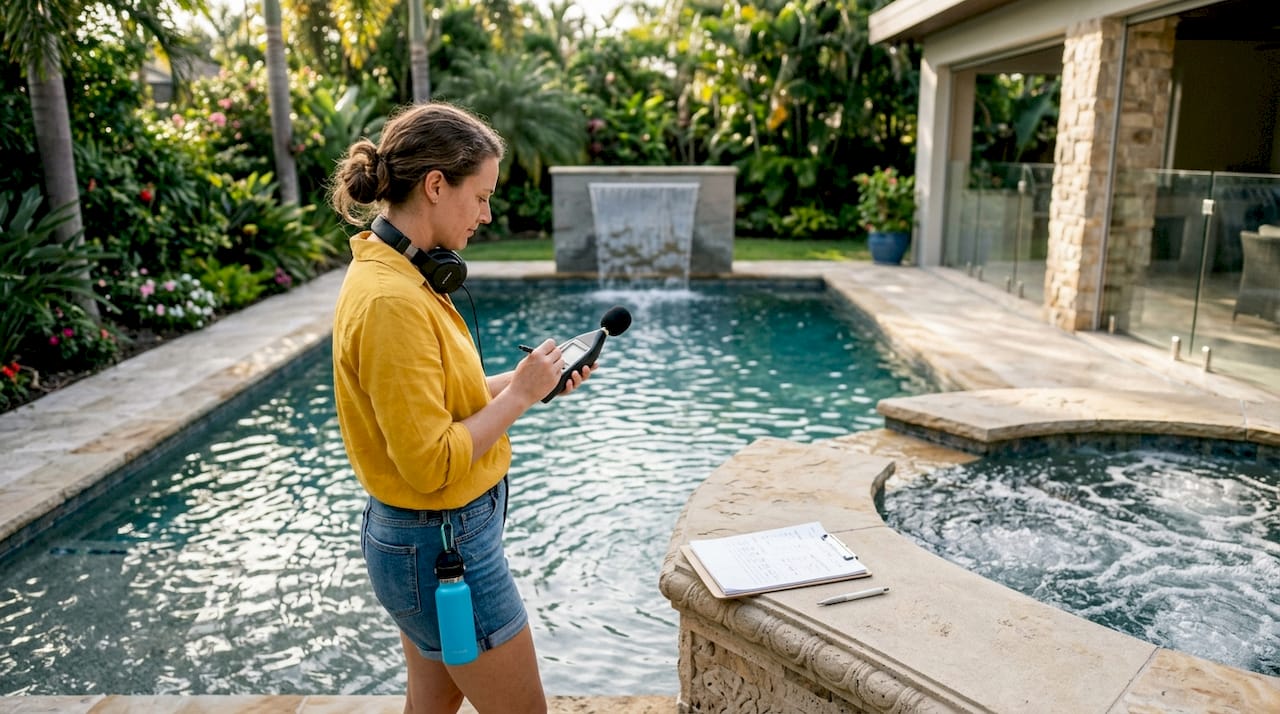
How to design a combination pool that actually works
Combination pools integrate multiple aquatic zones, a swimming area, spa, and splash deck, into one cohesive unit. The concept works because it maximizes backyard space and delivers multifaceted usability without requiring separate installations for each function. A well-designed combination pool adapts to swimmers, spa users, young children, and entertainers simultaneously.
Design strategies that experienced pool designers rely on:
- Zone your features by use: Group the spa and tanning ledge near the seating area. Keep the swim lane or deep section away from the splash zone. Clear zoning prevents the layout from feeling chaotic.
- Choose your pool shape early. Shape dictates everything downstream. Rectangular pools accommodate automatic covers and raised spas naturally. Freeform shapes suit naturalistic landscaping and rock features. L-shaped pools separate a play area from a swim area without expanding the footprint. Geometric versus freeform also affects cover compatibility and which deck materials avoid awkward gaps.
- Go multi-level. Raising the spa above the pool deck creates a visual anchor and a natural spillway. Multi-level designs visually separate the spa, splash deck, and swim area without increasing the overall footprint.
- Plan for nighttime from day one. Color-changing LEDs integrated into water features, fire bowls, and tanning ledges, combined with uplights on surrounding trees, create a composition that reads as one unified design after dark rather than a collection of lit objects.
- Add movable floor technology for flexibility. A high-speed movable floor can open or close in as little as 90 seconds, transforming the pool into a walkable terrace when not in use. It also raises to ground level for child safety when the pool is unattended.
A practical sequence for combining features:
- Lock in the pool shape and size before selecting any features.
- Identify your primary use cases: entertaining, family play, fitness, relaxation.
- Select features that serve each use case without overlapping zones.
- Choose a finish and lighting palette that ties the zones together visually.
- Work with a designer experienced in custom pool builds who can produce engineered drawings specific to your lot and local building codes.
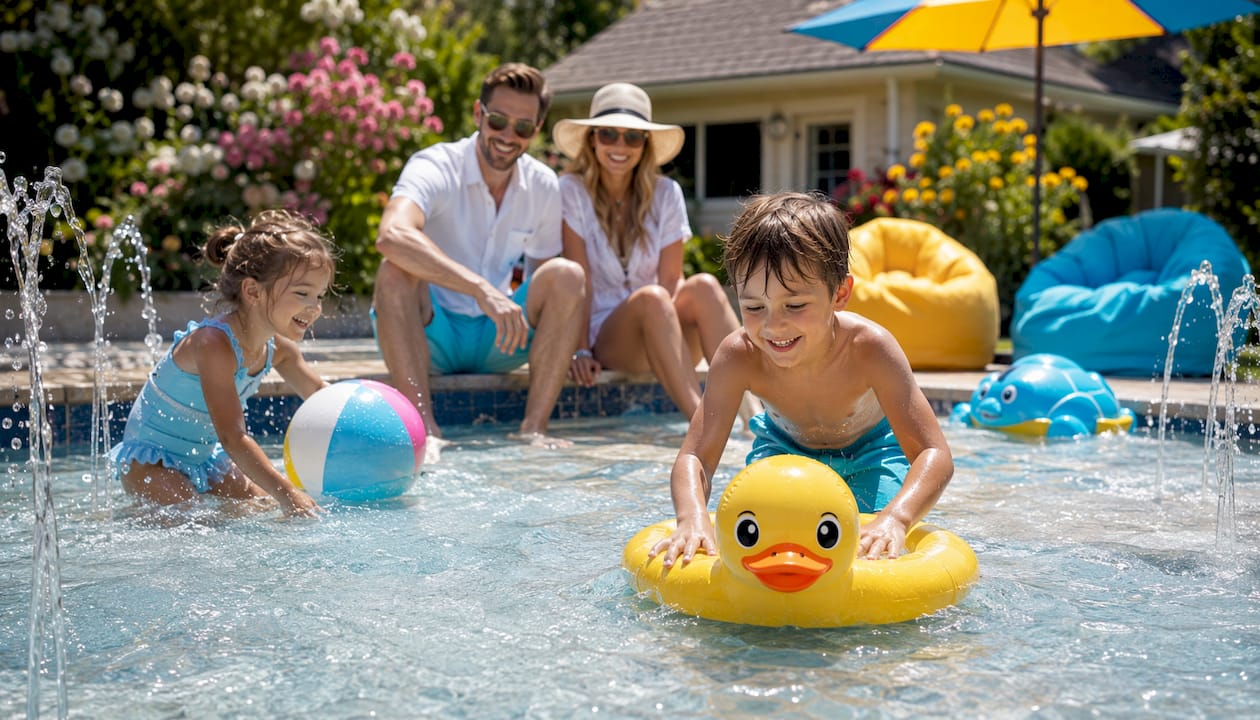
For families, kid-friendly layouts that pair tanning ledges with bubblers and shallow splash areas give children a safe zone while adults use the spa or swim lane. For entertainers, a swim-up bar paired with fire bowls and a raised spa creates a natural gathering point that works morning through midnight.
Maintenance and cost realities for multi-feature pools
More features mean more systems, and more systems mean more to maintain swimming pool safety. That’s not a reason to scale back. It’s a reason to plan carefully from the start.
What to expect operationally:
- Water features (waterfalls, sheer descents, bubblers) add pump load and require periodic nozzle cleaning. They’re generally low-maintenance compared to mechanical features.
- Spas need their own heating system, separate chemistry management, and jet maintenance. An integrated spa shares plumbing with the main pool, which simplifies the system compared to a detached unit.
- Movable floors require above-water motor access for servicing. Systems like the AMPHIBIA design place the motor outside the water entirely, which makes maintenance straightforward and extends component life.
- LED and automation systems are largely self-maintaining but benefit from annual software updates and occasional bulb replacement.
- Fire features using clean-burning fuels with automated controls require periodic burner inspection and fuel line checks.
Cost considerations:
A custom gunite pool with a tanning ledge and basic water features typically runs within a moderate to high price range. Adding features like a raised spa, premium finishes, multiple water elements, and extensive decking can significantly increase the investment in high-cost areas. These figures cover the pool and immediate deck; fencing, landscaping, and outdoor kitchens are separate line items.
One of the most consistent findings in pool construction: retrofitting complex features like spas and movable floors after a pool is complete can double or triple project costs due to concrete demolition, replumbing, and electrical work. Building everything in during initial construction is dramatically more cost-effective.
Sustainability options worth considering:
- Variable speed pumps reduce energy consumption compared to single-speed models.
- Automatic pool covers cut evaporation and heat loss, lowering both water and heating costs.
- Solar heating extends the swimming season without high utility bills.
- Smart automation schedules pumps, heaters, and lighting to run only when needed.
For homeowners in Arizona’s climate, pool renovation timing matters too. Planning a multi-feature build or remodel during the off-season typically means faster contractor availability and better pricing on materials.
The feature-first design principle that separates good pools from great ones
The most common mistake in multi-feature pool design is treating each element as a separate decision. Shape, finish, water features, lighting, and spa placement all cascade into each other. Choosing a pool shape determines which water features look proportional. The finish determines water color, which determines which deck material complements or clashes. The lighting you specify changes whether your pool reads as resort-level after dark or just functional.
Feature-first design means prioritizing how pool elements connect visually and functionally before finalizing any individual choice. It avoids the disjointed layouts that happen when features are added one at a time without a unifying concept.
Key principles that experienced designers apply:
- Fire and water combinations bridge design languages. Pairing flame with falling water creates a focal point that works architecturally and organically at the same time. It’s the single most photographed feature category in custom pool portfolios, and the reason is straightforward: the contrast is visually arresting without requiring a large footprint.
- Pool shape locks in your feature options early. A geometric pool shape influences cover compatibility and material choices in ways that affect the entire project scope. Decide on shape before committing to any feature list.
- Nighttime atmosphere is a design deliverable, not an afterthought. Coordinating color-changing LEDs, fire-water elements, and lighted spillways transforms evening pool usability from an afterthought into a resort-quality experience.
- Whole-pool wellness features represent the next generation of aquatic design. Rather than localized jets, systems that create gentle currents throughout the entire pool engage the full swim space for both relaxation and resistance training.
- Build complexity in from day one. The cost advantage of integrating features during initial construction versus retrofitting is one of the clearest financial arguments for planning comprehensively upfront.
Pro Tip: Bring a lighting plan to your first design consultation, not just a feature list. Designers who see how you want the pool to feel at 9 PM will make better decisions about feature placement, finish color, and spa positioning than those working from a daytime-only brief.
Ready to build your own multi-feature pool?
At Wefixuglypools, we’ve spent over a decade transforming backyards across the Greater Phoenix area into pools that actually get used. Whether you’re starting from scratch or remodeling an existing pool to add the features you’ve always wanted, we bring the design experience and hands-on expertise to make complex combinations work beautifully. Our team handles everything from initial concept through final installation, so you get a cohesive result instead of a collection of disconnected upgrades.
Explore our custom pool services and see what’s possible for your backyard.
Key Takeaways
The most successful multi-feature pools are built around a feature-first design approach that treats shape, finish, lighting, and aquatic zones as one interconnected system rather than separate choices.
| Point | Details |
|---|---|
| Combine features by zone | Group spa, tanning ledge, and seating together; keep swim lanes separate from splash areas. |
| Shape determines everything downstream | Pool shape affects spa placement, cover compatibility, and which water features look proportional. |
| Build complexity in from the start | Retrofitting spas or movable floors after construction can double or triple project costs. |
| Nighttime design is non-optional | Color-changing LEDs, fire bowls, and lighted spillways transform evening usability into resort quality. |
| Budget realistically for multi-feature builds | A high-end gunite pool with premium features and travertine deck can reach $150,000–$250,000 or more. |