Pool plaster cracking causes range from surface shrinkage during curing to deep structural shifts in the pool shell, and identifying which type you have determines whether you need a simple patch or a full replaster. The industry term for the overall condition is “plaster failure,” and it covers everything from cosmetic crazing to water-losing fissures. Traditional plaster finishes last about 7–10 years under normal conditions, but poor water chemistry or harsh climates can cut that lifespan significantly. Catching the right cause early saves you thousands of dollars and weeks of downtime.
What are the different types of pool plaster cracks?
Not every crack signals a crisis. The first step is knowing what you are looking at before you call anyone or spend a dollar.
Hairline cracks are shallow surface splits less than 1/8 inch wide. They sit in the top layer of plaster and do not penetrate the concrete shell beneath. These are mostly cosmetic and common in pools older than five years.
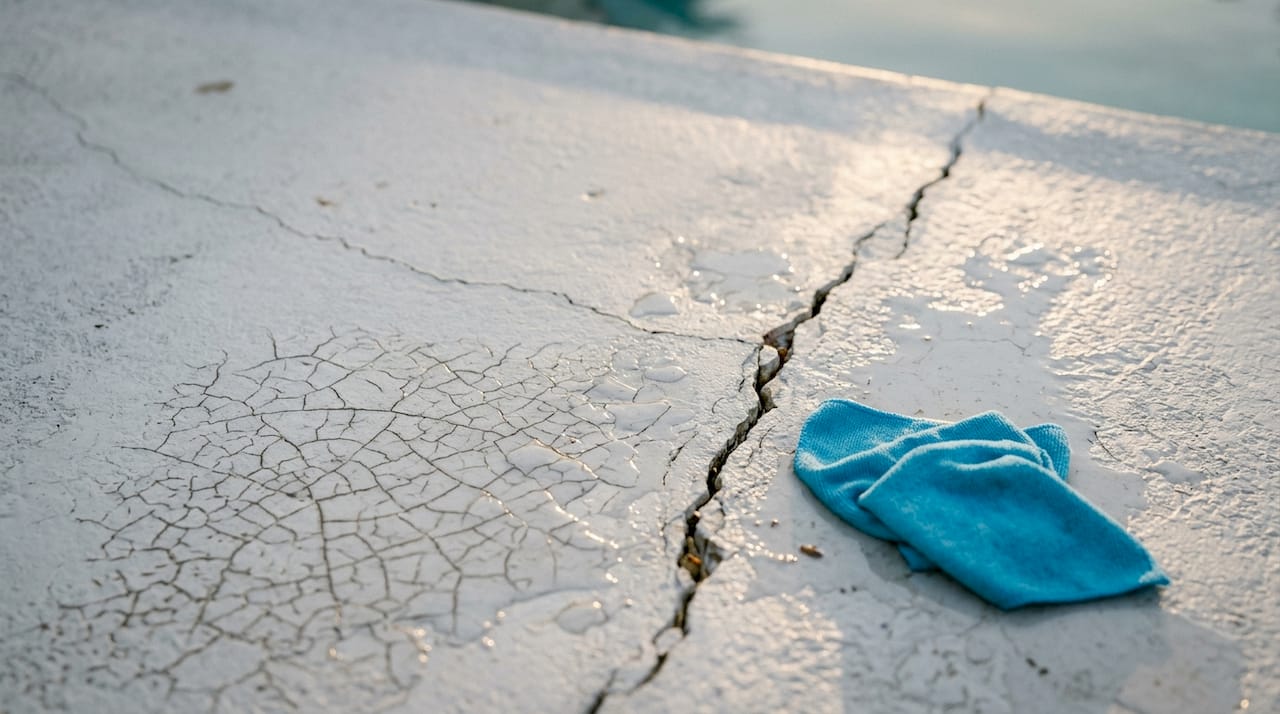
Structural cracks are a different matter. They run deeper, often exceed 1/8 inch in width, and can cut through the full concrete shell. You may notice them growing over time or appearing in straight lines across the floor or walls. Water loss beyond normal evaporation is the clearest warning sign.
Crazing, sometimes called spiderweb cracking, produces a network of fine interconnected lines across the surface. It typically results from rapid drying during the initial curing phase. Crazing looks alarming but is usually cosmetic unless the pattern deepens.
Here is a quick reference for crack identification:
| Crack type | Width | Depth | Typical cause |
|---|---|---|---|
| Hairline | Under 1/8 inch | Surface only | Shrinkage, age |
| Structural | Over 1/8 inch | Full shell | Soil movement, pressure |
| Crazing | Very fine network | Surface layer | Rapid curing, heat |
| Delamination | Varies | Plaster separating | Bond failure |
Key pool plaster deterioration signs to watch for include:
- Rough or peeling patches that snag swimsuits
- Discoloration or staining along crack lines
- Visible gaps that widen after temperature changes
- Water loss greater than normal evaporation
Pro Tip: Tap along the plaster surface with a coin or knuckle. A hollow sound indicates delamination, meaning the plaster has separated from the shell beneath. Patching will not fix delamination. Full resurfacing is the only lasting solution.
Major causes of pool plaster cracking explained
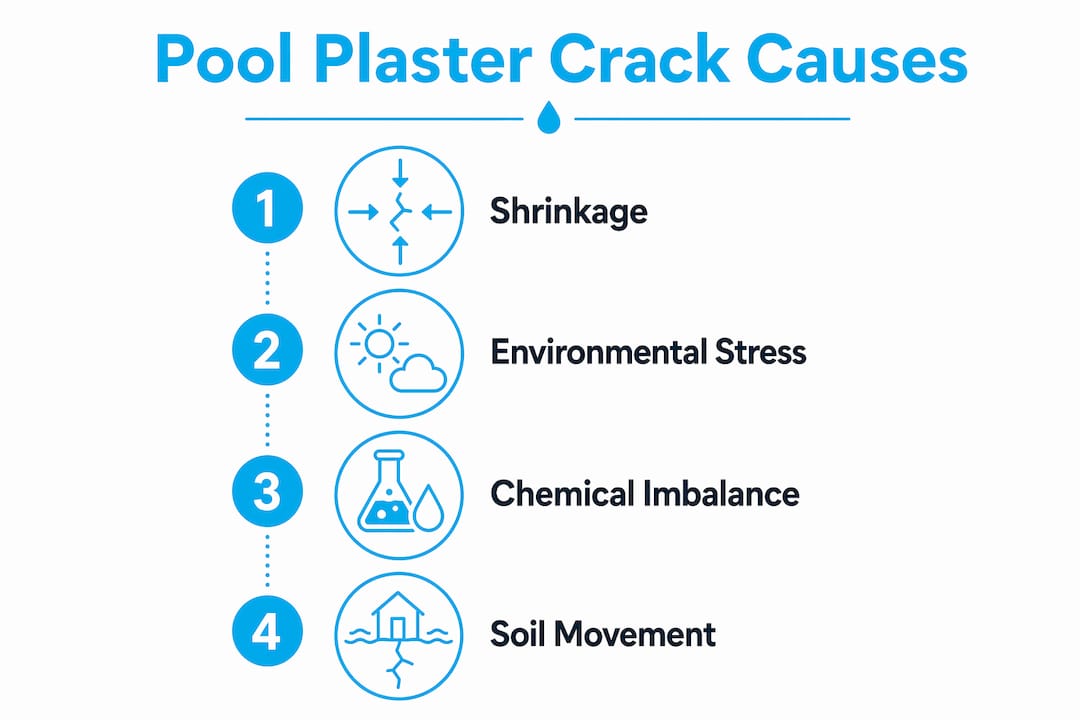
Pool plaster cracking causes fall into four main categories. Understanding each one tells you whether the fix is in your hands or requires a structural solution.
Shrinkage during curing
Fresh plaster shrinks as it dries. If the curing process happens too fast, due to high heat, low humidity, or wind, the surface contracts unevenly and cracks form. Most plaster failures trace back to applicator errors rather than water chemistry alone. Rushed curing and poor surface preparation are the most common workmanship mistakes.
Environmental stressors
Arizona and other desert climates are especially hard on pool plaster. Temperature swings exceeding 40°F cause the plaster to expand and contract repeatedly, creating stress fractures over time. UV exposure also degrades the binder in plaster, making it brittle and prone to surface splitting. These are pool deck cracking reasons that no amount of patching will eliminate without addressing the environment.
Chemical imbalances
Water chemistry is the silent killer of pool plaster. Low pH makes water aggressive, and that aggressive water literally eats the calcium out of your plaster surface. Low calcium hardness accelerates this process further, leaving the plaster porous and weak. The result is pitting, etching, and eventually cracking across large surface areas.
The main chemical culprits include:
- pH below 7.2: Acidic water dissolves plaster minerals
- Calcium hardness below 200 ppm: Soft water pulls calcium from the plaster surface
- Total alkalinity out of range: Destabilizes pH and accelerates chemical attack
- Cyanuric acid too high: Reduces sanitizer effectiveness and stresses the surface indirectly
Soil movement and hydrostatic pressure
The ground beneath your pool moves. Soil settlement, tree root intrusion, and seasonal moisture changes all shift the substrate under the shell. That movement transfers directly into the concrete and then into the plaster above it. Hydrostatic pressure is a related threat: when the water table rises around a drained pool, the pressure can lift the shell or cause cracking from below. This is why you should never drain your pool without consulting a professional first, particularly in areas with high water tables.
How to assess your pool plaster cracks at home
You can gather a lot of useful information before a professional ever sets foot in your yard. A systematic home assessment tells you whether you are dealing with a cosmetic issue or a leak.
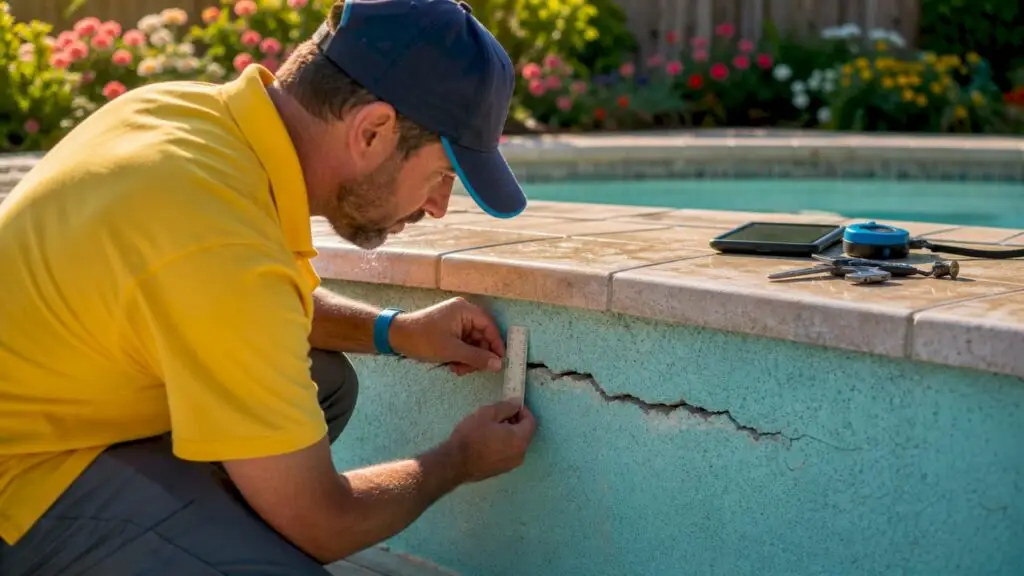
- Visual inspection. Walk the entire perimeter and scan the floor, walls, and steps. Note crack width, pattern, and location. Photograph everything with a ruler for scale. Cracks near fittings, returns, or the main drain deserve extra attention.
- The bucket test. Fill a five-gallon bucket with pool water and set it on a pool step so it sits partially submerged. Mark the water level inside the bucket and on the pool wall. Wait 24 hours. If the pool loses more water than the bucket, you have a leak, not just evaporation.
- Tap test for delamination. Use a coin and tap across the plaster surface systematically. Solid plaster sounds dense. Delaminated plaster sounds hollow and dull. Mark hollow areas with a grease pencil.
- Dye test. Turn off the pump and let the water go still. Hold a small amount of dye (available at pool supply stores) near a suspected crack. If the dye gets pulled into the crack, water is escaping through it.
- Monitor or call. Hairline cracks with no water loss and no hollow sound are safe to monitor monthly. Structural cracks, active leaks, or delamination require a professional evaluation right away.
Pro Tip: Always check pool plaster repair priorities before attempting any DIY patching. Sealing over a delaminated area traps moisture and makes the underlying problem worse.
Effective maintenance and prevention strategies for pool plaster cracking
Preventing plaster cracks is far cheaper than fixing them. Most of the work comes down to consistent chemistry and a few smart habits.
Maintain balanced water chemistry every week. Target pH between 7.4 and 7.6, calcium hardness between 200 and 400 ppm, and total alkalinity between 80 and 120 ppm. Test twice a week during summer in hot climates. Balanced water protects the plaster surface the same way moisturizer protects skin.
Never drain your pool without professional guidance. Improper draining causes hydrostatic pressure damage that can crack or lift the shell. If you need to drain for repairs, have a professional assess the water table risk first.
Additional prevention practices that extend plaster life:
- Brush the walls weekly to prevent calcium scale buildup, which stresses the surface
- Avoid abrasive cleaning tools that scratch and thin the plaster layer
- Manage tree roots near the pool deck to prevent substrate movement
- Improve deck drainage so water does not pool against the shell and saturate the soil
- Schedule annual inspections to catch minor cracks before they grow
Pro Tip: New plaster needs 28 days to fully cure. During that period, protect the curing surface from rapid temperature changes and keep chemistry balanced from day one. Rushing this phase is the single most common cause of premature crazing.
Controlling environmental factors matters too. In Phoenix and the surrounding Valley, summer temperatures regularly exceed 110°F, which accelerates UV degradation and thermal cycling stress. Adding shade structures or keeping the pool covered during peak heat hours reduces surface stress meaningfully.
Key Takeaways
Pool plaster cracking is caused by a combination of workmanship errors, chemical imbalance, environmental stress, and structural movement, and each cause requires a different repair response.
| Point | Details |
|---|---|
| Crack type determines repair | Hairline cracks are cosmetic; structural cracks and delamination require professional intervention. |
| Chemistry is the top preventable cause | Keeping pH between 7.4 and 7.6 and calcium hardness above 200 ppm protects plaster from chemical erosion. |
| The bucket test confirms leaks | If pool water drops more than a bucket over 24 hours, a crack is actively leaking and needs repair. |
| Draining without guidance risks shell damage | Hydrostatic pressure from improper draining can crack or lift the pool shell, worsening existing damage. |
| Patching works only when the root cause is fixed | Professional patches last 5–8 years, but recurring cracks reopen within 2–3 years if the underlying issue remains. |
What I’ve learned after years of watching homeowners patch the wrong problem
After working with hundreds of pool owners across the Greater Phoenix area, the pattern I see most often is this: a homeowner spots a crack, buys a tube of underwater epoxy, fills it in, and calls it done. Six months later, the crack is back and wider. The patch did not fail because the product was bad. It failed because the root cause was never addressed.
The most expensive mistake I see is patching over delamination. The plaster looks sealed from the outside, but moisture is still trapped underneath, and the bond continues to fail. By the time the homeowner calls us, the delamination has spread across half the pool floor and the only option is a full resurface. That job costs three to five times what early intervention would have cost.
My honest advice: treat the bucket test as non-negotiable. If your pool is losing water faster than a bucket sitting on the step, you have an active leak. Do not wait for the crack to grow before acting. The pool resurfacing process is not as disruptive as most homeowners fear, and catching problems early keeps the scope of work manageable.
Patching is absolutely the right call for isolated hairline cracks with no water loss and no delamination. Done professionally, those repairs hold for years. But if you are seeing multiple cracks, hollow spots, or water loss, the economics shift fast. A full replaster on a standard pool is a known, predictable cost. Chasing recurring cracks with repeated patches adds up quickly and never fully solves the problem.
Be proactive, not reactive. Your plaster is telling you something every time a new crack appears. Listen to it early.
— Brian
When professional pool repair makes the most sense
Cracks that pass the bucket test or sound hollow under a tap are beyond DIY territory. That is where Wefixuglypools steps in.
Wefixuglypools has spent over a decade diagnosing and repairing pool plaster across the Greater Phoenix area, completing hundreds of transformations for homeowners who thought their pools were beyond saving. Whether you need targeted crack repair or a complete pool remodeling and restoration service, the team provides an honest assessment before recommending any work. For homeowners dealing with active leaks or widespread deterioration, professional pool repair services include both patch repairs and full replastering, matched to the actual severity of the damage. Reach out to schedule a free evaluation and get a clear picture of what your pool actually needs.
FAQ
What is the most common cause of pool plaster cracking?
Poor workmanship during application and rushed curing are the leading causes of premature plaster cracking. Chemical imbalances, particularly low pH and low calcium hardness, accelerate deterioration in pools of any age.
How do I know if a crack in my pool is leaking?
Perform the bucket test: if your pool loses more water than a bucket sitting on a pool step over 24 hours, the crack is actively leaking and needs professional repair.
Can I patch pool plaster cracks myself?
Small hairline cracks with no water loss can be patched with pool-grade epoxy putty as a temporary measure. Structural cracks, delamination, or active leaks require professional diagnosis and repair to prevent the problem from recurring.
How long does pool plaster last before cracking becomes likely?
Traditional pool plaster lasts approximately 7–10 years under normal conditions. Harsh climates, aggressive water chemistry, and poor original workmanship can shorten that window considerably.
What does delamination mean and why does it matter?
Delamination means the plaster layer has separated from the concrete shell beneath it. It cannot be patched effectively and requires full resurfacing to restore structural integrity.