For custom pool construction and remodeling in Phoenix, we recommend hiring a contractor who holds an active B-5 or KA-5 license through the Arizona Registrar of Contractors, carries verifiable bond and insurance coverage, and specializes in remodel work rather than treating it as a side service. A remodeling-first specialist tends to reduce the risk of surprises on older pools and complex fixes. Below, we walk through verification steps, cost and payment guidance, the permit and inspection checklist, and contract questions that protect your budget.
TL;DR:
- Ensure the contractor holds an active B-5 or KA-5 license and verify their bond and insurance coverage through the Arizona ROC portal.
- Expect full remodeling costs to vary widely based on scope, finish, and site conditions, with clear, staged payment schedules and explicit cost breakdowns recommended.
- Confirm your contractor will handle all permits and inspections proactively, with a focus on barrier compliance and a realistic project timeline of eight to twelve weeks.
- Watch out for red flags such as large upfront payments, unverified licenses, or reluctance to provide written scope and schedule; verify all contractual protections before signing.
- Prefer remodel-specialist contractors with experience fixing older pools and thoroughly check references in person to avoid hidden issues and ensure final work matches promises.
Table of Contents
- How to Verify a Phoenix Pool Contractor’s License, Classification, and Bond
- What to Expect on Cost and Payment: Phoenix Ranges and Arizona Protections
- Permits, Inspections, and Phoenix Pool Barrier Rules That Affect Your Schedule
- Questions to Ask and a Contract Checklist Before You Sign
- Red Flags: Warning Signs That Should Stop You From Signing
- Why a Remodel-First Specialist Fits Phoenix Homeowners
- What Phoenix Homeowners Say About Their Pool Contractors
- A Phoenix Remodeler’s Take on Hiring the Right Way
- How We Fix Ugly Pools Can Help With Your Next Project
- FAQ
- Sources
How to Verify a Phoenix Pool Contractor’s License, Classification, and Bond
Before you let anyone near your backyard with a jackhammer, confirm that their license is real, active, and matched to the scope of work you need. The Arizona Registrar of Contractors portal lets you search by business name or license number, and the results show license status, the qualifying party on record, bond information, and any complaint history tied to that contractor.
Pool construction and remodeling in Arizona generally falls under a few specific classifications. A B-5 license covers general swimming pool contracting, while KA-5 is a dual classification that combines commercial and residential pool work under one license. You may also see A-9 (general engineering, sometimes used for excavation-heavy projects) or R-6 (residential general) attached to larger scopes, but neither substitutes for the pool-specific B-5 or KA-5 when the work involves gunite shells, plumbing, or plaster. Applicants for any of these classifications must identify a qualifying party who holds the experience and supervisory background the ROC requires, and that person’s name should match what you see on the contract.
Before signing anything, collect these items from every contractor you’re considering:
- The exact license number, so you can look it up yourself rather than taking a logo on a truck at face value.
- The qualifying party’s name, confirmed against the ROC record.
- Current proof of bond and a certificate of general liability insurance.
- At least two references from completed Phoenix-area remodels within the past two years.
Pro Tip: Ask for the license number on your first estimate call and verify it while you’re still on the phone. A legitimate contractor won’t hesitate, and you’ll weed out unlicensed operators before they ever set foot on your property.
Our guide to vetting a pool remodeling contractor walks through this same verification process in more detail if you want a step-by-step companion while you’re making calls.
What to Expect on Cost and Payment: Phoenix Ranges and Arizona Protections
Pool costs in Phoenix swing widely based on scope. A full custom build involves excavation, gunite shell work, plumbing, decking, and finish selection, while a remodel might involve only resurfacing, retiling, or equipment replacement. Site access, soil conditions, the complexity of water features, and the finish you choose (plaster versus pebble or quartz aggregate) all move the number more than almost anything else.
What matters just as much as the total is how you pay it. Arizona law gives homeowners real protection here. Under A.R.S. § 32-1158.01, residential pool construction contracts are subject to caps on down payments, and contractors must disclose your right to request payment and performance bonds. If someone asks for a large chunk of the total cost upfront, before any work has started, that’s not a sign of confidence. It’s a sign you should ask harder questions.
When you’re comparing proposals, look past the bottom-line number and check for these line items:
- A clear breakdown of excavation, shell, plumbing, decking, and finish costs rather than one lump figure.
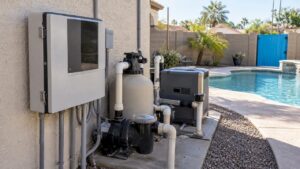
- Equipment specifications (pump, filter, heater model and capacity) instead of vague allowances.
- Permit and inspection fees listed explicitly, not folded into “miscellaneous.”
- A staged payment schedule tied to completed milestones, not just calendar dates.
Pro Tip: Ask directly whether the contract includes a payment and performance bond clause, and clarify upfront who covers the cost if you request one. Arizona law gives you that right, but exercising it is easier when you’ve asked before you sign rather than after a dispute starts.
Permits, Inspections, and Phoenix Pool Barrier Rules That Affect Your Schedule
Every new pool and most major remodels in Phoenix require a permit, and how your contractor handles that process says a lot about how the rest of the project will go. Standard pool designs can often move through a simpler submittal path, but custom shapes, grottos, or engineered features typically require a full custom submittal package, including a plot plan, sealed engineering details where the design calls for them, and a valuation-based review fee.
Two inspections matter more than any others in this process:
- Pre-gunite inspection. Before shotcrete goes on, the city checks that excavation, steel, and plumbing rough-in match the approved plans.
- Pre-plaster inspection. Before the pool is finished and filled, inspectors confirm that required barriers, gates, and latches are in place and functioning, consistent with the City of Phoenix pool barrier requirements.
Barrier compliance isn’t optional paperwork. Phoenix’s amendments to the ISPSC spell out gate and latch heights, self-closing hardware, and alternatives like approved powered safety covers, and the barrier has to remain in place for the life of the pool, not just long enough to pass inspection once.
A permit-to-completion window of roughly 8 to 12 weeks is a realistic target for many Phoenix remodels when a contractor manages the permitting process proactively. Delays usually come from incomplete submittals, missing engineering seals on custom designs, or barrier fixes that get discovered late instead of planned for from the start. A contractor who builds inspection timing into the schedule, and who hands you copies of the permit application, the approved plot plan, and any sealed engineering documents as a matter of course, is telling you they’ve done this before. If you want more detail on how the fence and latch requirements specifically affect your pre-plaster inspection, our breakdown of Phoenix pool fence rules covers the five-foot height and 54-inch latch placement standards most homeowners run into.
Questions to Ask and a Contract Checklist Before You Sign
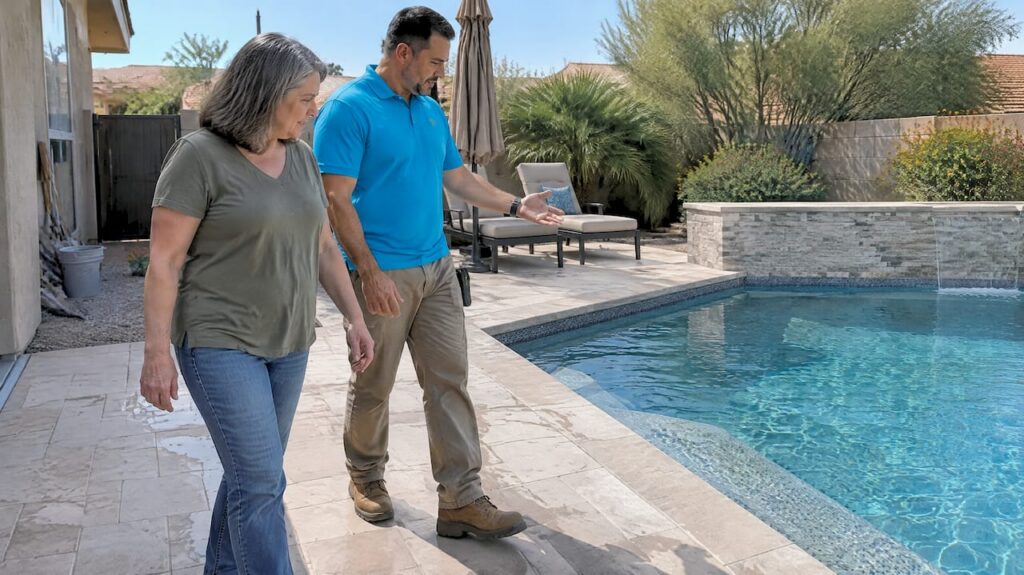
A good conversation with a prospective contractor should feel less like a sales pitch and more like a working interview. Ask how many Phoenix permits they’ve pulled in the past year, whether they have references specifically from remodel projects rather than only new builds, and how they manage subcontractors for plumbing, electrical, or specialty finish work. Vague answers here are a preview of vague project management later.
Once you’re ready to move forward, the contract itself needs to include specific protections, not just a price and a start date:
- A detailed scope of work with finish specifications, equipment models, and dimensions, not general descriptions.
- Fixed milestones tied to a staged payment schedule that matches the caps under Arizona’s payment protection statute.
- A written change-order procedure requiring your signature before any added cost or scope takes effect.
- Lien waiver documentation at each payment stage, so subcontractors can’t file a claim against your property after you’ve already paid.
- Clear warranty terms and a defined punch-list process for finishing touches after substantial completion.
Pro Tip: When you check references, ask to see the finished pool in person rather than relying on photos alone, and ask the homeowner directly whether the final cost matched the original proposal. A contractor’s best work is in the yards they’ve already finished, not in their sales materials.
Red Flags: Warning Signs That Should Stop You From Signing
Some warning signs are loud enough that you shouldn’t need a second opinion. Watch for these:
- A demand for a large cash payment upfront, especially one that exceeds what Arizona law permits as a down payment.
- A license number that doesn’t match anything in the ROC database, or one tied to a different qualifying party than the person you’re dealing with.
- Reluctance to put the scope, price, or schedule in writing.
- Refusal to pull permits themselves, or pressure on you to pull them personally.
- Repeated schedule slips with no documented explanation or updated timeline.
If you hit any of these, pause before paying another dollar. Re-verify the license, insist on a written contract amendment, and request documented lien releases for any payments already made. If the contractor won’t cooperate, you can file a complaint directly with the ROC. Escrow arrangements, bonds, and documented change orders exist precisely to protect you in these situations, and a legitimate contractor won’t push back when you ask to use them.
Why a Remodel-First Specialist Fits Phoenix Homeowners
Pool remodeling is a different discipline than new construction, even though both require the same license classifications. A shell that’s cracking, plumbing that was never installed to current code, or a barrier that was grandfathered in decades ago all require a contractor who has seen those specific problems before, not one encountering them for the first time on your project.

We built our practice around exactly that gap. With extensive experience and numerous completed remodels across the Phoenix area, we have developed a working familiarity with the kinds of surprises that show up once demolition starts on an older pool, which tends to reduce both schedule risk and the number of change orders that catch homeowners off guard mid-project.
Our pool services cover the specific pain points that come up again and again in remodel work:
- Resurfacing and restoration for pools with failing plaster or outdated finishes.
- Depth conversions for pools that no longer match how a family actually uses the space.
- Plumbing repair for systems installed long before current equipment standards.
- Barrier remediation to bring older pools into alignment with current Phoenix code.
We have experience fixing other contractors’ mistakes, which means we’ve already seen many of the problems a remodel can throw at a homeowner.
What Phoenix Homeowners Say About Their Pool Contractors
Reviews and references matter more in pool remodeling than almost any other home project, because so much of the work is invisible once it’s finished. You can’t see the rebar inside a shell or the plumbing beneath the deck, so you’re relying heavily on what past clients experienced during the process itself: whether the contractor communicated clearly, whether the timeline held up, and whether the final result matched what was promised.
When you’re checking references for any Phoenix contractor, ask specifically about the parts that are hardest to fake: Did inspections pass on the first attempt? Did the payment schedule match what was in the contract? Were change orders rare, and if they happened, were they documented before the work proceeded? A contractor with a strong track record of remodels will have homeowners willing to answer those questions candidly, and many will let you see the finished pool in person rather than relying on photos alone.
We encourage every homeowner we talk with to do exactly that kind of reference check, whether they end up working with us or with someone else. A contractor’s history with past clients tells you more about how your project will go than any estimate ever will.
A Phoenix Remodeler’s Take on Hiring the Right Way
The single rule I see homeowners skip most often is treating the permit and inspection process as the contractor’s problem rather than their own leverage. A contractor who can’t explain the pre-gunite and pre-plaster sequence clearly, or who treats barrier compliance as something to figure out later, is telling you how the rest of the project will go. Code realities and hiring decisions aren’t separate conversations. They’re the same conversation.
If you remember nothing else from this guide, remember three things: verify the ROC license yourself, insist on a staged payment schedule that matches Arizona’s statutory protections, and confirm barrier compliance before plaster goes down, not after.
— Brian
How We Fix Ugly Pools Can Help With Your Next Project
Whatever stage your pool is at right now, from a dated shell that needs a full transformation to a leak that’s been quietly draining money for months, we offer the specific service that matches it rather than a one-size answer.

Our team handles custom pool construction for homeowners starting from scratch, full remodels and resurfacing through our pool services line, and targeted fixes through pool repair when the issue is isolated rather than systemic. Specific needs we cover include:
- Custom pool design and construction for new builds.
- Resurfacing, replastering, and retiling for aging finishes.
- Depth conversions and barrier remediation to meet current code.
- Plumbing, filter system, and equipment repair for pools with isolated problems.
If you’re ready to see what a remodel-first approach looks like for your own backyard, request a free estimate through our custom pools page and we’ll walk the property with you before anything gets decided.
FAQ
Who is the best pool builder in Arizona?
There’s no single statewide ranking body, so the better question is which contractor holds an active B-5 or KA-5 license and has a strong record of completed projects in your area. For Phoenix-area remodels specifically, we built our practice around exactly that specialty, with a decade of experience and hundreds of completed transformations.
What is the average cost to build a pool in Phoenix, Arizona?
Costs vary significantly based on size, site conditions, and finish selection, and no single figure applies to every project. Ask any contractor you’re considering for an itemized breakdown of excavation, shell, plumbing, decking, and finish costs so you can compare proposals on the same terms.
How do I choose the right pool contractor?
Start by verifying the contractor’s license and bond status through the Arizona Registrar of Contractors, then confirm they carry current liability insurance and can provide references from completed local remodels. Review the contract carefully for a staged payment schedule that complies with Arizona’s payment protection statute, a defined change-order process, and clear warranty terms before you sign.
Can I get an inground pool for $30,000?
Whether that budget is realistic depends heavily on size, site access, and the finish level you choose, since costs vary too widely to state a fixed figure that applies everywhere. Request itemized quotes from licensed contractors so you can see exactly what a given budget buys in terms of shell size, equipment, and finish quality.
Sources
Before you sign anything, these are the primary sources worth checking yourself rather than taking a contractor’s word for it:
- License Classifications | Arizona Registrar of Contractors
- SB1116 / A.R.S. § 32-1158.01 (Swimming pool; spa; construction contracts)