If you can see algae in your pool right now, stop swimming and follow these steps immediately.
- Keep everyone out. Remove children and pets from the water and the surrounding deck until the water is fully treated and clear.
- Test your sanitizer. Grab a test kit or test strips and check your free chlorine level. If it reads below 1 ppm, your pool is unsanitized.
- Run your pump. Turn on the filter and run it continuously until the bloom clears.
- Identify the type. Green and cloudy? You can likely treat it yourself. Scummy surface, putrid smell, or a blue-green paint-like sheen? Call a professional before doing anything else.
- Call a pro if needed. Black algae, repeated re-blooms, or any sign of cyanobacterial scum (thick surface film, rotten odor) warrant professional treatment, not a DIY shock session.
Safety first: The CDC advises avoiding contact with visibly affected recreational water until it has been properly treated and clarity is fully restored. You cannot tell by looking whether algae is harmless or toxin-producing, so the safest default is to stay out.
Key Takeaways
A pool algae bloom is a sanitation failure, not just a cosmetic problem, and the safest response is to stop swimming immediately and treat the water before anyone re-enters.
| Point | Details |
|---|---|
| Stop swimming on sight | Visible algae signals a sanitation failure; the CDC advises staying out until water is treated and fully clear. |
| Identify the type first | Green algae clears in 2–7 days with shock; mustard and black algae need targeted protocols and take 1–3+ weeks. |
| Test, balance, then shock | Adjust pH to 7.2–7.4 before shocking; chlorine is significantly less effective outside this range. |
| Run the filter continuously | Keep the pump running 24/7 from first treatment until the water clears; a clogged or short-running filter extends recovery by days. |
| Wefixuglypools for persistent blooms | Recurring algae often signals surface damage or equipment failure; Wefixuglypools provides professional remediation and pool restoration in the Greater Phoenix area. |
Table of Contents
- What is a pool algae bloom and why should you care?
- What causes algae to bloom in a pool?
- How do you identify the type of algae in your pool?
- How to treat an active algae bloom step by step
- How long does treatment take and when is it safe to swim?
- How to prevent algae blooms with a routine maintenance schedule
- When should you call a professional instead of treating it yourself?
- Field-proven tips from Wefixuglypools technicians
- A homeowner’s perspective on getting this right
- Persistent algae problems may need more than chemicals
- Sources
What is a pool algae bloom and why should you care?
An algae bloom is a rapid, visible overgrowth of algae or cyanobacteria that clouds your water, coats pool surfaces, or forms a scum layer on top. It is not the same as a temporary green tint after a rainstorm or a brief cloudy spell after adding chemicals. A true bloom means the algae population has grown fast enough to overwhelm your sanitizer, and that signals a sanitation failure, not just an aesthetic problem.
The distinction matters because algae itself is not always the direct danger. The real risk is what grows alongside it. When free chlorine drops low enough for algae to take hold, harmful bacteria like E. coli and Pseudomonas can persist in the same water. Homeowner-focused reporting from Family Handyman notes that visible algae, surface scums, or putrid odors should be treated as potentially hazardous, and that owners should avoid swimming until the water is treated and clear.
Cyanobacteria, sometimes called blue-green algae, add another layer of risk. Under warm, nutrient-rich, and poorly mixed conditions, cyanobacteria can produce toxins that cause skin irritation, gastrointestinal illness, and in severe cases, liver damage. The problem is that cyanobacterial blooms look similar to ordinary green algae blooms until they form a thick, paint-like surface scum or release a distinctly foul smell.
Key point: Visible algae in a pool is evidence that your sanitizer has failed. Treat it as a health hazard until the water tests clean and you can see the bottom clearly.
Blooms can form surprisingly fast. In warm weather with low chlorine and adequate nutrients, algae populations can double within hours. That is why a pool that looked fine on Friday can turn green by Sunday morning.
What causes algae to bloom in a pool?
Algae spores are always present in pool water. They arrive constantly through wind, rain, contaminated swimwear, and equipment. The conditions that let them grow are what you can actually control.
- Low free chlorine relative to cyanuric acid (CYA). This is the most common trigger. Cyanuric acid stabilizes chlorine against UV degradation, but high CYA also reduces chlorine’s killing power. If your CYA is 80 ppm and your free chlorine is only 2 ppm, your effective sanitizer level is far lower than the number suggests. The FC/CYA relationship is the most reliable long-term control lever most homeowners overlook.
- Poor circulation and dead zones. Areas behind steps, in front of return jets, and in corners with low flow allow algae to settle and grow undisturbed. A pump that runs only a few hours a day in summer creates the same problem.
- High phosphates and organic load. Phosphates are algae’s primary food source. They enter pools through fertilizer runoff, leaf debris, rainwater, and some pool chemicals. A single storm can spike phosphate levels enough to fuel a bloom within days.
- Warm water and sunlight. Algae growth accelerates above 60°F and becomes aggressive above 80°F. Phoenix-area pools regularly hit 85–90°F in summer, which is near-ideal for rapid algae growth.
- Contaminated equipment and swimwear. Mustard algae in particular can survive on pool toys, brushes, and swimsuits for months outside of water. Bringing contaminated gear back into a treated pool restarts the problem immediately.
- Infrequent shocking. Pools that are never shocked allow combined chlorine (chloramines) to build up, reducing the water’s ability to kill algae even when total chlorine reads acceptable.
Pro Tip: *Check your free chlorine and CYA levels together every week during summer, not separately. A free chlorine reading of 3 ppm sounds healthy, but if your CYA is 100 ppm, your pool is essentially unsanitized.
How do you identify the type of algae in your pool?
Getting the type right before you treat saves you time, money, and repeat treatments. Each type has distinct visual cues and responds differently to standard shock.
Green algae
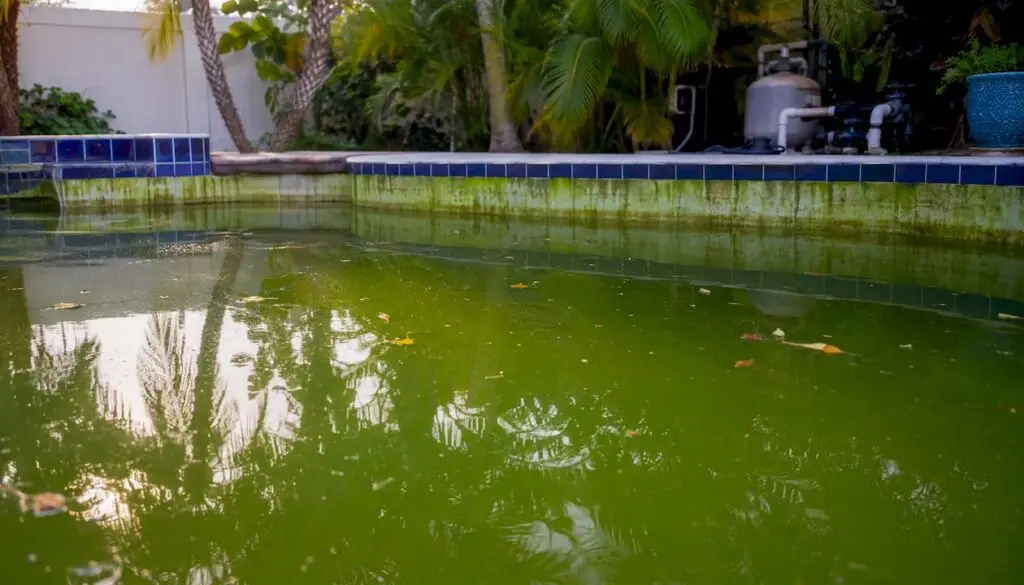
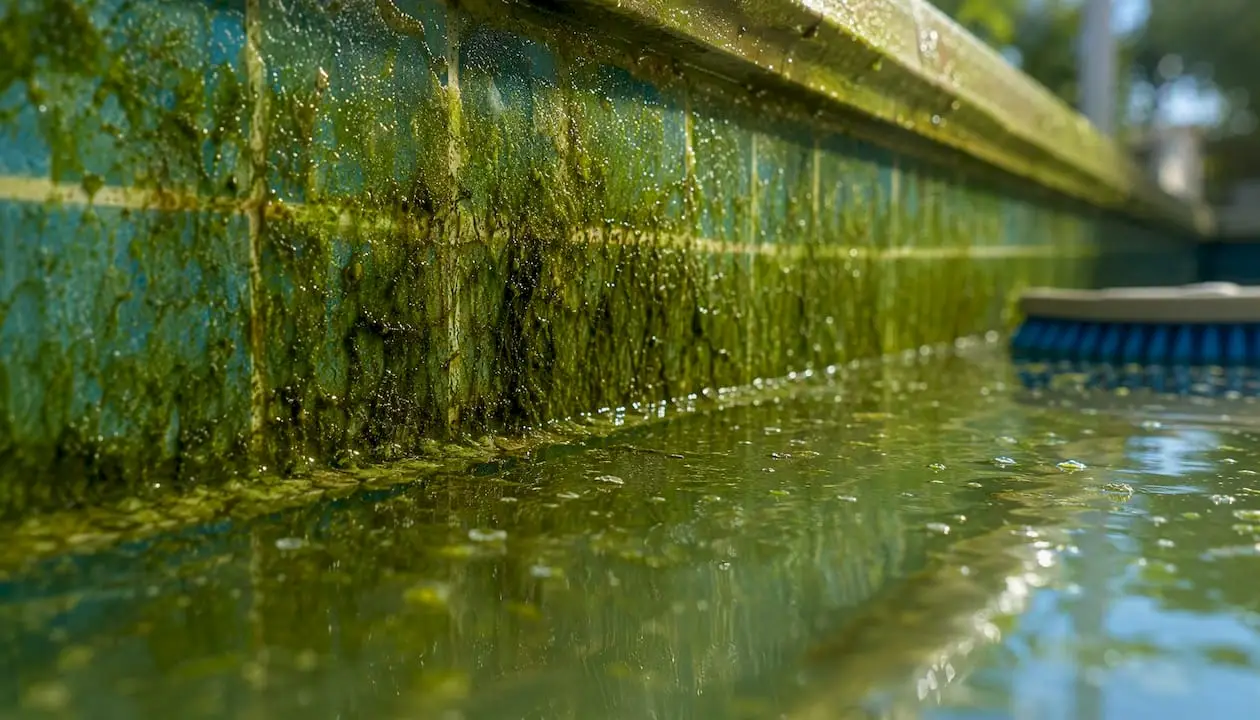
The most common type. Water turns cloudy green or teal, and surfaces feel slippery. It floats freely in the water column and also coats walls and floors. Green algae responds well to standard chlorine shock and proper filtration. According to PoolCareHelp, green algae commonly clears in a few days with proper shock and filtration when caught early.
Mustard (yellow) algae
Appears as a yellowish or brownish powder coating the shaded walls and floor of the pool, often in corners or behind steps. It brushes off easily but returns quickly. Mustard algae is chlorine-resistant and requires a specialized mustard algaecide or a very high shock dose. Critically, it can survive on swimwear, brushes, and toys for months outside the water. Any gear that touched an infected pool must be decontaminated before reuse.
Black algae
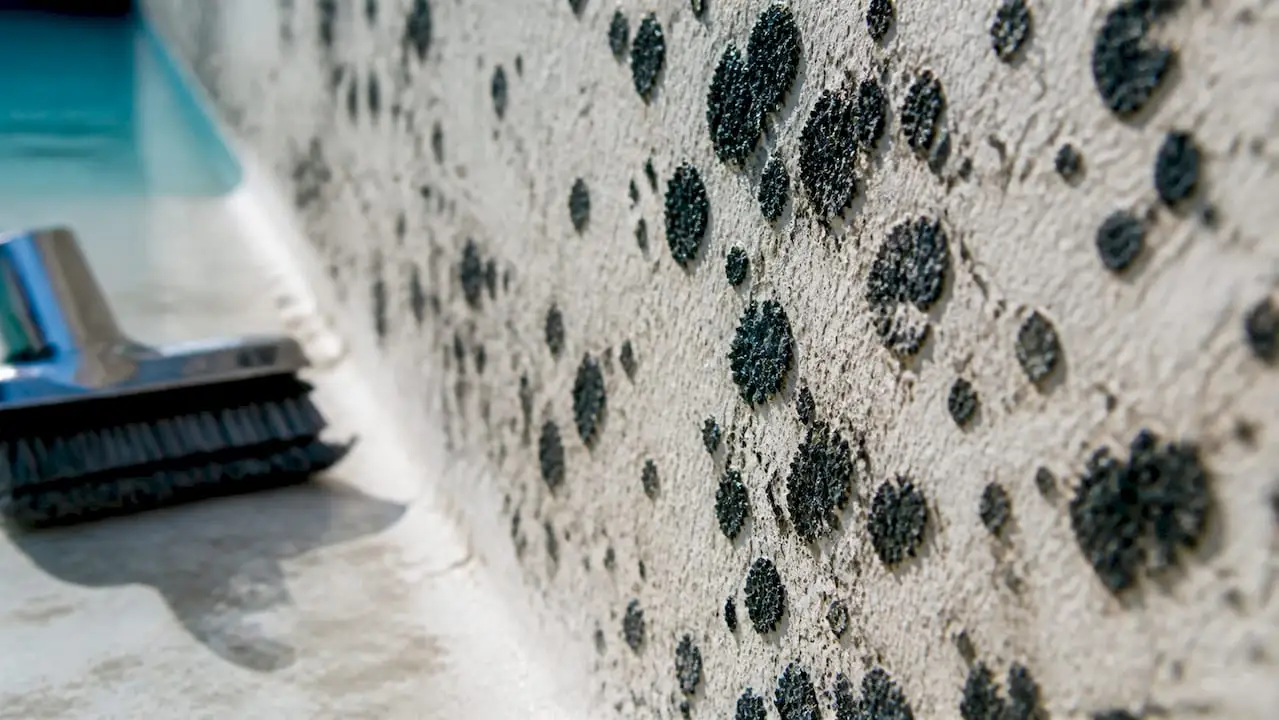
Not actually algae in the traditional sense but a cyanobacterium. It appears as dark blue-black raised spots or patches, most often on porous concrete or plaster surfaces. Black algae grows protective layers that standard chlorine cannot penetrate, and its roots anchor into the surface finish. Treatment requires a stainless-steel brush to break through the protective cap, direct application of trichlor tablets or granular chlorine to the spots, and repeated treatment cycles over one to two weeks or longer. If black algae has been present for a long time, it may have damaged the plaster finish, which requires professional surface restoration.
Pink biofilm
Often called “pink algae,” this is actually a bacterial biofilm (Serratia marcescens), not algae at all. It appears as a slimy pink or orange ring at the waterline or in corners. It responds to chlorine shock but tends to recur if the root cause (low sanitizer, rough surfaces) is not addressed.
Blue-green scum (cyanobacteria)
The most hazardous type. Looks like a thick, paint-like surface scum, often with a blue-green, olive, or rust color and a distinctly putrid or earthy smell. This is the type that can produce toxins. If you see this, close the pool immediately and call a professional. Do not attempt to shock it yourself without guidance because algaecides applied to cyanobacterial blooms can lyse cells and release toxins into the water, potentially making conditions temporarily worse.
How to treat an active algae bloom step by step
Most green algae blooms are treatable by a prepared homeowner. Mustard and black algae require more effort. Blue-green scum requires a professional. Here is the standard treatment sequence for common blooms.
- Test and record your water chemistry. Check free chlorine, combined chlorine, pH, total alkalinity, CYA, and phosphates. You need a baseline before adding anything.
- Balance pH and alkalinity first. Shock is far less effective outside the optimal pH range of 7.2–7.4. Adjust alkalinity to 80–120 ppm and pH before proceeding.
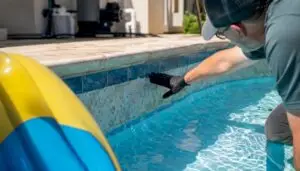
- Brush every surface thoroughly. Brush walls, floor, steps, and corners before shocking. This breaks up algae colonies and exposes them to the sanitizer. For black algae, use a stainless-steel brush and scrub hard enough to break the protective cap on each spot.
- Shock the pool. For green algae, a standard shock dose is typically 1 lb of calcium hypochlorite (cal-hypo) per 10,000 gallons, but a bloom usually requires 2–3x the normal dose. For mustard algae, use a mustard-specific algaecide alongside a high shock dose, following the product label for your pool volume. For black algae, place a trichlor tablet directly on each spot after brushing, then shock the full pool. Note: never mix cal-hypo and trichlor together directly; add them separately to avoid a dangerous chemical reaction.
- Run the filter 24/7. Keep the pump running continuously from the moment you shock until the water clears completely. This is non-negotiable.
- Vacuum to waste. Once dead algae settles to the floor (it will turn gray or white), vacuum it directly to waste rather than through the filter to avoid clogging and recirculating debris.
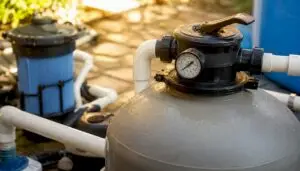
- Backwash or clean the filter. After vacuuming, backwash a sand or DE filter, or rinse a cartridge filter. A clogged filter cannot clear the water.
- Retest and repeat if needed. Retest free chlorine, pH, and clarity 24 hours after shocking. If the water is still green or cloudy, brush again and re-shock. Mustard and black algae routinely require multiple treatment cycles.
Dosage note: Always calculate shock doses based on your pool’s actual volume in gallons and follow the product label. Over-dosing cal-hypo can bleach pool surfaces and damage equipment seals. Under-dosing simply fails to kill the algae and wastes product.
The EPA notes that chemical algaecides can kill algae cells quickly but carry the trade-off of toxin release from cell lysis, particularly with cyanobacterial blooms. For copper-based algaecides used in more severe cases, a follow-up oxidizer like potassium permanganate is sometimes used by professionals to address released toxins, though this sequence has implications for fish and pet safety and should not be attempted without professional guidance.
Safety during treatment: Wear gloves and eye protection when handling shock chemicals. Keep children and pets away from the pool and pool deck during treatment. Never add chemicals to a pool while anyone is in the water. Store pool chemicals separately and never mix them in the same container.
How long does treatment take and when is it safe to swim?
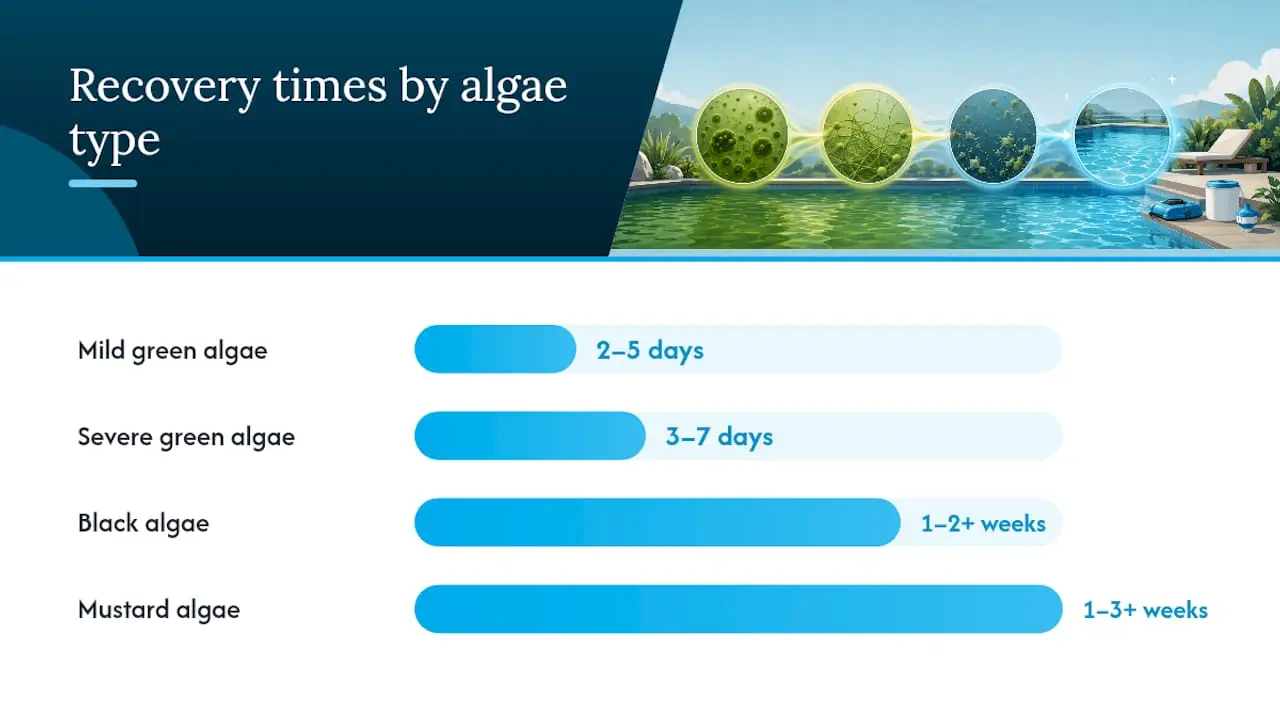
Recovery time depends on the type of algae, the severity of the bloom, and how consistently you run the filter and re-treat.
| Algae Type | Typical Recovery Time | Notes |
|---|---|---|
| Mild green algae | 2–5 days | Clears with one or two shock treatments and continuous filtration |
| Severe green algae | 3–7 days | May need multiple shock cycles; vacuum to waste required |
| Mustard algae | 1–3+ weeks | High reinfection risk from gear; repeated treatment cycles common |
| Black algae | 1–2+ weeks | Requires stainless-steel brushing and direct spot treatment; may recur |
| Blue-green (cyanobacteria) | Treat as hazardous; timeline varies | Professional treatment required; do not swim until pro clears it |
Swim-safety checklist
Do not allow anyone back in the pool until all of the following are true:
- You can see the bottom of the pool clearly, including the drain at the deepest point.
- Free chlorine reads within the safe range appropriate for your cyanuric acid (CYA) level.
- Combined chlorine (chloramines) reads at a low level indicating effective sanitation.
- pH reads within the optimal range for chlorine effectiveness.
- No visible algae remains on any surface.
- No surface scum, film, or unusual odor is present.
The CDC advises avoiding contact with visibly affected recreational water until it is properly treated and clarity is fully restored. If there is any doubt, wait another day and retest.
If someone has been exposed: Skin irritation, rashes, eye redness, vomiting, or respiratory symptoms after swimming in a visibly affected pool warrant a call to a doctor or poison control. Pets that drink from or swim in a cyanobacterial bloom can become seriously ill very quickly. If a pet shows vomiting, lethargy, or seizures after pool exposure, contact a veterinarian immediately.
How to prevent algae blooms with a routine maintenance schedule
Prevention is far less work than treatment. The goal is to keep sanitizer stable, circulation constant, and nutrient levels low enough that algae never gets a foothold.
Daily (or after heavy use/storms):
- Check free chlorine and pH visually with test strips; adjust if needed.
- Skim debris from the surface before it sinks and decays.
- After a storm, test phosphates and free chlorine immediately.
Weekly:
- Test full chemistry: free chlorine, combined chlorine, pH, alkalinity, CYA, and phosphates.
- Brush all walls, steps, and floor surfaces even when the water looks clean.
- Vacuum the floor.
- Check that all return jets are aimed to maximize circulation (typically angled downward and slightly to one side to create a circular current).
Monthly:
- Clean or backwash the filter.
- Test and adjust CYA. If CYA exceeds 80 ppm, consider a partial drain and refill to bring it down.
- Inspect pump baskets and skimmer baskets for debris.
- Check phosphate levels and use a phosphate remover if readings exceed 200–300 ppb.
Seasonal:
- Before summer: shock the pool, balance all chemistry, and inspect the filter and pump for wear. In Phoenix-area climates, this means starting in late March or early April before temperatures consistently exceed 80°F.
- After major storms: test immediately for phosphate spikes from fertilizer runoff. Landscaping choices around the pool matter here. Keeping fertilized grass and garden beds away from pool edges reduces runoff significantly. For ideas on pool-friendly landscaping, see pool landscaping ideas that reduce nutrient inputs.
- Winterization (cooler climates): balance chemistry, lower water level, add a winterizing algaecide, and cover the pool. In Phoenix, pools typically run year-round, so consistent maintenance never fully stops.
Pump run-time guidance: A common rule of thumb is to run your pump long enough to turn over the full pool volume at least once per day. In summer heat above 90°F, twice-daily turnover is a more reliable target. A pool that runs its pump for only 4–6 hours in 110°F Phoenix heat is almost guaranteed to develop algae within days.
Pro Tip: Keep pool toys, floats, and gear stored out of the water when not in use. Wet gear left in the pool or on the deck can introduce algae spores and bacteria. Dedicated pool toy storage keeps equipment dry and reduces contamination risk between swim sessions.
Phosphate control deserves specific attention. Phosphates do not affect chlorine directly, but they feed algae. A pool with high phosphates requires more chlorine to stay algae-free, and any sanitizer lapse becomes a bloom faster. Test phosphates monthly during peak season and use a phosphate remover when levels climb above 300 ppb.
Understanding the weekly service cadence that prevents sanitizer lapses is one of the most practical things a pool owner can do to stay ahead of algae year-round.
When should you call a professional instead of treating it yourself?
DIY treatment works well for most green algae blooms caught early. There are situations, though, where calling a professional is the faster, safer, and ultimately cheaper choice.
Call a pro when:
- The bloom is blue-green with surface scum or a putrid odor. Cyanobacterial blooms require specialized treatment protocols, and improper DIY treatment can release toxins.
- Black algae has been present for more than a week and is not responding to repeated brushing and direct chlorination.
- The pool has re-bloomed more than twice in a single season despite correct chemistry.
- You cannot restore water clarity within the expected timeline for the algae type.
- The pool is large (over 25,000 gallons) and a severe bloom requires a volume of chemicals that is difficult to handle safely without professional equipment.
- You suspect a filtration or circulation failure is driving the problem. A failing pump, broken return jet, or cracked filter housing will cause re-blooms indefinitely until the equipment is repaired.
What a professional will do:
- Conduct a full water chemistry panel, including phosphates, metals, and stabilizer levels that basic test kits miss.
- Perform a SLAM-style (Shock, Level, And Maintain) treatment with precise dosing based on pool volume and chemistry.
- Apply copper-based algaecides or potassium permanganate protocols for persistent cyanobacterial cases, with appropriate safety precautions.
- Inspect and service filtration equipment, including DE grids, cartridge elements, and sand media.
- Assess whether black algae has damaged the plaster or pebble finish and recommend surface restoration if needed.
- Provide a follow-up visit to confirm the bloom has not returned.
Before calling, have your most recent test results ready, along with photos of the affected areas and a note on when the bloom first appeared. This helps the technician diagnose the root cause rather than just treating the visible symptom. For persistent issues tied to aging equipment or surface damage, pool repair services address the underlying problems that keep algae coming back.
Field-proven tips from Wefixuglypools technicians
Working in the Greater Phoenix area means dealing with conditions that push algae growth hard: summer water temperatures above 85°F, intense UV that burns through chlorine fast, and monsoon storms that dump phosphate-laden runoff into pools overnight. Here is what we see repeatedly in the field.
Decontaminate gear and swimwear after a mustard algae outbreak. Mustard algae can survive on equipment and swimsuits for months outside of water. Wash swimsuits with detergent and hot water, and soak brushes, nets, and toys in a dilute chlorine solution before reusing them. Skipping this step is the single most common reason mustard algae returns within two weeks of treatment.
Check your dead zones. Every pool has areas where circulation is weak: behind the ladder, in front of the main drain, in corners opposite the return jets. These are where algae establishes first. Brush these spots every week regardless of how the rest of the pool looks, and aim your return jets to push water across them.
Stop chasing the symptom. If you are shocking your pool every two weeks and algae keeps returning, the problem is not the algae. It is usually one of three things: CYA that has crept too high (above 80 ppm) and is neutralizing your chlorine, a filtration system that is not running long enough, or a phosphate level that is feeding regrowth faster than chlorine can kill it. Test all three before reaching for another bag of shock.
Common homeowner mistakes we see:
- Using algaecide as the primary treatment instead of chlorine. Algaecide is a supplement, not a substitute for proper sanitizer levels.
- Using the wrong shock type. Cal-hypo raises calcium hardness over time; liquid chlorine (sodium hypochlorite) does not. In Phoenix, where calcium hardness is already high from hard water, repeated cal-hypo use can contribute to scaling and cloudy water.
- Ignoring the filter after treatment. A filter clogged with dead algae recirculates debris and extends recovery by days.
- Running the pump only at night to save electricity. UV is not a factor at night, but algae does not stop growing in the dark. Run the pump during peak heat hours too.
Pro Tip: After a monsoon storm in Phoenix, test your phosphates within 24 hours. Fertilizer runoff from neighboring yards can spike phosphate levels dramatically overnight. Catching it early with a phosphate remover costs a few dollars. Treating the algae bloom that follows costs far more in chemicals and time.
For a broader look at the common pool repairs that contribute to poor circulation and recurring algae, that resource covers the equipment failures we see most often.
A homeowner’s perspective on getting this right
Most algae blooms are not a crisis. They are a signal. Something in the maintenance routine slipped, and the pool is telling you about it in the most visible way possible. The good news is that the steps in this guide resolve the vast majority of green algae blooms within a week when followed consistently.
Where I’d urge caution is with the two types that look deceptively manageable: mustard algae and blue-green scum. Mustard algae has a way of making homeowners feel like they’ve beaten it after the first treatment, only to return two weeks later because contaminated gear reintroduced it. Blue-green scum is the one I’d never recommend treating without professional input. The risk of toxin release during treatment is real, and the health consequences for children and pets are serious enough that it is not worth the savings on a service call.
For most Phoenix-area homeowners, the real leverage is in prevention: running the pump long enough, keeping CYA in check, and testing after every storm. A pool that gets consistent weekly attention rarely develops a full bloom. When it does, the steps above get you back to clear water faster than any single product or shortcut.
Persistent algae problems may need more than chemicals
When algae keeps coming back despite correct chemistry and consistent treatment, the pool itself is often the problem. Aging plaster, rough or pitted surfaces, failing return jets, and undersized filtration all create conditions where algae thrives regardless of how much chlorine you add.
Wefixuglypools has spent over a decade restoring pools across the Greater Phoenix area that were stuck in exactly this cycle. Our team handles everything from professional algae remediation and filtration overhaul to full pool remodeling and restoration that eliminates the surface conditions algae exploits. If your pool has recurring blooms, visible surface damage, or equipment that has not been serviced in years, a professional assessment is the fastest way to break the cycle. Contact Wefixuglypools for an inspection and estimate, and we will tell you exactly what is driving the problem and what it takes to fix it for good.
Sources
- CDC
- Control measures for cyanobacterial HABs in surface water — EPA
- Decision-tree framework and review for harmful cyanobacterial bloom control — PMC (peer-reviewed synthesis)
- Management of Cyanobacteria — Texas A&M / AquaPlant (2025)
- Not all algae is harmless — Here’s when it becomes a real health threat — Family Handyman