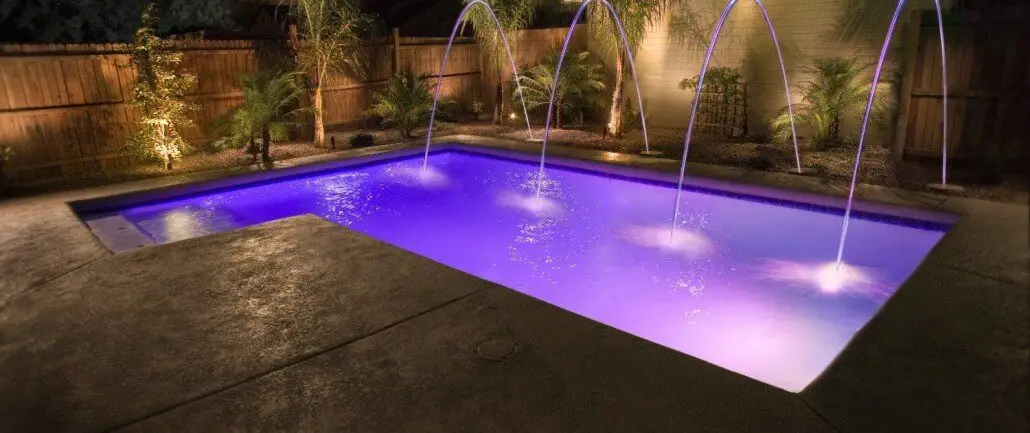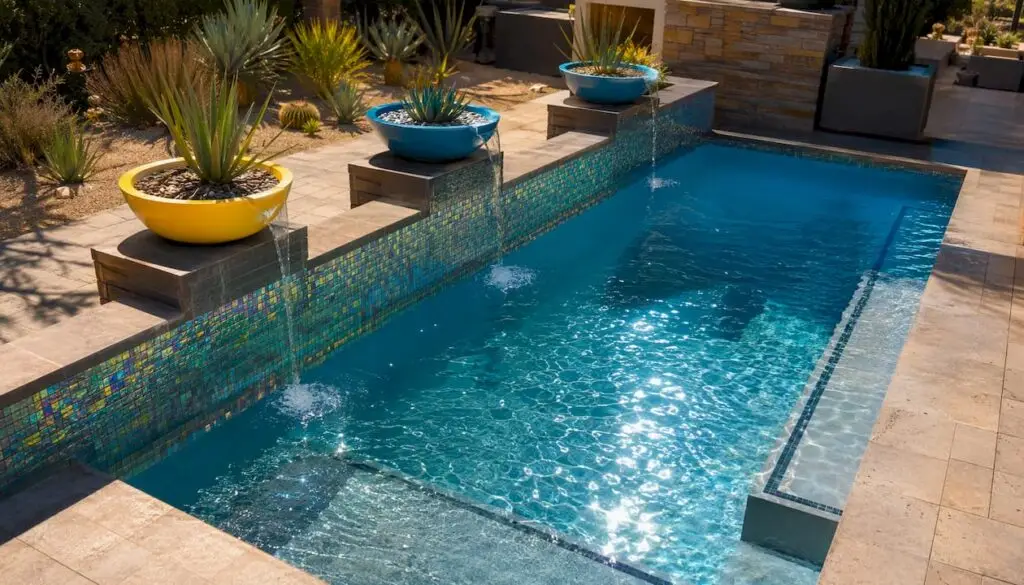
The single most effective approach for most homeowners is to pair a pool type with a complementary landscape strategy from the start, treating the water, the decking, the plants, and the lighting as one coordinated system rather than separate projects. That integration is what separates a backyard that looks like a resort from one that just has a pool sitting in a yard.
The top idea categories covered here are: resort/tropical, modern/minimal, natural/woodland, Mediterranean, small-yard/plunge, lap/fitness, and classic family-friendly. Each one works best when the pool shape, hardscape material, plant palette, and safety features are chosen together.
Quick-start checklist before you call a contractor:
- Measure your site. Record the yard’s dimensions, setback distances from property lines, and any slopes or grade changes. Most municipalities require a minimum 5-foot setback from the pool edge to the fence, though local codes vary.
- Pick one style and two non-negotiable safety items. Choose a visual direction from the categories below, then lock in a compliant barrier (fence or wall) and an automatic safety cover or alarm before budgeting anything else.
- Prepare a contractor brief. Gather 10–15 inspiration photos, your site measurements, a rough budget range, and a list of must-have features. That brief turns a first estimate call from 45 minutes of guessing into a productive scoping session.
Pro Tip: Save your inspiration images in a shared folder organized by category (pool shape, decking, plants, lighting) so you can hand the folder directly to a designer or contractor without sorting on the spot.
Key Takeaways
Pairing your pool type with a matching landscape strategy from day one is the single most reliable way to get a finished backyard that looks intentional, stays manageable, and holds its value.
| Point | Details |
|---|---|
| Integrate design from the start | Planning pool, hardscape, planting, and drainage together reduces change orders and hidden costs. |
| Match pool type to lifestyle | Lap pools suit daily swimmers; plunge pools fit compact yards; family pools need shallow entries and clear sightlines. |
| Prioritize safety before aesthetics | A compliant barrier, self-latching gate, and automatic cover are non-negotiable before any feature upgrades. |
| Choose low-debris, drought-tolerant plants | Ornamental grasses, palms, and native perennials reduce maintenance and protect pool water quality. |
| Wefixuglypools for Greater Phoenix projects | The team handles remodeling, custom features, and landscape integration with a decade of local project experience. |
Table of Contents
- Six signature pool and landscape styles worth knowing
- How to choose the right pool type, size, and shape for your yard
- High-impact pool features that change how you use the space
- Planting strategies for privacy, shade, and low-maintenance poolside beauty
- Decking, coping, and hardscape: which materials actually hold up
- Safety and privacy solutions that work with your design
- How to plan your project: budget ranges, timeline, and permits
- Maintenance, drainage, and durability: what holds up over time
- Design trends worth considering in 2026
- How professionals scope a pool and landscape remodel
- Local permit requirements and how to obtain them
- What experienced remodelers know that most homeowners don’t
- Ready to turn these ideas into a real project plan?
- Sources
Six signature pool and landscape styles worth knowing
The best backyard pool and landscape designs start with a clear visual direction. Mixing elements from three or four styles at once usually produces a cluttered result; picking one primary style and borrowing one or two accents from a second tends to work far better.
HGTV’s gallery of about 40 swimming pool landscaping approaches shows this clearly: the yards that photograph best share a consistent material palette and a plant strategy that reinforces the mood rather than competing with it.
Resort/tropical
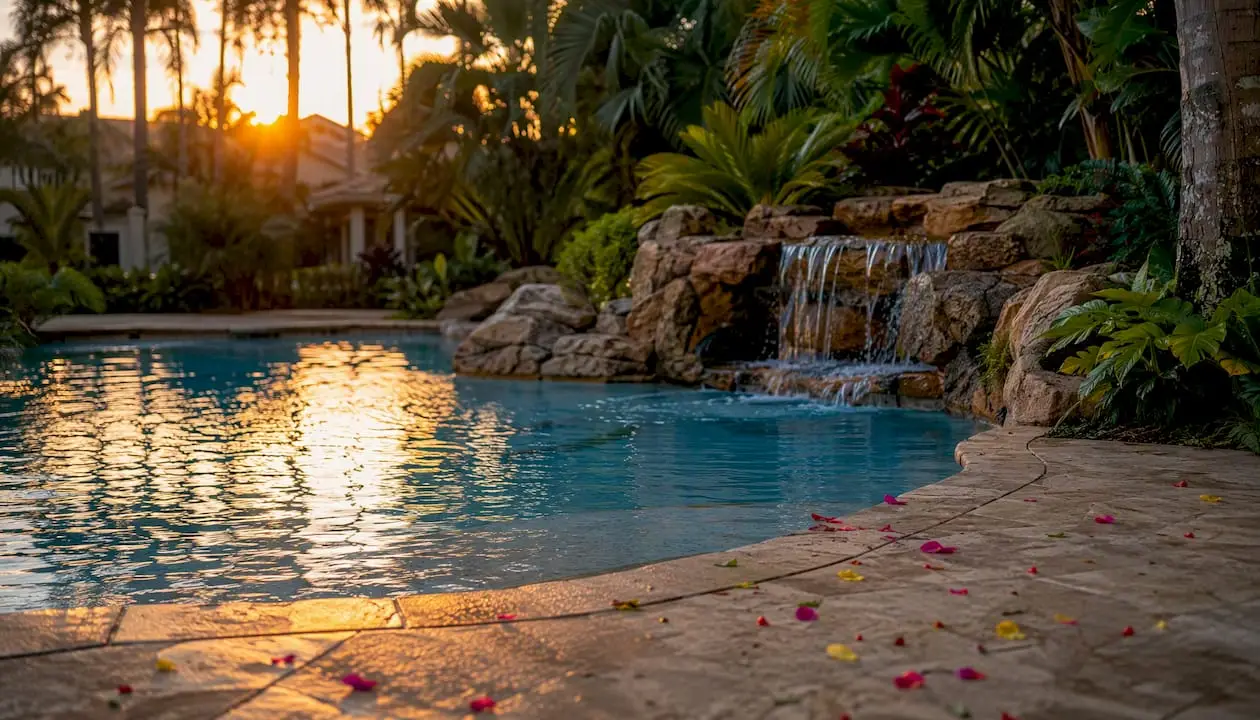
The mood is lush, immersive, and slightly theatrical. Visual hallmarks: freeform pool shape with a rock waterfall or grotto, dense tropical plantings (bird of paradise, queen palms, bougainvillea), and warm amber LED uplighting on the palms at night. Practical tip: in Phoenix and other desert markets, choose cold-hardy tropical varieties rated for USDA Zone 9b or warmer, since a hard freeze will wipe out true tropicals in a single night.
Modern/minimal
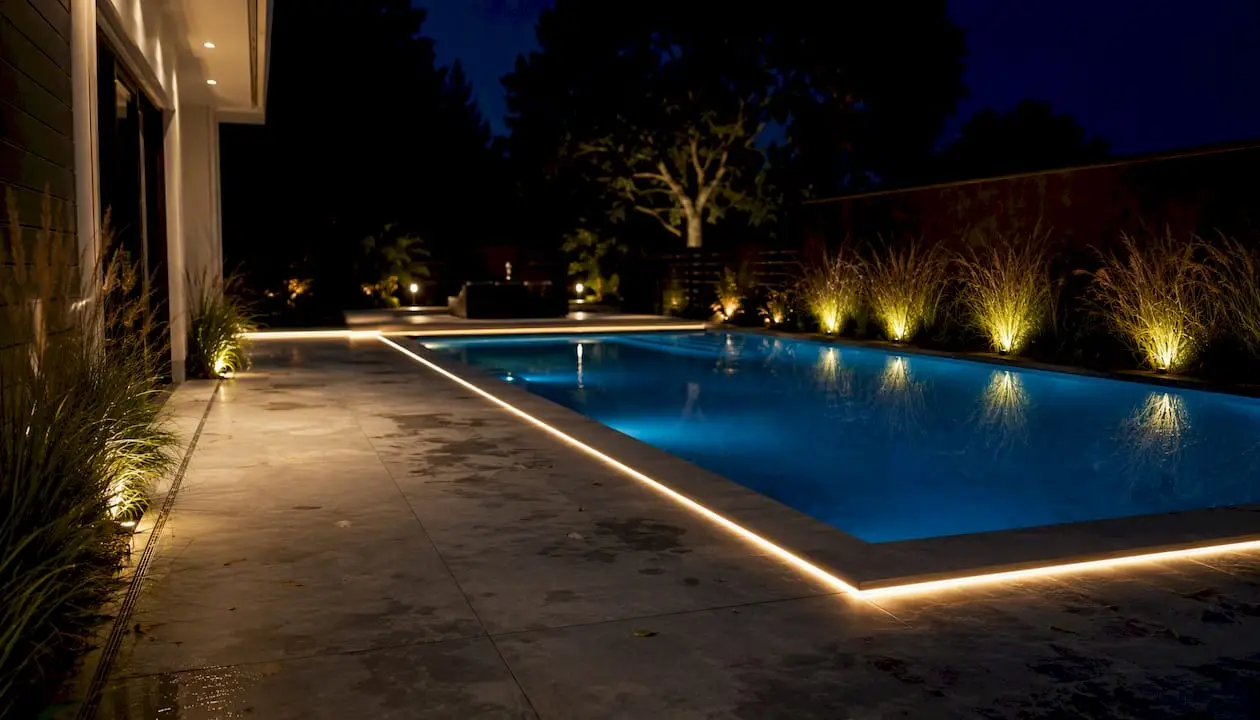
Clean geometry, restrained color, and deliberate negative space define this look. Rectangular or L-shaped pools with flush coping, large-format porcelain pavers, ornamental grasses, and low-voltage linear LED strips along the pool edge are the signature moves. Toll Brothers highlights resort-style and modern water features as the most requested combination in new builds, and the reason is straightforward: the look photographs well and ages gracefully.
Natural/woodland
This style works best on larger lots with mature trees. The pool takes an organic, irregular shape, the coping uses natural flagstone or boulders, and the planting blends native grasses, ferns, and low-debris shrubs. Lighting stays subtle, often recessed into the coping or placed at grade. The main planning challenge is root management: keep the pool shell at least 10 feet from any established tree with an aggressive root system.
Mediterranean
Terracotta, travertine, and stucco walls set the palette. Lavender, rosemary, olive trees, and Italian cypress provide structure and fragrance. This style handles heat well, which makes it a natural fit for Arizona yards. Martha Stewart’s pool landscaping galleries show how formal symmetry and potted citrus trees complete the look without requiring a large footprint.
Small-yard/plunge
A plunge pool (typically 10–15 feet long and 6–8 feet wide) with a simple rectangular or square shape, surrounded by large pavers and a single row of tall screening plants, can turn a 20-by-30-foot patio into a genuine retreat. The key is keeping the hardscape proportion generous: at least 4 feet of deck on the long sides so the space doesn’t feel cramped.
Classic family-friendly
This style prioritizes function: a shallow entry or tanning ledge, a gradual depth transition, wide decking for chairs and tables, and a clear sightline from the house to the water. Fencing is integrated into the design rather than bolted on as an afterthought. Houzz’s gallery of 75+ pool landscaping examples shows dozens of family-oriented layouts where the safety fence doubles as a privacy screen when planted with evergreen shrubs on the outside.
How to choose the right pool type, size, and shape for your yard
Pool type should follow lifestyle first, then yard constraints. A lap pool (typically 40–75 feet long and 8–10 feet wide) makes sense for daily swimmers but wastes space for families who primarily want to lounge and entertain. A plunge pool suits a compact yard or a homeowner who wants a water feature more than a swimming area. An infinity-edge pool delivers maximum visual drama but requires a significant grade change and a catch basin below the vanishing edge, which adds cost and complexity.
Common site constraints that change the decision:
- Slope and grade: A sloped yard often makes an infinity edge more practical than a flat-bottom rectangular pool, since the grade change is already there.
- Setbacks: Most jurisdictions require the pool to sit a minimum distance from property lines, the house foundation, and utility easements. Check local code before finalizing shape.
- Existing trees: Large trees near the proposed pool location mean root barrier installation or relocation of the pool footprint.
- Utility lines: Underground gas, electrical, and irrigation lines must be located before excavation. A utility locate (call 811 in the U.S.) is required by law before any digging.
- Soil type: Expansive clay soils in parts of the Phoenix metro require engineered shell designs to prevent cracking.
Pro Tip: If you’re uncertain about final size, design the pool shell slightly smaller than your maximum budget allows and use the savings to build out the decking and landscaping fully. A well-landscaped smaller pool consistently outperforms a larger pool surrounded by bare concrete.
For families specifically, the kid-friendly pool design guide covers shallow entry options, bench seating depths, and safety-conscious layouts worth reviewing before you finalize a shape.
High-impact pool features that change how you use the space
Not every feature belongs in every backyard. The ones below deliver the strongest return when they match a specific lifestyle or use case.
Water features (waterfalls, deck jets, bubblers, grottos) add sound and movement that make a pool feel alive. A single sheer-descent waterfall on a raised bond beam costs less than a full rock grotto but creates a similar acoustic effect. Wefixuglypools’s water features page shows how fountains and waterfalls integrate with plumbing and equipment, which matters because adding a water feature after the pool is built almost always costs more than planning it from the start.
Tanning ledges and sun shelves are shallow (6–9 inches of water) flat platforms at the pool entry. They work for lounging adults, young children who want to splash without swimming, and pets. The ledge should be at least 6 feet wide to fit a standard chaise lounge chair.
Integrated spas share the pool’s equipment when plumbed correctly, which reduces the cost versus a standalone spa. The spa should be positioned so it’s visible from the main seating area and accessible without walking across wet decking.
Fire features (fire bowls, fire pits, linear burners) extend the usable hours of the backyard well past sunset and pair naturally with a spa for year-round use. Houzz and HGTV galleries consistently show fire and water features appearing together in high-end builds because the contrast between the two elements is visually compelling. For fire pit options and placement guidance, the types of fire pits guide covers the main configurations.
Built-in seating and swim-up bars make the most sense for homeowners who entertain frequently. A swim-up bar requires a raised bond beam or a shallow shelf at bar height, plus waterproof cabinetry and a nearby utility connection. For a look at how these features combine, the unique pool feature combinations guide shows real pairings with layout notes.
LED lighting has become a baseline expectation rather than an upgrade. Integrated low-voltage LED systems improve safety at night and extend evening use while offering color-changing accent options. The pool lighting design guide covers path, step, and underwater options in detail.
Planting strategies for privacy, shade, and low-maintenance poolside beauty
The wrong plants around a pool create more work than they’re worth. Leaf-heavy deciduous trees, seed-dropping flowering trees, and plants with invasive root systems are the three categories to avoid near the water’s edge.
Great Garden Plants recommends organizing poolside planting by goal: ornamental grasses for texture and movement, arborvitae or clumping bamboo for privacy hedges, and container tropicals for seasonal color. That framework holds up well in most U.S. climates.
By goal:
- Privacy screens: Sky Pencil holly, Italian cypress, Green Giant arborvitae, clumping bamboo (non-invasive varieties like Bambusa oldhamii). Plant in a staggered double row for faster coverage.
- Shade without debris: Queen palms, Mexican fan palms, and multi-trunk desert willows drop minimal litter. Avoid ash, cottonwood, and mulberry near pools.
- Low-maintenance ornamentals: Ornamental grasses (Karl Foerster, Blue Oat grass), agave, lantana, and bougainvillea thrive in heat and require minimal water once established.
- Groundcovers: Decomposed granite, river rock, or low-growing rosemary groundcover between pavers reduces bare soil and splash-back onto decking.
For Phoenix-area yards specifically, Wefixuglypools’s pool landscaping blog shows plant and hardscape pairings that hold up in desert heat and alkaline soil conditions. Gallivan Companies also recommends drought-tolerant palettes and minimal leaf-shedding species as the most practical choice for reducing pool maintenance.
Pro Tip: Plant privacy screens at least 5 feet from the pool edge and 3 feet from any underground plumbing. Roots follow water, and pool plumbing is a reliable water source. A root barrier sleeve on underground lines adds a layer of protection for less than $200 in most installations.
Tranquility Pools notes that planning irrigation and drainage alongside the pool design, rather than after, prevents the most common planting failures: overwatered turf next to the pool deck, poor drainage that floods planting beds, and irrigation heads that spray onto the pool surface.
Decking, coping, and hardscape: which materials actually hold up
Surface choice around a pool is a safety decision as much as an aesthetic one. Slip resistance, heat absorption, and long-term durability in wet conditions should rank ahead of appearance when you’re evaluating options.
| Material | Slip Resistance | Heat Absorption | Upkeep | Typical Lifespan |
|---|---|---|---|---|
| Broom-finished concrete | Good | High | Low | 20–30 years |
| Travertine pavers | Good (tumbled edge) | Low to moderate | Moderate | 25+ years |
| Porcelain tile (textured) | Excellent | Moderate | Low | 30+ years |
| Natural flagstone | Moderate | Moderate | Moderate | 20–30 years |
| Thermally modified wood | Good | Low | Moderate | 15–25 years |
| Composite/synthetic decking | Good | Low to moderate | Low | 15–25 years |
Porcelain tile with a textured matte finish is the strongest performer on slip resistance and maintenance, which is why it appears so frequently in 2026 builds. Travertine remains the most popular choice for Mediterranean and resort styles because it stays cooler underfoot than concrete in direct sun. Broom-finished concrete is the most cost-effective option and holds up well, but it requires sealing every 2–3 years to prevent staining and surface erosion.
One detail that often gets overlooked: contrast at step edges. A contrasting coping color or a non-slip strip at every step edge reduces the risk of a misstep in low light. This is a code requirement in some jurisdictions and a best practice everywhere.
Safety and privacy solutions that work with your design
Safety and aesthetics are not in conflict when you plan them together. A well-designed pool barrier can double as a privacy screen, a windbreak, and a planting structure.
Core safety checklist:
- Barrier: A fence or wall at least 4 feet high (most codes require 4–5 feet) with no climbable horizontal rails on the pool side.
- Self-closing, self-latching gate: The latch must be on the pool side and out of reach of young children (at least 54 inches from the ground per most codes).
- Pool alarm: Surface wave sensors or subsurface alarms provide a secondary alert layer. Some jurisdictions require them by code.
- Automatic safety cover: A motorized cover rated to ASTM F1346 standards supports an adult’s weight and prevents accidental entry.
- Supervision protocol: No safety device replaces active supervision for children under 12.
Privacy strategies that integrate with the design:
Slatted aluminum or cedar privacy walls with climbing vines (Confederate jasmine, Carolina jessamine) soften the hard edge and add fragrance. A trellis panel on the pool-facing side of the fence creates a planting surface without reducing the barrier’s structural integrity.
Pro Tip: Before you finalize your fence design, pull the pool barrier ordinance for your specific municipality. In the Greater Phoenix area, Maricopa County and individual cities (Scottsdale, Surprise, Chandler) each have slightly different requirements for gate hardware, fence height, and alarm type. A 20-minute call to the building department before you buy materials saves a costly revision.
Check local code requirements before purchasing any barrier system. Requirements vary by city and county, and non-compliant installations can delay a certificate of occupancy.
How to plan your project: budget ranges, timeline, and permits
Planning pool and landscape design together from the start reduces change orders and hidden costs versus adding landscaping after the pool is installed. That single decision, made at the beginning, is one of the most reliable ways to keep a project on budget.
Typical budget ranges by scope:
- Basic pool remodel (resurfacing, new coping, minor equipment): $15,000–$35,000
- Feature additions (water feature, tanning ledge, LED upgrade, new decking): $20,000–$60,000
- Full remodel with landscape integration (new shell finish, hardscape, planting, lighting, privacy fence): $50,000–$150,000+
- New custom pool construction with full landscaping: $80,000–$250,000+ depending on size, features, and site complexity
These are ranges, not quotes. Final cost depends on site conditions, material selections, and local labor rates.
Sample project timeline:
| Phase | Duration | Trades Involved |
|---|---|---|
| Design and permitting | 4–10 weeks | Designer, engineer, permit office |
| Demolition and excavation | 1–2 weeks | Excavation crew, utility locators |
| Shell/plumbing/equipment | 3–6 weeks | Pool contractor, plumber, electrician |
| Hardscape and coping | 2–4 weeks | Masonry, tile setter |
| Landscaping and irrigation | 1–3 weeks | Landscape contractor, irrigation specialist |
| Final inspection and startup | 1–2 weeks | Pool contractor, inspector |
Contractor briefing checklist: Bring your site dimensions, a style direction with 10–15 photos, a list of must-have features, your permit status (applied, not yet applied, or unknown), and any known site constraints (trees, slopes, utility lines). The pool remodeling project gallery shows examples of scoped projects that started with exactly this kind of brief.
Maintenance, drainage, and durability: what holds up over time
Material choices made at the design stage determine how much time and money you spend maintaining the pool and surrounding landscape for the next 20 years.
Finish lifespans and failure drivers:
- White plaster: 7–12 years. Fails early from aggressive water chemistry (low pH) and poor surface prep.
- Quartz aggregate finish: 12–18 years. More stain-resistant than plaster; requires proper startup chemistry.
- Pebble/exposed aggregate: 18–25 years. The most durable interior finish; rough texture requires brushing more frequently.
- Tile (waterline and feature): 20–30+ years when properly grouted. Grout failure from freeze-thaw cycles is the main failure mode in colder climates.
- Concrete decking: 20–30 years with sealing every 2–3 years.
- Pavers: 25+ years; individual units can be replaced without disturbing the full deck.
Simple maintenance schedule:
- Weekly: Test and adjust water chemistry (pH 7.2–7.6, free chlorine 1–3 ppm), skim surface, empty skimmer baskets, brush walls and floor.
- Monthly: Backwash or clean filter, inspect equipment for leaks, check lighting fixtures, clear irrigation heads near the pool.
- Seasonally: Inspect coping and grout for cracks, reseal concrete decking if needed, trim poolside plants to reduce debris, check fence hardware and gate latches.
Drainage is the most underestimated factor in long-term durability. Decking that slopes toward the pool rather than away from it pushes chemical-laden splash water into planting beds, corroding irrigation components and stressing plant roots. A minimum 1/8-inch-per-foot slope away from the pool edge is the standard.
Pro Tip: Position irrigation heads at least 6 feet from the pool edge and use drip irrigation rather than spray heads in poolside planting beds. Spray heads that drift chlorinated splash water onto foliage cause leaf burn and accelerate corrosion on metal irrigation fittings.
For pool repair needs that arise from deferred maintenance, addressing them early almost always costs less than waiting until a minor crack becomes a structural issue.
Design trends worth considering in 2026
The clearest pattern in 2026 pool and landscape design is a shift toward lower maintenance, longer usability, and materials that look better as they age rather than requiring constant upkeep to stay presentable.
- Low-maintenance plant palettes: Drought-tolerant grasses, agave, and native perennials are replacing high-water-use turf around pools. You can implement this without a full remodel by converting a 3-foot border around the deck to decomposed granite and drought-tolerant groundcover.
- Integrated LED lighting systems: Low-voltage LED systems are now standard in new builds and retrofits alike. Color-tunable LEDs let you shift from cool white for swimming to warm amber for evening entertaining without changing any hardware.
- Fire and seating integration: Fire bowls and linear burners built into the pool surround or a raised seating wall are appearing in projects at every price point, not just luxury builds. A single gas fire bowl on a poured concrete pedestal can be added to an existing patio for a few thousand dollars.
- Naturalistic pool shapes: Organic, freeform shapes with boulder coping and pebble finishes are gaining ground over the strict rectangle, particularly in larger yards where the pool can read as a natural water feature.
- Textured porcelain decking: Large-format (24×48 inch) textured porcelain pavers in warm sand and slate tones are the most-specified decking material in 2026 remodels. They stay cooler than concrete, require almost no sealing, and pair with every major style direction.
How professionals scope a pool and landscape remodel
A professional contractor’s first site visit covers more than you might expect. Understanding what they’re checking helps you prepare and signals to them that you’re a serious, informed client.
Pre-construction checklist (what a contractor inspects):
- As-built measurements: Actual pool dimensions, deck area, and setback distances, which often differ from original plans.
- Structural and soil review: Visible cracks in the shell, deck settlement, and soil type (expansive clay vs. sandy loam) all affect the scope and cost.
- Drainage mapping: Where does water go when it rains? Pooling near the equipment pad or the house foundation is a red flag that must be resolved before any cosmetic work begins.
- Irrigation system location: Existing heads, lines, and valves that conflict with new hardscape or planting zones need to be relocated, not just capped.
- Equipment location and condition: Pump, filter, heater, and automation system age and condition affect whether they can support new features.
- Utility and access: Gas line location for fire features, electrical panel capacity for new lighting and equipment, and equipment access for future service calls.
Before/after example: A leaf-heavy yard with a large ash tree overhanging the pool is a common problem. The solution path: remove or relocate the tree, replace with a low-debris queen palm or multi-trunk desert willow, add a screened fence panel on the prevailing wind side, and switch to a cartridge filter (easier to clean than a sand filter when debris loads are high). The result is a pool that requires 30–40 minutes less maintenance per week.
Wefixuglypools’s local project experience in the Greater Phoenix area means the team has seen these site conditions hundreds of times. A professional estimate from a contractor with that track record includes a site-specific scope, not a generic price list.
Pro Tip: Ask any contractor you’re considering for three references from projects completed in the last 18 months, specifically projects that involved both pool remodeling and landscape integration. The coordination between those two scopes is where most problems occur, and a contractor who has done it successfully will have no hesitation providing references.
Local permit requirements and how to obtain them
Pool and landscape projects in the United States almost always require permits, and the specific requirements vary significantly by city, county, and state. In Arizona, for example, the Arizona Department of Environmental Quality (ADEQ) and local municipalities each have jurisdiction over different aspects of pool construction and modification.
What typically requires a permit:
- New pool construction or significant structural modification to an existing pool shell
- Electrical work (new lighting circuits, equipment upgrades, GFCI installation)
- Gas line installation for fire features or pool heaters
- Fencing and gate installation (barrier ordinances are enforced at the permit stage)
- Significant grading or drainage modifications
How to obtain permits:
- Contact your city or county building department to confirm which permits apply to your specific scope of work.
- Submit plans prepared by a licensed contractor or engineer. Most jurisdictions require stamped drawings for new pool construction.
- Pay the permit fee (fees vary widely by jurisdiction and project value).
- Schedule required inspections at each phase: pre-pour, rough plumbing, electrical, and final.
In the Greater Phoenix area, cities like Scottsdale, Surprise, and Chandler each have their own online permit portals. Most allow you to check permit status and schedule inspections online. A licensed contractor handles permit applications as part of the project scope in most cases, but confirming this before signing a contract is worth the 30 seconds it takes to ask.
This is general information. Confirm current permit requirements with your local building department or a licensed contractor before starting any work.
What experienced remodelers know that most homeowners don’t
Three things come up repeatedly in pool and landscape projects that homeowners consistently underestimate, and knowing them before you start can save real money.
First, the budget trap that catches the most people is not the pool itself but the deck and landscaping that surrounds it. A pool shell takes up a fraction of the backyard; the decking, fencing, planting, and lighting cover the rest. Flip that ratio to 60/40 and the finished yard looks like a resort.
Second, small design changes at the planning stage have an outsized effect on resale value. A tanning ledge, a water feature, and integrated LED lighting add perceived value that buyers respond to, often more than a larger pool size. A 12-by-24-foot pool with a tanning ledge and a sheer-descent waterfall photographs better and sells faster than a 16-by-32-foot pool with no features and plain concrete decking.
Third, expect the project to take longer than the initial timeline suggests. Permit processing, material lead times, and trade scheduling all add time. A realistic timeline for a full remodel with landscape integration in the Phoenix area is 4–6 months from signed contract to final inspection. Plan around that, not around the optimistic 10-week estimate that sounds good in a sales meeting.
Wefixuglypools has completed hundreds of pool transformations in the Greater Phoenix area over more than a decade. That volume of real-world projects is what makes a professional estimate specific rather than generic.
Ready to turn these ideas into a real project plan?
Wefixuglypools takes you from inspiration to a deliverable estimate, covering pool remodeling and restoration, resurfacing, custom pool features, and full landscape integration for homeowners across the Greater Phoenix area. The team handles the permit coordination, trade scheduling, and site-specific design work so you’re not managing five separate contractors.
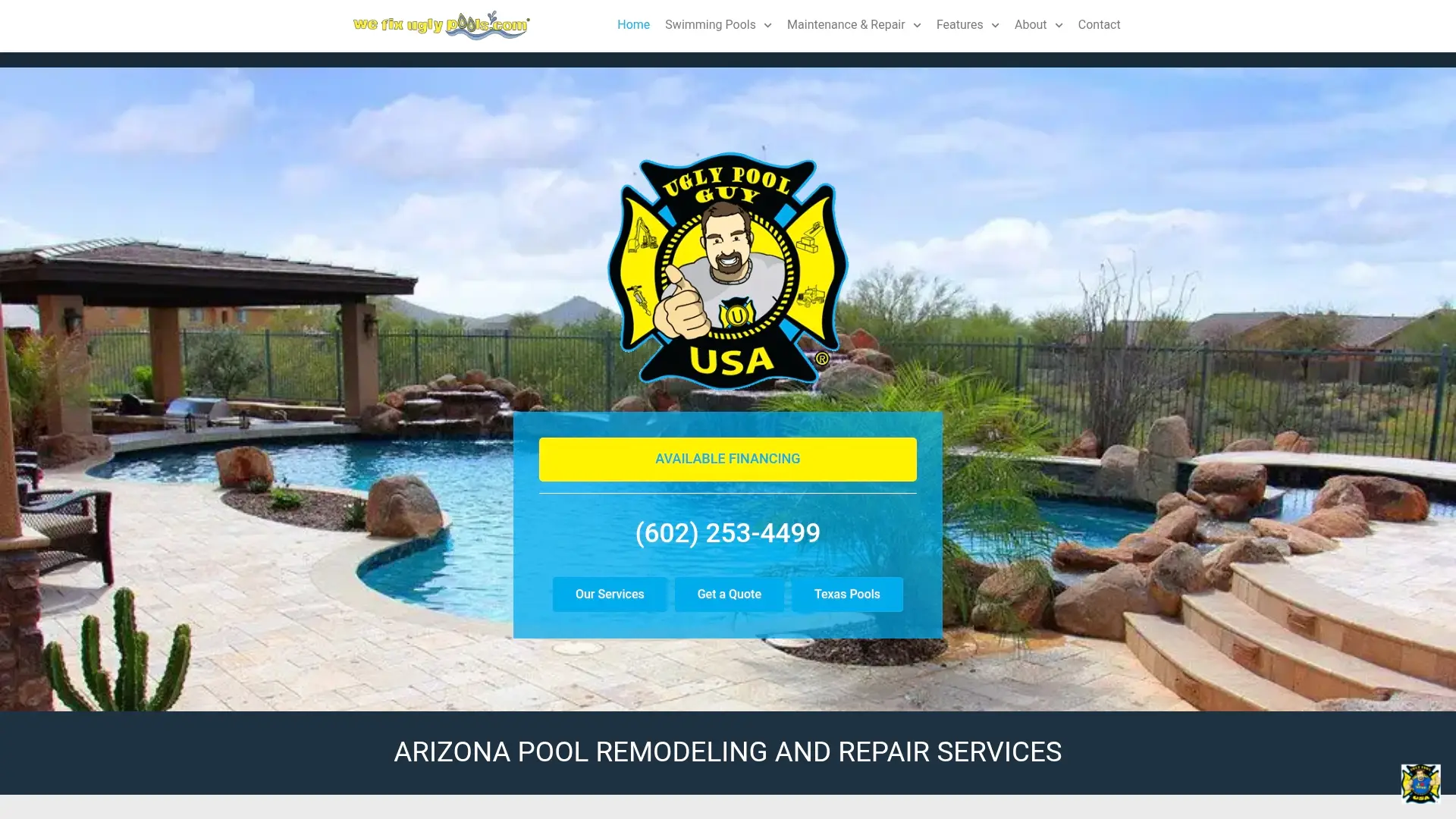
To request an estimate, prepare your site dimensions, a style direction with 10–15 photos, and a list of must-have features. Wefixuglypools will review your brief and provide a scope-specific estimate rather than a ballpark number. Get in touch through the pool remodeling page to schedule your first consultation.
Sources
For image-driven inspiration, Houzz’s pool landscaping gallery is the most comprehensive starting point, with 75+ real project photos covering every style and budget range. HGTV’s swimming pool landscaping gallery organizes ideas by plant type and style, which makes it useful for narrowing down a plant palette. Martha Stewart’s pool landscaping collection skews toward formal and Mediterranean layouts and is worth browsing if that direction appeals to you.
For plant-specific guidance, Great Garden Plants’ poolside planting guide and Gallivan Companies’ low-maintenance design features article both give practical species recommendations with maintenance notes. For Phoenix-area homeowners, the Wefixuglypools pool landscaping blog shows local before-and-after examples with plant and hardscape pairings specific to desert conditions.
- Modern Backyard Pool Landscaping Ideas | Build Beautiful
- 40 Swimming Pool Landscaping Ideas | HGTV
- 75 Pool Landscaping Ideas You’ll Love – August, 2026 | Houzz
- What To Plant Around Swimming Pools: 7 Landscaping Ideas