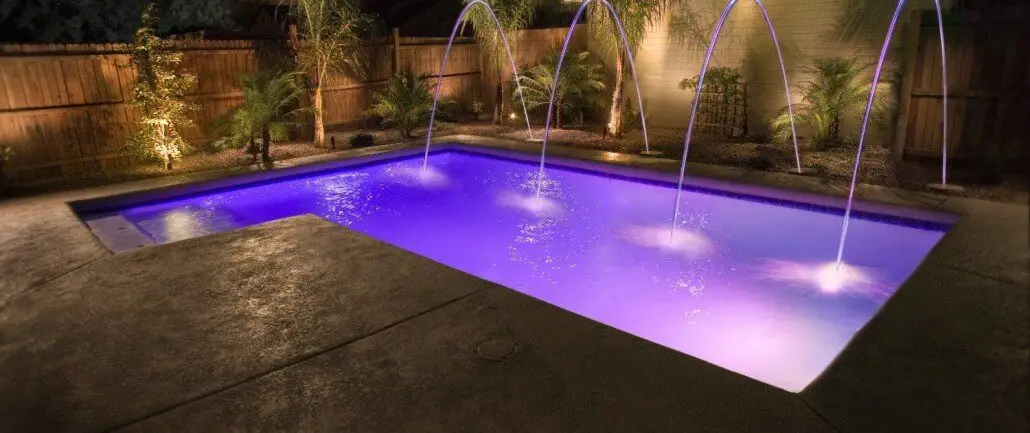
Smart pool technology is an automated ecosystem that continuously manages your pool’s conditions and equipment without you lifting a finger. At its core, it combines a central control hub, real-time sensors, and automated actuators to monitor water chemistry, regulate pump speeds, control lighting, and schedule cleaning cycles around the clock. The result? A pool that practically runs itself while keeping you informed every step of the way.
Here is what a fully integrated smart pool system handles automatically:
- Water chemistry monitoring: pH, chlorine (ORP), temperature, and pressure tracked in real time
- Chemical dosing: automated adjustments that eliminate manual testing and guesswork
- Pump and filtration control: variable-speed operation matched to actual demand
- Remote access: full control via smartphone apps and voice assistants like Alexa or Google Home
- Equipment protection: predictive alerts for motor issues, pressure changes, and potential leaks
- Energy management: scheduling that shifts heavy loads to off-peak utility hours
Pool professionals often call this the “Internet of Pools” (IoP), a term that captures how every piece of equipment communicates through a shared digital network rather than operating in isolation.
What are the key features of smart pool technology?
Modern pool automation systems pack a lot into one connected platform. Understanding each component helps you decide which features matter most for your backyard.
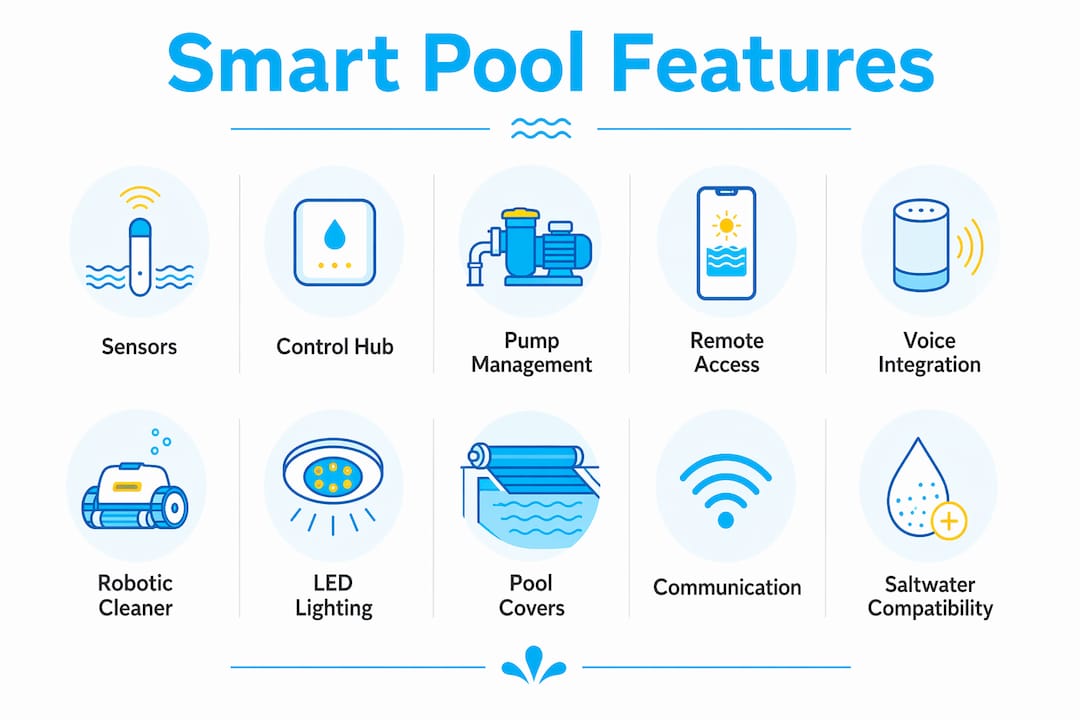
1. Smart water chemistry sensors
ORP and pH sensors sit inside the filtration circuit and measure sanitizer strength and acidity continuously. When levels drift outside the target range, the system triggers automated chemical dosing rather than waiting for your next manual test. This keeps water stable, protects equipment from corrosive or scaling conditions, and removes the “chemical roller coaster” that plagues manually managed pools.
2. Variable-speed pump control
The pump is the biggest energy draw in any pool system. Smart platforms manage variable-speed pump RPMs by assigning low speeds for standard filtration and higher speeds for skimmers or water features. That precise control extends equipment life and cuts electricity costs compared to single-speed motors running on mechanical timers.
3. Central control hub
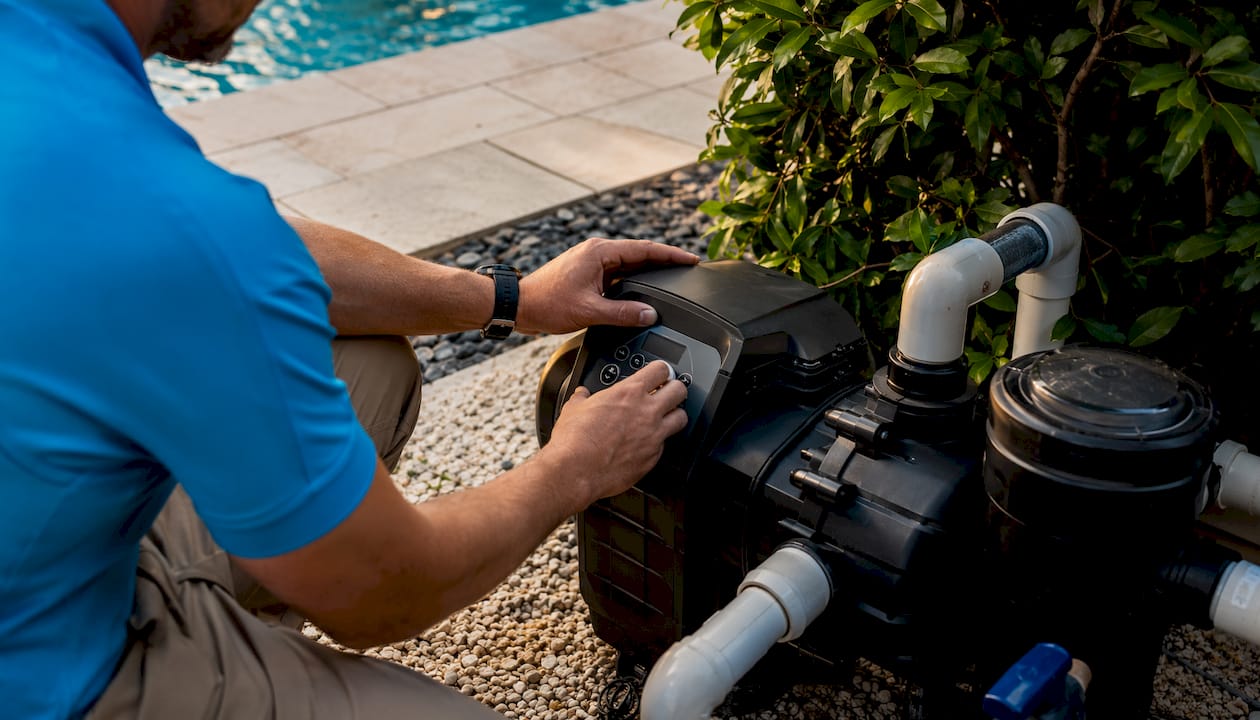
The hub is the brain of the operation. It processes sensor data, executes programmed schedules, and responds to commands from your phone or voice assistant. Most hubs mount at the equipment pad and connect to every device through low-voltage wiring or a dedicated wireless mesh network.
4. Remote monitoring and app control
Apps like Pentair Home, Hayward OmniLogic, and Jandy iAquaLink give you full remote control over pump speed, heater temperature, light colors, and chemical readings from any smartphone. You receive instant alerts when something needs attention, whether you are poolside or across the country.

5. Voice assistant integration
Smart pool systems connect to Amazon Alexa and Google Home through cloud servers, so you can say “Alexa, heat the spa to 102 degrees” without opening an app. Brands like Pentair and Hayward offer voice-ready equipment that syncs instantly with major voice platforms.
6. Robotic cleaner integration
Automated cleaning robots receive commands from the central hub to target specific pool zones based on debris levels and water quality data. This optimizes cleaning schedules and reduces energy use compared to robots running on fixed timers regardless of actual need. For a deeper look at cleaning system options, the types of pool cleaning systems guide covers how robotic cleaners fit into a modern automated setup.
7. Smart LED lighting
Wi-Fi-enabled LED systems allow color customization, synchronized light shows, and scheduled on/off times through the same app that controls your pump and heater. Automated scheduling eliminates lights running all night and cuts lighting energy costs substantially.
8. Automated pool covers
Motorized covers connect to the automation controller and open or close on a schedule or via a single app tap. They reduce evaporation, retain heat, and add a layer of safety without requiring manual effort.
9. Specialized communication protocols
Smart pool devices typically communicate over RS-485 or low-frequency mesh networks rather than standard home Wi-Fi. These protocols handle the distance, interference, and outdoor conditions that household wireless networks struggle with, keeping your system stable and responsive.
10. Saltwater pool compatibility
Modern smart sensors use corrosion-resistant materials calibrated for salt environments. Your salt chlorinator integrates directly with the automation controller, letting you monitor salt levels and chlorine production remotely.
| Feature | What it automates | Primary benefit |
|---|---|---|
| ORP/pH sensors | Chemical balance | Eliminates manual testing |
| Variable-speed pump | Flow rate and run time | Lower electricity costs |
| Central hub | All connected devices | Single point of control |
| Remote app | Scheduling, alerts, adjustments | Control from anywhere |
| Robotic cleaner | Cleaning zones and timing | Less manual vacuuming |
| Smart LED lighting | Color, schedule, effects | Energy savings and ambiance |
| Automated cover | Open/close cycles | Heat retention and safety |
What are the real benefits of smart pools for homeowners?
The practical advantages go well beyond convenience. Smart pool automation delivers measurable results across energy costs, water quality, and equipment longevity.
- Energy savings: Smart automation can reduce energy consumption by 40–60% through optimized pump and heater scheduling matched to usage and weather conditions.
- Simplified maintenance: Automated chemical dosing is often the single most impactful upgrade a pool owner can make, cutting weekly maintenance from hours to minutes.
- Predictive equipment protection: Sensors monitor motor vibrations, electrical draw, and temperature to detect failures before they happen, saving you from costly emergency repairs.
- Consistent water quality: Continuous ORP and pH monitoring keeps chemistry stable, protecting swimmers and extending the life of surfaces and equipment.
- Remote peace of mind: Instant alerts notify you of pressure changes, chemical imbalances, or potential leaks the moment they occur, whether you are home or traveling.
- Scalable investment: You can start with one automated feature like a robotic cleaner or smart lighting and expand gradually as your budget allows.
- Home value impact: A well-equipped automated pool adds measurable appeal to your property. Wefixuglypools has seen firsthand how modern pool upgrades influence home value in the Greater Phoenix market.
The bottom line on ROI: Pool automation combined with a variable-speed pump can save significant yearly electricity costs compared to a single-speed pump on a mechanical timer, according to industry installation data. For most mid-range systems, the payback period is typically under a few years.
How does smart pool automation actually work behind the scenes?
The architecture behind a smart pool system has three layers: sensors that collect data, a central controller that processes it, and actuators that execute the response. Understanding how these layers interact explains why automated pools outperform manually managed ones.
Sensors sit in the filtration circuit and at key points around the equipment pad. They transmit readings on pH, ORP, temperature, pressure, and flow rates every few seconds to the central hub. The hub compares incoming data against your preset parameters and decides whether to act. If pH drops below the target range, the hub activates a chemical feed pump. If filter pressure rises gradually, it sends a notification that the filter needs cleaning.
Actuators are the physical responders: valve motors, pump speed controllers, chemical dosing pumps, and relay switches that turn high-voltage equipment on and off. Each actuator receives a low-voltage signal from the hub and executes the command within seconds.
Pro Tip: When retrofitting an older pool, ask your installer about adding actuators to existing equipment before replacing anything. Most legacy pumps, heaters, and valves can accept a controller without full replacement, which keeps upfront costs manageable.
Variable-speed pump management is where the energy savings become most visible. The system assigns specific RPM targets to different tasks: a quiet, low-speed setting for overnight filtration, a higher speed when the skimmer needs more pull, and full speed during backwash cycles. This dynamic control is why ENERGY STAR certified pool pumps paired with automation deliver savings that fixed-schedule timers simply cannot match.
Predictive maintenance takes the guesswork out of equipment health. By tracking subtle changes in motor vibration, heat output, and electrical draw, the system flags a potential pump issue before the motor actually fails. That early warning is the difference between a scheduled service call and an emergency replacement mid-summer.
Security and privacy considerations in smart pool technology
Connecting your pool to the internet introduces the same security considerations as any other smart home device. Your pool hub communicates with manufacturer cloud servers to relay app commands and push firmware updates, which means the security of that cloud connection matters.
A few practical steps protect your setup. Use a strong, unique password for your pool automation app and enable two-factor authentication where the platform supports it. Keep firmware updated, since manufacturers push security patches through automatic updates on most modern systems. Placing your pool hub on a dedicated network segment, separate from your primary home Wi-Fi, limits exposure if another device on your network is compromised.
Privacy-wise, pool automation apps collect usage data including scheduling patterns, chemical readings, and location data if geofencing is enabled. Review the privacy policy of your specific platform to understand what is stored and whether it is shared with third parties. Most major brands allow you to disable geofencing without losing core automation features.
Common challenges and limitations of smart pool technology
Smart pool systems are genuinely reliable, but they come with real-world constraints worth knowing before you invest.
Internet dependency is the most common friction point. Voice control and remote app access require a stable internet connection. If your router goes down or your ISP has an outage, cloud-dependent features stop working until connectivity is restored. Systems using RS-485 wired protocols continue operating locally, but app-based control goes offline.
Installation complexity means professional setup is almost always necessary. The electrical work involved in connecting a hub to pumps, heaters, and chemical feeders requires licensed expertise. Budget for installation labor on top of equipment costs, which typically run $1,200–$4,500 for a basic system covering pump, heater, lights, and one water feature.
Sensor calibration and maintenance is an ongoing requirement. ORP and pH probes drift over time and need periodic recalibration or replacement to stay accurate. A sensor reading incorrectly can trigger unnecessary chemical dosing or, worse, miss a genuine imbalance.
Tech comfort level affects how much value you extract from the system. Homeowners who are comfortable with smartphone apps and occasional firmware updates get the most out of automation. If technology feels like a barrier, starting with a simpler entry-level controller and expanding gradually is a smarter path than jumping to a fully integrated platform on day one.
Compatibility gaps can appear when mixing equipment from different manufacturers. Not every pump, heater, or salt cell communicates cleanly with every hub. Confirming compatibility before purchasing components saves significant headaches during installation.
Ready to upgrade your pool with smart technology?
At Wefixuglypools, we have spent over a decade transforming pools across the Greater Phoenix area, and smart automation is one of the upgrades our clients ask about most. Whether you are starting from scratch with a custom pool build or adding automation to an existing pool through our pool remodeling services, our team guides you through every decision, from sensor selection to hub installation. Reach out today and let us help you build a pool that works as hard as you do.
Key Takeaways
Smart pool automation delivers the biggest returns when sensors, a central hub, and variable-speed pump control work together as one connected system.
| Point | Details |
|---|---|
| Energy savings are measurable | Smart automation can reduce energy consumption by 40–60% through optimized pump and heater scheduling matched to usage and weather conditions. |
| Chemical dosing is the top upgrade | Automated ORP and pH dosing eliminates manual testing and prevents costly water chemistry problems. |
| Predictive maintenance protects equipment | Sensors track motor vibrations and electrical draw to flag failures before they cause downtime. |
| Scalable investment fits any budget | Homeowners can start with one automated feature and expand the system incrementally over time. |
| Professional installation is required | Connecting a hub to high-voltage pool equipment requires licensed electrical work and adds to upfront costs. |