Pool deck replacement is defined as the full removal and reinstallation of the surface surrounding your pool when damage, age, or structural failure makes repair impractical. A worn deck is not just an eyesore. Cracked, spalling, or uneven concrete creates real slip hazards and can trigger code violations during a sale or renovation. Knowing when to replace worn pool deck surfaces versus patching them saves you money and prevents repeat failures. This guide walks you through every decision point, from evaluating your current deck to selecting materials and executing the project correctly.
When should you repair versus replace your pool deck?
The decision to repair or replace comes down to three factors: deck age, crack severity, and how much of the surface is damaged. Repair is the right call when the deck is under 15–20 years old, cracks are less than 1/4 inch wide, and spalling covers less than 10–30% of the total area. Once repair costs exceed 40–60% of full replacement cost, replacement becomes the smarter financial choice.
Crack width tells you a lot about what is happening beneath the surface. Hairline cracks under 1/4 inch wide are usually cosmetic and cost between $100–$500 per crack to fix. Wider cracks, especially those running in multiple directions, signal soil movement or structural failure that a surface patch will not resolve.
Age matters just as much as visible damage. A deck older than 20 years has likely absorbed years of chemical exposure, freeze-thaw cycles, and UV degradation. Even if it looks repairable, the underlying concrete may be too compromised to hold a patch long-term.
Here is a quick comparison to guide your decision:
| Factor | Repair | Replace |
|---|---|---|
| Deck age | Under 15–20 years | Over 20 years |
| Crack width | Under 1/4 inch | Over 1/4 inch, widespread |
| Spalling coverage | Under 10–30% of area | Over 30% of area |
| Repair cost vs. replacement | Under 40% of replacement cost | Over 40–60% of replacement cost |
| Structural damage present | No | Yes |
Local building codes also affect your decision. Permits are generally required for decks over 200 square feet or elevated more than 30 inches. If your deck triggers a permit, inspectors may flag existing code violations that force a full replacement anyway.
What materials work best for pool deck replacement options?
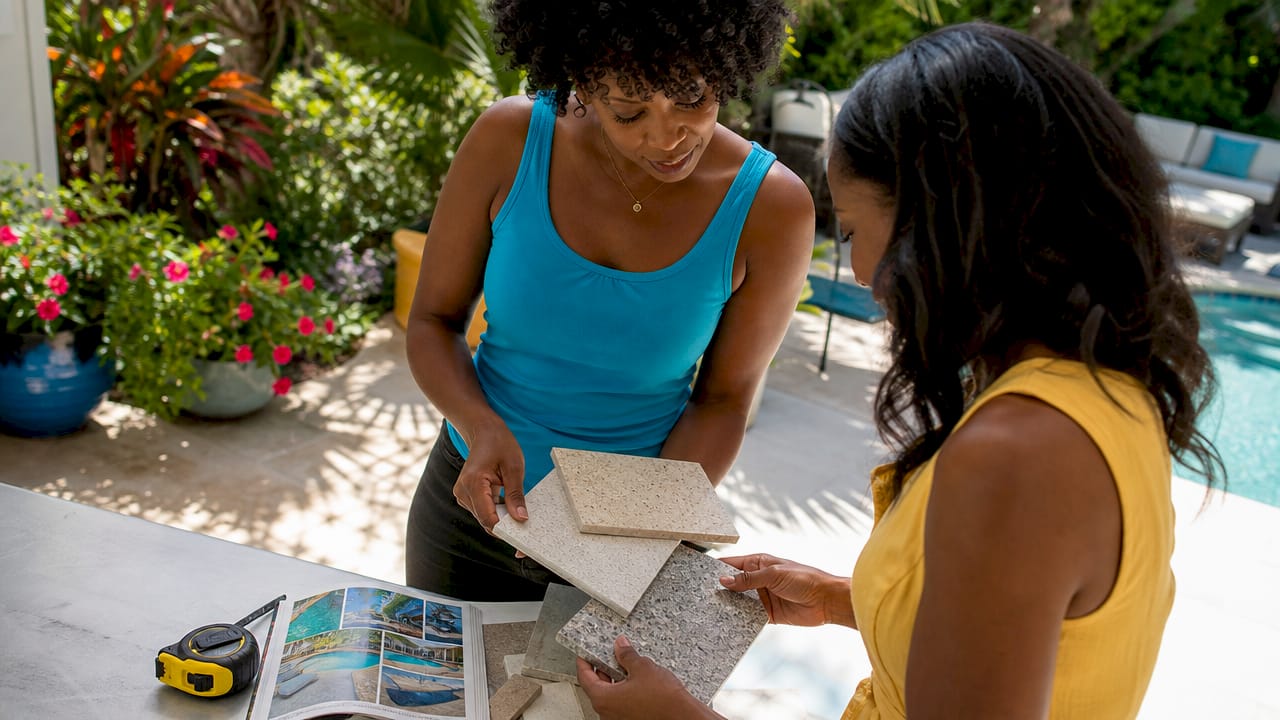
Material selection is the most consequential choice in any pool deck replacement project. Slip resistance is the top technical consideration for pool deck surfaces, because smooth or polished finishes become dangerous when wet. Aesthetics matter, but safety comes first.
Here are the most common pool deck replacement options and what you need to know about each:
- Stamped concrete: Highly popular for its visual range and durability. Costs roughly $8–$12 per square foot installed. Requires a broom finish or anti-slip additive to meet safety standards. Needs resealing every 2–3 years in hot climates like Phoenix.
- Concrete pavers: Individual units that allow for easy repair of isolated damage without replacing the whole deck. Slightly higher upfront cost but lower long-term maintenance. Natural texture provides good slip resistance.
- Composite decking: Works well for above-ground pool installations. Resists rot and chemical exposure better than pressure-treated wood. Premium products carry 25-year warranties.
- Pressure-treated wood: Lower upfront cost but requires annual sealing and is susceptible to warping in humid or wet environments. Not the best long-term choice for in-ground pool surrounds.
- Travertine or natural stone: Excellent heat resistance and natural slip texture. Higher material cost but adds significant property value. Requires professional installation for proper drainage slope.
Pro Tip: Always ask your installer for the Coefficient of Friction (COF) rating of any finish they propose. The Americans with Disabilities Act recommends a COF of at least 0.6 for wet surfaces. A finish that meets this threshold protects your family and reduces your liability.
Pool decks face unique environmental stressors including constant water exposure, chemical splashes, and shifting water loads. Standard deck construction methods are not sufficient. Specify materials and installation techniques designed for pool environments from the start.
How to replace a worn pool deck step by step
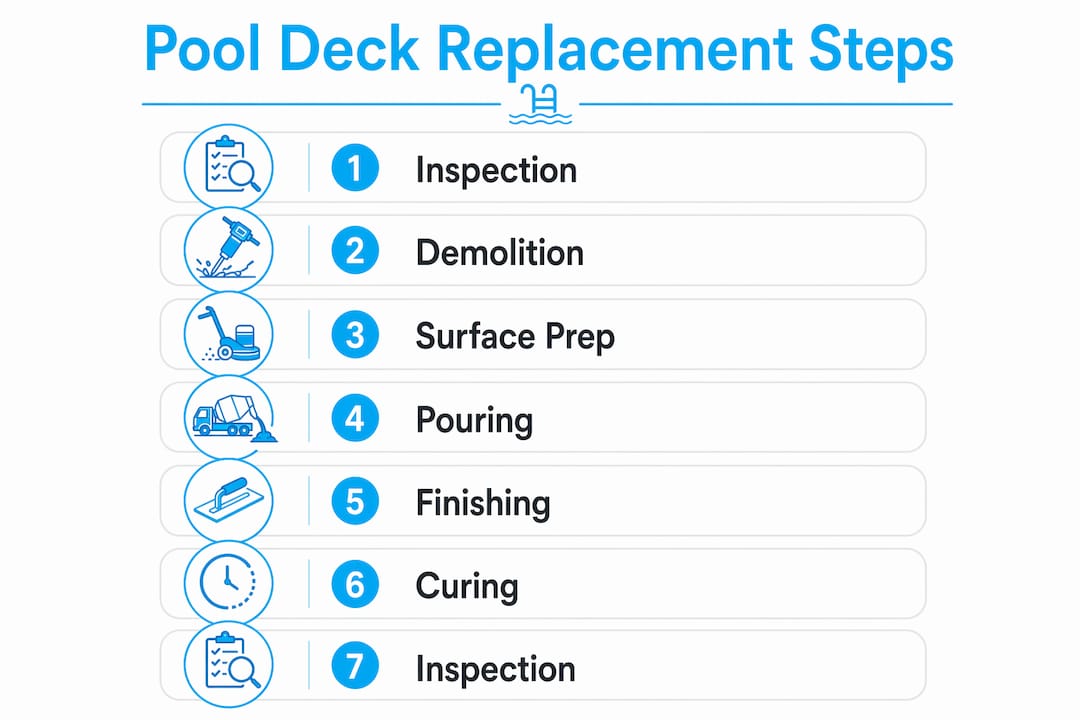
A full pool deck replacement follows a defined sequence. Skipping steps, especially in site preparation, is the leading cause of premature failure. Here is the process from start to finish.
-
Site evaluation and permits. Walk the entire deck and document all cracks, soft spots, and drainage issues. Measure the total square footage. Submit permit applications before any demolition begins. Most municipalities require approved plans before work starts.
-
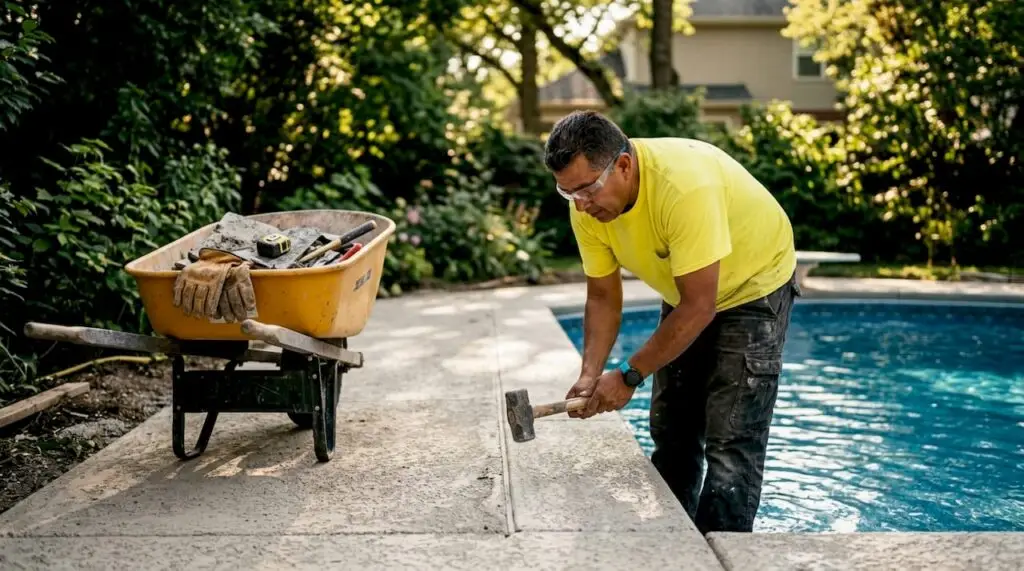
Demolition and debris removal. Break up the existing concrete with a jackhammer or saw-cut it into manageable sections. Remove all debris, including old footings if they are compromised. Do not leave old concrete as a base for new work unless a structural engineer approves it.
-
Subgrade preparation. This step determines how long your new deck lasts. Compact the soil to a stable base. If soil movement or root intrusion caused the original failure, address it now. Surface-only fixes on unstable ground fail within 12–18 months. Add gravel base material for drainage where needed.
-
Forming and framing. Set forms to the correct slope, typically 1/8 to 1/4 inch per foot away from the pool, to direct water away from the water’s edge and prevent pooling. For wood or composite decks, frame to the actual pool measurements taken after installation to avoid misfits.
-
Pouring or installing the new surface. For concrete, pour in sections with control joints placed every 8–10 feet to manage thermal expansion. For pavers or composite, follow manufacturer spacing and fastening specifications exactly.
-
Finishing, sealing, and texturing. Apply a broom finish or anti-slip texture before the concrete sets. Once cured (typically 28 days for full strength), apply a penetrating sealer rated for pool environments.
-
Compliance and final inspection. Pool barrier requirements mandate fences at least 48 inches high with self-closing, self-latching gates swinging outward. Schedule your final inspection before filling the pool or using the deck.
Pro Tip: Weather matters more than most homeowners realize. Pouring concrete in temperatures below 50°F or above 90°F affects curing quality. In Phoenix, schedule pours for early morning in summer months to avoid heat-related surface defects.
A standard 400-square-foot replacement project runs approximately $4,800–$8,000 and takes about 14 days from demolition to a sealable surface. Decorative finishes add $4–$8 per square foot to that baseline.
Common mistakes homeowners make when replacing a pool deck
The most expensive pool deck mistakes share one root cause: fixing the symptom instead of the problem. Many homeowners focus on aesthetic fixes without addressing foundational issues like soil settlement or root intrusion, causing repairs to fail within 1–2 years. That is money spent twice.
Watch out for these specific pitfalls:
- Skipping the root cause diagnosis. Thermal expansion, tree root intrusion, and poor drainage each require different fixes. A contractor who jumps straight to pouring without investigating the cause is setting you up for repeat failure.
- Ignoring slip resistance. Choosing a polished or smooth finish because it looks good is a safety hazard. Wet pool decks cause falls. Prioritize texture and COF ratings over visual appeal alone.
- Missing permit requirements. Unpermitted work can result in fines, forced removal, or problems when you sell your home. Always verify local requirements before demolition starts.
- Improper crack repair technique. Filling cracks without proper preparation leads to early patch failure. Cracks must be widened with an angle grinder to create a dovetail or V-shape profile before filling. Skipping this step means the patch pops out within a season.
- Hiring unqualified installers. Pool deck construction requires knowledge of drainage slopes, chemical-resistant materials, and pool barrier codes. Verify that any contractor holds a current license and carries liability insurance before signing a contract.
Hiring a licensed contractor who specializes in pool environments is not a luxury. Pool decks face water, chemicals, and sun exposure that standard concrete or decking contractors may not account for. One shortcut in material selection or subgrade prep can cost you the entire project within two years.
Checking references from past pool deck projects specifically, not just general concrete work, gives you the clearest picture of a contractor’s real competence.
Key Takeaways
Replacing a worn pool deck requires addressing root causes first, selecting slip-resistant materials, and following a permit-compliant installation process to achieve lasting results.
| Point | Details |
|---|---|
| Repair vs. replace threshold | Replace when repair costs exceed 40–60% of full replacement, or when structural damage is present. |
| Slip resistance is non-negotiable | Choose finishes with a COF of at least 0.6 for wet surfaces to meet safety standards. |
| Subgrade prep determines longevity | Unstable soil or root intrusion must be resolved before any new surface is installed. |
| Permits protect your investment | Decks over 200 square feet typically require permits; unpermitted work creates legal and resale risk. |
| Budget for the full project | A 400-square-foot replacement costs $4,800–$8,000 and takes approximately 14 days to complete. |
What I’ve learned after years of pool deck replacements
The homeowners who get the best outcomes share one habit: they ask “why did this fail?” before they ask “what should we put down next?” I have seen beautiful stamped concrete installations crack within 18 months because nobody addressed a slow soil settlement issue underneath. The new surface looked perfect on day one and was a disaster by the following summer.
The other mistake I see constantly is treating pool deck replacement as a purely cosmetic project. It is a structural and safety project that happens to look good when done right. Code compliance, specifically pool barrier fencing and proper drainage slope, is not optional. Inspectors in the Greater Phoenix area are thorough, and retrofitting a fence or regrading a deck after the fact costs far more than planning for it upfront.
My honest advice: get a professional site evaluation before you commit to any material or contractor. A good inspector will identify soil conditions, drainage patterns, and existing code gaps that change your entire approach. That evaluation typically costs a few hundred dollars. It can save you thousands. For homeowners weighing their options, the pool renovation mistakes we see most often are entirely preventable with the right preparation.
Budget realism also matters. Homeowners sometimes try to cut costs by choosing a cheaper material that is not rated for pool environments. That decision almost always costs more in the long run. Spend the money on the right material and a qualified installer the first time.
— Brian
Ready to upgrade your pool area with confidence?
Wefixuglypools has spent over a decade transforming worn, unsafe pool areas into spaces homeowners are proud of across the Greater Phoenix area. We handle every step of the process, from site evaluation and permit applications to material sourcing and final inspection, so you never have to coordinate multiple contractors or guess at code requirements.
Our team specializes in pool remodeling and deck replacement for residential properties, with hundreds of completed projects backing every recommendation we make. Whether you are replacing a cracked concrete surround or upgrading to pavers or stamped concrete, we bring the expertise to do it right the first time. Contact Wefixuglypools today to request a consultation and get a clear plan for your project.
FAQ
When is it time to replace rather than repair a pool deck?
Replace your pool deck when cracks exceed 1/4 inch wide, spalling covers more than 30% of the surface, or repair costs exceed 40–60% of full replacement cost. Structural damage or a deck older than 20 years also warrants full replacement.
How much does it cost to install new pool decking?
A standard residential pool deck replacement costs $12–$20 per square foot, with decorative finishes adding $4–$8 per square foot. A 400-square-foot project typically totals $4,800–$8,000.
Do I need a permit to replace my pool deck?
Permits are generally required for decks over 200 square feet or elevated more than 30 inches. Skipping permits can result in fines or forced removal, and may create problems when selling your home.
What is the safest material for a pool deck surface?
Any material with a Coefficient of Friction of at least 0.6 on wet surfaces qualifies as safe. Concrete pavers, broom-finish concrete, and textured composite decking all meet this threshold when properly installed.
How long does a pool deck replacement take?
A typical 400-square-foot pool deck replacement takes approximately 14 days from demolition to a sealable surface, assuming no major subgrade issues and favorable weather conditions.