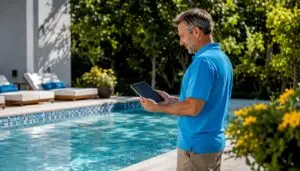
Pool water features are the aesthetic and functional water elements designed to enhance residential pools, including waterfalls, bubblers, deck jets, fountains, and fire-and-water combinations. The right feature does more than look impressive. Moving water improves circulation and masks ambient noise, making your backyard genuinely more comfortable. Wefixuglypools has spent over a decade helping Phoenix-area homeowners choose and install the types of pool water features that fit their space, style, and budget. This guide covers every major option, what each costs, and how to maintain what you install.
1. Types of pool water features every homeowner should know
Pool water features fall into two broad categories: architectural features that suit modern, geometric pools, and naturalistic features that complement freeform or lagoon-style designs. Knowing which category fits your pool shape is the fastest way to narrow your choices.
Sheer descents
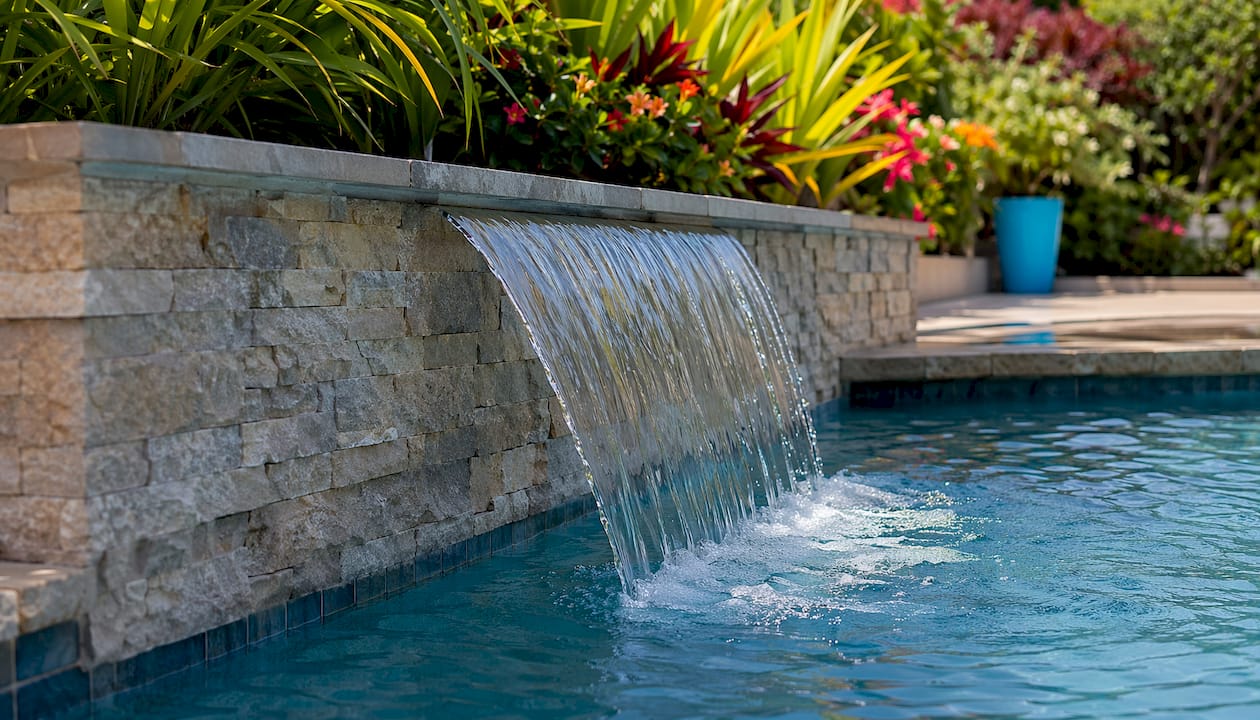
A sheer descent sends a thin, glass-like sheet of water over a raised bond beam or raised wall into the pool below. The effect is clean, quiet, and works perfectly with modern rectangular pools. Sheer descents typically cost $2,000–$4,500 installed, making them one of the more accessible architectural options.
Rock waterfalls
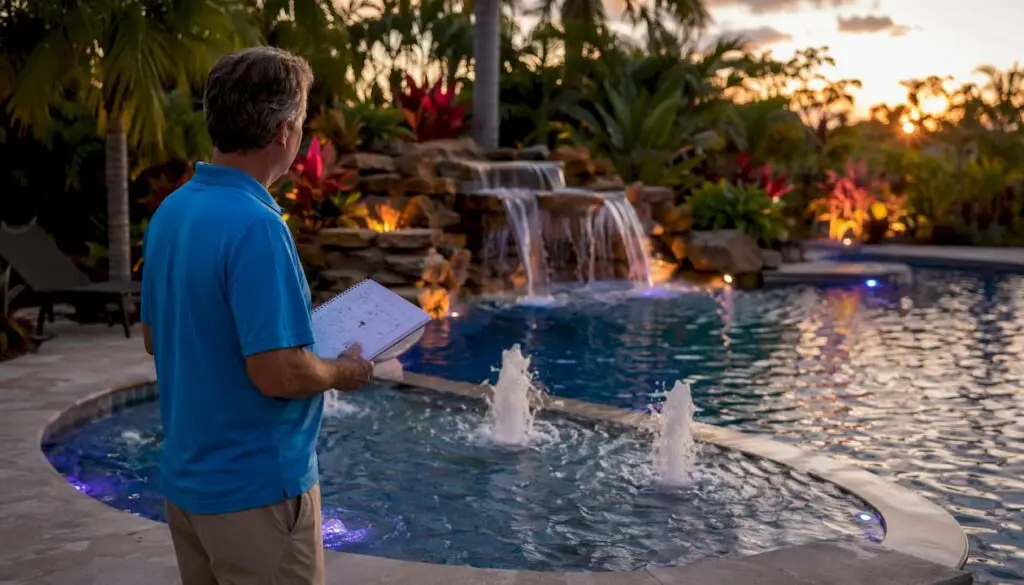
Rock waterfalls are the most dramatic naturalistic feature available. Boulders, ledge stone, or cast concrete are stacked to create a cascading waterfall effect. They suit freeform pools and tropical backyard themes. Large custom rock waterfalls run $5,000–$15,000, depending on height, material, and complexity.
Pool bubblers
Bubblers are small jets installed in shallow sun shelves or tanning ledges. They push a gentle column of water upward, creating a playful, low-key effect that children love. Bubblers range from $800–$1,500 per unit and are among the most affordable pool feature upgrades available.
Deck jets
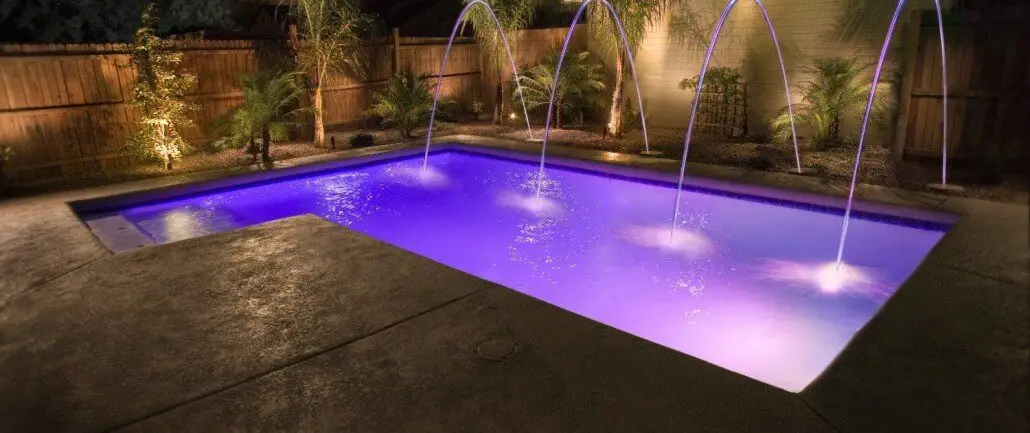
Deck jets shoot a laminar arc of water from the pool deck into the pool. Multiple jets can be synchronized to create a choreographed display. They pair well with geometric pools and light up beautifully at night with LED lighting. Deck jets typically cost $1,200–$2,800 installed.
Scuppers
Scuppers are wall-mounted spouts that pour water from a raised feature wall or spa spillover into the pool below. They are a staple of Mediterranean and contemporary pool designs. Scuppers share the same cost range as sheer descents and deliver a similar architectural effect with a slightly bolder sound.
Rain curtains and rain bars
A rain curtain installs a horizontal pipe with evenly spaced holes along a pergola, raised beam, or pool structure. Water falls straight down in a curtain effect. This feature works best on covered outdoor spaces and creates a dramatic visual backdrop for evening entertaining.
Pool fountains
Pool fountains add vertical water movement from inside the pool itself. Options range from simple single-jet pop-up fountains to multi-nozzle displays. Pool fountain designs work well in formal or symmetrical pool layouts where the fountain becomes a visual centerpiece.
Grottos
A grotto is a cave-like structure built into or beside a rock waterfall, large enough for swimmers to sit inside. It is the most immersive naturalistic feature available. Grottos require significant structural planning and fall at the higher end of the rock waterfall cost range.
Fire and water features
Fire and water combinations place gas-fed fire bowls, fire pits, or fire columns adjacent to or directly over the water. The contrast of flame and water creates a striking nighttime ambiance. This is what most homeowners mean when they ask “what is a pool fire feature.” Fire features require a gas line, a licensed installer, and ongoing fuel costs, so budget accordingly.
Spillover spas
A spillover spa sits elevated above the main pool and allows water to cascade over the shared wall. The effect is both visual and functional. The spa overflow keeps water moving between both bodies, improving circulation in the main pool.
Pro Tip: If you are planning multiple features, install them during the original pool build. Retrofitting water features into an existing pool requires cutting decks, re-plumbing, and patching, which can nearly double the project cost.
2. Cost ranges and installation complexity
Installation costs vary widely based on feature type, materials, and whether you are building new or retrofitting. The table below gives you a practical reference for budgeting.
| Feature | Typical Cost Range | Installation Complexity | Maintenance Level |
|---|---|---|---|
| Bubblers | $800–$1,500 | Low | Low |
| Deck jets | $1,200–$2,800 | Low to moderate | Low |
| Sheer descents / scuppers | $2,000–$4,500 | Moderate | Low to moderate |
| Pool fountains | $1,500–$4,000 | Moderate | Moderate |
| Rock waterfalls | $5,000–$15,000 | High | Moderate to high |
| Fire and water features | $3,500–$10,000+ | High | Moderate |
| Grottos | $8,000–$20,000+ | Very high | High |
Material choice drives both cost and durability. Natural stone like quartz or granite resists pool chemicals well and holds up for decades. Cast concrete costs less and offers more design flexibility, but it requires sealing and periodic resurfacing. Metal elements look striking but need regular treatment to prevent mineral buildup and corrosion.
Retrofitting is the biggest cost multiplier homeowners overlook. Adding a sheer descent to an existing pool means cutting into the bond beam, running new plumbing, and patching the deck. That work can push a $3,000 feature to $6,000 or more. Planning features during the original build is always the more cost-effective path.
Pro Tip: Ask your contractor to rough in plumbing for future water features even if you are not installing them immediately. The cost at the build stage is minimal. Adding that plumbing later is not.
3. How to choose the right water features for your pool
Matching a feature to your pool starts with three questions: What is the pool’s shape and style? How much sound and visual activity do you want? And how much time are you willing to spend on maintenance?
- Pool shape and architecture. Sheer descents and scuppers suit modern linear pools. Rock waterfalls and grottos belong in freeform or lagoon-style pools. Mixing styles creates visual conflict that no amount of landscaping fixes. Match the feature to the pool’s existing design language first.
- Scale and proportion. A large rock waterfall on a small pool overwhelms the space. A single bubbler on a large resort-style pool disappears. Choose features proportional to the pool’s footprint and the surrounding yard.
- Sound level. Sheer descents and deck jets produce a soft, consistent sound. Rock waterfalls and spillover spas are louder. If your pool is close to a bedroom window, a quieter feature preserves the peace.
- Automation compatibility. Smart pool automation systems let you control features from a phone or voice assistant. Features that are easy to turn on get used. Features that require manual valve adjustments get ignored. Plan for automation from the start.
- Multi-feature combinations. Effective combinations pair one statement feature with one or two supporting features. A rock waterfall with two deck jets and a spillover spa creates depth without chaos. Stacking too many features of equal visual weight creates a cluttered look.
Aligning your feature choices with your pool’s overall design saves money and produces a more cohesive result. A professional designer can model the finished look before any concrete is poured.
4. Maintaining pool water features: practical tips and common pitfalls
Water features require more maintenance than a still pool. The extra aeration they create is the main reason. Waterfalls and bubblers cause CO2 off-gassing, which raises pool pH. Higher pH leads to scaling on surfaces and cloudy water if left uncorrected.
- Test water chemistry twice a week when running features consistently. Standard once-a-week testing is not enough for an active water feature setup.
- Clean nozzles and jets monthly. Mineral deposits clog deck jet nozzles and bubbler heads. A diluted acid wash or a nozzle cleaning tool clears buildup before it restricts flow.
- Brush rock and stone surfaces weekly. Algae colonizes textured surfaces faster than smooth pool walls. A stiff pool brush on rock waterfall surfaces prevents green buildup.
- Winterize jets and pumps before freezing temperatures. Blow out water lines with compressed air and cap exposed fittings. Water left in lines expands when it freezes and cracks PVC fittings.
- Inspect spillway edges and bond beams seasonally. Cracks in spillway edges allow water to escape behind the feature wall, causing structural damage over time.
Pro Tip: Schedule routine pool maintenance that includes feature-specific checks. A technician who only tests the water chemistry will miss a cracked nozzle or a slow spillway leak until the damage is expensive.
Key takeaways
The most effective pool water features combine visual appeal with functional benefits like improved circulation and noise masking, and they are always easier and cheaper to install during the original pool build.
| Point | Details |
|---|---|
| Match feature to pool style | Sheer descents suit modern pools; rock waterfalls suit freeform designs. |
| Budget for retrofitting costs | Adding features to an existing pool can nearly double the installation price. |
| Test chemistry more often | Run features consistently and test water chemistry at least twice a week. |
| Plan automation early | Integrating smart controls at the build stage prevents costly future upgrades. |
| Choose proportional features | Scale each feature to the pool’s footprint to avoid visual clutter. |
What I’ve learned after years of pool feature installations
The homeowners who get the most out of their water features are the ones who planned for them before the pool was built, not after. I have seen beautiful rock waterfalls installed on existing pools that cost twice what they should have because the plumbing was an afterthought.
The other pattern I see regularly is what I call feature fatigue. A homeowner installs three or four impressive features, uses them constantly for the first summer, then stops running them because turning everything on manually is a hassle. The fix is simple. Smart automation that schedules your features to run at sunset costs a fraction of what the features themselves cost, and it is the single biggest factor in whether those features get used five years from now.
My honest advice: pick one statement feature that fits your pool’s architecture, add one or two supporting features for depth, and wire everything into an automation system from day one. That combination delivers more long-term enjoyment than a pool loaded with features that nobody turns on.
— Brian
Ready to add water features to your pool?
Wefixuglypools specializes in custom pool remodeling and water feature installation across the Greater Phoenix area. Whether you want a clean sheer descent on a modern pool or a full rock waterfall with a grotto, our team designs and builds features that fit your pool’s architecture and your budget.
We handle everything from design and permitting to plumbing and automation integration. Financing options are available for qualifying projects. Contact Wefixuglypools today to schedule a consultation and see what your pool could look like with the right water features installed by a team that has done it hundreds of times.
FAQ
What are the most popular types of pool water features?
Sheer descents, rock waterfalls, bubblers, and deck jets are the most commonly installed pool water features in residential pools. Each suits a different pool style and budget range.
What is a pool fire feature?
A pool fire feature is a gas-fed fire bowl, column, or pit installed adjacent to or over the pool water, creating a visual contrast between flame and water. It requires a licensed gas line installation and ongoing fuel costs.
How much does a pool water feature upgrade cost?
Costs range from $800 for a basic bubbler to $15,000 or more for a large custom rock waterfall. Retrofitting features into an existing pool adds significant labor and plumbing costs on top of the feature price itself.
Do water features affect pool chemistry?
Yes. Aeration from waterfalls and bubblers raises pool pH by causing CO2 off-gassing. Homeowners running features consistently should test water chemistry roughly twice a week to prevent scaling and cloudy water.
Can I add a water feature to an existing pool?
You can, but it costs more than building one in from the start. Retrofitting requires cutting the deck, re-plumbing, and patching, which can nearly double the total project expense compared to including the feature in a new pool build.