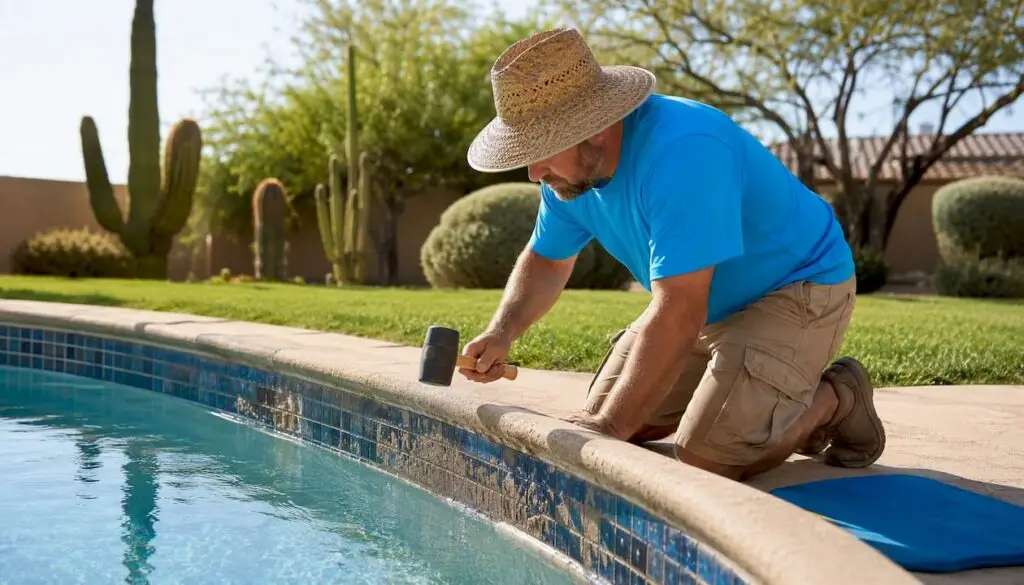
If you’re seeing stained, faded, or lifting tiles around your waterline, hire a licensed contractor to restore discolored pool tiles before the problem gets worse. Wefixuglypools has spent a decade completing hundreds of pool remodels across Greater Phoenix, and our first step is always a proper diagnostic inspection, not a cosmetic patch. Loose or hollow-sounding tiles almost always point to a substrate or bond-beam issue beneath the surface. Schedule a written inspection that includes tap testing, membrane assessment, and a scoped estimate before any tile work begins.
Table of Contents
- Key Takeaways for Phoenix Homeowners
- Why diagnosis comes before any tile work
- Ready to get a written estimate from Wefixuglypools?
- Authoritative resources contractors rely on
- Key Takeaways
- What most homeowners get wrong about tile discoloration
Key Takeaways for Phoenix Homeowners
Before your contractor visit, knowing what to look for and what to ask separates a lasting repair from one that fails within a year or two.
What to check before the inspection:
- Tap tiles lightly; a hollow sound signals a broken bond between tile and substrate
- Watch for continuous grout loss, unexplained water loss, or calcium scaling at the waterline
- Note how many tiles are affected, their location, and how long the issue has been visible
- Take photos to share with the contractor before the site visit
Six questions to ask every contractor:
- Are you licensed and insured in Arizona? (Request ROC license number)
- Does your inspection include membrane and substrate evaluation, or only visible tile?
- Which ANSI-rated mortars and grouts do you specify? (Look for ANSI A118.4 or A118.11 mortars; ANSI A118.3 epoxy grout where chemical resistance matters)
- What is your written workmanship warranty, and what does it cover?
- What is the project timeline, including cure periods before refill?
- Can you share a local portfolio and references from Greater Phoenix projects?
Red flags: any contractor who skips membrane inspection, gives vague cure-time answers, or won’t provide a written warranty. Skipping the membrane check and treating only the visible tile commonly produces repeat failures within a couple of years.
Typical Phoenix timeline and cost drivers: Minor spot repairs on a few tiles with sound substrate can often be completed within several days. Full waterline or substrate work requires a complete drain and multi-stage curing. Polymer-modified thinset needs at least 72 hours of curing before refilling the pool, while epoxy grout systems require up to 7 days to fully cure before refill. Cost depends on scope (spot repair vs. full waterline band), substrate condition, tile sourcing, and whether waterproofing or plumbing work is needed. Full waterline band replacement is typically warranted when a significant portion of the band shows failure or when the substrate is compromised.

Why diagnosis comes before any tile work
We’ve seen it many times: a homeowner gets a quick re-grout or a few tiles swapped out, and within a season the same section is failing again. The reason is almost always what was skipped, not what was done.
Our inspection process starts with tap testing every tile in the affected zone, then moves to membrane and substrate evaluation. If moisture is migrating behind the setting bed, no amount of fresh tile will hold. We document findings with photos, note bond-beam condition, and map any areas where the waterproofing membrane needs repair before re-tiling begins. The result is a written scope tied directly to the cause, whether that’s a grout-only fix, partial substrate repair, full waterline replacement, or a combined resurfacing project.

Wefixuglypools backs every project with a workmanship warranty and carries the licensing and insurance you should require from any Phoenix contractor. Our portfolio of local before-and-after projects is available to review before you sign anything.
Ready to get a written estimate from Wefixuglypools?
Discolored tiles deserve a real answer, not a guess.

Contact Wefixuglypools to schedule your on-site diagnostic inspection. Bring pool age, a description of visible issues, and photos if you have them. We’ll complete the site visit in 1–2 hours and deliver a written, line-item estimate within 48–72 hours. From there, we block your project on the schedule with cure-time windows built in so your pool is back in service as quickly as the materials allow. Our pool repair services in Phoenix cover everything from spot tile replacement to full substrate and waterproofing repair. For homeowners in the West Valley, our Surprise, AZ remodeling team is ready to help. Request your estimate today.
Authoritative resources contractors rely on
Use these references to verify scope items, material specs, and cure-time claims when comparing bids.
- ANSI A118.3, A118.4, and A118.11 mortar and grout standards define the minimum performance requirements for mortars and grouts used in submerged and wet-area tile installations. Ask to see these spec numbers on any written estimate.
- Pool Tile Repair and Replacement — Pool Repair Authority covers scope thresholds, cure-time requirements, and permit considerations in plain language.
- Pool Tile Cracks and Failure — J Designs explains bond-beam movement and structural causes behind tile failure.
- How to Restore Faded Pool Tiles — Classic Marcite provides homeowner-facing technical background on tile fading and surface staining.
| Technical item | Standard expectation | Source |
|---|---|---|
| Thinset cure before refill | 72-hour minimum (polymer-modified) | Pool Repair Authority |
| Epoxy grout cure before refill | Up to 7 days | Pool Repair Authority |
| Full waterline replacement threshold | >10–20% band failure or compromised substrate | Pool Repair Authority |
| Mortar spec for wet/submerged areas | ANSI A118.4 or A118.11 | Tile Repair Authority |
| Epoxy grout spec for chemical resistance | ANSI A118.3 | Tile Repair Authority |
When reviewing bids, match every material listed against these specs. If a contractor’s estimate lists generic “pool mortar” without an ANSI designation, ask for the product’s technical data sheet. Permit requirements for tile work vary by municipality; full interior re-tiling or shell work often triggers a permit review under local building codes, so confirm with your city or HOA before work begins.
Key Takeaways
A licensed Greater Phoenix contractor who inspects the membrane and substrate before touching a single tile is the only reliable path to a lasting tile restoration.
| Point | Details |
|---|---|
| Diagnosis before cosmetic work | Skipping membrane inspection leads to repeat failures within 12–24 months. |
| Cure times protect your investment | Thinset needs 72 hours; epoxy grout needs up to 7 days before refill. |
| Scope threshold matters | Full waterline replacement is typically needed when more than 10–20% of the band has failed. |
| Six contractor questions | Ask about licensing, membrane inspection, ANSI specs, warranty, timeline, and local portfolio. |
| Wefixuglypools | Greater Phoenix’s specialist for contractor-grade tile restoration, with a decade of local remodels and a written workmanship warranty. |
What most homeowners get wrong about tile discoloration
The conventional wisdom treats pool tile discoloration as a maintenance problem. Scrub it, re-grout it, move on. That framing costs homeowners real money.
Discoloration at the waterline is often the first visible sign that something is moving or failing beneath the surface. Calcium scaling, staining, and grout loss are symptoms. The cause is usually mechanical: thermal cycling in Phoenix’s climate puts constant stress on the bond between tile and substrate, and once that bond starts to break, water finds its way behind the setting bed. At that point, the tile is just the messenger.
The contractors who skip straight to cosmetic fixes aren’t cutting corners out of laziness. They’re responding to what homeowners ask for: a fast, affordable patch. The problem is that a patch without a diagnosis is a loan against a bigger repair bill later. Insisting on a written scope that names the cause, not just the symptom, is the single most protective thing you can do before signing any contract.