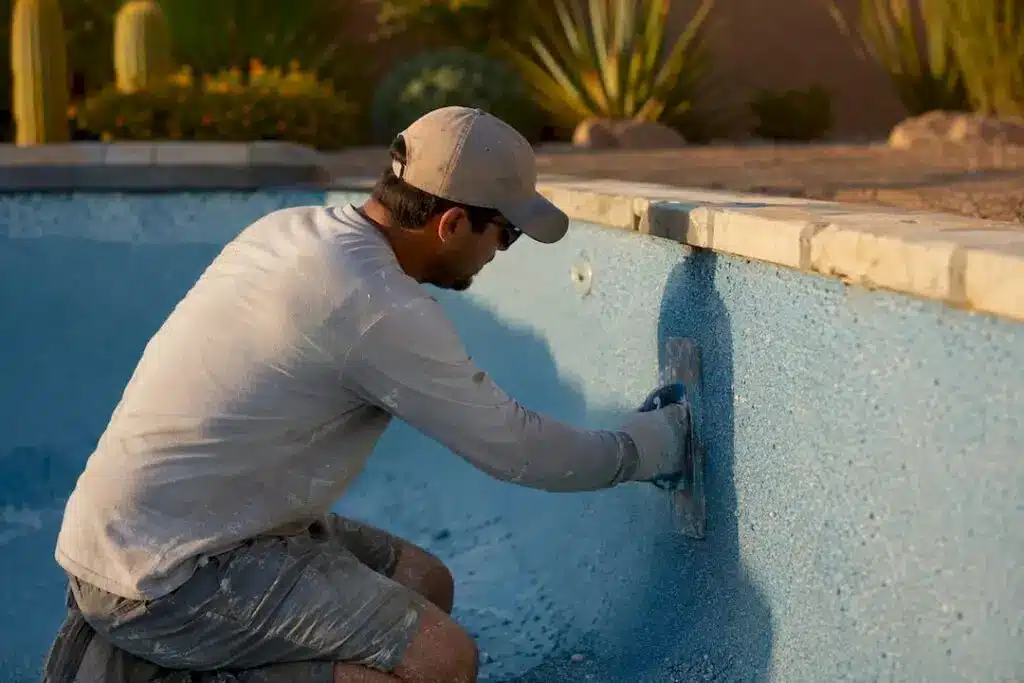
Phoenix homeowners typically pay between $4,500 and $9,500 for standard plaster resurfacing, $7,000 to $12,000 for upgraded plaster, $9,000 to $18,000 for pebble or aggregate finishes, and up to a high cost depending on scope to $60,000-plus for a full remodel. Your final number hinges on pool size and how much repair work hides beneath that faded surface. Before you commit to any figure, get a written, on-site estimate from a licensed Phoenix contractor. Ballpark numbers from a phone call won’t cut it.
TL;DR:
- Phoenix pool resurfacing costs are heavily influenced by finish type, with pebble and aggregate options lasting up to 20 years and costing between $9,000 and $18,000.
- Larger pools typically add proportionally more to costs, but prep and mobilization fees remain relatively constant regardless of size.
- Most resurfacing projects in Phoenix take one to two weeks from start to finish, with delays common if unexpected repairs like crack repair or replumbing are needed.
- A detailed, written estimate should include license verification, specific scope, materials, warranties, and a clear timeline to prevent unexpected charges or incomplete work.
Table of Contents
- What Does It Cost to Resurface a Pool by Finish Type in Phoenix?
- What Drives Pool Resurfacing Prices Up or Down?
- How Much Does Pool Size Affect Resurfacing Cost?
- How Long Does Pool Resurfacing Take in Phoenix?
- What Should a Written Pool Resurfacing Estimate Include?
- What We’ve Learned After a Decade of Phoenix Pool Projects
- Why Most Pool Resurfacing Advice Undersells Phoenix’s Climate
- Ready for a Written, On-Site Pool Resurfacing Quote?
- Sources
What Does It Cost to Resurface a Pool by Finish Type in Phoenix?
Your finish choice is the single biggest lever in your resurfacing budget, and it also decides how often you’ll be writing this check again. Standard white plaster remains the entry point for Phoenix homeowners, and for good reason: it’s the cheapest option upfront, but our brutal sun and mineral-heavy water make it the shortest-lived choice by far.
Here’s how the finishes typically stack up for an average residential pool in the Phoenix area:
- Standard plaster: $4,500 to $9,500, lasting 7 to 10 years before it needs attention again.
- Upgraded/colored plaster: $7,000 to $12,000, with a slightly longer lifespan of 8 to 12 years and better resistance to staining.
- Pebble/aggregate (Pebble Tec and similar): $9,000 to $18,000, typically lasting 15 to 20 years.
- Quartz or glass-bead finishes: $10,000 up to a high cost depending on scope, offering a comparable lifespan to pebble with a smoother, more reflective look.
- Full remodel (resurfacing plus structural, tile, and equipment work): up to a high cost depending on scope to $60,000 or more depending on scope.
Consumer cost guides commonly cite a general national resurfacing range of $6,000 to about about about $15,000 for most residential pools. Phoenix pricing tends to sit at the higher end of that band or above it, largely because our water chemistry and UV exposure push homeowners toward upgraded finishes more often than mild-climate markets do.
Pro Tip: Ask your contractor how many coats of finish they’re applying and whether they use a Phoenix-specific plaster mix designed to resist calcium buildup from our notoriously hard water. A cheaper mix might save you $500 now and cost you three extra years off your finish’s life.

Pebble and aggregate surfaces are worth a closer look if you’re tired of resurfacing every decade. Manufacturer-certified installers, like those in Pebble Tec’s builder network, tend to charge more per square foot, but that premium buys real protection against finish failure, which matters when you’re dealing with 115-degree summers baking the pool deck.

What Drives Pool Resurfacing Prices Up or Down?
The number on your resurfacing quote rarely comes from the finish alone. Contractors price separately for what’s underneath and around that new surface, and Phoenix’s climate adds a few line items you won’t see in cooler markets.
- Substrate repairs. Cracks, hollow spots, and exposed rebar (common in pools over 15 years old) require patching or structural work before any new finish goes down.
- Tile and coping replacement. Waterline tile replacement averages roughly about about about $15,000 nationally, though most Phoenix jobs run closer to several thousand dollars or $8,000 depending on tile grade and linear footage.
- Equipment swaps. Pumps, heaters, and filters nearing the end of their lifespan are frequently bundled into resurfacing bids since draining the pool is the ideal window to replace them.
- Replumbing. Old copper or degraded PVC lines sometimes surface as a surprise add during prep work.
- Access and site logistics. Pools behind narrow gates or up steep grades cost more to prep because equipment has to be hauled in by hand.
Phoenix’s hard water leaves calcium scaling that requires acid washing or extra surface prep, and years of intense UV exposure fade and weaken plaster faster than in most other states, both of which commonly widen the gap between an online estimate and your actual bid. Crack repair and replumbing work discovered during prep is the most common reason a $6,000 quote turns into $9,000.
How Much Does Pool Size Affect Resurfacing Cost?
Bigger pools cost more to resurface, obviously, but the relationship isn’t perfectly linear because prep work and mobilization costs stay roughly fixed regardless of size. Here’s how three common Phoenix pool sizes typically shake out:
- Small pool (~10,000 gallons, roughly 12×24 feet): Plaster runs $4,000 to $6,500; pebble finishes run $8,000 to $12,000.
- Average pool (~14,000 gallons, roughly 15×30 feet): Plaster runs $5,500 to $8,500; pebble finishes run $10,000 to about about about $15,000.
- Large pool (~20,000+ gallons, freeform or with attached spa): Plaster runs $8,000 to $12,000; pebble finishes run $14,000 up to a high cost depending on scope-plus.
If your pool has visible structural cracking, delaminating plaster (that flaky, popcorn-like texture), or a spa attachment needing separate tile and plumbing work, budget toward a full remodel rather than a simple resurface. Once structural repairs stack up, the math often favors doing it all at once.
How Long Does Pool Resurfacing Take in Phoenix?
Most Phoenix resurfacing projects run one to two weeks from drain to refill, though scope and season both affect that window.
- Inspection and contract signing (1 to 3 days): the contractor assesses the substrate and finalizes your written scope.
- Draining (half a day): pools drain in hours, not days, in our climate.
- Surface prep and repairs (2 to 5 days): bond coat removal, crack patching, and any rebar work happens here.
- Finish application (1 to 2 days): plaster, pebble, or quartz gets troweled and finished.
- Curing and refill (3 to 7 days): the pool fills while the finish cures, with brushing during the first days to prevent plaster dust.
Permits aren’t typically required for straight resurfacing (they usually are for equipment relocation or structural changes), but confirming ROC contractor registration before signing matters more than any permit. A written timeline in your contract protects you if delays happen during our busy spring and fall booking seasons.
What Should a Written Pool Resurfacing Estimate Include?
A trustworthy estimate reads like a contract, not a guess. Before you sign anything, run through this checklist:
- ROC license number, verifiable through Arizona’s contractor search tool.
- Proof of liability insurance and bonding.
- References or reviews from recent local jobs, cross-checked against BBB profiles and sites like Yelp.
- Itemized scope, listing prep work, finish type, tile, coping, and any equipment replacement as separate line items.
- Named materials and brands, not vague terms like “premium plaster.”
- Written warranty terms, including what’s covered and for how long.
- Expected cure and refill timeline.
Best-practice guides consistently recommend an itemized, written scope and warranty precisely because verbal promises evaporate the moment a finish cracks in year three.
Pro Tip: If a bid comes in thousands below every other quote, ask specifically what prep work is included. Lowball bids often skip bond coat removal or substrate repair, which shows up later as blistering or delamination, not savings.
What We’ve Learned After a Decade of Phoenix Pool Projects
We’ve spent a decade resurfacing and remodeling pools across the Greater Phoenix area, and a few patterns show up in almost every project. Here’s what that experience has taught homeowners who are budgeting for their own job:
- Hard water and relentless UV exposure shorten plaster life here more aggressively than in almost any other U.S. market, which is why we push upgraded finishes for anyone planning to stay in their home long term.
- Hundreds of completed transformations have shown us that the pools requiring the most unplanned repair work are almost always ones that skipped acid washing or chemical balancing for years.
- A detailed process walkthrough helps homeowners understand exactly what happens between draining and refill, and why rushing that timeline backfires.
- Confirming ROC registration and requiring a project-specific written warranty are the two habits that separate homeowners who get what they paid for from those who end up back on a contractor’s schedule within two years.
Why Most Pool Resurfacing Advice Undersells Phoenix’s Climate
Most national cost guides treat resurfacing like a one-size-fits-all home improvement project. That framing misses what actually happens to a pool surface in a desert climate with 300-plus sunny days and water hardness levels most coastal markets never deal with. The conventional advice to “just get three quotes and pick the middle one” ignores that the cheapest bid in Phoenix is disproportionately likely to have skipped prep work your pool needs.
What the numbers actually support is this: your finish decision matters less than your prep decision. A gorgeous pebble finish poured over an inadequately treated substrate will fail early regardless of how much you paid for the surface material. Homeowners should prioritize a contractor’s willingness to inspect thoroughly and document that scope in writing over chasing the lowest price per square foot.
If you take one thing from this guide, make it this: verify the license, read the warranty terms twice, and never let “we’ve done hundreds of these” substitute for a specific, written plan for your pool.
— Brian
Ready for a Written, On-Site Pool Resurfacing Quote?
Wefixuglypools is the local specialist for homeowners who want a real number, not a phone-call guess. Every project starts with an on-site inspection and a written scope covering repairs, finish selection, tile, and equipment, backed by a project-specific warranty so you know exactly what’s covered after the crew leaves.

After a decade of transformations across the Phoenix area, we’ve seen firsthand how hard water and sun exposure wear down a pool’s surface, and we build every quote around what your pool actually needs rather than a generic price sheet. If you’re ready to see real numbers for your own backyard, request a remodeling estimate and get a written breakdown before you commit to anything.
Sources
- How Much Does Pool Tile Cost? 2025 Data
- How Much Does it Cost to Resurface a Pool?
- Roc
- Pebble Tec find-a-builder map