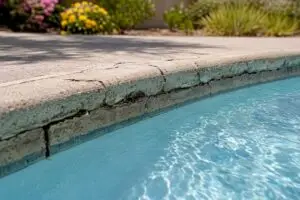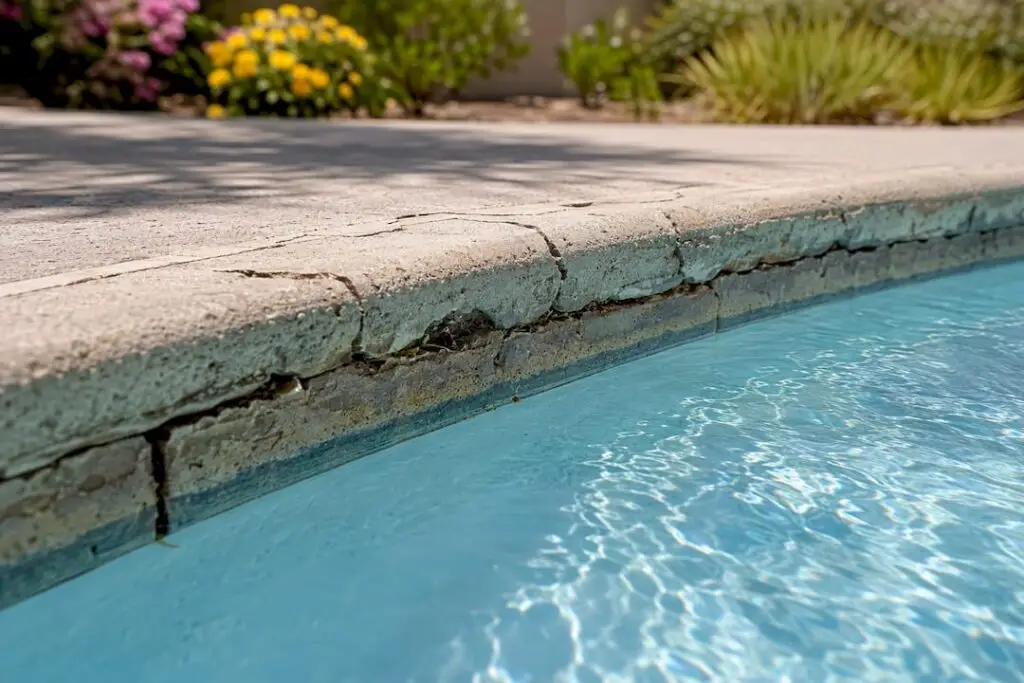
Pool coping deteriorates when water works past the mortar bond and reaches the bond beam, and the coping material or joints can no longer absorb ground movement, freeze-thaw cycles, or salt exposure. Left alone, this threatens the pool shell and the surrounding deck. Take these steps this week:
- Walk the entire perimeter and look for cracks, gaps, or shifted pieces.
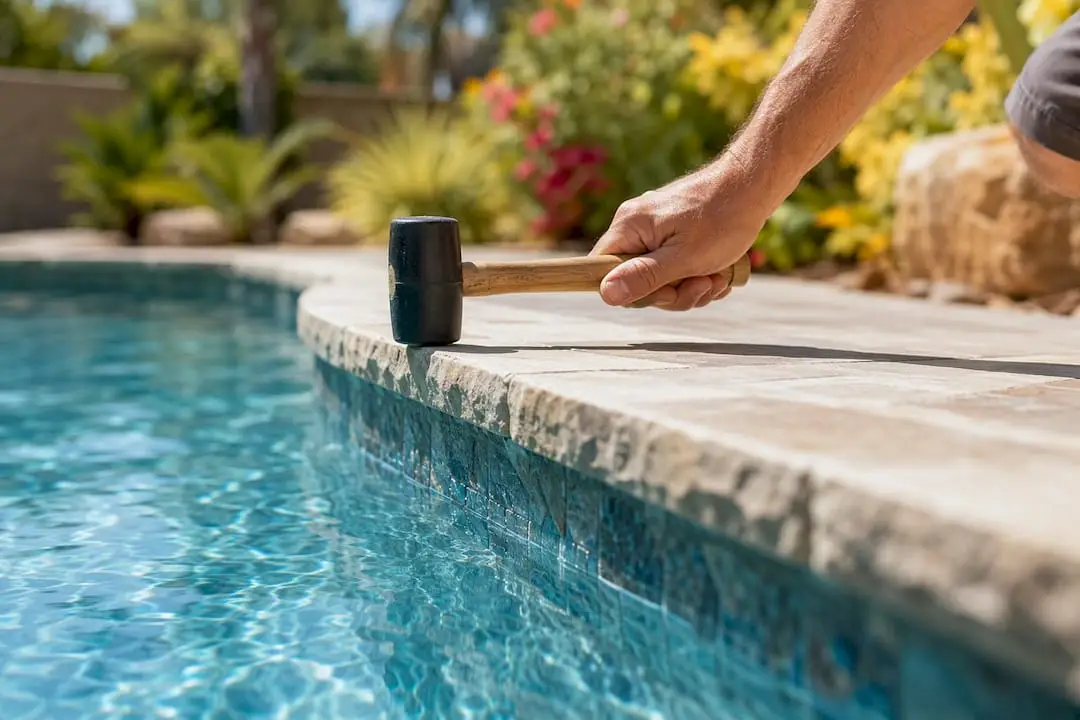
- Perform a hollow-tap test on every coping section with a rubber mallet.
- Photograph and mark any suspect spots so you can track changes over time.
Catching this early means re-bedding or repointing a few feet of coping. Wait too long, and you’re paying for bond-beam reconstruction instead.
Key Takeaways
Coping deteriorates fastest where water intrusion, ground movement, and material vulnerability like freeze-thaw or salt exposure overlap, and early repair costs far less than delayed bond-beam reconstruction.
| Point | Details |
|---|---|
| Inspect twice a year | Walk the perimeter and hollow-tap every section each spring and fall to catch problems early. |
| Hollow sound means trouble | A dull thud under a rubber mallet signals the coping has separated from its mortar bed. |
| Match the fix to the damage | Isolated spalling needs patching; widespread hollow sections need re-bedding or full replacement. |
| Watch salt levels | Saltwater systems running 3,000 to 3,500 ppm accelerate pore crystallization and spalling. |
| Get a professional evaluation | Wefixuglypools inspects bond beams, mortar beds, and tile condition before recommending repair or replacement. |
Table of Contents
- What Pool Coping Does and Why It Matters
- How Do You Spot Coping Damage? A Homeowner’s Checklist
- What Causes Pool Coping to Crack and Fail?
- Repair, Reset, or Replace: How Do You Decide?
- Which Coping Materials Hold Up Best?
- How Can You Slow Down Coping Deterioration?
- When Should You Call a Professional?
- A Pattern We See Often in the Field
- Why Most Coping Advice Undersells the Urgency
- Fix Coping Damage Before It Reaches the Bond Beam
- Frequently Asked Questions
- Sources
What Pool Coping Does and Why It Matters
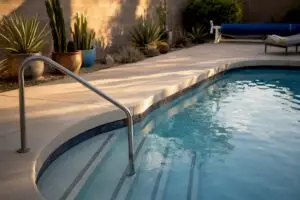
Coping is the capstone that finishes the top edge of your pool shell, sitting right where the deck meets the water. It does two jobs at once: it gives swimmers a rounded, non-slip edge to grip, and it seals the transition between deck and shell so rain, splash-out, and irrigation water can’t work their way behind the wall.
When that seal fails, water tracks down into the bond beam, the reinforced concrete band that ties the pool wall together. From there it saturates the soil beneath, and saturated soil shifts. That shift cracks mortar joints, which lets in more water. It’s a feedback loop, and it rarely reverses on its own.
How Do You Spot Coping Damage? A Homeowner’s Checklist
Most coping failures give warning signs long before a piece actually breaks loose. Here’s what to check, in order:
- Visual cracks — hairline cracks are cosmetic at first, but cracks running clean through a piece signal it’s no longer bonded to the mortar bed.
- Spalling — chunks flaking or popping off the surface, often where water has frozen inside the pores.
- Efflorescence — a white, chalky residue on the wall below the coping line means water has been moving through the material and depositing dissolved minerals as it evaporates.
- Gaps at joints — spaces where sealant has pulled away or crumbled out entirely.
- Rocking or sunken pieces — press down gently on a suspect section; if it moves, the bed underneath has failed.
- The hollow-tap test — tap each piece with a rubber mallet. A sharp ring means solid bonding. A dull, hollow thud means the coping has separated from its mortar bed and is at high risk of shifting or cracking further.
Don’t skip the indirect clues, either: unexplained water loss, waterline tile that’s started to lift or pop, and deck cracks that radiate outward from the coping line all point back to the same root problem.
Pro Tip: Tap every piece, not just the ones that look suspicious. Hollow spots hide under perfectly clean-looking coping more often than you’d expect, especially on the shady side of the pool where moisture lingers longest.
What Causes Pool Coping to Crack and Fail?
Coping damage almost always traces back to one of three conditions stacking on top of each other: a broken bond to the mortar bed, standing water at the coping-to-deck joint, and repeated freeze-thaw or thermal cycling. Break any one of those three, and the failure chain stalls.
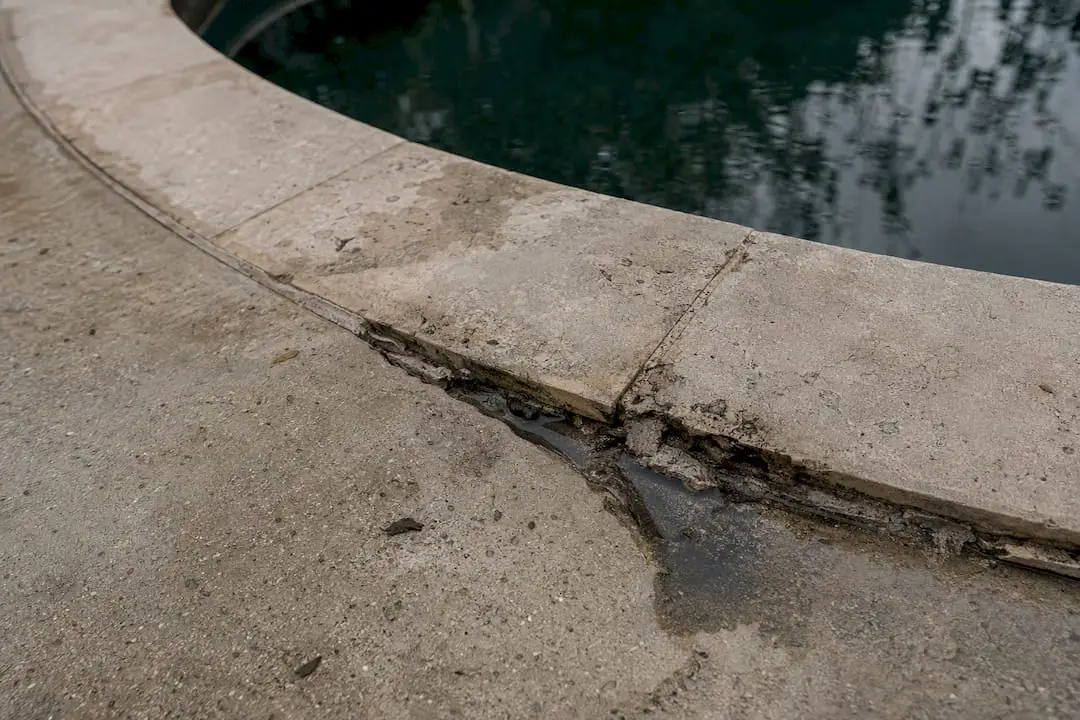
Freeze-thaw and thermal cycling. Water seeps into the microscopic pores of concrete or natural stone, then expands when it freezes. Repeat that cycle every winter for a decade and the material weakens from the inside out, long before a crack shows on the surface.
Soil movement and settlement. Expansive clay soils swell and shrink with moisture, and that movement pushes and pulls on the bond beam underneath the coping. Mortar has almost no flexibility, so it’s usually the first thing to give.
Poor installation. Coping set without flexible expansion joints, or bedded in mortar that was mixed too dry or too wet, fails years ahead of schedule.
Pool chemistry and salt. Saltwater systems typically run at 3,000 to 3,500 ppm, and that salt gets pulled into porous coping through capillary action. When the water evaporates, salt crystals form inside the pores and expand, accelerating spalling well beyond what plain chlorine exposure would cause.
- UV exposure and constant foot traffic wear down surface texture and open new entry points for water.
- Failed sealant and open joints let water in faster than any single factor above.
Repair, Reset, or Replace: How Do You Decide?
The right fix depends entirely on how far the damage has spread, not just how bad one piece looks.
- Cosmetic patching works when damage is isolated: one or two spalled spots, hairline surface cracks, and the coping around them still rings solid under a tap test.
- Re-bedding (reset) makes sense when you find a handful of hollow-sounding sections in a limited area. The piece gets pulled, the old mortar cleared out, and it’s reset in fresh mortar with a proper joint.
- Full replacement with bond-beam work becomes necessary once hollow spots run continuously around large stretches, efflorescence shows up in multiple places, or waterline tile has started shifting. At that point, patching over old coping just traps moisture underneath and fails again within a season or two.
Cost climbs sharply at each stage: patching runs cheapest, re-bedding costs more per linear foot, and full bond-beam reconstruction costs the most by a wide margin. Delaying rarely saves money. It just moves your project from the cheap tier to the expensive one.
Which Coping Materials Hold Up Best?
Material choice drives how fast deterioration shows up and what maintenance it demands.
- Poured or precast concrete spalls and cracks under thermal cycling and prolonged UV exposure; sealing every 18 to 24 months in salt environments slows the damage significantly.
- Natural stone, like travertine, is porous and needs regular sealing, while denser stones such as granite resist salt intrusion better but cost more upfront.
- Brick and paver coping relies entirely on mortar joints for stability; once one joint fails, individual pavers can pop loose and the problem spreads down the line.
- Aluminum trim on vinyl-liner pools corrodes cosmetically but rarely threatens structure the way concrete or masonry failures do.
Climate matters as much as the material itself. A stone that lasts 20 years in a mild, dry climate might show failure in half that time somewhere with hard freezes or heavy salt use. For a broader look at how material choice affects long-term durability, this comparison of concrete and fiberglass pool construction covers similar porosity trade-offs from a construction standpoint.
How Can You Slow Down Coping Deterioration?
Prevention costs a fraction of repair, and most of it takes an afternoon a few times a year.
- Balance your water chemistry and, if you run a saltwater system, keep salt levels within the manufacturer’s recommended range rather than letting them drift upward.
- Reseal porous coping on schedule. For concrete in salt-exposed pools, plan on resealing every 18 to 24 months.
- Keep expansion joints filled with a flexible sealant, not rigid mortar, and make sure deck drainage slopes away from the coping line instead of pooling against it.
- Run a seasonal inspection each spring and fall: walk the perimeter, hollow-tap suspect areas, and note anything that’s changed since last time.
- Handle small jobs yourself when they’re truly cosmetic, like resealing a clean joint, but leave anything involving hollow sections or visible movement to a professional.
Pro Tip: Mark your inspection dates on a calendar and take the same set of photos each time. Side-by-side comparisons catch slow-moving problems that memory alone will miss.
When Should You Call a Professional?
Some red flags aren’t DIY territory. Call a professional if you find hollow sections spreading across multiple areas, coping that’s failed once already and started failing again, tile movement near the waterline, or water loss you can’t explain through evaporation alone.
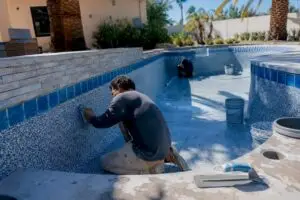
A qualified inspection covers the bond beam condition, the mortar bed underneath the coping, moisture trapped behind the coping face, and the condition of adjacent tile and shell surfaces.
Cost ranges vary widely by region and scope, but repointing a joint costs far less per linear foot than re-bedding a section, and re-bedding costs far less than full replacement with bond-beam reconstruction. Timelines follow the same pattern: a patch job might take an afternoon, while bond-beam work can take days. When you’re comparing estimates, ask each contractor exactly what they inspected, whether they tested for hollow sections across the full perimeter, and whether their quote includes bond-beam repair if it turns out to be needed.
A Pattern We See Often in the Field
A homeowner notices one loose coping piece near the deep end and waits a season to deal with it “since it’s just cosmetic.” By the time a contractor gets out there, three more sections have gone hollow and water has already reached the bond beam. The fix that would have cost a few hundred dollars in re-bedding now requires a multi-section bond-beam repair.
That pattern repeats more than homeowners expect. Wefixuglypools has walked enough Phoenix-area pool decks to know the difference between a cosmetic chip and an early warning sign, and catching it early is almost always the cheaper path.
Why Most Coping Advice Undersells the Urgency
Most articles on this topic treat coping damage as a cosmetic nuisance, something to fix whenever the budget allows. That framing gets the risk backward. Coping is the last line of defense between your deck and your bond beam, and every month you wait after a hollow-tap test comes back bad, the repair scope grows.
The conventional advice to “keep an eye on it” also assumes homeowners know what to look for, which most don’t until a piece actually cracks or shifts underfoot. A hollow-tap test takes five minutes and costs nothing, yet almost nobody does it as routine maintenance the way they’d check a smoke detector battery.
If there’s one thing worth prioritizing over everything else in this article, it’s this: treat the tap test as an annual habit, not a response to visible damage. The homeowners who catch coping failure early are the ones who went looking for it before it announced itself with a crack in the deck.
Fix Coping Damage Before It Reaches the Bond Beam
Wefixuglypools is the alternative to a patch-and-hope approach for coping damage in the Greater Phoenix area: instead of guessing whether that hollow section is cosmetic or structural, you get a direct inspection of the bond beam, mortar bed, and tile condition before any work starts.
With a decade of experience and hundreds of pool transformations across the Phoenix area, Wefixuglypools has seen every version of the pattern described above, from a single loose piece to full bond-beam reconstruction. If your coping is failing a tap test or showing efflorescence, the smart move is a proper inspection now rather than a bigger bill later. Get an expert pool repair evaluation or, if the damage has spread far enough to warrant a fuller renovation, explore pool remodeling and restoration options to see what a complete fix looks like.
Frequently Asked Questions
What does pool coping deterioration actually mean?
Pool coping deterioration explained simply: it’s the progressive breakdown of the capstone material and mortar bond at the pool’s edge, usually triggered by water intrusion, ground movement, or material fatigue from freeze-thaw and salt exposure.
Can I repair pool coping myself?
Cosmetic issues like resealing a clean joint or patching a small surface chip are reasonable DIY jobs. Anything involving hollow sections, visible movement, or water reaching the bond beam needs a professional.
How much does pool coping replacement cost?
Costs scale with scope: repointing a joint costs the least per linear foot, re-bedding individual sections costs more, and full replacement with bond-beam work costs the most. Get multiple estimates and ask what each inspection actually covered.
How often should I inspect my pool coping?
Twice a year is a reasonable baseline, once in spring and once in fall, with a hollow-tap test and a visual walk of the entire perimeter each time.
Does saltwater chlorination make coping deteriorate faster?
Yes. Salt drawn into porous coping through capillary action crystallizes as water evaporates, and that crystal growth accelerates spalling beyond what plain chlorine exposure causes.
Sources
- How much salt do you add? – Hayward blog
- Pool Coping: What It Is, Types, and Replacement Cost Guide — Larry’s Pool