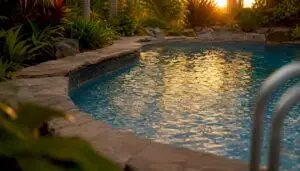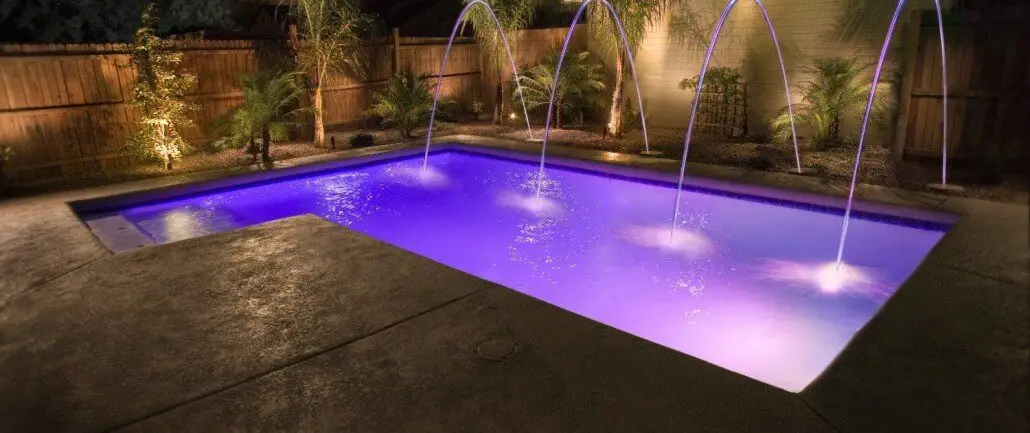
Pool lighting design options are the combination of fixture types, placement strategies, and control systems that make a swimming pool safe and visually compelling after dark. The right setup does more than illuminate water. It defines the entire mood of your backyard. Modern systems from brands like Pentair, Hayward, and Jandy give homeowners more control than ever, with LED technology, fiber optic accents, and smart home integration all available at different price points. Whether you are planning a new build or upgrading an existing pool, understanding your options before you commit saves money and prevents costly mistakes.
What are the main pool lighting design options?
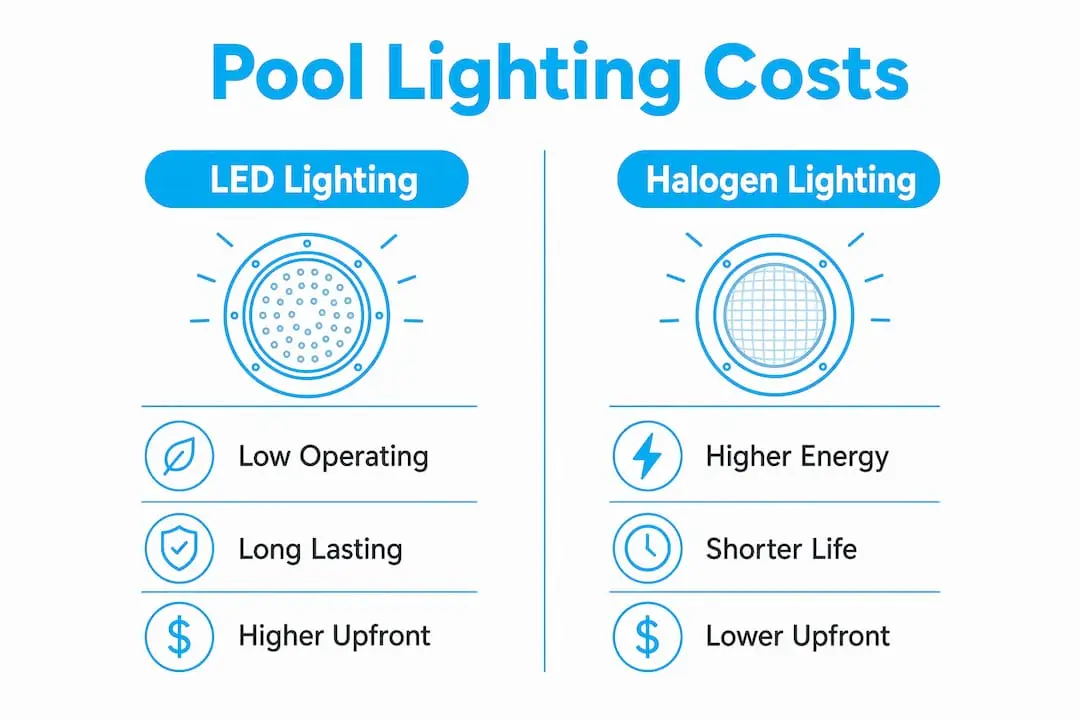
LED lights are the dominant choice in pool illumination today, and for good reason. They are 90% more energy efficient than halogen bulbs and last 10–15 years under normal use. That lifespan advantage alone makes them the default recommendation for any new installation or retrofit.
Beyond standard LED fixtures, four main categories cover most residential applications:
- In-wall LED fixtures (Pentair IntelliBrite, Hayward ColorLogic, Jandy WaterColors): These mount in the pool wall niche and provide the brightest, most even underwater coverage. They are the go-to for full pool illumination.
- LED strip lighting: Ideal for vinyl-liner and above-ground pools where wall niches do not exist. Strip light installations run $200–$1,000 depending on length and waterproofing grade.
- Fiber optic systems: The electrical components stay completely out of the water, making them the safest accent option available. Fiber optic systems cost $400–$1,200 but produce lower lumen output than LED fixtures, so they work best for perimeter glow and feature accents rather than primary pool lighting.
- Floating LED orbs: Battery-powered and fully portable, these cost $20–$100 each and work well for parties or temporary setups. They add no permanent value but require zero installation.
Pro Tip: If you are choosing between fiber optic and LED for a water feature accent, go fiber optic. The zero-voltage underwater profile is a genuine safety advantage, not just a marketing claim.
The energy numbers tell a clear story. LEDs produce 80–120 lumens per watt. Incandescent bulbs produce 12–17 lumens per watt. That gap means you get the same brightness at a fraction of the operating cost, and you replace the fixture far less often.
How do you design an effective pool lighting layout?
The most effective pool lighting layouts use three layers working together: ambient, task, and accent. This approach, used by professional designers at firms like RPD Florida, prevents the flat, overlit look that makes pools feel more like parking lots than backyard retreats.
Here is how each layer functions:
- Ambient lighting covers the water itself. In-wall LED fixtures placed at regular intervals along the pool walls provide the base layer. For a standard rectangular pool, two to four fixtures spaced evenly give full coverage without dark spots.
- Task lighting targets functional areas. Steps, entry points, spa controls, and shallow-end markers all need direct illumination for safety. These fixtures are smaller and more focused than ambient units.
- Accent lighting handles the details. Waterfalls, fountains, palm trees, and architectural features around the deck all benefit from directed spotlights or uplights. Accent lighting prevents a flat appearance and creates the depth that makes a pool look professionally designed.
Color temperature is a decision most homeowners overlook. Warm white (2700–3000K) creates a relaxed, resort-style atmosphere. Cool white (5000–6500K) reads as modern and crisp, which suits geometric pools and contemporary architecture. Neither is wrong. The choice depends on how you use the space and what your home’s exterior style calls for.
Lights mounted opposite your main viewing angle minimize glare and maximize water reflection. If you sit on a patio facing north, your fixtures should be on the north wall pointing south.
Pro Tip: Sketch your pool shape and mark where you typically sit or entertain. Place fixtures on the far side of those positions. You will see the water glow instead of staring into a light source.
Lighting placement opposite primary viewing points is one of the most consistently overlooked principles in residential pool design. Getting it right costs nothing extra. Getting it wrong means glare every time you use the pool at night.

What do pool lighting options actually cost?
LED pool lighting costs vary widely based on fixture type, quantity, and whether you are retrofitting an existing pool or building new. Here is a straightforward breakdown:
| Fixture Type | Typical Cost Range | Best Use Case |
|---|---|---|
| In-wall LED (single color) | $150–$400 per fixture | Primary pool illumination |
| In-wall LED (color-changing) | $250–$600 per fixture | Full ambiance control |
| LED strip lighting | $200–$1,000 total | Vinyl or above-ground pools |
| Fiber optic system | $400–$1,200 total | Feature accents, perimeter glow |
| Floating LED orbs | $20–$100 each | Temporary or party use |
Color-changing LED upgrades cost $100–$200 more than white-only models. That premium buys you preset modes like party and romantic settings, remote control, and smartphone app integration. For most homeowners who entertain regularly, the upgrade pays for itself in versatility.
Operating costs favor LED by a significant margin. A 100-watt halogen fixture running four hours per night costs roughly $58 per year in electricity. A comparable LED fixture drawing 18 watts costs around $10 per year. Multiply that across four fixtures over ten years and the savings are substantial.
Retrofit projects carry one hidden cost that surprises homeowners: mismatched form factors. Retrofitting LED fixtures requires matching the new fixture to the existing niche dimensions. If the form factor does not match, you may need to drain the pool and rewire, which adds hundreds of dollars to the project. Always confirm niche size before ordering fixtures.
What safety and installation practices should homeowners know?
Safety is the primary reason experts recommend upgrading older halogen systems to modern 12V LED lighting. High-voltage halogen systems carry real electrocution risk. Low-voltage LED systems reduce that risk dramatically. This is not a minor upgrade. It is a fundamental improvement in how safe your pool is to use after dark.
Beyond voltage, these practices protect your investment and your family:
- Inspect lens gaskets annually. Most premature light failures trace back to compromised lens gaskets that allow water into the fixture housing. A $5 gasket replacement prevents a $400 fixture replacement.
- Size your transformer correctly. Size the transformer at 130% of total lamp wattage to handle thermal stress and prevent premature failure. Undersized transformers are a common cause of flickering and shortened fixture life.
- Plan lighting during construction or remodel. Integrating lighting during a remodel is far less expensive than adding it afterward. Conduit runs and niche placements cost a fraction of what they cost as add-ons.
- Use the existing cord as a pull line during retrofits. Professional installers thread the new fixture cord through the conduit by attaching it to the old cord before pulling. This avoids opening walls or draining the pool unnecessarily.
- Never mix fixture brands across a single lighting zone. Pentair, Hayward, and Jandy systems use different synchronization protocols. Mixing brands in one zone means you cannot run color shows or preset modes across all fixtures simultaneously.
Pro Tip: Ask your installer to label every fixture circuit at the breaker panel during installation. When a fixture fails five years later, you will know exactly which breaker controls it without guessing.
How can creative lighting styles enhance your pool?
Creative pool lighting goes well beyond a single white underwater fixture. The most visually impressive residential pools use multiple light sources working together to create depth, color, and movement.
Color-changing LED systems from Pentair (IntelliBrite 5G), Hayward (ColorLogic 4.0), and Jandy (WaterColors LED) all offer preset lighting modes and smartphone control. You can shift from a calm blue for a quiet evening swim to a vibrant multi-color sequence for a pool party, all from your phone. These systems also integrate with platforms like Amazon Alexa and Google Home, so lighting scenes can trigger automatically at sunset or as part of a broader outdoor entertainment routine.
Accent lighting on water features like waterfalls and fountains creates some of the most dramatic effects available in residential pool design. A simple sheer descent waterfall lit from below with a color-changing LED becomes a focal point visible from inside the house. The water carries and diffuses the light in ways that no static fixture can replicate.
Floating LED orbs add a playful, low-commitment option for homeowners who want flexibility. They require no installation, no wiring, and no permits. Drop them in for a party and store them afterward. They will not replace a properly designed fixed system, but they complement one well.
Programming lighting scenes for specific occasions is an underused feature of most smart LED systems. Most Pentair and Hayward controllers let you save custom scenes, so you can recall the exact color and brightness combination you used for last summer’s party without adjusting anything manually. Pairing this with pool landscaping ideas that use uplighting on surrounding palms or garden beds creates a cohesive outdoor environment rather than an isolated lit pool.
Key takeaways
The most effective pool lighting combines layered LED fixtures, strategic placement opposite viewing angles, and smart controls to deliver both safety and ambiance.
| Point | Details |
|---|---|
| LED dominates for efficiency | LEDs last 10–15 years and use 90% less energy than halogen alternatives. |
| Layer your lighting | Use ambient, task, and accent layers together to avoid flat, one-dimensional results. |
| Placement determines glare | Mount fixtures opposite your main viewing angle to maximize reflection and minimize eye strain. |
| Match form factors on retrofits | Confirm niche dimensions before ordering LED replacements to avoid costly rewiring. |
| Safety starts at 12V | Low-voltage LED systems reduce electrocution risk and should replace any remaining halogen fixtures. |
Why i think most homeowners get pool lighting wrong
I have seen hundreds of pool projects across the Greater Phoenix area, and the single most common mistake is treating lighting as the last line item on the budget. Homeowners spend months selecting tile, coping, and water features, then pick whatever LED fixture the contractor has in stock. The result is a pool that looks fine in photos and flat in person.
The second mistake is ignoring color temperature entirely. Warm white and cool white create completely different atmospheres. A warm-white system in a modern geometric pool feels dated. A cool-white system in a lagoon-style pool with natural stone feels clinical. These are not subtle differences. They are the difference between a backyard you want to spend time in and one that just exists.
The third mistake is skipping accent lighting to save money. Accent lighting on a waterfall or a fire feature is not a luxury. It is what separates a pool that looks designed from one that looks installed. The cost difference between a basic setup and a properly accented one is often $500–$1,000. Over a ten-year ownership period, that is a rounding error compared to the enjoyment it adds.
My honest recommendation: treat lighting as a design element from day one, not a finish detail. Decide on your fixture layout before the concrete is poured. Plan your conduit runs. Choose your color temperature based on how you actually use the space. And invest in at least one quality brand system with smart controls. You will use those controls more than you expect.
— Brian
Ready to transform your pool with the right lighting?
Wefixuglypools has spent over a decade transforming outdated and unsafe pools across the Greater Phoenix area into spaces homeowners are proud to use every night. Lighting is one of the most impactful upgrades in any pool remodel, and getting it right requires more than swapping fixtures.
The Wefixuglypools team designs custom pool lighting solutions tailored to your pool’s shape, your outdoor space, and how you actually use your backyard. From full LED retrofits to new builds with layered lighting systems, every project is planned with both safety and aesthetics in mind. If your pool is underlit, outdated, or just not what you imagined, explore custom pool options and see what a properly designed lighting plan can do.
FAQ
What is the best type of pool lighting for most homeowners?
In-wall LED fixtures from brands like Pentair, Hayward, or Jandy are the best choice for most homeowners. They offer the longest lifespan, lowest operating cost, and the widest range of color and control options.
How many pool lights does a standard pool need?
Most standard residential pools need two to four in-wall fixtures for full ambient coverage. Larger pools, irregular shapes, or pools with water features may need additional accent fixtures to eliminate dark zones.
Are color-changing LED pool lights worth the extra cost?
Color-changing LED systems cost $100–$200 more than white-only models but add preset modes, app control, and smart home integration. For homeowners who entertain regularly, the added versatility justifies the price difference.
How do i know if my pool lighting is a safety risk?
Older halogen or incandescent systems operating at high voltage are a genuine electrocution risk. Upgrading to a 12V LED system is the most direct way to reduce that risk. Have a licensed pool electrician inspect any fixture older than ten years.
Can i add pool lighting to an existing pool without draining it?
Yes, in most cases. Retrofitting LED fixtures into existing niches typically does not require draining the pool, provided the new fixture matches the niche dimensions. A professional installer can use the existing cord as a pull line to thread the new fixture through the conduit.