A pool spa combo is defined as an integrated aquatic system that combines a swimming pool and a heated spa into a single, connected structure. The industry term for this setup is a “combination pool and spa,” though homeowners commonly call it a pool spa combo or swim spa combo. This design gives you the best of both worlds: refreshing laps in the pool and warm, therapeutic soaking in the spa, all within one backyard footprint. Shared plumbing, filtration, and heating systems make the setup more efficient than building two separate water features. For families who want year-round outdoor living without doubling their construction budget, this is one of the most practical upgrades available.
What is a pool spa combo and how does it work?
A pool spa combo operates in two distinct modes: pool mode for swimming and spa mode for heated soaking. Switching between them is handled by a valve and pump system that redirects water flow and adjusts circulation rates. The mechanics are straightforward once you understand the role of each component.
In pool mode, water circulates at a lower flow rate through the main filtration system. The heater maintains a comfortable swimming temperature, typically in the mid-80s°F for most Arizona backyards. Jets in the spa zone stay inactive, and the spa functions as a connected water feature rather than a therapeutic station.
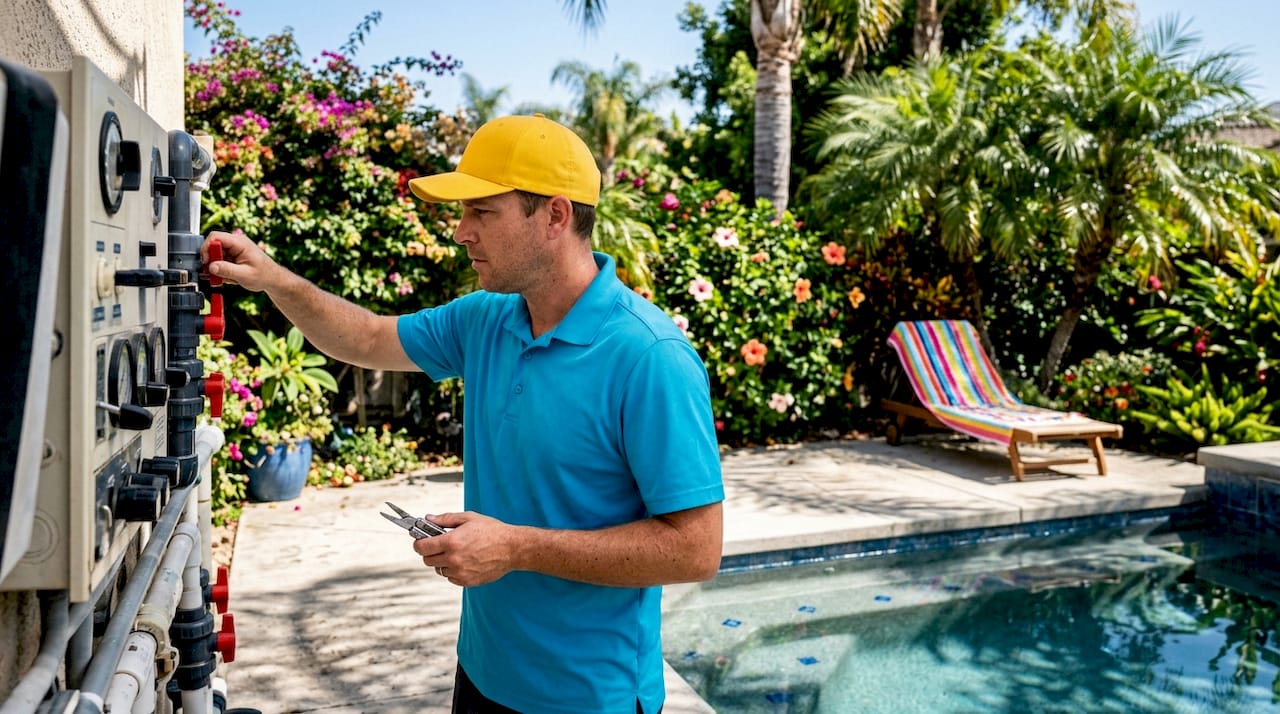
Spa mode changes everything. The spa temperature rises to between 96°F and 104°F, which is the therapeutic range recommended for hydrotherapy. That temperature shift requires the heater to work harder and the pump to redirect flow specifically through the spa jets. A dedicated valve closes off the pool circulation loop so the heater focuses its energy on the smaller spa volume, reaching target temperature much faster than heating the full pool.
The key advantage of shared equipment is simplicity. Shared filtration and heating systems reduce both installation cost and long-term maintenance complexity. The catch is that the main pump must be sized correctly to handle the resistance created by spa jets. An undersized pump will struggle in spa mode, producing weak jet pressure and slower heating.
- Valves redirect water between pool and spa circuits
- The pump adjusts flow rate based on the active mode
- The heater focuses on the spa volume during spa mode for faster temperature gain
- Filtration runs continuously through both modes, keeping water clean
Pro Tip: Ask your pool builder to specify the pump’s horsepower rating for spa mode separately from pool mode. A pump that handles both without strain is the single most important equipment decision in a combo build.
What design options are available for a pool spa combo?
Three main configurations define how homeowners design a pool with an attached spa. Each has a different visual impact, thermal behavior, and price point.
Attached spillover spa
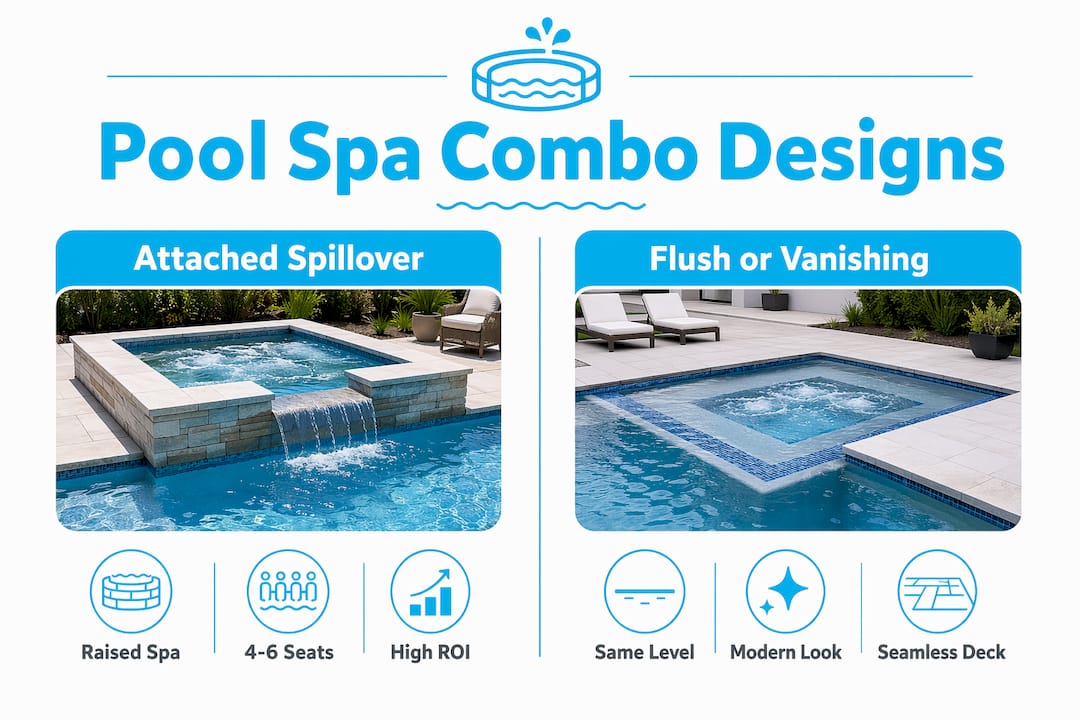
The attached spillover spa is the most popular choice. It sits raised 12 to 24 inches above the pool, seats 4 to 6 adults, and covers 50 to 90 square feet of surface area. Water cascades from the spa over a spillway into the pool below, creating a water feature that looks and sounds impressive. The elevated placement creates a natural focal point in the backyard and adds a visual layer that flat pool designs simply cannot match.
A raised spillover spa delivers the highest return on investment among pool water features. Homeowners get both the aesthetic benefit of a waterfall effect and the functional benefit of a dedicated soaking zone. The acoustic element, the sound of moving water, adds to the outdoor ambiance without any additional cost.
Flush or vanishing-edge spa
A flush spa sits at the same level as the pool deck, with no raised wall between the two zones. This design suits modern and minimalist backyards where clean lines matter more than visual drama. The transition between pool and spa is subtle, often marked only by a change in tile or coping material. Flush designs work especially well in smaller backyards where a raised structure would feel cramped.
Separate but adjacent spa
Configurations range from fully integrated shells to separate but adjacent zones. A separate but adjacent spa shares the same equipment pad but sits as a physically distinct shell next to the pool. This setup offers thermal independence, meaning you can heat the spa to full temperature without affecting the pool water at all. It also gives you more flexibility in placement, which matters when your backyard layout does not naturally support an attached design.
| Design type | Visual impact | Thermal independence | Best for |
|---|---|---|---|
| Attached spillover | High | Low | Focal-point backyards |
| Flush spa | Moderate | Low | Modern, minimalist spaces |
| Separate adjacent | Moderate | High | Flexible layouts, larger lots |
Pro Tip: If your family uses the spa and pool at the same time regularly, a separate adjacent design is worth the extra plumbing cost. Thermal independence means the kids can swim in a cool pool while adults soak in a fully heated spa simultaneously.
What should you know about pool and spa installation?
Pool and spa installation timelines depend on whether you are building new or adding a spa to an existing pool. The numbers matter because most homeowners underestimate how long the process takes.
-
New combo build: Adding a spa to a new pool construction adds 2 to 3 weeks to the overall project timeline. Plan for this from the start so the schedule does not catch you off guard.
-
Standalone spa installation: A standalone spa built from scratch typically takes 6 to 10 weeks from permit to water. That range accounts for permit processing, excavation, shotcrete, curing, plumbing, and equipment installation.
-
Adding a spa to an existing pool: Retrofitting a spa onto an existing pool takes 4 to 6 weeks and often requires equipment upgrades. Your existing heater or pump may not have the capacity to handle spa jets.
-
Shotcrete curing: Shotcrete requires 28 days to cure fully before the next construction phase can begin. This is a fixed, non-negotiable timeline. No amount of scheduling pressure shortens it.
-
Equipment assessment: Adding a spa to an existing pool may require upgrading the pool heater or pump to meet the flow and heating demands of hydrotherapy jets. Get an equipment audit before signing a contract so upgrade costs are included in your budget from day one.
One detail most homeowners miss is the plumbing complexity that comes with integrating spa jets into an existing pool system. The pipe sizing, valve placement, and return line configuration all affect jet performance. A builder who specializes in combination systems will size these correctly the first time, saving you costly rework later.
What are the benefits of a pool spa combo?
A pool spa combo delivers advantages that neither a standalone pool nor a standalone spa can match on its own. The benefits stack across health, lifestyle, and property value.
- Year-round usability. The heated spa extends your outdoor season well beyond summer. In Phoenix, where winters are mild, a spa-equipped pool becomes a 12-month amenity rather than a 6-month one.
- Energy efficiency. Shared filtration and heating systems mean one equipment pad, one chemical program, and one maintenance routine instead of two. The operational savings are real and ongoing.
- Hydrotherapy and wellness. Regular spa use reduces cortisol levels and supports improved blood circulation and muscle relaxation. These are measurable physical benefits, not marketing claims.
- Stress relief. The same research shows that spa use supports mental wellness by lowering stress hormones. A 20-minute soak after work produces a physiological response similar to light exercise in terms of relaxation.
- Aesthetic and acoustic value. A spillover spa adds moving water to your backyard. That sound and visual motion elevate the entire outdoor space, making it feel more like a resort and less like a suburban yard.
- Property value. A well-designed custom pool feature like an attached spa is one of the few outdoor upgrades that consistently adds appraised value in Arizona real estate markets.
The wellness angle is worth taking seriously. Hydrotherapy has been used in clinical settings for decades to treat muscle soreness, joint stiffness, and sleep disorders. Having that tool available in your own backyard removes the barrier of access entirely.
Key takeaways
A pool spa combo is the most efficient way to add both swimming and therapeutic soaking to a single backyard, with shared systems reducing cost and maintenance compared to two separate installations.
| Point | Details |
|---|---|
| Dual-mode operation | Valves and pumps switch the system between pool mode and spa mode at 96°F–104°F. |
| Design configurations | Spillover, flush, and separate adjacent designs each suit different backyard layouts and lifestyle needs. |
| Installation timelines | New combo builds add 2–3 weeks; shotcrete curing alone requires a fixed 28-day window. |
| Equipment sizing matters | The main pump must handle spa jet resistance or performance will suffer in both modes. |
| Wellness and value | Regular spa use reduces cortisol and improves circulation, while the feature adds long-term property value. |
Why the design decision matters more than most homeowners realize
I have seen homeowners spend weeks choosing tile colors and almost no time thinking about pump sizing or spa placement. That is backwards. The tile is cosmetic. The pump and the spa’s position relative to the pool determine whether the system actually works the way you imagined it would.
The most common regret I hear is from homeowners who chose a flush spa because it looked cleaner in the design rendering, then realized they wanted the sound and visual drama of a spillover. The backyard design decision is permanent in a way that equipment upgrades are not. Get the layout right first.
The second thing I would tell any homeowner is to ask specifically about the shotcrete curing window before you set a completion date. Twenty-eight days is not negotiable, and builders who promise faster timelines are either skipping steps or planning to rush the finish work after the cure. Neither outcome is good for a structure you expect to last 20 or 30 years.
Finally, if you are adding a spa to an existing pool, budget for equipment upgrades before you start. The heater and pump that were sized for a pool alone almost never have the headroom to handle spa jets without strain. A professional pool repair assessment before construction starts will tell you exactly what needs to be replaced and what can stay.
— Brian
Ready to add a spa to your pool?
Wefixuglypools has spent over a decade building and remodeling pools across the Greater Phoenix area, including hundreds of pool spa combo projects. Whether you want a raised spillover spa that becomes the centerpiece of your backyard or a flush design that fits a modern aesthetic, the team handles design, plumbing, and equipment integration from start to finish.
If your current pool feels dated or underperforms, a spa addition is one of the most effective ways to upgrade it. Wefixuglypools specializes in pool remodeling and restoration that includes full spa integration, equipment upgrades, and custom water features. Homeowners in Scottsdale, Surprise, and across the Phoenix metro can also explore local remodeling options tailored to their neighborhood and backyard size. Contact Wefixuglypools to schedule a consultation and get a clear plan for your project.
FAQ
What is a pool spa combo?
A pool spa combo is an integrated aquatic system that connects a swimming pool and a heated spa within a single structure, sharing filtration, heating, and plumbing equipment. It operates in two modes: pool mode for swimming and spa mode with water heated to 96°F–104°F.
How long does pool and spa installation take?
Adding a spa to a new pool build takes 2 to 3 additional weeks, while a standalone spa installation runs 6 to 10 weeks. Retrofitting a spa onto an existing pool typically takes 4 to 6 weeks, depending on equipment upgrades needed.
What are the main benefits of a pool spa combo?
The primary benefits include year-round usability, shared equipment efficiency, and hydrotherapy advantages such as reduced cortisol, improved circulation, and muscle relaxation. The feature also adds aesthetic value and long-term property value.
Can I add a spa to my existing pool?
Yes, but your existing pump and heater may need to be upgraded to handle the flow and heating demands of spa jets. An equipment assessment before construction starts is the best way to avoid budget surprises mid-project.
What is the most popular pool spa combo design?
The attached spillover spa is the most popular configuration. It sits 12 to 24 inches above the pool, seats 4 to 6 adults, and creates a waterfall effect that adds both visual and acoustic appeal to the backyard.