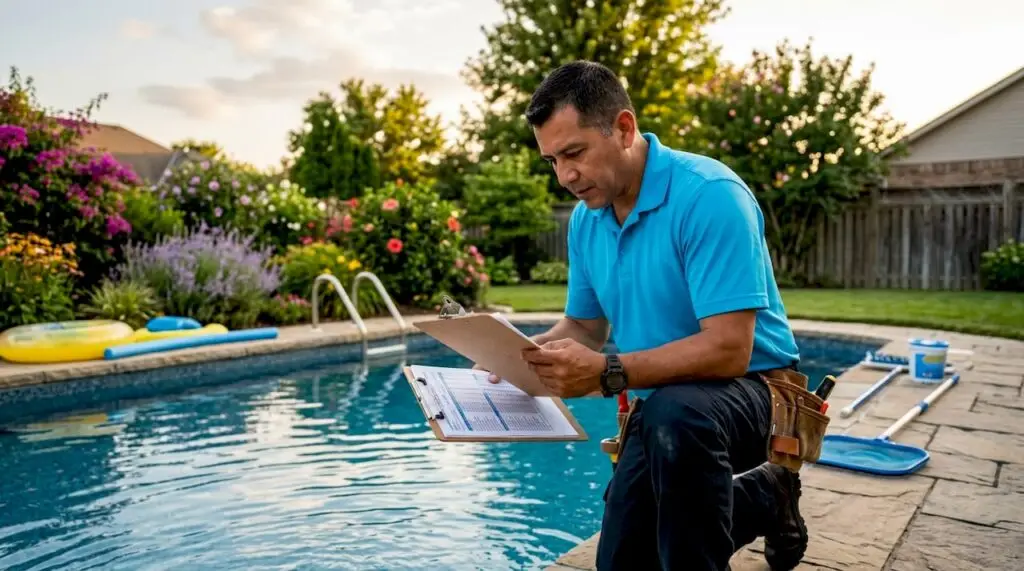
A pool service report is a professional record documenting the work performed, water chemistry results, and equipment condition during a swimming pool maintenance visit. Think of it as the written proof that your pool received proper care, even when you were not home to watch. Every homeowner with a service contract deserves one after each visit. Without this pool service documentation, you have no way to verify what was done, catch developing problems early, or protect yourself if a dispute arises.
What is a pool service report and what does it include?
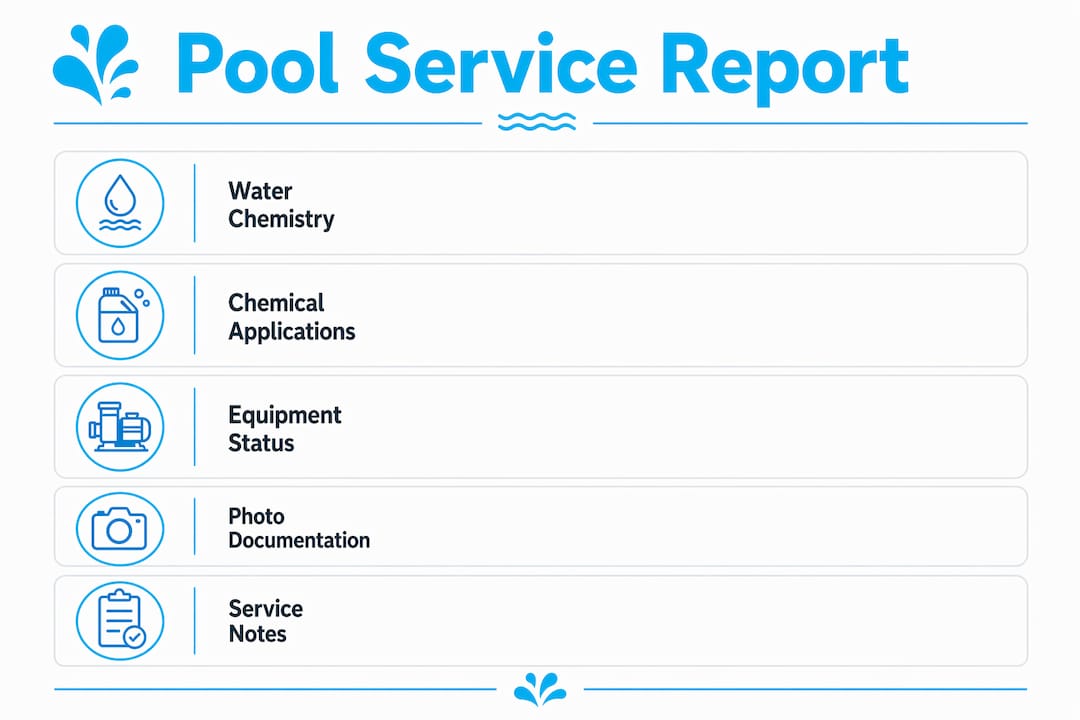
A standard pool service report is the industry term for what many homeowners loosely call a “pool maintenance summary.” A professional visit typically lasts 15–40 minutes and covers a 22-point checklist. That checklist becomes the backbone of the report you receive.
Water chemistry readings
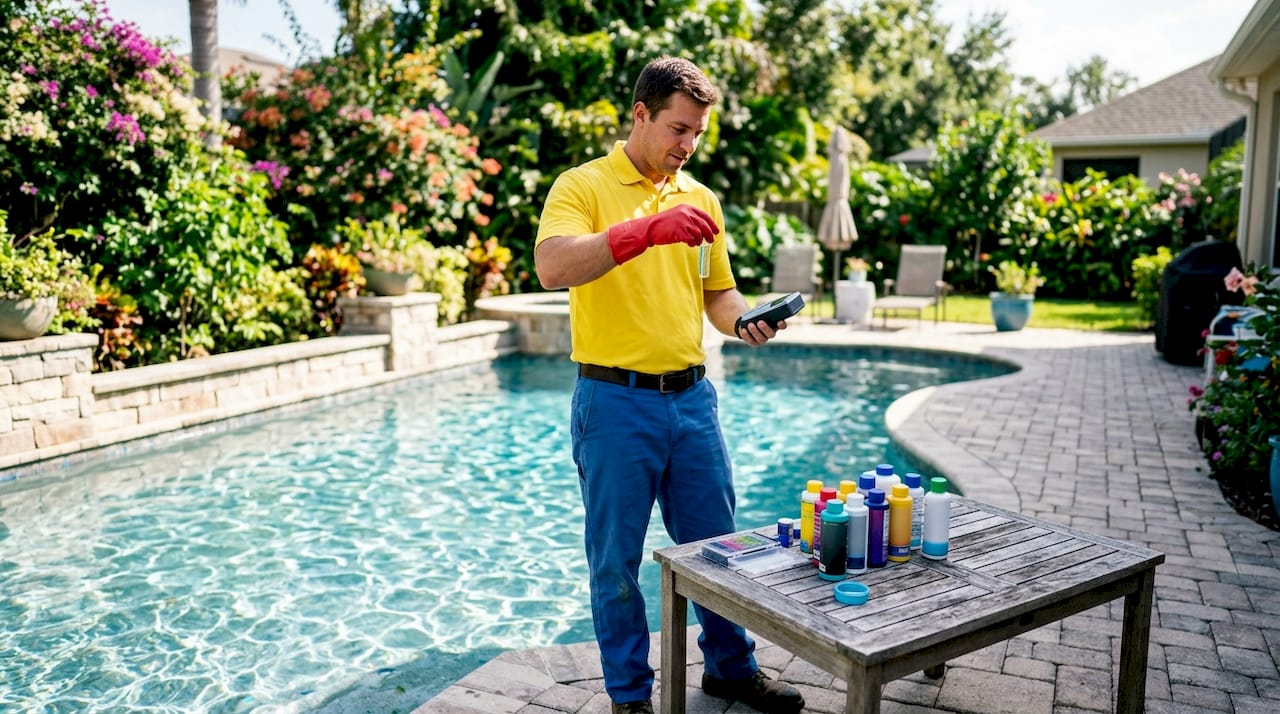
Water chemistry is the most critical section of any pool report. A thorough report records all of the following values, along with their target ranges:
- pH: Target 7.4–7.6. Values outside this range cause skin irritation and reduce sanitizer effectiveness.
- Free chlorine: Target 1–3 ppm. Low chlorine allows bacteria and algae to grow.
- Total alkalinity: Target 80–120 ppm. Alkalinity stabilizes pH and prevents rapid swings.
- Calcium hardness: Target 200–400 ppm. Low calcium causes plaster erosion; high calcium causes scaling.
- Cyanuric acid (stabilizer): Target 30–50 ppm. This protects chlorine from UV breakdown in outdoor pools.
- Salt level (salt pools): Target 2,700–3,400 ppm. Correct salt levels keep the chlorine generator running properly.
- Phosphates: Target below 100 ppb. High phosphates feed algae growth.
Each reading tells a specific story about your pool’s health. A technician who records all seven values gives you a complete picture, not just a partial one.
Chemicals applied and physical cleaning steps
Reports document every chemical added, including the product name, dosage, and reason for application. This matters because over-dosing chemicals can damage surfaces and equipment. The report also logs physical cleaning steps: skimming the surface, brushing walls and steps, vacuuming the floor, and emptying baskets. Timestamp and technician name appear on every completed report for full accountability.
Equipment status and photo documentation
A complete report notes the condition of the pump, filter, heater, and automatic cleaner. Technicians flag anything that looks worn, leaking, or underperforming. Photo documentation is the most underused feature in pool service reporting. Photos show the pool’s condition before and after the visit, giving you visual proof of the work done and a clear record of any issues that need attention.
Pro Tip: Ask your service provider to include at least two photos per visit: one of the pool water clarity and one of the equipment area. This small request significantly improves accountability.
Why does accurate pool service documentation matter?
A pool service report is a legal document that protects both the homeowner and the service provider. Objective data, precise chemical levels, and clear equipment notes create a defensible record if a dispute ever reaches an insurance company or a court. That protection works in both directions.
“The service report is the visible artifact of invisible work, documenting the usually unseen service visit and helping reduce misunderstandings with clients.” — Pool Service Client Reports, Florida’s Best Pools
The importance of pool service reports goes well beyond legal protection. Here is what detailed documentation delivers for you as a homeowner:
- Closes the perception gap. Most homeowners are not home during service. A report confirms the visit happened and shows exactly what was done.
- Justifies recurring fees. High-quality reports reduce callbacks and help you see the value in your monthly service fee.
- Supports warranty and repair claims. A documented history of water chemistry and equipment checks is often required when filing warranty claims or scheduling major repairs.
- Enables regulatory compliance. Regulatory-grade pool reports must follow exact data fields and retention rules for liability and compliance validity. Informal notes do not meet this standard.
- Builds long-term trust. Consistent, factual reporting over months and years tells you whether your service provider is doing the same quality work every visit or cutting corners over time.
Skipping detailed reports or giving vague notes directly correlates with lower customer trust and more costly return visits. A provider who resists detailed reporting is a provider worth questioning.
How digital reporting is changing pool maintenance communication
Automated digital service reporting delivered by email or client portals is the industry standard in 2026. Digital delivery eliminates the perception gap by providing transparent proof of work and clear chemical adjustments within hours of the visit. Paper notes left on a door or verbal updates over the phone no longer meet homeowner expectations.
Modern digital reports typically include:
- A service summary with date, time, and technician name
- Full water chemistry readings with color-coded pass/fail indicators
- Photos of the pool and equipment
- Notes on any issues flagged during the visit
- Parts used or chemicals added, with quantities
- A portal link giving you access to your full service history
Customers who receive clear, data-backed reports showing water chemistry trends are more likely to maintain their service contracts. The reason is simple: transparency builds confidence. When you can log into a portal and see six months of pH readings, you know your provider is doing the work.
Pro Tip: If your current provider only sends a text message or leaves a paper slip, ask specifically for a digital report with chemistry readings and photos. Most professional service software supports this at no extra cost.
Digitized reports also shift pool care decisions from guesswork toward data. You can spot a pattern, such as pH consistently drifting high, and ask your technician about a root cause before it becomes a costly problem. That kind of proactive conversation only happens when you have the numbers in front of you. Learning more about professional pool maintenance helps you set the right expectations from day one.
How to read a pool service report effectively
Reading a pool service report is straightforward once you know what each section means. Use this step-by-step approach to get the most from every report you receive.
-
Check the timestamp and technician name first. Confirm the visit happened on the scheduled day and that a named technician performed the work. This is your first accountability check.
-
Review water chemistry values against target ranges. Compare each reading to the target ranges listed in the chemistry section above. Any value outside its target range should appear as a flagged item in the report. If it does not, ask your technician why.
-
Read the chemicals applied section carefully. Verify that the chemicals listed match the chemistry readings. If chlorine was low and no chlorine was added, that is a red flag worth addressing immediately.
-
Examine the equipment status notes. Look for any items marked as worn, leaking, or requiring follow-up. A pump running at reduced pressure or a filter due for a backwash should appear here with a recommended next step.
-
Study the photos. Compare the before and after images if your provider includes them. Clear water, clean walls, and empty skimmer baskets confirm the physical cleaning was completed. A photo showing green water or debris-filled baskets after a visit is a conversation starter.
-
Act on flagged recommendations promptly. Short, specific reports with photos protect technicians against claims of incomplete service. They also protect you. If a report flags a cracked fitting and you delay repair, that delay becomes your documented responsibility.
Understanding how to read a service report also helps you decide when professional service is worth the cost versus handling minor tasks yourself. The data in your reports gives you that clarity.
Key Takeaways
A pool service report is the single most important document your pool service provider gives you, and reviewing it after every visit protects your pool, your budget, and your legal standing.
| Point | Details |
|---|---|
| Core definition | A pool service report documents water chemistry, chemicals applied, equipment status, and cleaning steps from each visit. |
| Legal protection | Objective data and photos create a defensible record for insurance disputes and warranty claims. |
| Digital is standard | Email or portal delivery with photos and chemistry trends is the industry standard in 2026. |
| Reading reports | Check timestamp, chemistry values, chemicals added, equipment notes, and photos after every visit. |
| Provider quality signal | Providers who skip detailed reports or give vague notes are more likely to deliver inconsistent service. |
What I have learned from years of watching pool reports get ignored
Pool service reports are the most underused tool in residential pool care. Homeowners sign service contracts, pay monthly fees, and never once open the report that arrives in their inbox. That gap between receiving a report and actually reading it is where most pool problems quietly grow.
The best reports I have seen are concise, factual, and photo-backed. Three to five lines of clear notes plus two or three photos tell you everything you need to know. Lengthy narratives full of generic language tell you almost nothing. If a report says “pool looks good,” that is not a report. That is a placeholder.
The uncomfortable truth is that high-volume service routes push technicians to cut visit time. Routes with many stops per day often result in skipped maintenance steps and thin reports. A provider who consistently delivers detailed, photo-documented reports is almost certainly spending the full time at your pool. A provider whose reports are always identical, vague, and photo-free probably is not.
My advice to every homeowner is this: request a sample report before you sign a service contract. If the provider cannot show you a detailed example with chemistry readings and photos, keep looking. The report is your window into work you cannot see. Protect that window.
— Brian
Wefixuglypools brings transparency to every pool service visit
At Wefixuglypools, we believe every homeowner deserves clear, documented proof of the work performed on their pool. Our team serves homeowners across the Greater Phoenix area, including Surprise and Scottsdale, with professional pool remodeling, repair, and maintenance services built on honest communication.
Whether your pool needs a full remodel, a targeted repair, or a fresh maintenance plan, our team documents every step with the detail you deserve. We have completed hundreds of pool transformations across Phoenix over the past decade, and our clients know exactly what was done and why. If you are ready to work with a team that treats reporting as part of the service, not an afterthought, reach out to Wefixuglypools for a consultation today.
FAQ
What is a pool service report?
A pool service report is a documented record of a pool maintenance visit, covering water chemistry readings, chemicals applied, equipment condition, physical cleaning steps, and technician details. It serves as proof of work and a maintenance history for the homeowner.
What should be included in a pool service report?
A complete report includes pH, chlorine, alkalinity, calcium hardness, cyanuric acid, and salt readings, along with chemicals added, equipment status, cleaning tasks completed, photos, and a timestamp with the technician’s name.
How often should I receive a pool service report?
You should receive a pool service report after every scheduled visit. Most professional providers deliver reports digitally by email or through a client portal within hours of the service.
Can a pool service report protect me legally?
Yes. A pool service report functions as a legal document when it uses objective data, precise chemical levels, and clear equipment notes. This documentation supports insurance claims, warranty disputes, and compliance requirements.
What does it mean if my pool report shows flagged chemistry values?
Flagged values mean one or more water chemistry readings fell outside the safe target range during the visit. Your technician should note what was added to correct the issue and recommend a follow-up if the problem requires monitoring.