Neglected pool repair priorities are defined by a single rule: restore safety and circulation before anything else. Skipping this sequence wastes chemicals, damages equipment, and leaves real hazards unaddressed. Safety and system verification come first, followed by debris removal, chemical treatment, and structural repairs. Whether your pool has turned green, lost equipment function, or sat idle for a season, the order you tackle repairs determines how fast and how cheaply you get back to swimming. Beltway Pools, PoolBurg, and Angi all confirm that chemistry and filtration repair must precede equipment and structural fixes to avoid escalating costs.
1. Why neglected pool repair priorities start with circulation
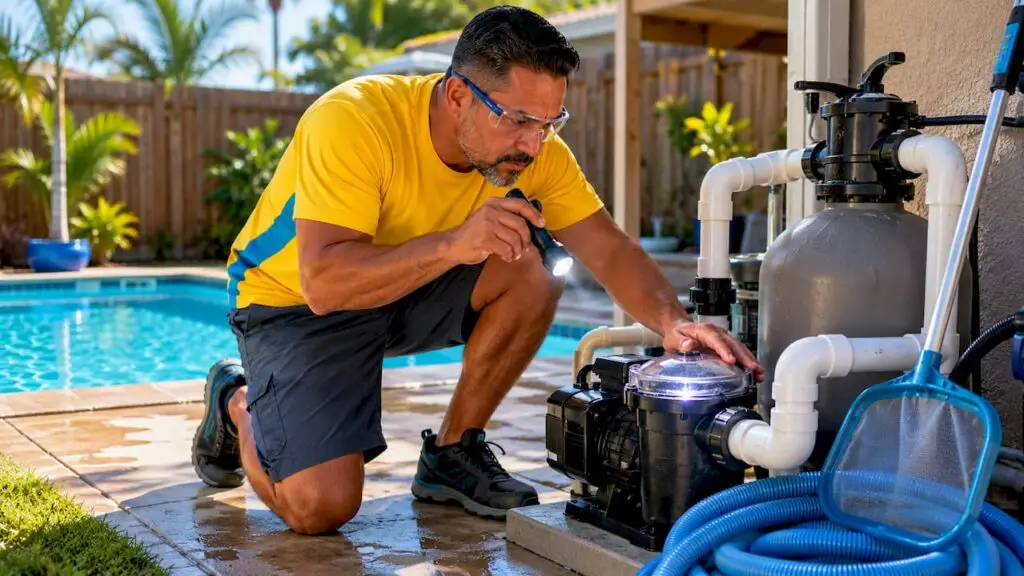
Circulation is the foundation of every repair that follows. Without a working pump, filter, and valves, chemical treatment fails and algae removal becomes impossible. You can pour in shock and clarifier all day, but if the water is not moving, none of it distributes properly.
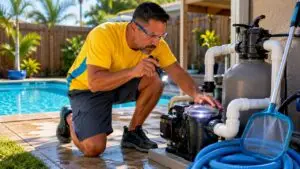
Start with a visual and operational inspection of your circulation hardware:
- Pump: Check that it primes and runs without grinding or overheating. Worn seals and clogged impellers are the most common failures.
- Filter: Inspect for cracked housings, clogged media, and broken laterals. A filter that cannot cycle water properly will collapse under the load of heavy algae treatment.
- Valves and plumbing: Look for visible leaks at unions and fittings. Even a slow drip signals pressure loss that reduces circulation efficiency.
- Water level: Confirm the water sits at mid-skimmer height. Low water causes the pump to run dry and burn out.
Treat this inspection like a troubleshooting ladder. Check water level and pump priming first, then inspect for leaks, then assess filter condition, and only then begin sanitation. Skipping steps costs you time and money.
Pro Tip: Run the pump for 30 minutes before adding any chemicals. If the water does not circulate visibly through the returns, stop and fix the pump before proceeding.
2. How to safely remove debris and prepare for treatment
Physical cleaning comes before chemical treatment, not after. Leaves, algae mats, and sediment consume chlorine rapidly. Every pound of organic debris you remove before shocking means less chemical waste and faster water clarity.
Follow this sequence:
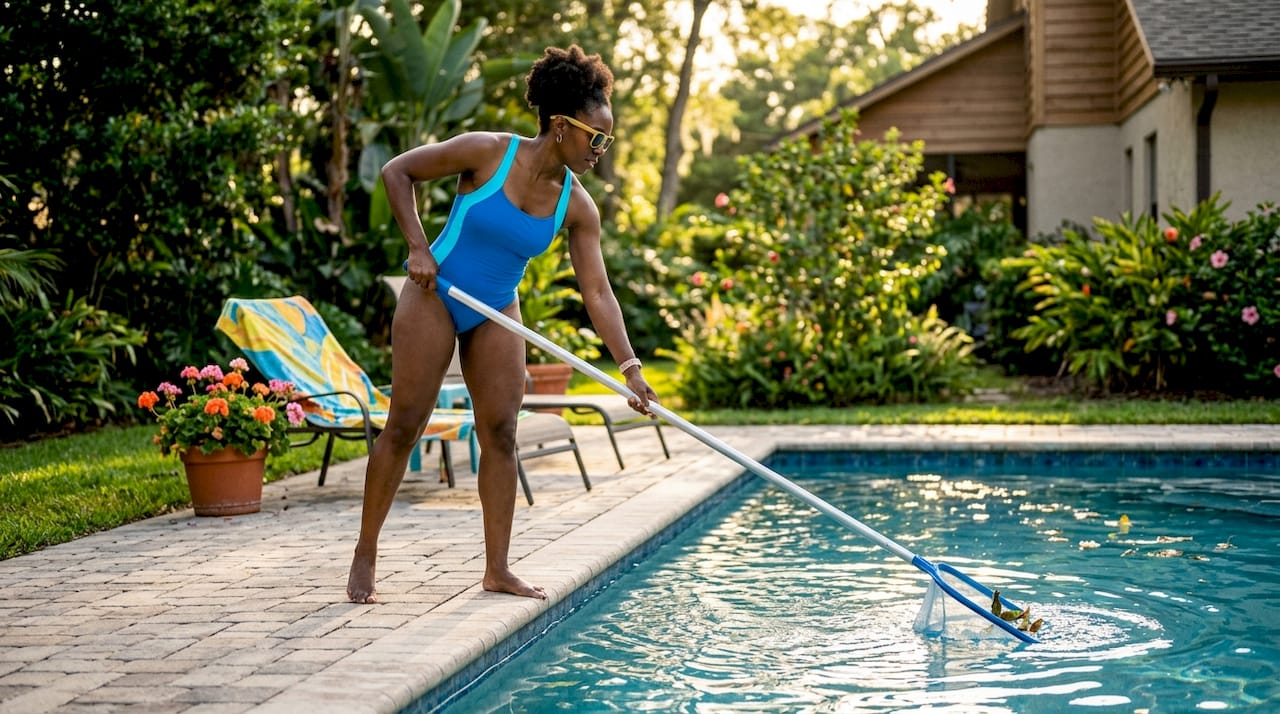
- Remove large debris first. Use a leaf rake or net to pull out leaves, branches, and visible algae clumps. Do not vacuum yet. Vacuuming heavy debris before netting it clogs the filter immediately.
- Brush all surfaces. Scrub walls, steps, and the floor to break algae loose from surfaces. Algae that stays attached resists chemical treatment.
- Vacuum to waste. Set your multiport valve to “waste” and vacuum the loosened debris directly out of the pool. This bypasses the filter and prevents clogging during the heaviest phase of cleaning.
- Address stagnant water around the pool. Mosquitoes can develop from egg to adult in roughly 5 days in as little water as a bottle cap. Drain tarps, planter saucers, and any pooled water near the deck immediately.
Pro Tip: Wear waterproof gloves and eye protection when handling heavily contaminated pool water. Green water can harbor bacteria that irritate skin and eyes.
3. Effective chemical treatment to clear green or cloudy water
Chemical treatment only works after circulation is confirmed and debris is removed. The standard professional method for algae-infested pools is the SLAM process: Shock, Level, and Maintain. You raise free chlorine to a target shock level and hold it there continuously until the water clears.
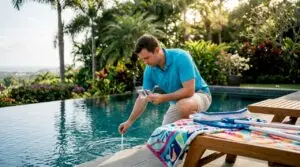
Key chemical parameters to test and balance before shocking:
- pH: Target 7.2–7.6. High pH reduces chlorine effectiveness significantly.
- Total alkalinity: Target 80–120 ppm. Alkalinity stabilizes pH and prevents rapid swings.
- Cyanuric acid (stabilizer): Target 30–50 ppm for outdoor pools. Too high and chlorine becomes ineffective.
- Free chlorine: Shock to 10 times the cyanuric acid level for SLAM treatment.
Continuous brushing and shock held at target chlorine levels while running filters clears green pools over 3–7 days, not overnight. Patience here is not optional. Homeowners who stop shocking early because the water looks better almost always see algae return within days.
| Stage | Action | Timeframe |
|---|---|---|
| Pre-treatment | Balance pH and alkalinity | Day 1 |
| Shock | Raise free chlorine to SLAM level | Day 1–2 |
| Maintain | Hold chlorine, brush twice daily | Day 2–7 |
| Verify | Test for overnight chlorine loss | Day 5–7 |
| Stabilize | Final chemistry balance check | Week 2 |
Filtration collapse after shocking is a common problem. Clean or backwash the filter every 24 hours during active treatment. A clogged filter stops the clearing process cold.
4. Equipment and structural repairs after water quality is restored
Once the water is clear, the next phase of urgent pool repairs focuses on mechanical and structural integrity. Typical homeowner pool repair costs range from $242 to $1,211 or more, depending on pool size and damage extent. Knowing what to tackle yourself versus what requires a professional saves you from that upper end of the range.
| Repair Type | DIY Possible? | Professional Required? |
|---|---|---|
| Pump seal replacement | Yes, with basic tools | No |
| Filter media replacement | Yes | No |
| Cracked deck caulking | Yes | No |
| Underground plumbing leaks | No | Yes |
| Electrical wiring or bonding | No | Yes |
| Structural crack repair | Rarely | Usually yes |
| Anti-entrapment drain covers | Yes | Recommended |
Anti-entrapment drain covers are a non-negotiable safety repair. The federal Virginia Graeme Baker (VGB) Act requires certified drain covers on all public and residential pools. Neglected pools frequently have outdated or missing covers, which create entrapment and drowning hazards.
Structural cracking, underground plumbing, and electrical repairs require professional services. Attempting these without proper training creates safety risks and often causes more expensive damage. For complex repairs, getting a professional pool inspection before starting work gives you a clear scope and prevents surprises.
Pro Tip: Caulk all expansion joints between the pool shell and deck every 2–3 years. Cracked caulking lets water infiltrate the substrate and causes deck heaving, which is far more expensive to fix than fresh caulk.
5. What to do about common pool repair issues with leaks
Leaks are among the most overlooked items on any pool maintenance checklist. A pool that loses more than a quarter inch of water per day is likely leaking, not just evaporating. The bucket test confirms this: fill a bucket to pool water level, set it on a step, and compare water loss after 24 hours.
Leak sources fall into three categories. Plumbing leaks occur at fittings, unions, and underground lines. Shell leaks appear as cracks in the plaster, tile, or fiberglass surface. Equipment pad leaks show up at pump and filter connections. Each type requires a different repair approach, and misidentifying the source wastes time and money.
For plumbing and shell leaks, pool equipment repairs by a qualified technician are the fastest path to an accurate diagnosis. Pressure testing the plumbing lines identifies underground leaks without excavation guesswork. Shell cracks visible to the eye can often be patched with hydraulic cement or epoxy, but cracks that reappear signal a structural issue requiring professional assessment.
6. How to move from emergency recovery to long-term pool maintenance
Clear water is not fully stabilized water. Reestablishing chemical balance after clearing green water takes 2–4 weeks of ongoing adjustment. Homeowners who stop testing after the water looks good almost always face a second algae outbreak within a month.
Build these habits into your routine after recovery:
- Test chemistry twice weekly for the first month after recovery. Once stable, weekly testing is sufficient.
- Clean or backwash the filter on a schedule. For cartridge filters, clean every two weeks during heavy use. For sand or DE filters, backwash when pressure rises 8–10 psi above the clean baseline.
- Brush walls and steps weekly. Algae spores settle on surfaces before they become visible in the water. Weekly brushing disrupts the cycle before it starts.
- Inspect equipment monthly. Look for drips, unusual pump noise, and pressure gauge readings outside the normal range.
- Plan a seasonal inspection. Catching worn O-rings, cracked fittings, and fading plaster early costs a fraction of what deferred repairs cost. Our pool cleaning guide covers the full maintenance rhythm in detail.
The goal is to never return to emergency recovery mode. A consistent pool maintenance checklist, followed weekly, prevents the conditions that create a neglected pool in the first place.
Key takeaways
Restoring a neglected pool requires a fixed sequence: circulation first, then cleaning, then chemistry, then structural and equipment repairs.
| Point | Details |
|---|---|
| Circulation comes first | Confirm pump, filter, and valves work before adding any chemicals. |
| Debris removal precedes shocking | Remove leaves and brush algae before chemical treatment to avoid wasting chlorine. |
| SLAM clears algae in 3–7 days | Hold shock-level chlorine continuously and brush twice daily until water clears. |
| Safety codes require drain covers | VGB Act compliance is a non-negotiable repair on any reopened pool. |
| Clear water needs 2–4 more weeks | Continue testing and adjusting chemistry after visual clarity is achieved. |
The order of operations is everything
I have seen homeowners dump hundreds of dollars of shock into a pool with a broken pump and wonder why nothing changed. The water just sat there, green and untreated, because there was no circulation to distribute the chemicals. That single mistake, skipping the circulation check, is the most expensive error in neglected pool recovery.
The repair sequence is not a suggestion. It is the difference between a pool that clears in a week and one that stays green for a month. Fix the pump first. Clean the debris second. Then shock. Then address equipment and structural issues. Every time someone reverses that order, they pay for it twice.
My other strong recommendation is to get a professional inspection early, not as a last resort. Knowing what you are dealing with before you spend money on chemicals and equipment prevents the frustration of treating symptoms while the real problem goes unaddressed. For complex repairs, the cost of a professional assessment is almost always less than the cost of a wrong guess. You can review what professional pool repair actually covers to understand where the line between DIY and pro work falls.
— Brian
Wefixuglypools can help you restore your pool the right way
Dealing with a neglected pool is stressful, especially when you are not sure where the damage ends and the repairs begin. Wefixuglypools has spent over a decade transforming unsafe, unappealing pools across the Greater Phoenix area into clean, safe, and beautiful backyard features.
Our team handles everything from equipment repairs and chemical recovery to full pool remodeling and restoration, so you get a complete solution rather than a patchwork fix. Whether your pool needs a targeted repair or a full rebuild, we bring the experience to do it right the first time. Contact Wefixuglypools today to schedule a consultation and get your pool back to its best.
FAQ
What are the first steps for a neglected pool?
Inspect and restore circulation hardware first. Confirm the pump primes, the filter runs, and there are no visible leaks before adding any chemicals.
How long does it take to clear a green pool?
Clearing a green pool with continuous shock treatment and brushing typically takes 3–7 days. Full chemical stabilization takes 2–4 weeks after the water clears visually.
What pool repairs require a professional?
Underground plumbing leaks, electrical wiring, bonding repairs, and structural cracks require professional services. Attempting these without proper training creates safety risks and higher repair costs.
Are anti-entrapment drain covers legally required?
The federal VGB Act requires certified anti-entrapment drain covers on residential and public pools. Neglected pools frequently lack current compliant covers, making this a priority safety repair.
How much do pool repairs typically cost?
Pool repair costs range from $242 to $1,211 or more, depending on pool size and the extent of damage. Minor repairs cover pump maintenance and chemical balancing, while major repairs include plumbing and resurfacing.