Pool renovation market timing is defined as selecting the optimal season and scheduling strategy to maximize project efficiency, cost savings, and pool usability after remodeling. The off-season months of fall and winter consistently deliver better contractor availability, lower prices, and fewer scheduling conflicts than spring or summer. Understanding when to renovate your pool, and how long the process realistically takes, protects your investment and gets you swimming again as quickly as possible. This guide breaks down every factor that shapes your renovation schedule so you can plan with confidence.
What factors influence the best timing for pool renovation?
Several variables work together to determine when your pool remodel will go smoothly and cost less. Knowing each one helps you avoid the most common and expensive mistakes homeowners make.
Seasonal contractor demand is the biggest driver of both price and availability. Contractors are busiest from march through may, which means longer wait times and less negotiating power for homeowners who wait until spring to call.
Weather conditions directly affect material performance. Plaster and concrete need specific temperature and humidity ranges to cure correctly. Scheduling around Phoenix’s extreme summer heat or unexpected cold snaps protects the quality of your finished surface.
Permit processing times add weeks to any project before a single shovel hits the ground. Permit timelines range from 1 to 6 weeks, and late material selections are the most common cause of delays. Finalizing your design early keeps the permit application moving.
Project scope shapes how much timing flexibility you actually have:
- Simple resurfacing works well in almost any season
- Structural changes like adding a spa, retaining wall, or new plumbing require longer windows and more permit scrutiny
- Tile replacement and deck work are weather-sensitive and benefit from mild temperatures
- Equipment upgrades such as variable-speed pumps or LED lighting can often be done year-round with minimal disruption
End-use goals matter too. If you want the pool ready for a summer party or plan to list your home for sale, your target completion date works backward to define your ideal start date. Missing that window by even a few weeks can cost you an entire swim season.
How long does a typical pool renovation take?
Total project duration surprises most homeowners because active construction time and calendar time are very different numbers.
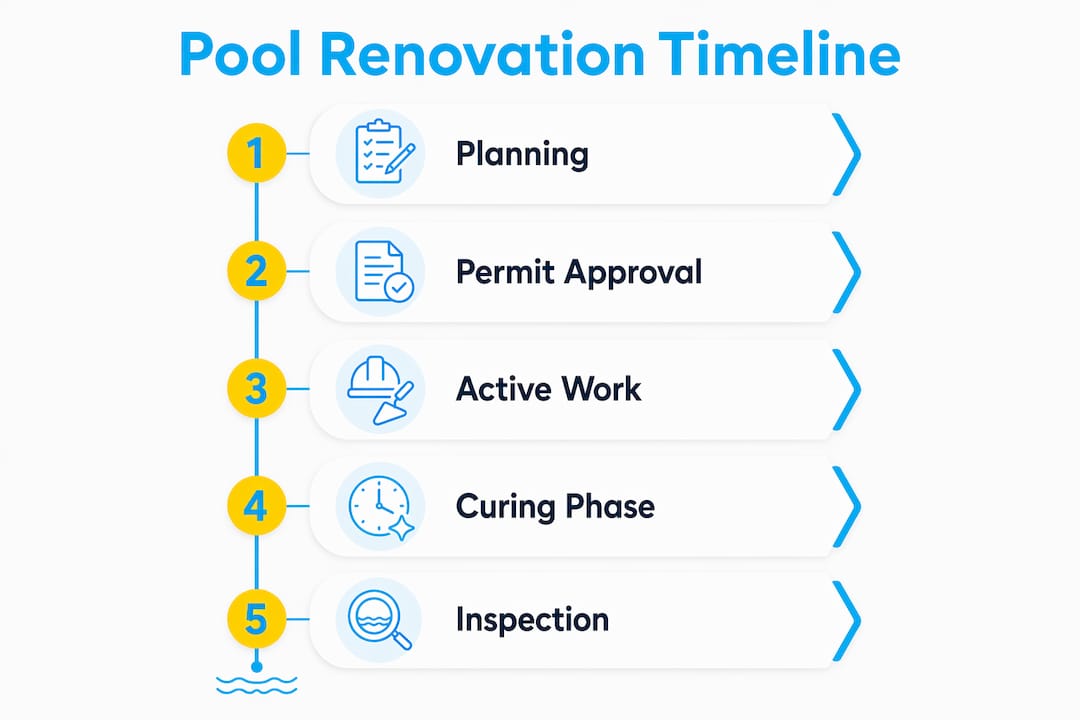
Standard pool renovations take 3 to 8 weeks of active work. Major structural projects can run 8 to 12 weeks or longer. Simple resurfacing typically wraps up in 1 to 2 weeks of hands-on work. Those figures only count the days crews are physically on site.
| Renovation type | Active work time | Total calendar estimate |
|---|---|---|
| Resurfacing only | 1–2 weeks | 3–5 weeks |
| Standard remodel | 3–8 weeks | 6–12 weeks |
| Major structural | 8–12+ weeks | 12–20+ weeks |
Calendar time includes permit processing, material delivery, inspection waits, and weather delays. Adding a 2-week buffer beyond your contractor’s estimate is standard practice and prevents frustration when inspections or weather push the schedule.
Plaster adds another layer to the timeline. Plaster requires a 28-day curing period after application, during which water chemistry must be carefully managed. Rushing pool use during this window causes discoloration and surface damage that shortens the life of your finish.
Pro Tip: Ask your contractor to separate “active work days” from “total calendar days” in their estimate. That single question reveals how much dead time is built into the schedule and helps you set realistic expectations with your family.
What are the advantages and drawbacks of off-season vs. peak-season renovation?
Timing your remodel correctly is less about personal preference and more about real financial and logistical outcomes. Both seasons have genuine advantages depending on your project type.
Off-season benefits (fall and winter)
Fall and winter are the best renovation windows in most U.S. climates, including the Greater Phoenix area. Lower contractor demand means better pricing, faster scheduling, and more attention from your crew. You also get the pool ready before summer demand peaks, so you are not scrambling in june when everyone else is calling for repairs.
- Competitive pricing due to reduced contractor workload
- Faster permit processing when municipal offices are less backlogged
- Pool is ready and fully cured before the swim season begins
- More flexibility to choose your preferred contractor rather than whoever is available
Peak-season realities (spring and summer)
Spring and summer bring real trade-offs. Delaying your decision until peak season makes it harder to secure a quality contractor and drives up costs. Demand in 2026 is rising earlier than in previous years, meaning homeowners who wait until march or april are already behind.
One genuine advantage of summer renovation is material performance. Summer heat accelerates curing for concrete and plaster work, which can shorten the time before you can use the pool again. Dry, hot conditions in Phoenix specifically create near-ideal curing environments for certain finishes.
Pro Tip: If you must renovate in summer, schedule the plaster application for early morning. Crews finish before peak afternoon heat, and the surface cures more evenly without the risk of rapid moisture loss that causes cracking.
The risk of waiting until peak season is not just higher cost. It is the real possibility of missing your target window entirely. A contractor booked solid through july cannot start your project until august, which means you lose the entire summer swim season.
How to plan your pool renovation for the best investment returns
Treating your pool renovation as a planned investment rather than a reactive repair changes every decision you make. Homeowners who plan ahead spend less, get better results, and avoid the emergency repair cycle that drains budgets year after year.
-
Start contractor conversations in january or february. Homeowners who begin planning earlier secure better scheduling and pricing. Waiting until march puts you in competition with every other homeowner who procrastinated.
-
Finalize your design and material selections before submitting permits. Early design finalization prevents permit delays that can add over a month to your project timeline. Know your tile, plaster color, and equipment choices before you call the permit office.
-
Build a realistic budget that includes buffer time. Active work costs are only part of the picture. Factor in permit fees, inspection costs, and the possibility of a 2-week schedule extension due to weather or material delays.
-
Understand your return on investment. A well-executed pool renovation increases property value by 5% to 7% and is recommended every 8 to 15 years. That figure makes renovation a financial decision, not just an aesthetic one. You can read more about pools and home value to understand how remodeling affects your specific market.
-
Treat renovation as preventative maintenance. Proactive scheduling prevents costly emergency repairs and protects long-term asset value. A pool that gets attention every 10 years costs far less over its lifetime than one that gets ignored until something breaks. Reviewing neglected pool repair priorities before you plan your project helps you catch issues that could complicate your timeline.
-
Avoid the most common timing mistakes. Skipping the permit step to save time, choosing materials after submitting the application, and scheduling renovation during your busiest personal calendar months all lead to cost overruns. A detailed look at pool renovation mistakes can save you thousands before you sign a contract.
Understanding how home service project timelines work in practice, including realistic expectations for scheduling and delays, is something many homeowners underestimate. Resources on home service project planning can help you set accurate expectations before your project begins.
Key Takeaways
The single most effective approach to pool renovation is scheduling your project in fall or winter, finalizing all design decisions before permit submission, and building a 2-week buffer into your total calendar estimate.
| Point | Details |
|---|---|
| Off-season timing wins | Fall and winter offer lower prices, faster scheduling, and pool readiness before summer. |
| Buffer your timeline | Add 2 weeks beyond the contractor estimate to account for permits, inspections, and weather. |
| Plaster needs 28 days | Rushing pool use during the curing window causes surface damage and shortens finish life. |
| Plan by january or february | Early planning secures better contractors and pricing before peak-season demand locks them out. |
| Renovation builds value | A well-executed remodel increases property value by 5% to 7% and protects long-term asset value. |
What I have learned after watching hundreds of pool renovations
The homeowners who get the best results are never the ones who called in a panic in june. They are the ones who called in december, picked their materials by january, and had permits in hand before the busy season started. I have seen this pattern repeat itself so consistently that I now consider early planning the single biggest factor in renovation satisfaction.
The nuance most guides miss is the summer curing advantage. Phoenix heat is genuinely useful for concrete and plaster work. If your project scope is limited to resurfacing and you cannot avoid a summer start, the heat works in your favor for curing speed. The problem is that most homeowners who renovate in summer do so because they waited too long, not because they planned for it. There is a real difference between choosing summer strategically and arriving there by default.
The other thing I want homeowners to understand is that renovation is not a luxury. A pool that has not been resurfaced in 15 years is a liability. The surface degrades, equipment wears out, and what would have cost $15,000 in a planned renovation becomes $25,000 in emergency repairs and structural fixes. Treating your pool the way you treat your roof, as something that needs scheduled attention on a predictable cycle, changes how you budget and how you feel about the process.
My honest advice: pick a target completion date, count backward 12 weeks, and make your first contractor call on that date. That single habit separates homeowners who get the pool they want from those who spend the summer waiting.
— Brian
Wefixuglypools is ready when your timing is right
Knowing when to renovate is only half the equation. The other half is working with a team that manages permits, materials, and scheduling without putting that burden on you.

Wefixuglypools has spent a decade transforming pools across the Greater Phoenix area, completing hundreds of remodels with a process built around your timeline and budget. Whether you are planning a full pool remodeling project or exploring custom pool features that fit your backyard and lifestyle, our team handles the permit applications, material coordination, and scheduling so your project stays on track. Reach out now to lock in your preferred start date before the spring rush fills our calendar.
FAQ
When is the best time to renovate a pool?
Fall and winter are the best seasons for pool renovation in most U.S. climates. Lower contractor demand during these months means better pricing, faster scheduling, and a pool that is ready before summer.
How long does a pool renovation take from start to finish?
Active construction takes 1 to 2 weeks for resurfacing and 3 to 8 weeks for standard remodels. Total calendar time, including permits and inspections, typically runs 2 to 4 weeks longer than the active work estimate.
Does pool renovation increase home value?
A well-executed pool renovation increases property value by 5% to 7%. Renovations are recommended every 8 to 15 years to maintain both safety and market value.
Why do permit delays extend pool renovation timelines?
Permit processing takes 1 to 6 weeks, and late material selections are the most common cause of bottlenecks. Finalizing your design before submitting the permit application prevents delays that can push your start date back by a month or more.
Is summer a bad time to renovate a pool?
Summer is not ideal for scheduling, but it does offer one real advantage. High heat and dry conditions accelerate curing for concrete and plaster finishes, which can shorten the time before you can use the pool again.