Pool cleaning systems are defined as the equipment and methods used to remove debris, algae, and contaminants from swimming pool water and surfaces. The four main types of pool cleaning systems are manual tools, suction-side cleaners, pressure-side cleaners, and robotic cleaners. Each category handles different debris types, suits different pool sizes, and demands a different level of owner effort. Choosing the right system, or the right combination, is the single most important decision you make for long-term pool hygiene. The Pool & Hot Tub Alliance recognizes that no one method covers every cleaning need, which is why most experienced pool owners use at least two approaches together.
1. Types of pool cleaning systems: the four main categories
Pool cleaning falls into four recognized categories, each with a distinct mechanism and purpose. Manual systems rely entirely on physical effort and handheld tools. Automatic systems, which include suction-side, pressure-side, and robotic cleaners, operate with varying degrees of independence from the owner. Understanding where each category excels helps you build a cleaning routine that keeps your pool safe and clear without wasted effort or money.
The right starting point is matching the system to your pool’s specific conditions: size, shape, surrounding trees, bather load, and your available time. A small above-ground pool in a sheltered yard has very different needs than a large in-ground pool surrounded by desert landscaping in the Greater Phoenix area.

2. Manual pool cleaning systems
Manual pool cleaning systems are the foundation of any maintenance routine. The core tools include a skimmer net, telescopic pole, wall brush, and a manual vacuum head connected to a garden hose or pool pump. These tools handle surface debris, tile lines, steps, and tight corners that no automatic cleaner reaches reliably.
Manual vacuuming a standard residential pool takes 30–60 minutes per session. That time investment is real, but it gives you direct control over problem areas. Automatic systems cut that weekly labor down to roughly 10 minutes for setup and filter maintenance, but they do not eliminate manual work entirely.
The most important manual technique most homeowners skip is the filter valve setting. When vacuuming algae or heavy silt, set the valve to “Waste” rather than “Filter.” This sends debris directly out of the system instead of back into the pool water. Watch your water level when using this setting, because the pool drains faster than you expect.
- Skimmer net: Removes floating leaves, insects, and sunscreen film from the surface daily
- Wall brush: Scrubs algae and calcium deposits from walls, steps, and tile lines weekly
- Telescopic pole: Extends your reach to the far end of any pool without getting in
- Manual vacuum: Targets settled debris on the floor, steps, and corners with precision
Pro Tip: Brush your pool walls before running any automatic cleaner. Loosened debris settles to the floor where the automatic cleaner can pick it up, cutting your manual follow-up time in half.
3. Suction-side pool cleaners
Suction-side cleaners are the most affordable entry point into automatic pool cleaning. They connect to the skimmer or a dedicated suction port and draw power entirely from your existing pool pump. The cleaner moves randomly across the pool floor, pulling debris through a hose and into the pump’s filter basket or a separate bag.
These cleaners work best with light debris like sand, fine dirt, and small particles. They struggle with large leaves, twigs, and heavy organic loads. If your pool sits under trees or collects significant debris after storms, a suction-side cleaner will clog frequently and require constant attention.
Key strengths and limitations:
- Affordable: Entry-level models cost significantly less than pressure-side or robotic units
- Simple setup: Connects in minutes with no additional pump required
- Random pattern: Does not follow a systematic path, so coverage can be inconsistent
- Filter load: All debris passes through your main pump, adding wear to the filtration system
- Limited capacity: Small debris bags or baskets fill quickly in heavily soiled pools
- Best fit: Smaller pools, light debris environments, and budget-conscious owners
Suction-side cleaners are recommended specifically for light sand and dirt debris. That narrow strength is worth knowing before you buy.
4. Pressure-side pool cleaners
Pressure-side cleaners connect to your pool’s return jet and use water pressure for propulsion. Most models require a dedicated booster pump, which adds to the upfront cost and installation complexity. The payoff is meaningful: these cleaners carry their own debris collection bag, so collected material never passes through your main filtration system.
Pressure-side cleaners attach to return jets and collect debris in dedicated filter bags, protecting the main filter from heavy loads. This makes them the right choice for pools with significant leaf fall, twigs, or larger organic debris.
- Independent debris bag: Keeps large debris out of your pump and filter
- Handles heavy loads: Moves leaves, twigs, and larger particles that suction cleaners cannot manage
- Booster pump required: Adds $200–$500 to setup costs for most installations
- Random movement: Like suction-side models, most pressure-side cleaners do not follow a systematic path
- Best fit: Pools surrounded by trees, large in-ground pools, and owners who want to protect their main filter
Pro Tip: Empty the debris bag after every cleaning cycle. A full bag reduces water flow through the cleaner, cutting its effectiveness and putting extra strain on the booster pump.
Pressure-side cleaners sit in the middle of the cost range. They cost more than suction-side models but less than most robotic units. For pools with irregular shapes or heavy debris seasons, they often deliver the best value per dollar spent.
5. Robotic pool cleaners
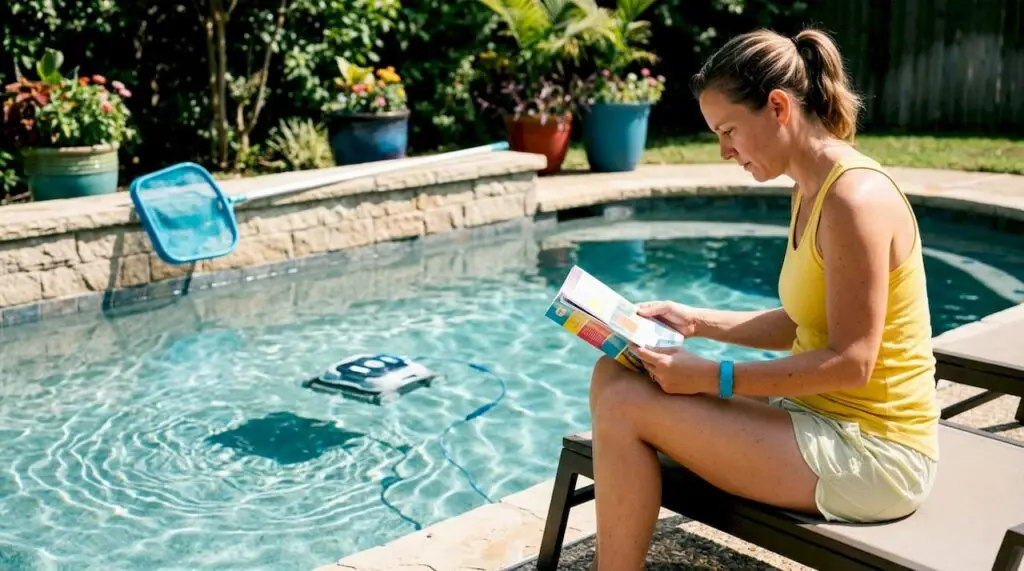
Robotic pool cleaners are the most technologically advanced option available to homeowners. They operate independently of your main pool pump and filtration system, running on their own electric motor and internal filter. This independence reduces your main pump’s runtime and lowers electricity costs over time.
Modern robotic cleaners cover the pool floor, walls, and waterline in a single cycle using systematic navigation patterns rather than random movement. High-end models now feature AI navigation and automatic filter cleaning, with some units capable of going up to two months without manual debris emptying. That is a meaningful shift from the weekly maintenance that older models required.
- Systematic coverage: Cleans floors, walls, and waterlines in one pass
- Energy efficient: Bypasses the main pump, reducing overall electricity consumption
- Self-contained filter: Debris stays in the unit’s own basket, not your pool’s filtration system
- Higher purchase price: Quality robotic units cost significantly more than suction or pressure-side models
- Cord management: Corded models require attention to prevent tangling during operation
- Best fit: Large in-ground pools, heavily used pools, and owners who want minimal weekly effort
Robotic cleaners represent a shift in how pool cleaning works, reducing energy consumption and main pump runtime in ways that suction and pressure-side models cannot match. For Phoenix-area pools that run year-round, that energy savings adds up fast.
6. Comparing pool cleaning systems and choosing the right one
The best pool cleaning method for your home depends on four factors: pool size, debris type, your budget, and how much time you want to spend on maintenance each week. No single system handles every situation perfectly, which is why combining automatic and manual cleaning produces the most consistent results.
| System | Best debris type | Coverage area | Independence | Relative cost |
|---|---|---|---|---|
| Manual tools | All types | Targeted spots | None | Low |
| Suction-side | Sand, fine dirt | Floor only | Partial | Low to moderate |
| Pressure-side | Leaves, twigs | Floor only | Partial | Moderate to high |
| Robotic | All types | Floor, walls, waterline | Full | High |
Automatic cleaners reduce needed manual labor substantially but still require manual attention to steps, corners, and water surface skimming. That is not a flaw in the technology. It is simply the reality of pool geometry.
Practical recommendations by situation:
- Small above-ground pool, light debris: A suction-side cleaner plus a skimmer net covers most needs at the lowest cost
- Large in-ground pool, heavy leaf load: A pressure-side cleaner handles the bulk debris; a robotic unit adds wall and waterline coverage
- Year-round pool in a warm climate: A robotic cleaner running 2–3 times per week, combined with weekly manual brushing, delivers the cleanest results
- Tight budget: Start with manual tools and a suction-side cleaner; upgrade to robotic when the budget allows
Manual tools including skimmer nets and wall brushes remain indispensable for daily surface cleaning and targeted spot treatment, even when you own the most advanced robotic unit on the market. Budget for both categories from the start.
For homeowners weighing professional service against a full DIY setup, the pool service vs. DIY guide from Wefixuglypools breaks down the real costs and time commitments clearly.
Key takeaways
The most effective pool maintenance combines a systematic automatic cleaner for base load cleaning with manual tools for steps, corners, and surface skimming.
| Point | Details |
|---|---|
| Four main system types | Manual, suction-side, pressure-side, and robotic cleaners each serve different needs. |
| Manual tools stay essential | Skimmer nets and brushes handle steps, corners, and surfaces that automatics miss. |
| Match system to debris type | Suction for fine dirt, pressure-side for leaves, robotic for full-surface coverage. |
| Robotic cleaners save energy | They bypass the main pump, reducing electricity use and pump wear over time. |
| Combine methods for best results | Running an automatic cleaner 2–3 times weekly plus manual spot cleaning keeps pools consistently clean. |
What I’ve learned after years of watching pool owners get this wrong
Most homeowners buy a robotic cleaner expecting it to handle everything. Then they wonder why their steps look grimy and their tile line is turning green. The technology is genuinely impressive, but it does not change pool geometry. Steps, tight corners, and the waterline tile require a brush and a human hand. That will not change regardless of how advanced the navigation software gets.
The approach I recommend is simple. Run your automatic cleaner two to three times per week for base load maintenance. Spend ten minutes every week with a brush on the walls and steps. Skim the surface daily if you have trees nearby. That routine costs you less than 30 minutes a week and keeps the water consistently clear.
The other mistake I see constantly is buying a suction-side cleaner for a pool surrounded by trees. The cleaner clogs within minutes, the owner gives up, and the pool turns green. Matching the system to your actual debris load is more important than matching it to your budget. Spend a week tracking what lands in your pool before you buy anything.
One more thing worth knowing: pool shape affects cleaner performance more than most product descriptions admit. Irregular shapes, tight radius curves, and recessed steps all create dead zones for automatic cleaners. If your pool has complex geometry, factor that into your decision. A pool remodeling consultation can also reveal whether your current pool shape is working against your cleaning equipment.
— Brian
Your pool deserves a cleaning system that actually fits it
Choosing the right cleaning equipment is easier when your pool is in good shape to begin with. Cracked surfaces, outdated plumbing, and worn finishes make every cleaning method less effective and more time-consuming.
Wefixuglypools has spent over a decade transforming pools across the Greater Phoenix area, completing hundreds of remodels that make pools easier to maintain and genuinely enjoyable to use. Whether you need a full pool remodeling and restoration or targeted repairs that improve your cleaning system’s performance, the team at Wefixuglypools brings the hands-on expertise to get it done right. A well-built pool and the right cleaning system work together. Contact Wefixuglypools to see what that combination looks like for your backyard.
FAQ
What are the four main types of pool cleaning systems?
The four main types are manual tools, suction-side cleaners, pressure-side cleaners, and robotic cleaners. Each handles different debris types and suits different pool sizes and budgets.
Do robotic pool cleaners replace manual cleaning entirely?
Robotic cleaners handle floors, walls, and waterlines but cannot clean steps, tight corners, or the water surface. Manual tools remain necessary for those areas even with a robotic unit running regularly.
Which pool cleaner works best for above-ground pools?
Suction-side cleaners are the most practical choice for above-ground pools with light debris loads. They connect directly to the existing pump and cost significantly less than robotic models.
How often should I run an automatic pool cleaner?
Running an automatic cleaner 2–3 times per week handles the base load of debris effectively. Pair that schedule with weekly manual brushing for consistently clean water and surfaces.
What is the “Waste” setting used for during pool vacuuming?
The “Waste” setting on your filter valve sends vacuumed debris directly out of the system rather than back through the filter. Use it when removing algae or heavy silt to prevent contamination of your filter media.