
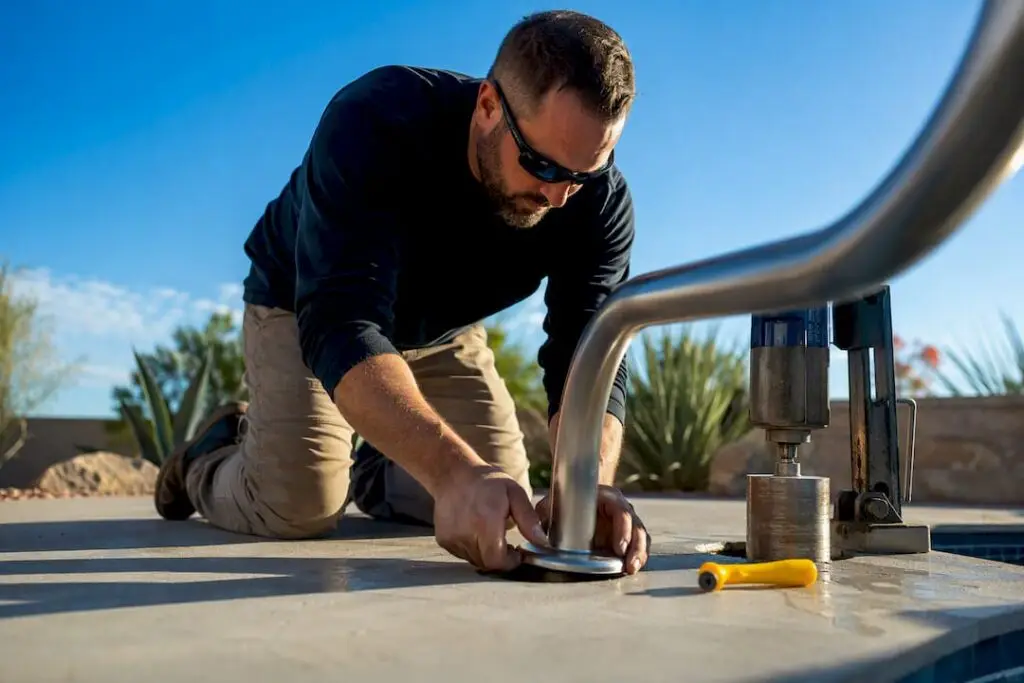
Yes, most existing pools can accept a handrail retrofit. Core-drilling into the deck for in-deck anchors gives you the most permanent, secure result, while bolt-down base plates work when you need to avoid cutting concrete. Nonconductive rail materials sidestep some bonding work but come with their own trade-offs. Whichever route you choose, every metal rail has to be equipotentially bonded to your pool’s grounding system, and that single requirement is often the reason homeowners end up calling a licensed pro instead of finishing the project themselves.
TL;DR:
- Using core-drilling for in-deck anchors provides the most stable and permanent installation, but requires deck patching if the concrete is thin or cracked.
- Bolt-down base plates are quicker and cheaper for existing concrete without damage concerns, yet offer less stability on fragile or stressed decking materials.
- Proper bonding to the pool’s grounding system is mandatory and often overlooked, with compromised bonds increasing shock hazard risks and complicating code compliance.
- Stainless steel, specifically 316L, offers the best corrosion resistance for saltwater pools, lasting up to twenty-five years, unlike lower-grade alloys prone to early rust.
- DIY installation suits solid decks free of electrical work; otherwise, hiring a licensed professional ensures compliance, safety, and prevents costly mistakes related to bonding and deck repairs.
Table of Contents
- Pool Handrail Installation Methods Compared
- Which Pool Handrail Materials Hold Up Best?
- Bonding, Grounding, and Code Essentials
- What Does Pool Handrail Installation Cost?
- Should You DIY or Hire a Pro for Handrail Installation?
- Why a Specialist Handles Handrail Retrofits Better
- Get a Professional Pool Handrail Assessment
- Sources
Pool Handrail Installation Methods Compared
Three approaches cover almost every retrofit situation, and picking the wrong one is how a Saturday project turns into a two-week deck repair.
Core-drilling for in-deck anchors is the gold standard for a rail that won’t wobble. You core-drill new anchor holes into the deck at roughly four inches in diameter, set the anchor sleeve to the manufacturer’s specified depth, and lock it in with epoxy or cement grout. Once cured, a decorative escutcheon covers the socket for a clean, finished look. This method requires a repour or patch if your deck is thin, cracked, or tiled near the anchor point.

Bolt-down base plates skip the drilling altogether. A surface-mounted bracket bolts straight into the existing concrete with expansion anchors, which makes it faster and cheaper for decks you don’t want to cut into. The trade-off is stability: base plates aren’t ideal on thin pavers, loose tile, or decking that’s already showing stress cracks, since there’s less material gripping the anchor.
In-shell and water-cooled anchor systems show up mostly on new builds or deep retrofits where the rail needs to tie directly into the pool structure rather than the deck. These specialized anchor kits follow a precise sequence, including drain alignment and mud cap installation, and they still need to be bonded per local code.
Before committing to any method, inspect your existing anchor sockets:
- Check for rust bleed or pitting around the socket rim
- Test whether the old rail base seats snugly or wobbles
- Look for hairline cracks radiating from the socket into the deck
- Confirm the socket depth matches your new rail’s post diameter
Old sockets often don’t match new hardware. A common retrofit mistake is assuming a replacement rail will drop right into the original hole, when corrosion or shifting has actually changed its shape.
Which Pool Handrail Materials Hold Up Best?
Material choice determines whether your rail lasts five years or twenty-five.
- 316L stainless steel is the standard recommendation for salt pools and coastal climates because it resists pitting and corrosion far better than 304 or lower-grade alloys, which can streak and rust within a few seasons of saltwater exposure.
- Powder-coated rails add color and a warmer grip, but any chip in the coating exposes bare steel underneath, and once corrosion starts under the finish, it spreads fast and hides from view.
- Thermoplastic or vinyl-coated rails are nonconductive, which reduces (though doesn’t eliminate) bonding complexity, but they vary widely in UV durability and can degrade faster in intense sun.
Pro Tip: If you’re on a salt chlorination system, don’t shop by price alone. Spending more upfront on 316L stainless almost always costs less over a decade than replacing a corroded lower-grade rail twice.
Stick with stainless fasteners and escutcheons that match your rail grade, and plan a visual inspection every six months for loose bases or surface rust.
Bonding, Grounding, and Code Essentials
This is the part homeowners skip and regret. Every metal handrail must be equipotentially bonded to the pool’s electrical grounding system under NEC guidance, which keeps stray voltage from turning a wet metal rail into a shock hazard.
The retrofit reality: bond wires get cut, corroded, or left too short during past pool work far more often than homeowners expect. When that happens, a bonding fix sometimes means exposing part of the pool shell to attach a clamp properly, since temporary fixes like tape or twisted wire aren’t code-compliant and don’t hold up underwater.

If your bonding conductor is too short to reach the new rail base, approved split nuts or extension clamps are the correct fix, not a workaround. Many jurisdictions require a permit and an electrical inspection whenever bonding work touches the pool’s grounding loop, so it’s worth asking your contractor upfront whether your project will trigger one.

Skipping bonding isn’t just a code violation. A missing or improperly connected bond wire raises real shock risk for anyone touching a wet rail, and it can complicate an insurance claim if an incident ever happens near the pool.
What Does Pool Handrail Installation Cost?
Budgets vary based on how much deck work and bonding your retrofit actually needs.
- Bolt-down kit, materials only: the cheapest route when your deck is sound and bonding is already in place; you’re mainly paying for the rail and anchors.
- Core-drill retrofit with labor: covers drilling, anchor setting, epoxy cure time, and a finished escutcheon; costs climb with rail length and stainless grade.
- In-deck anchor replacement with deck repair: the priciest option, since it often includes patching or repouring a section of concrete plus bonding verification.
Cost drivers to watch: stainless grade (316L costs more than 304 but lasts longer), whether the deck needs cutting or patching, any electrical bonding work, permit fees, and the finish quality of your escutcheons.
Timelines split roughly the same way. A straightforward surface mount can be done in an afternoon. Deck work involving core-drilling and epoxy cure typically stretches across a few days once you factor in setting time. When you request quotes, ask specifically about anchor type, the bonding plan, warranty terms, and a realistic start-to-finish timeline. A common surprise during retrofits is discovering the old sockets are corroded, which adds cost and time that a good contractor should flag before work begins, not after.
Should You DIY or Hire a Pro for Handrail Installation?
Run through this checklist before you buy a kit or pick up a phone.
DIY tends to make sense when:
- Your deck is solid concrete with no cracking near the mount points
- No bonding or electrical work is required
- You’re using a bolt-down kit rather than core-drilling
- You have basic masonry tools and comfort working around pool equipment
Call a licensed pro when you see these red flags:
- The bond wire is missing, corroded, or too short to reach the new rail
- Anchor sockets show rust, pitting, or don’t match your new hardware
- The project requires cutting or patching the deck
- Your municipality requires a permit or electrical inspection for bonding work
Pro Tip: Ask any contractor for photos of a bonding connection they completed on a past job, not just finished rail photos. A clean-looking rail can still be hiding a bad bond connection underneath.
Hiring a licensed installer isn’t just about convenience. It shifts liability for code compliance onto someone who carries insurance and knows exactly how local inspectors interpret bonding rules, which matters more than most homeowners realize until something goes wrong.
Why a Specialist Handles Handrail Retrofits Better
Handrail work looks simple until you hit a corroded socket or a bond wire two inches too short, and that’s exactly where experience pays off. Wefixuglypools has spent a decade completing hundreds of pool transformations across the Phoenix area, which means anchor selection, bonding continuity, and finish details get handled correctly the first time, not fixed on a callback. A specialist also spots deck issues that would derail a DIY job before they become expensive surprises.
— Brian
Get a Professional Pool Handrail Assessment
If cutting into your deck, chasing a corroded bond wire, or matching anchor hardware sounds like more trouble than it’s worth, that’s exactly the work Wefixuglypools handles every week across the Phoenix area.

Every assessment starts with an on-site look at your existing sockets, deck condition, and bonding continuity, so you get an anchor recommendation and a clear scope before any drilling starts. Expect your quote to spell out the anchor type, bonding plan, and any deck repair needed, with no guesswork added later. If a handrail retrofit turns into a bigger opportunity to refresh your deck or add safety features at the same time, that’s covered too through Wefixuglypools’s pool remodeling services. Reach out and schedule an inspection to find out exactly what your pool needs before you buy a kit or sign with anyone else.
Sources
For deeper technical detail, consult the Doheny’s rail and ladder installation guide for anchor specifications, and your local building department for NEC bonding requirements. Manufacturer instructions always take precedence over general advice when they conflict.
- How to add a handrail to an existing pool — Royal Swimming Pools (blog)
- Electrical bonding requirements for pools — Merrimack NH Building Code Enforcement
- Handy handrail tips from Larry’s Pool Service — California Pool Association
- Pool handrail material & finish guide — Louei Metal Arts (blog)


